There’s one more geological marvel we want to see.
But before we get there we stop at a PDS to empty the grey water out of van and top up fresh water.
While there and another van pulls up and out jumps Debby Downer wanting a chat.
Moeraki Boulders? Says him after asking where we are heading. That’s a big lot of disappointment. nothing there, just rocks on a beach…
And he proceeds to launch into a general whinge about the world, life, and modern times intermingled with a racist rant or two. I curse at how slow the grey water tank drains and opt to just pretend it’s finished so I can move on quicker…
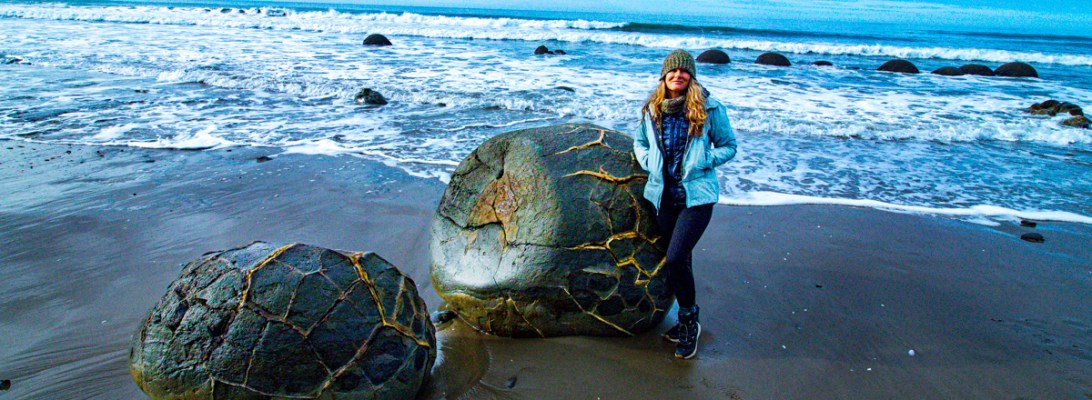
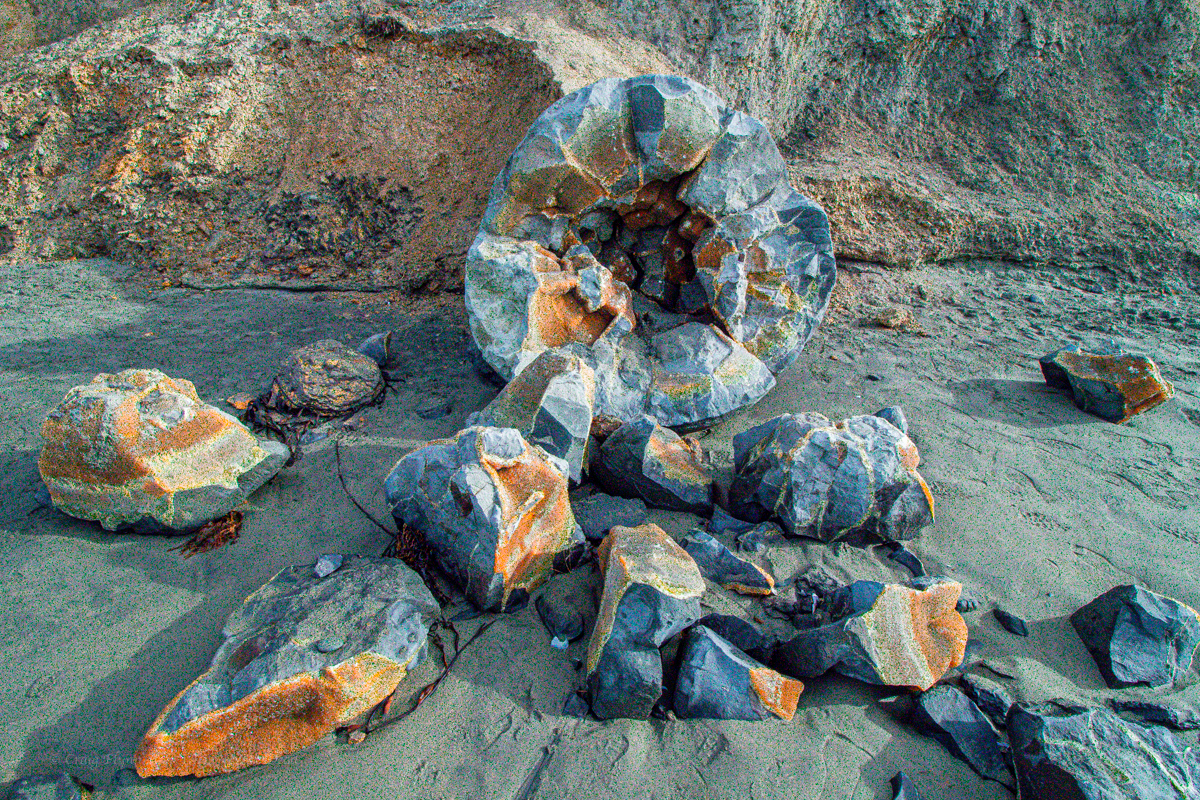
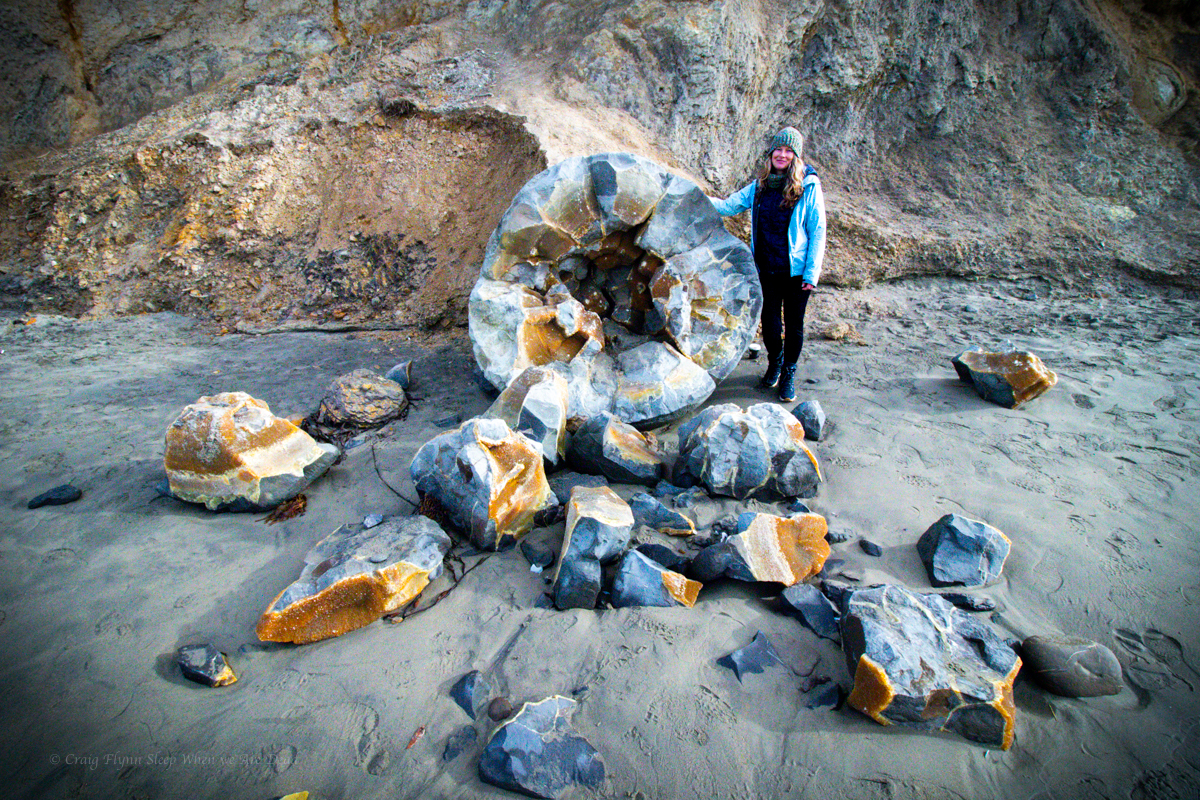
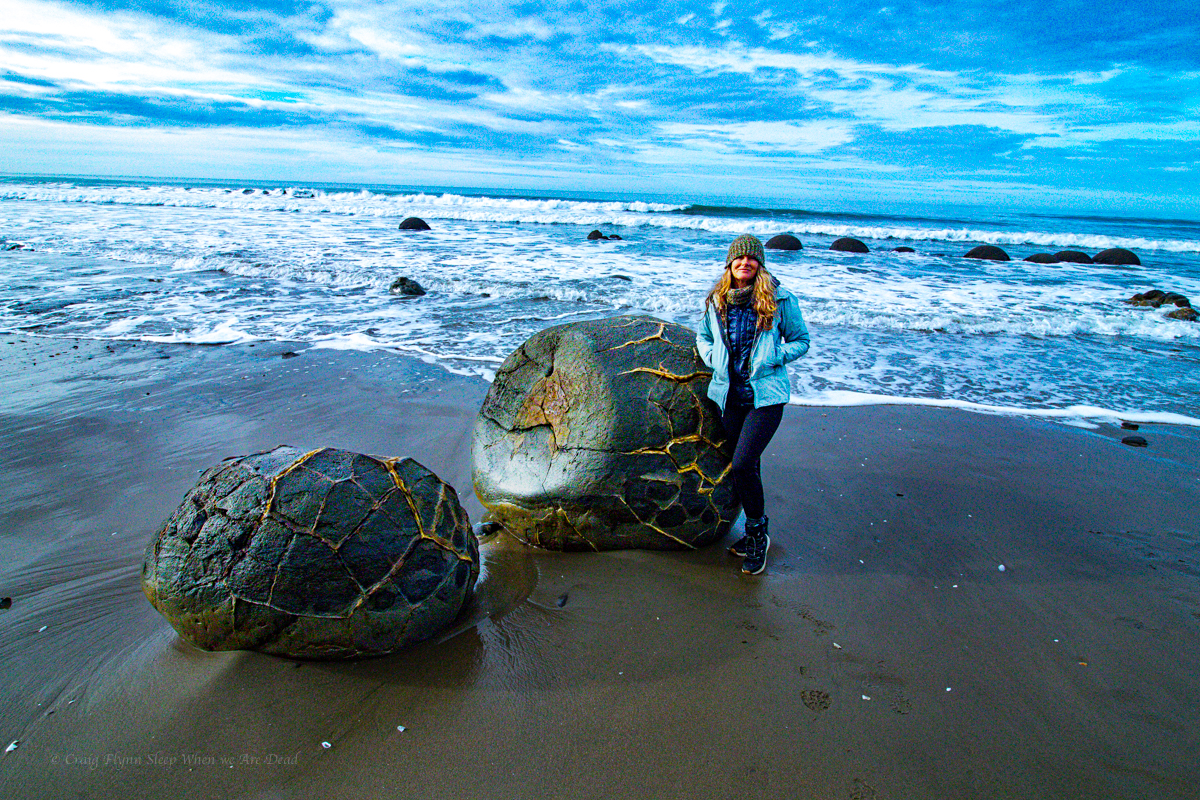
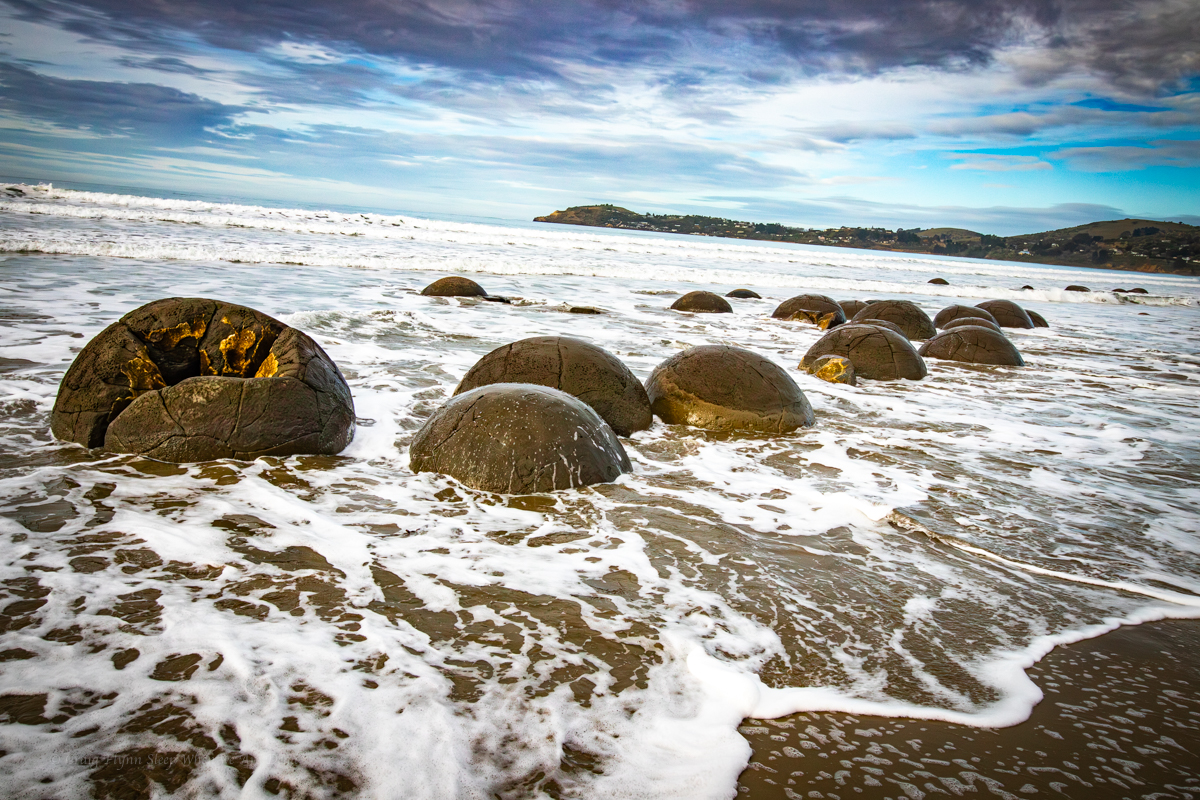
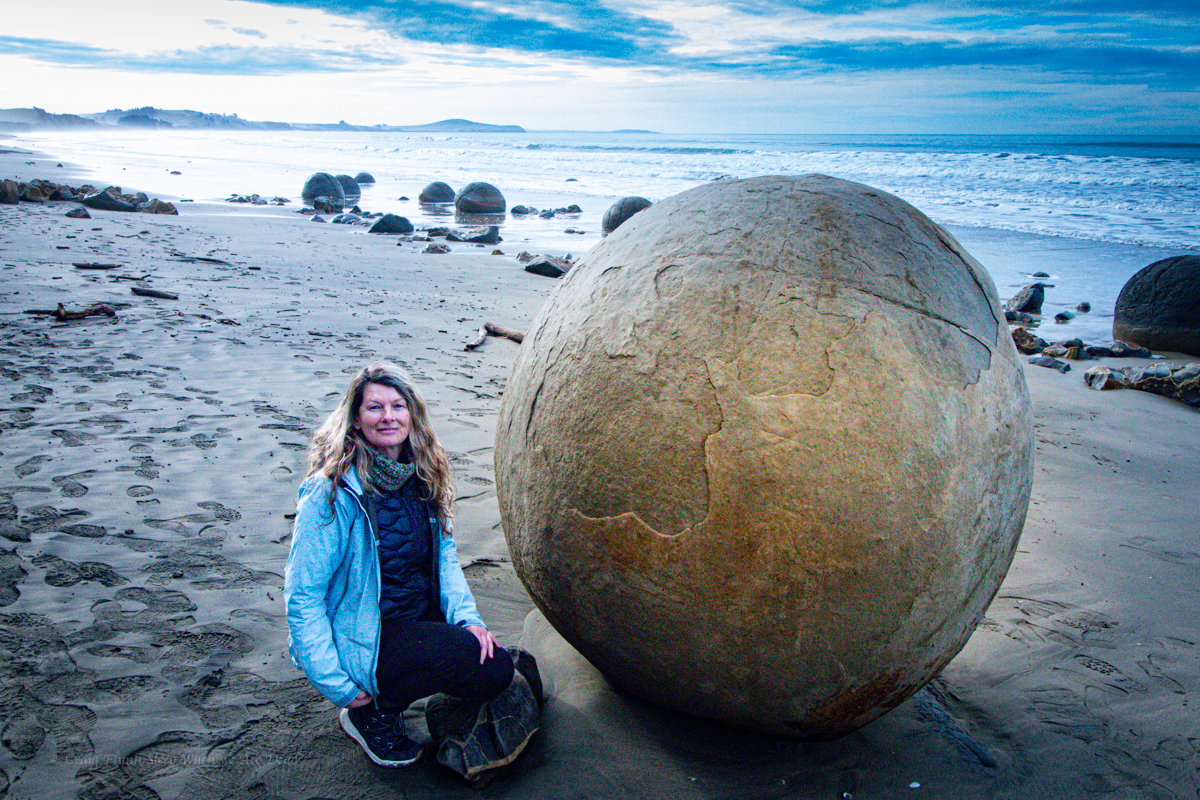
So what are the Moeraki Boulders?
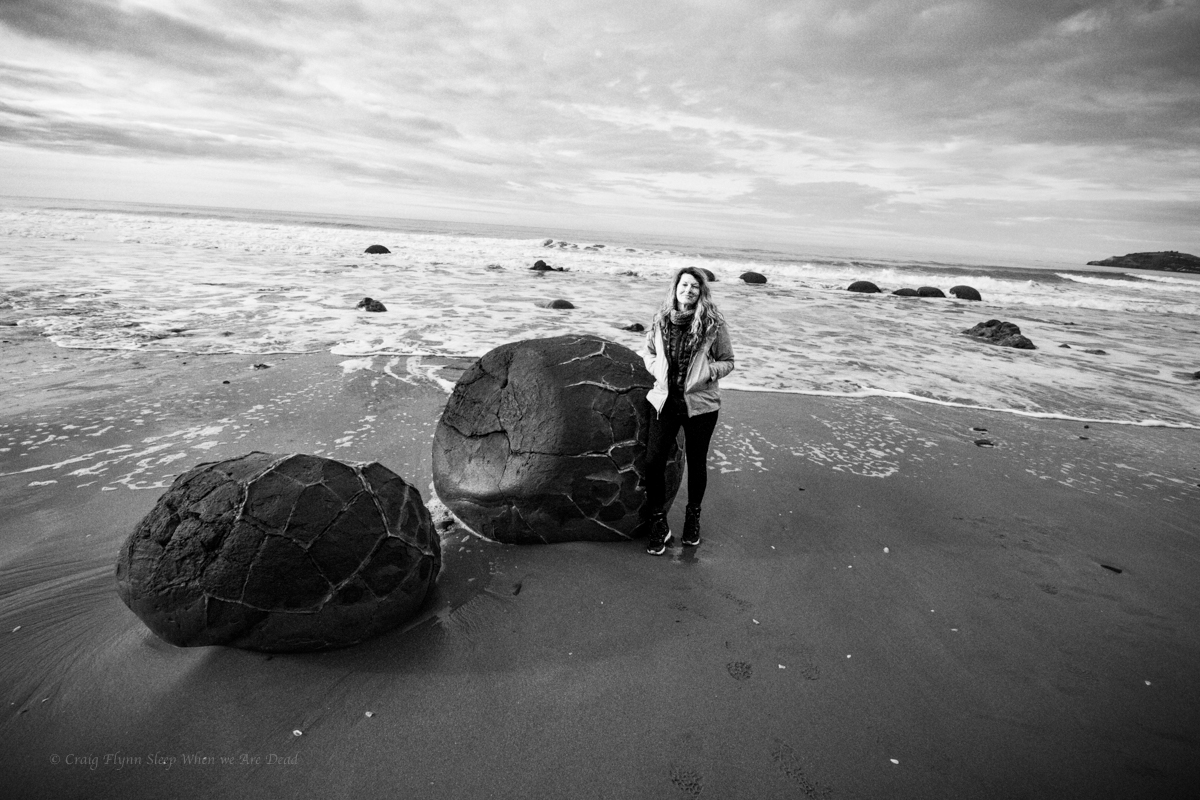
Well old racist Karen was sort of right, they are rocks on a beach.
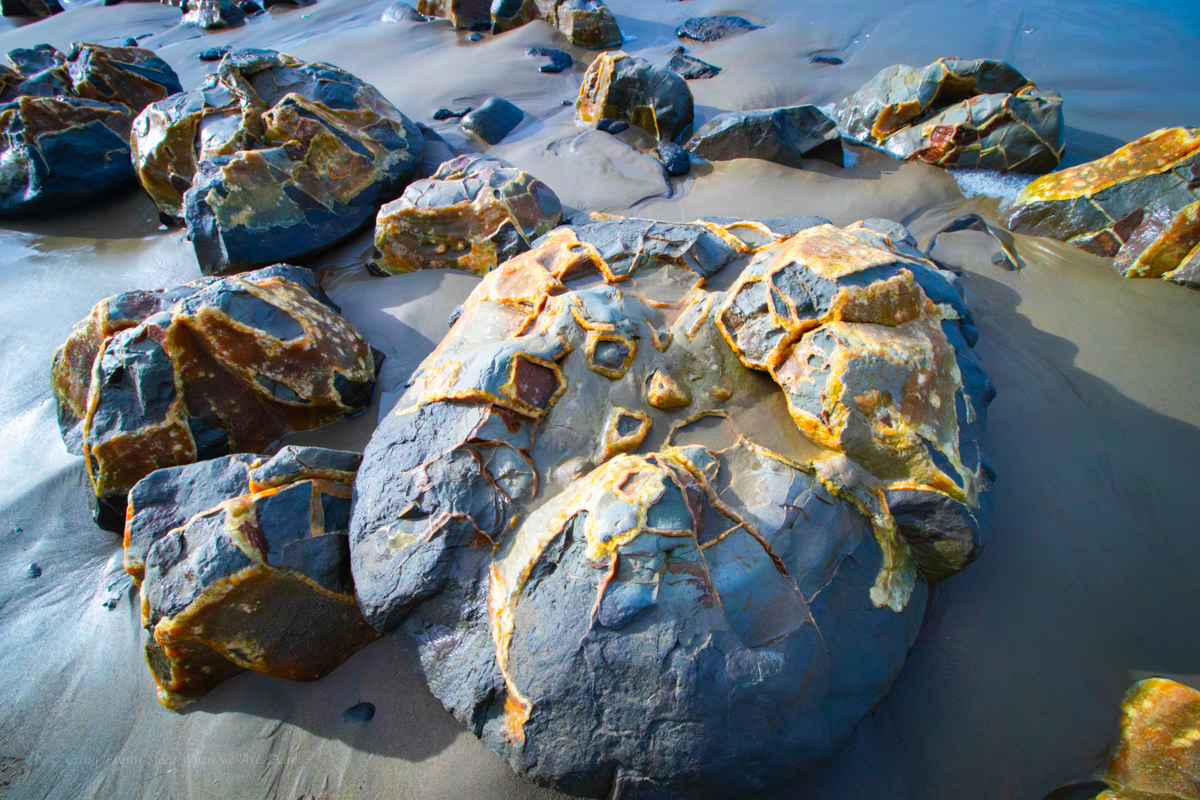
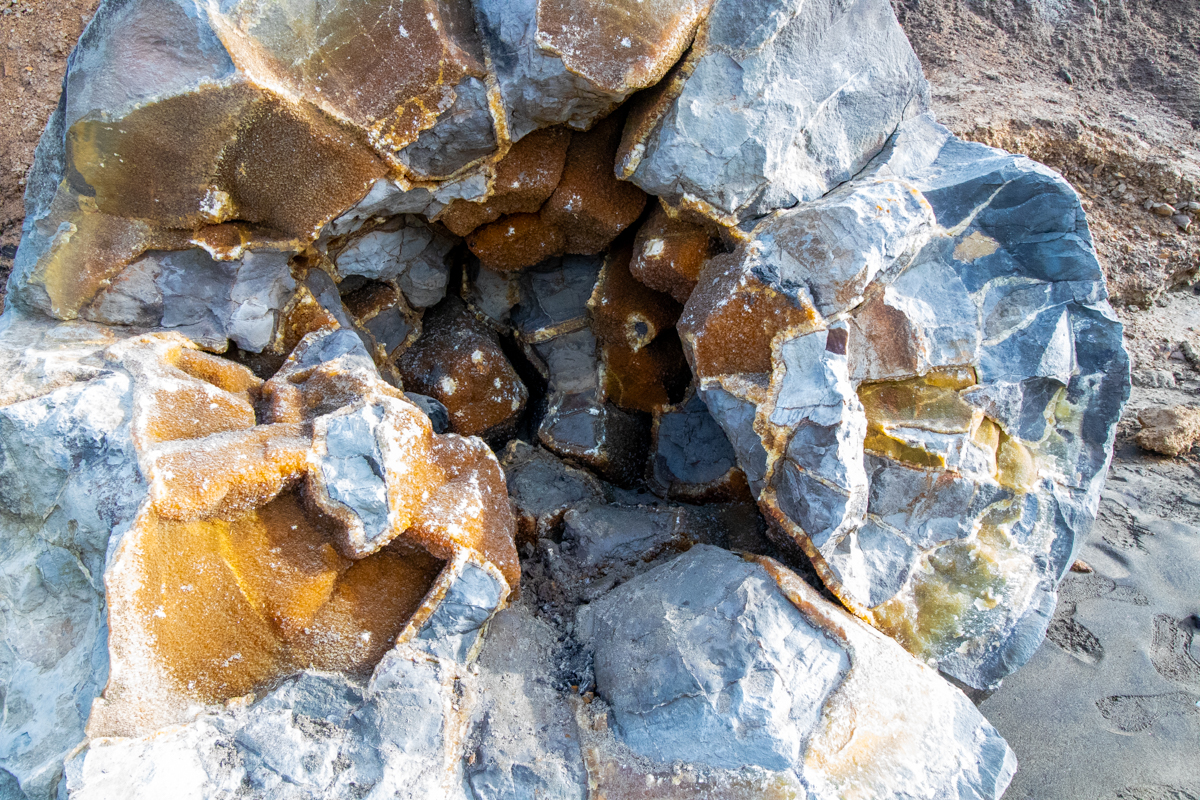
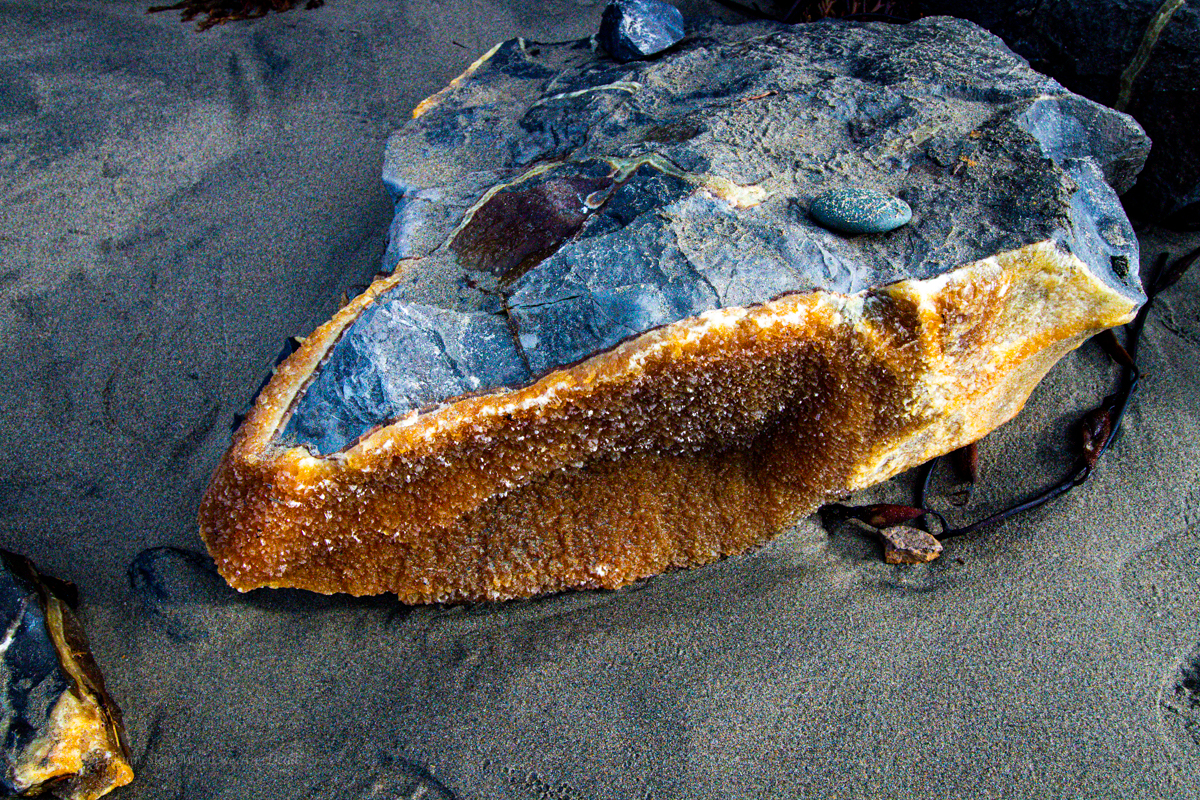
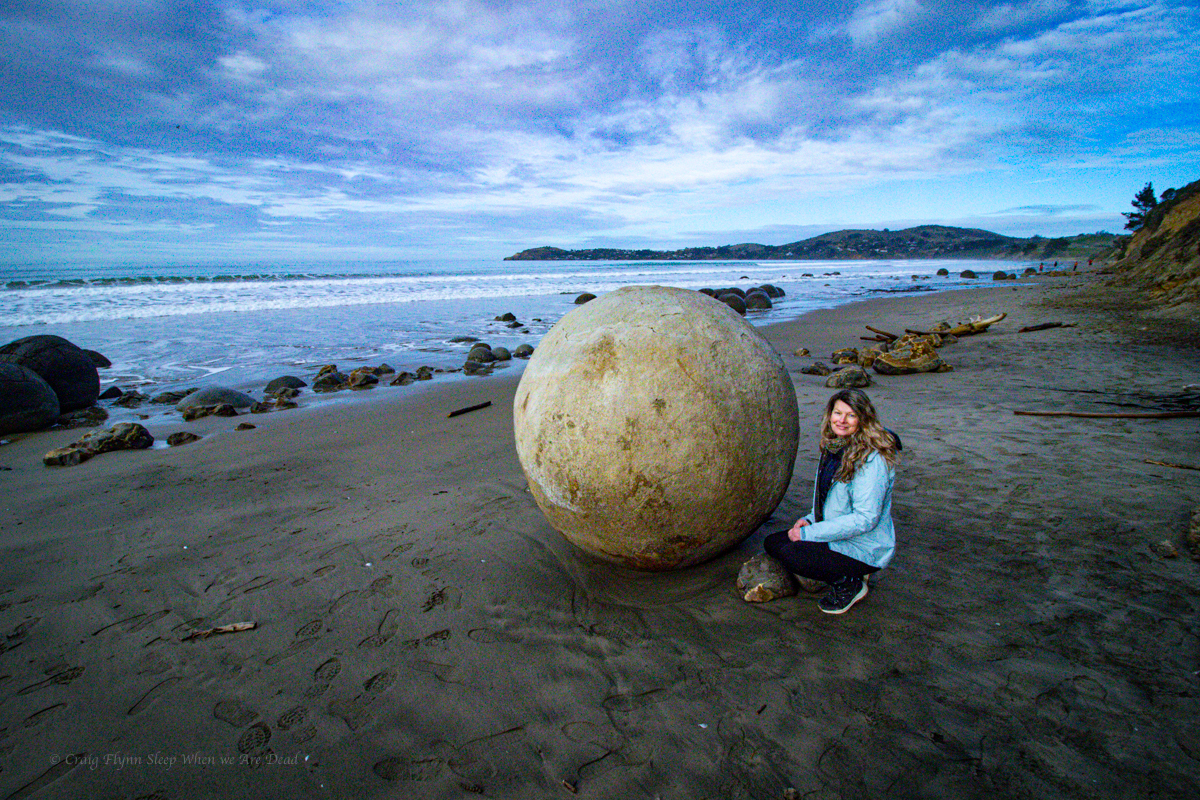
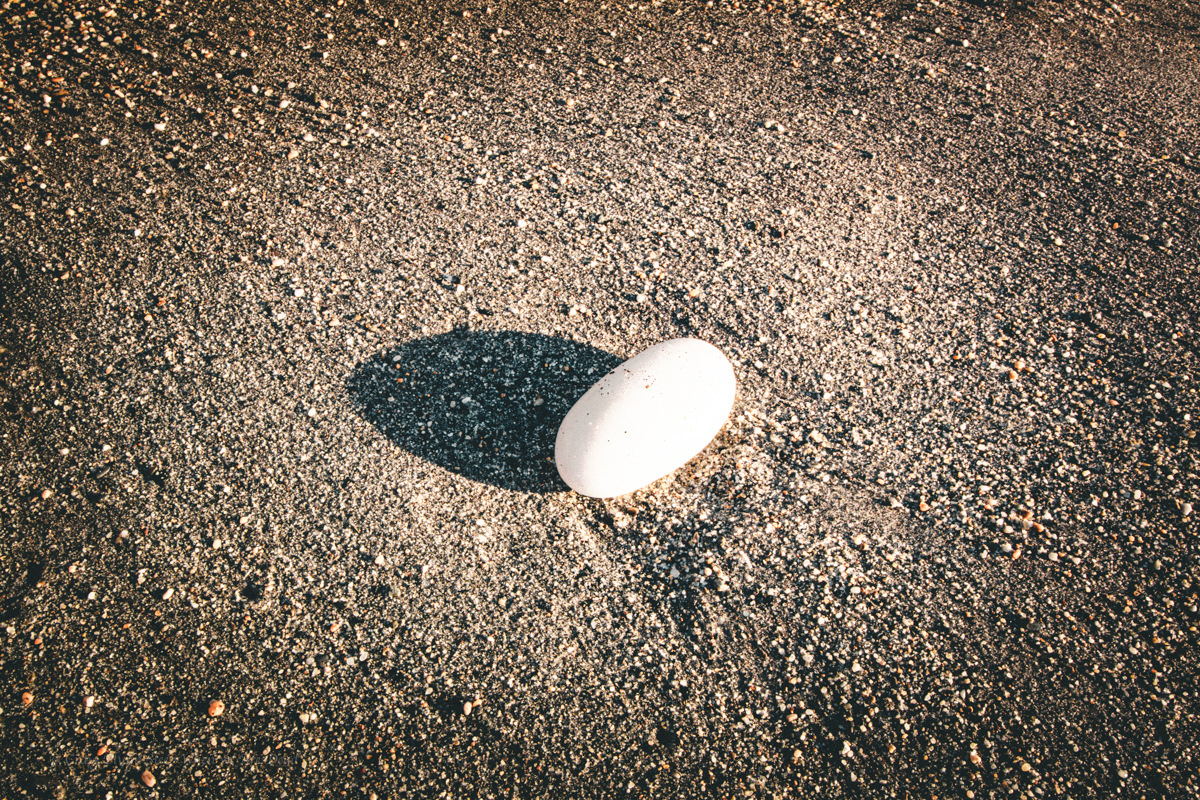
But not just any rocks, they are concretions, Septarian Concretions to be exact. Similar to the ones we saw in the cave tour only bigger. Much bigger.
What the hell are Septarian Concretions?
I’m glad you ask.
They are nodules of rock, typically spherical, usually formed in cabanate rich mudstone. They often “grow” around something, a crab claw or dinosaur bone for example, so often contain fossils in their centre.
So basically as dumbed down as I needed it explained to me, a bit of organic matter is engulfed in mud and a rock “crystal” grows around it before the mud/sand is rockyfied itself.
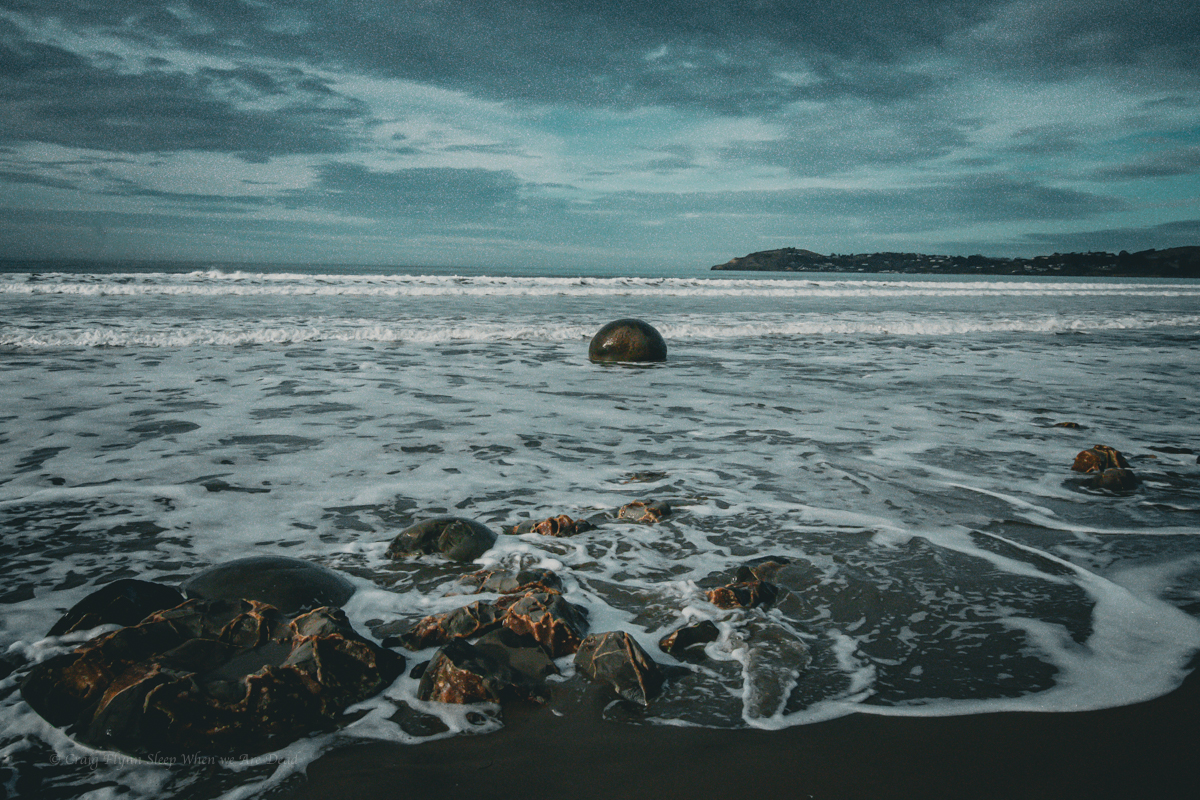
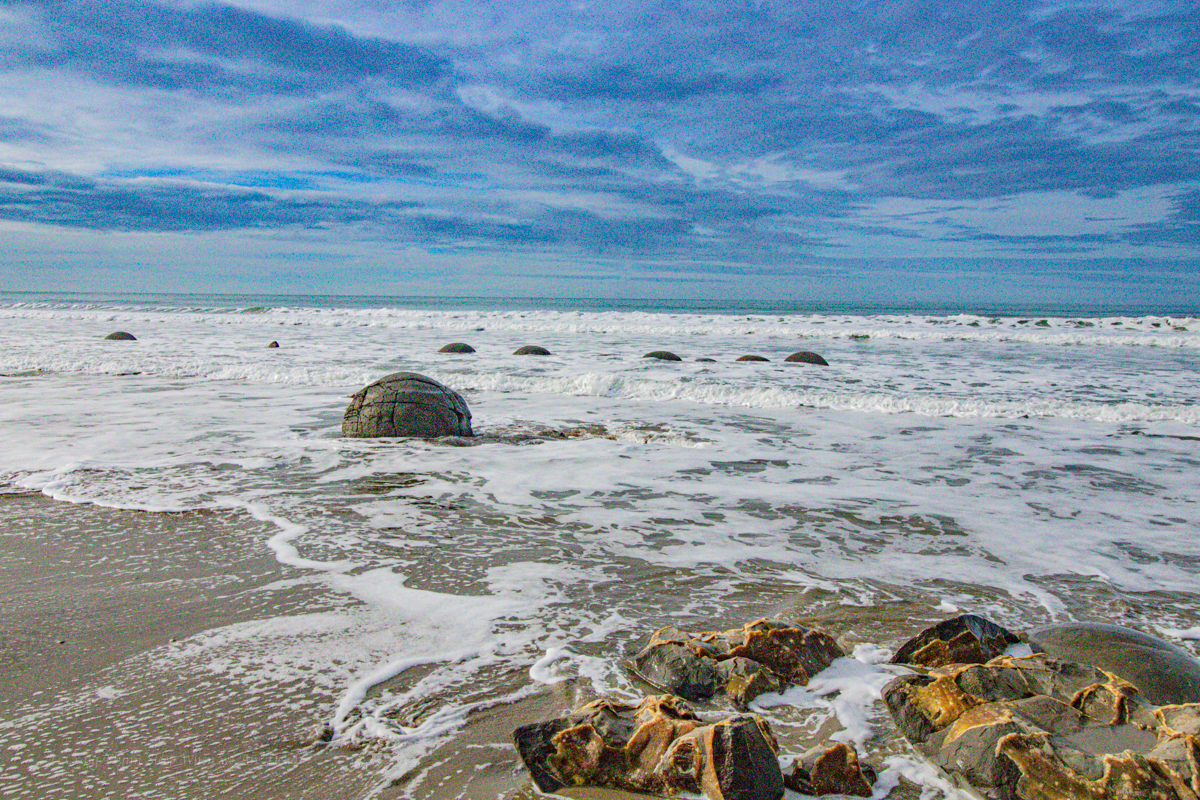
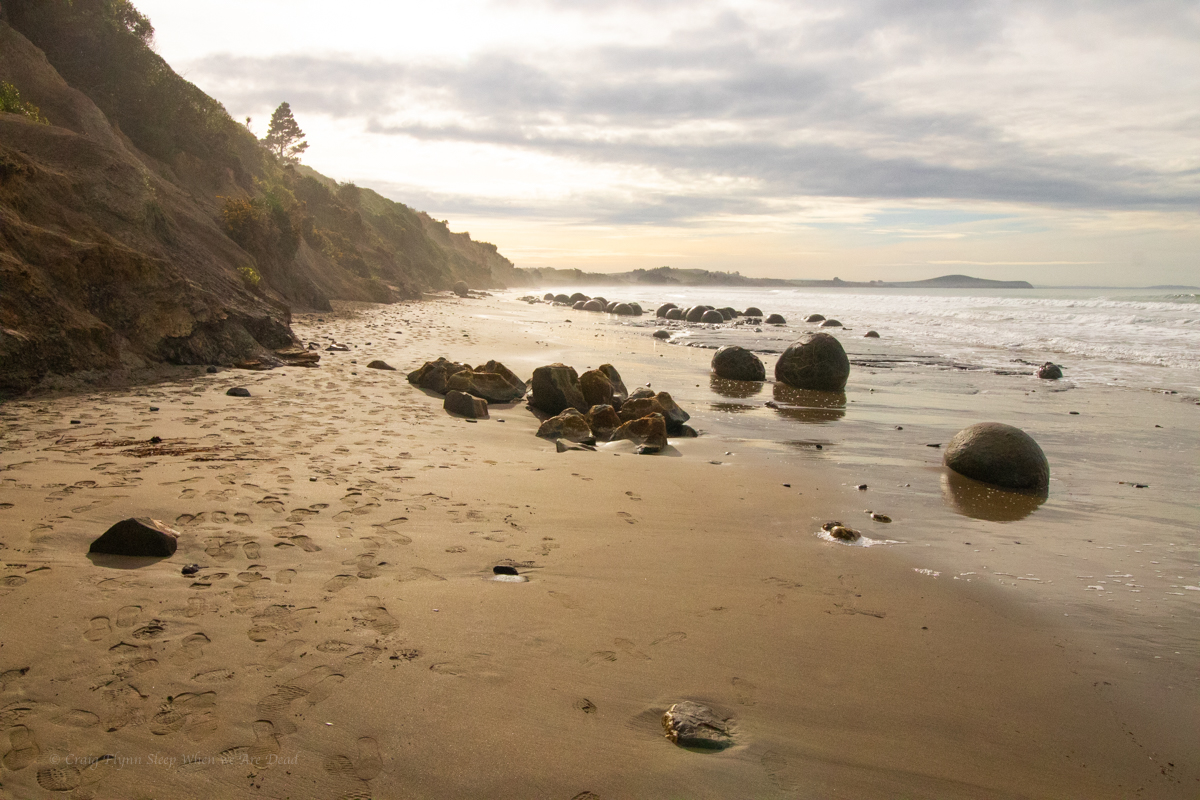
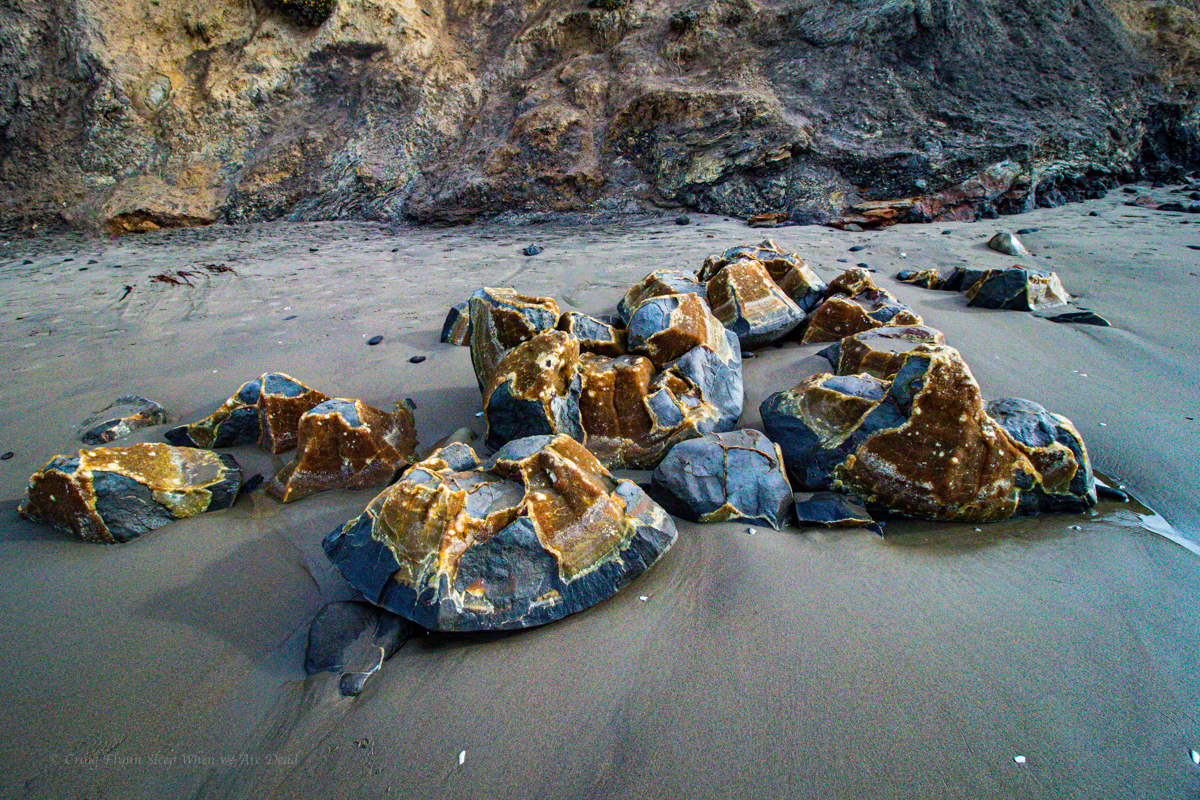
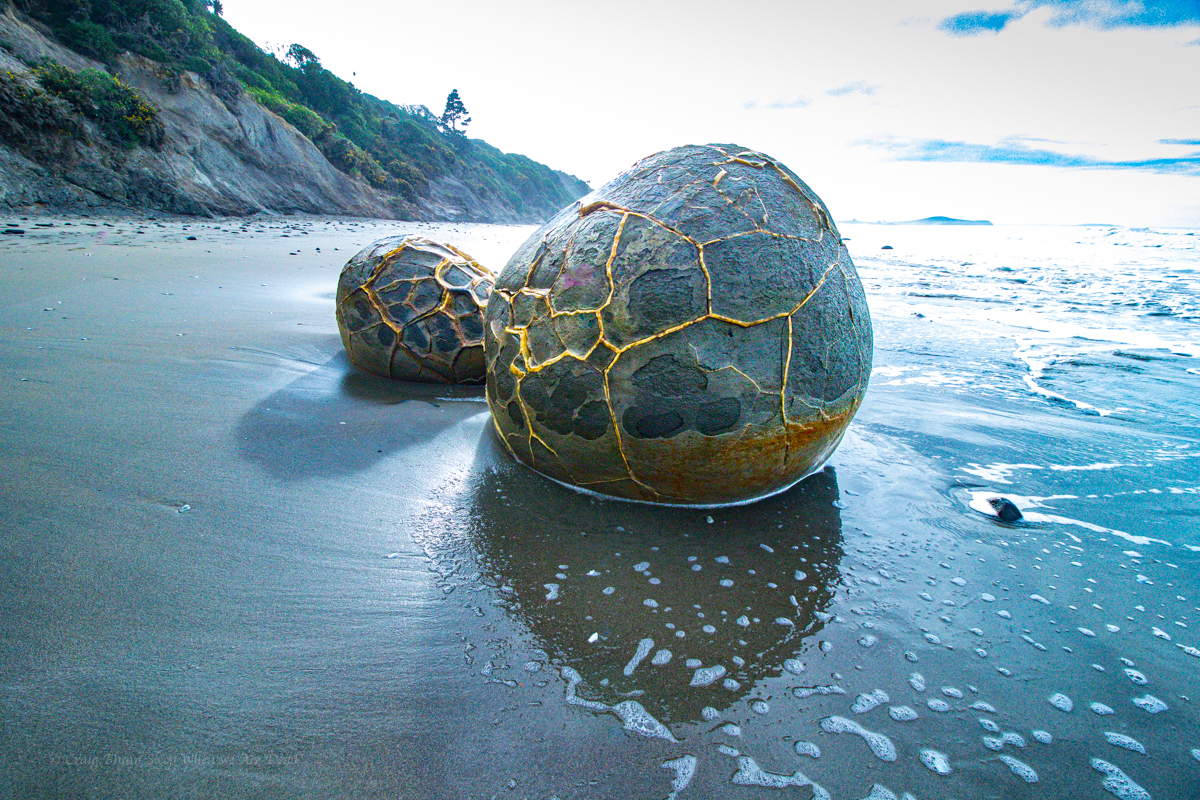
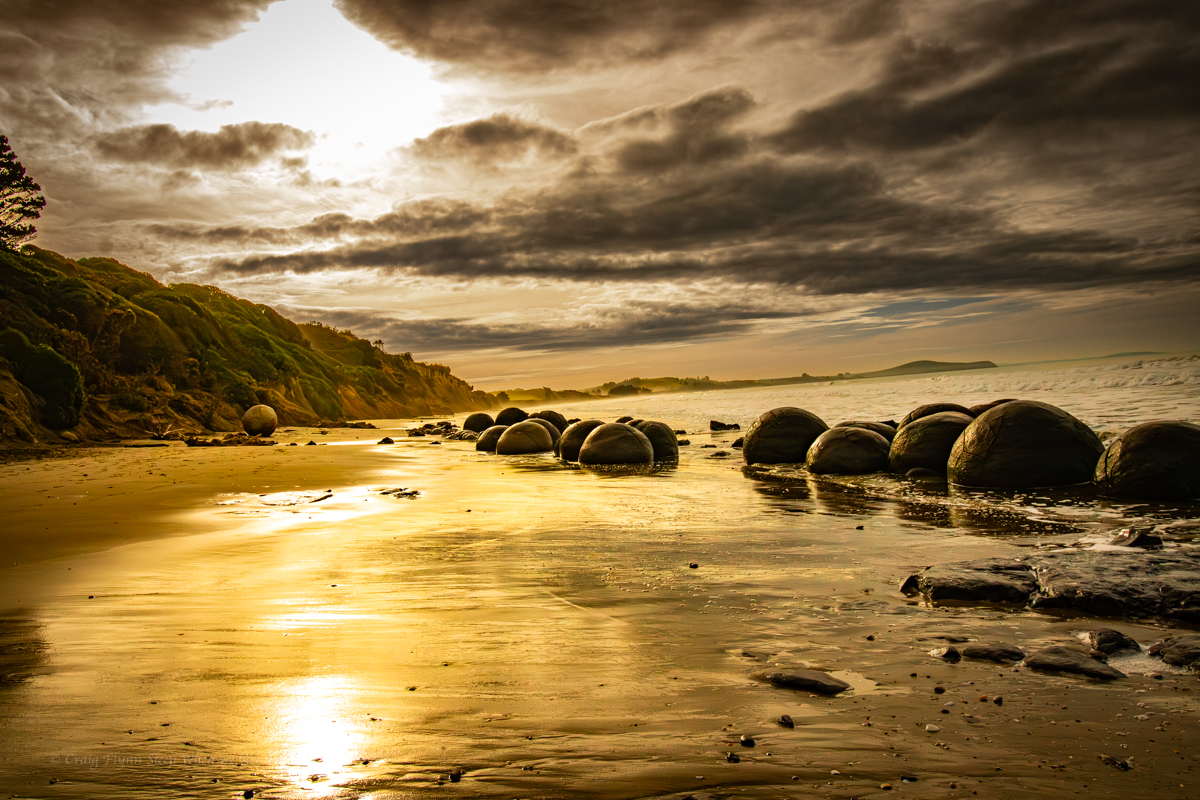
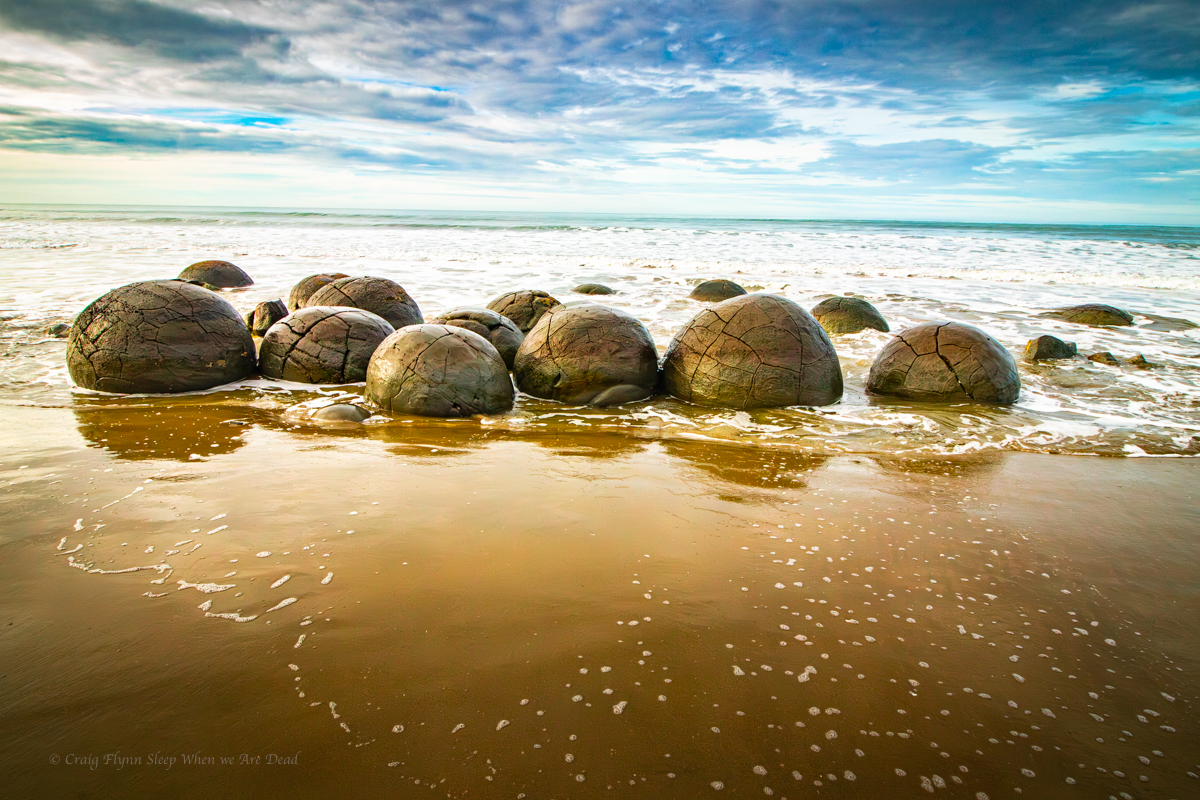
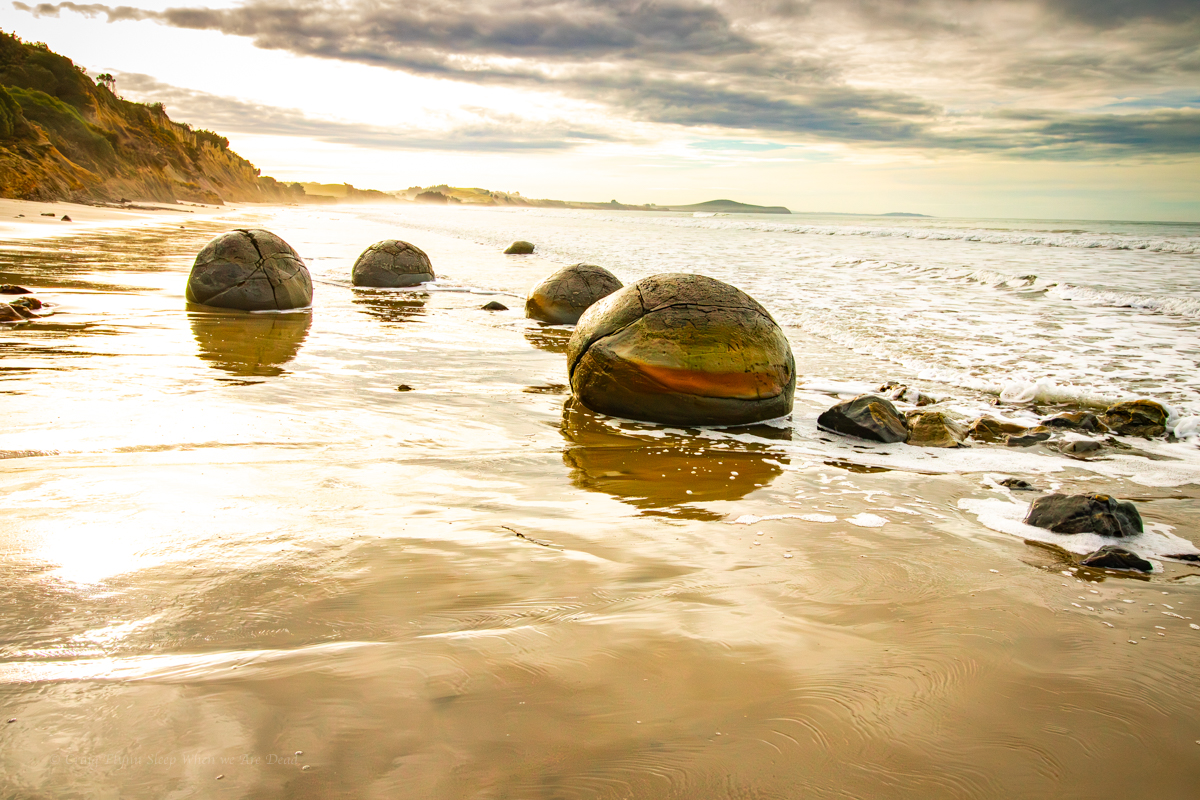
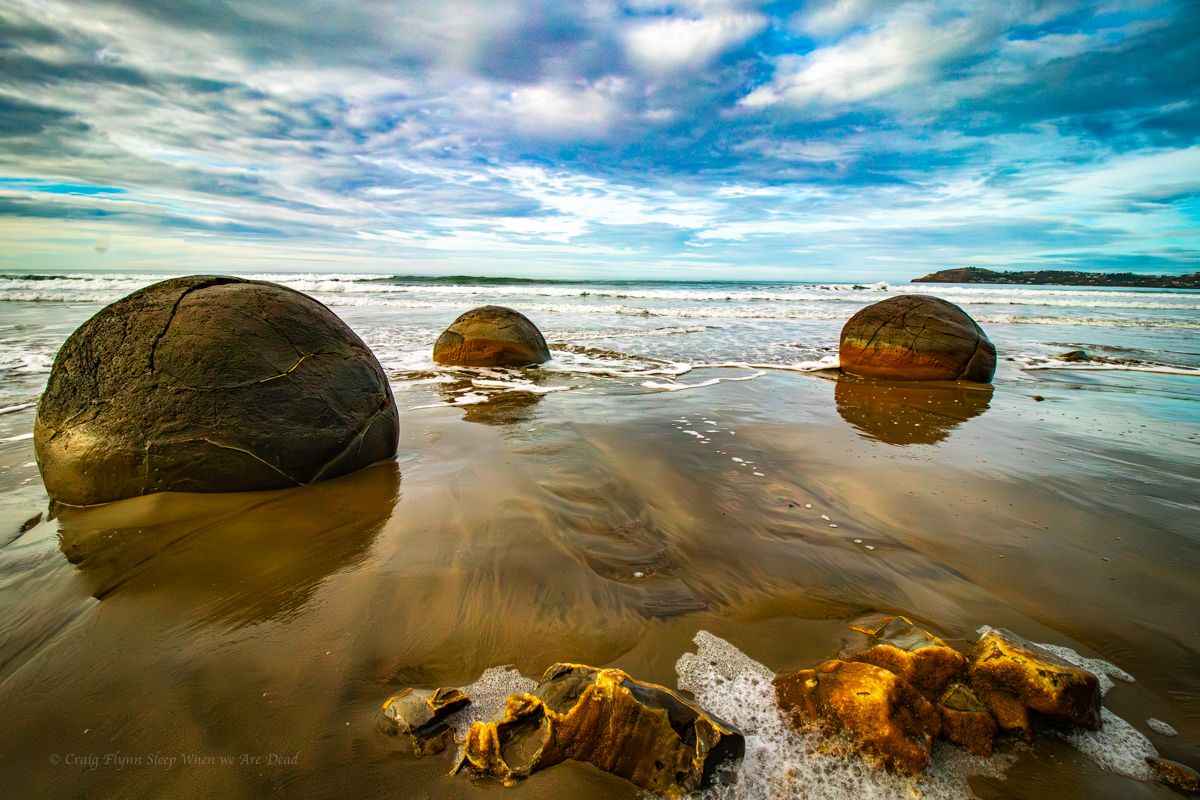
Time move son and the softer mudstone or sandstone is eroded from around the harder nodule leaving behind big marbles.
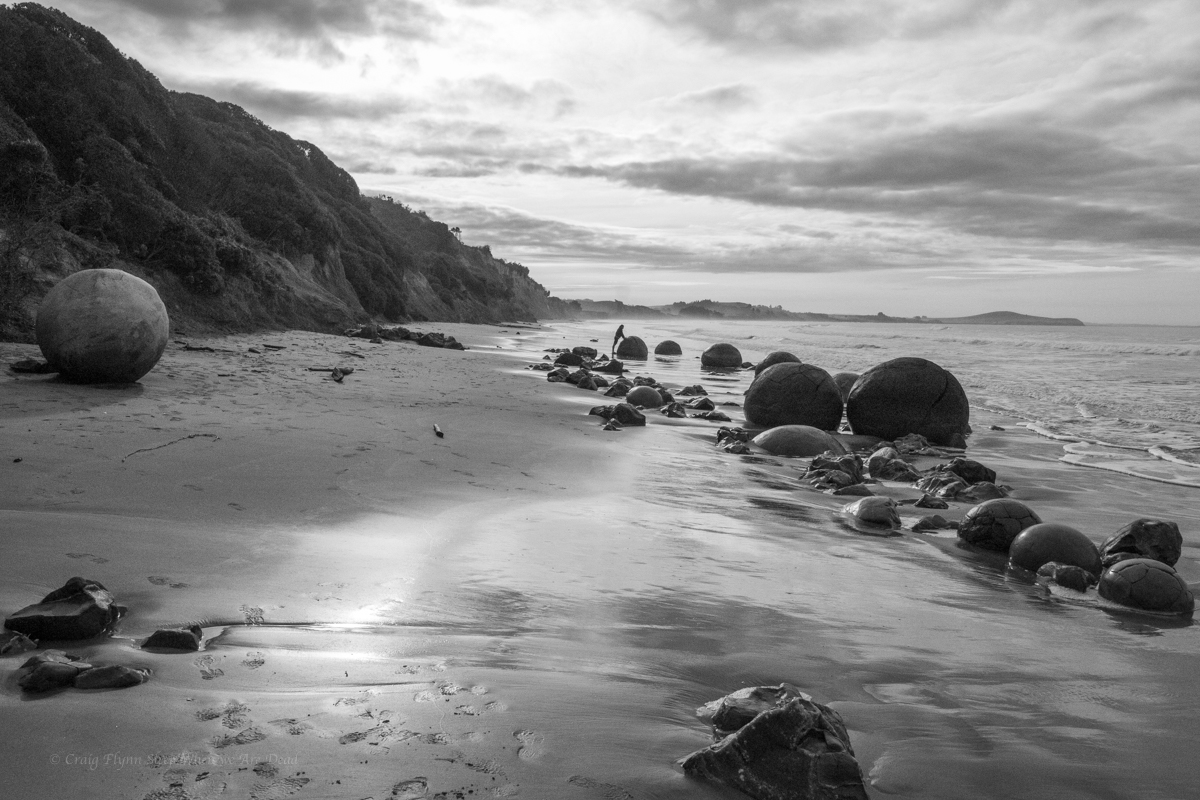
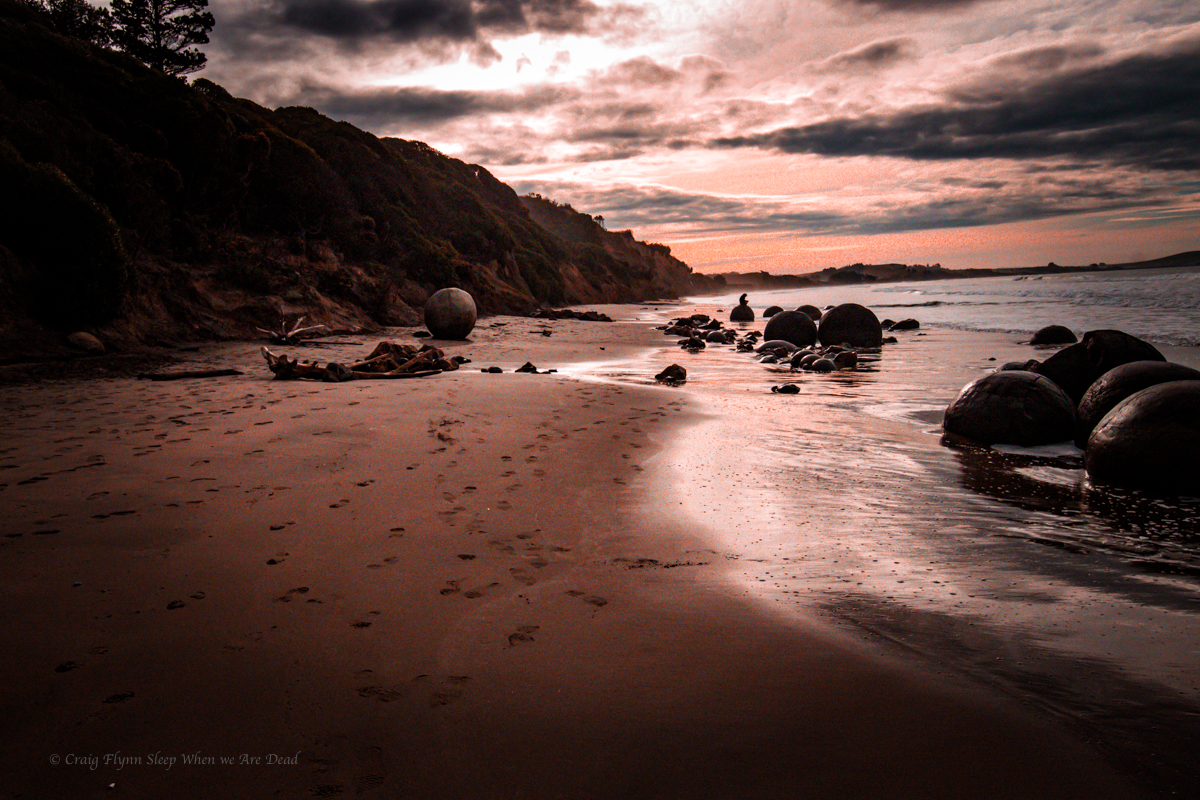
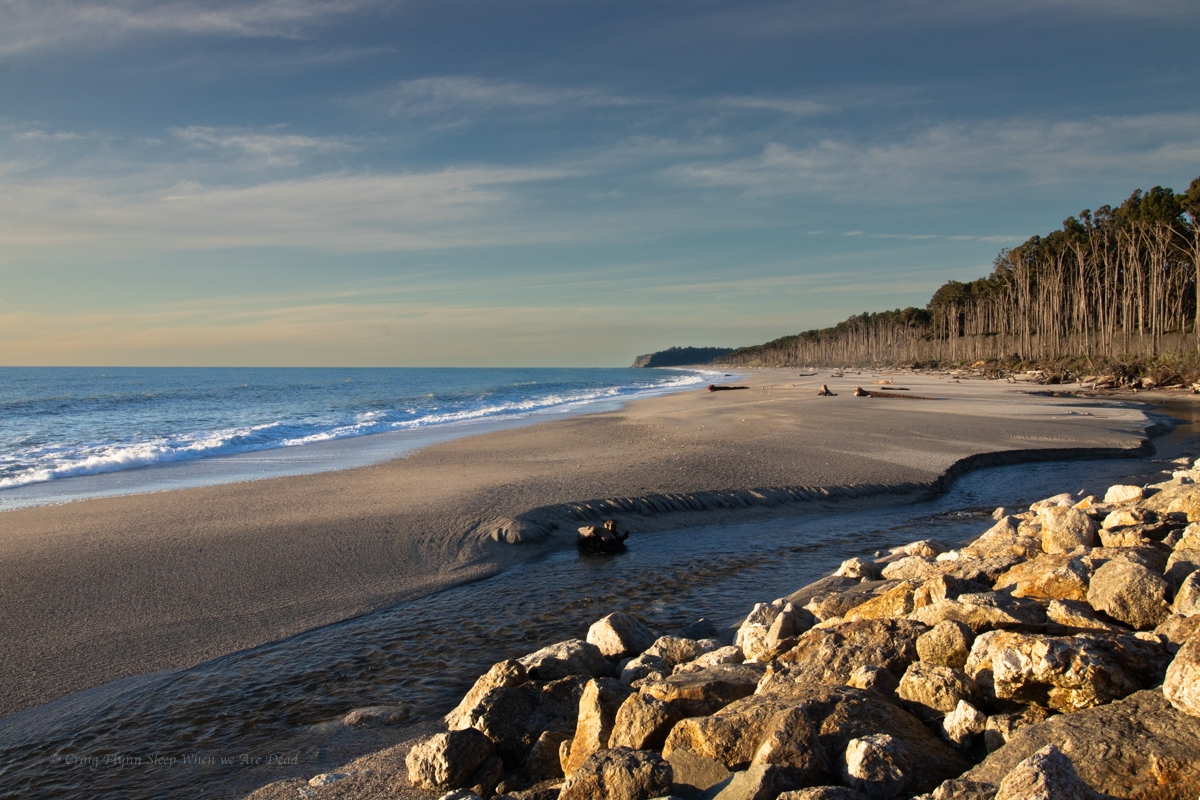
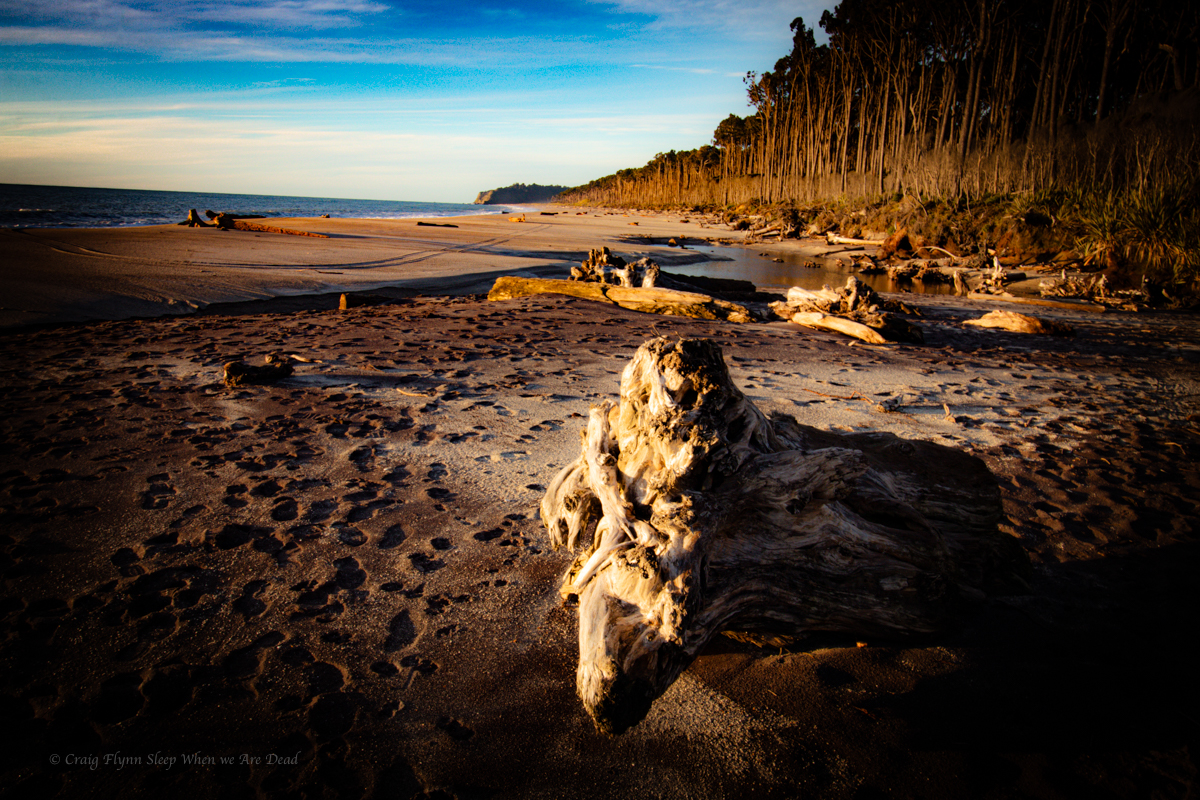
And if that’s not impressive enough to make you want to check them out. Well they are on a spectacular stretch of beach.
And, well
Just look at them!
There are other, similar concretions 20km south at Shag Point (Teheheh, Shag!) that contain plesiosaur fossils but we are heading north…
And that end’s our New Zealand adventure, for this time. The following day is spent making our way back up to Christchurch, we’ve a plane to catch.
All in all we had a great trip. To recap here’s a list of links to all the awesome stuff we got to see and do.
From Lake Pukaki we back-track and little and head east. There is something we want to check out on the East Coast. On the way we spot tourist signs and make the occasional diversion to check them out.
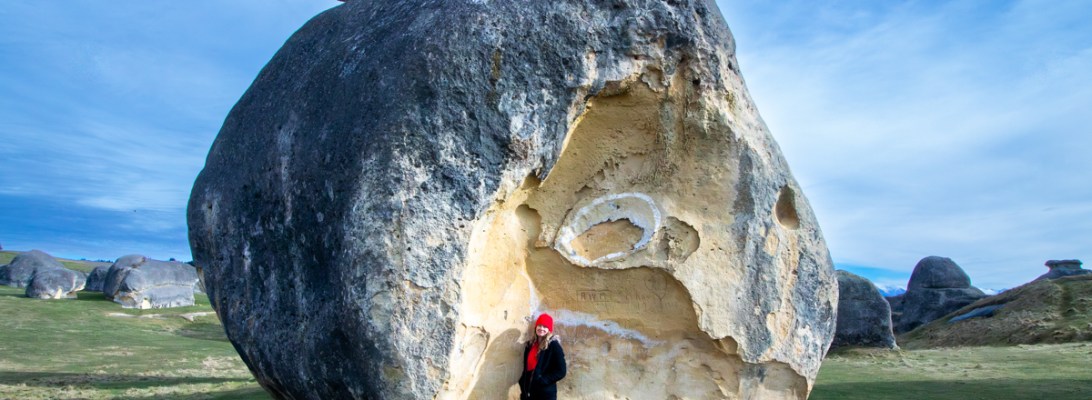
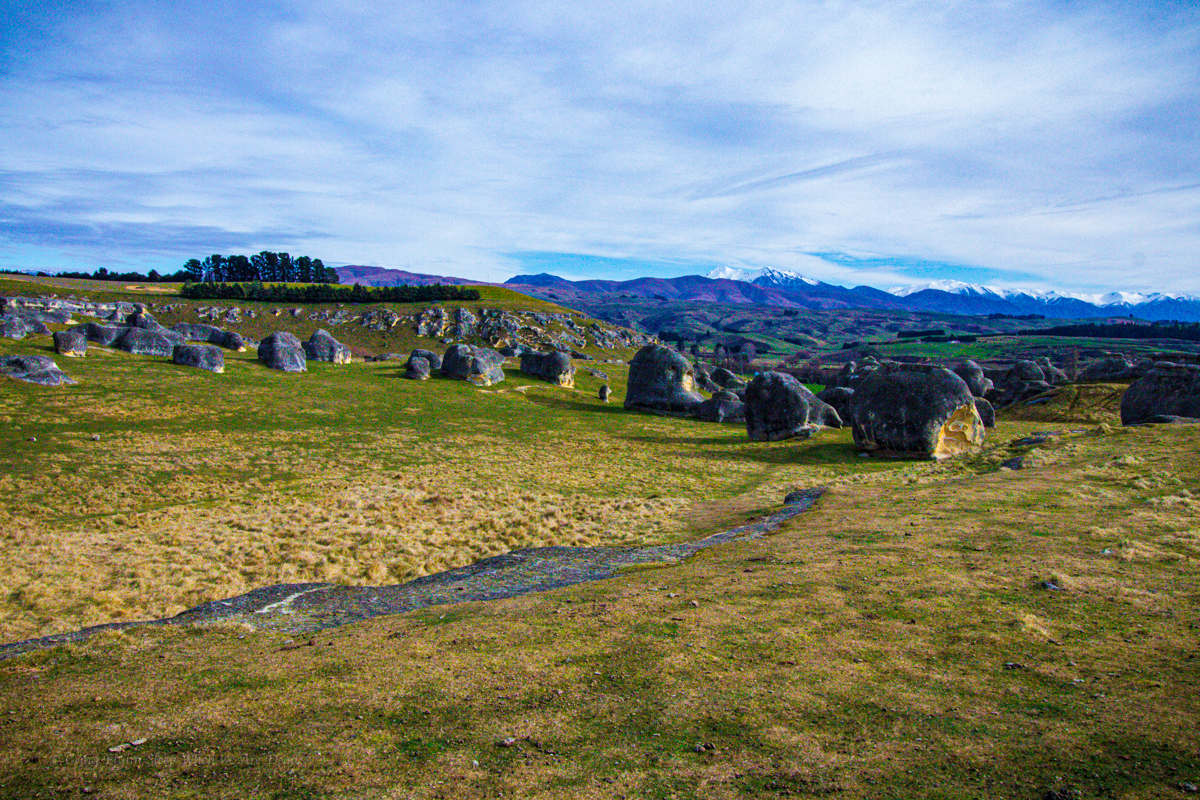
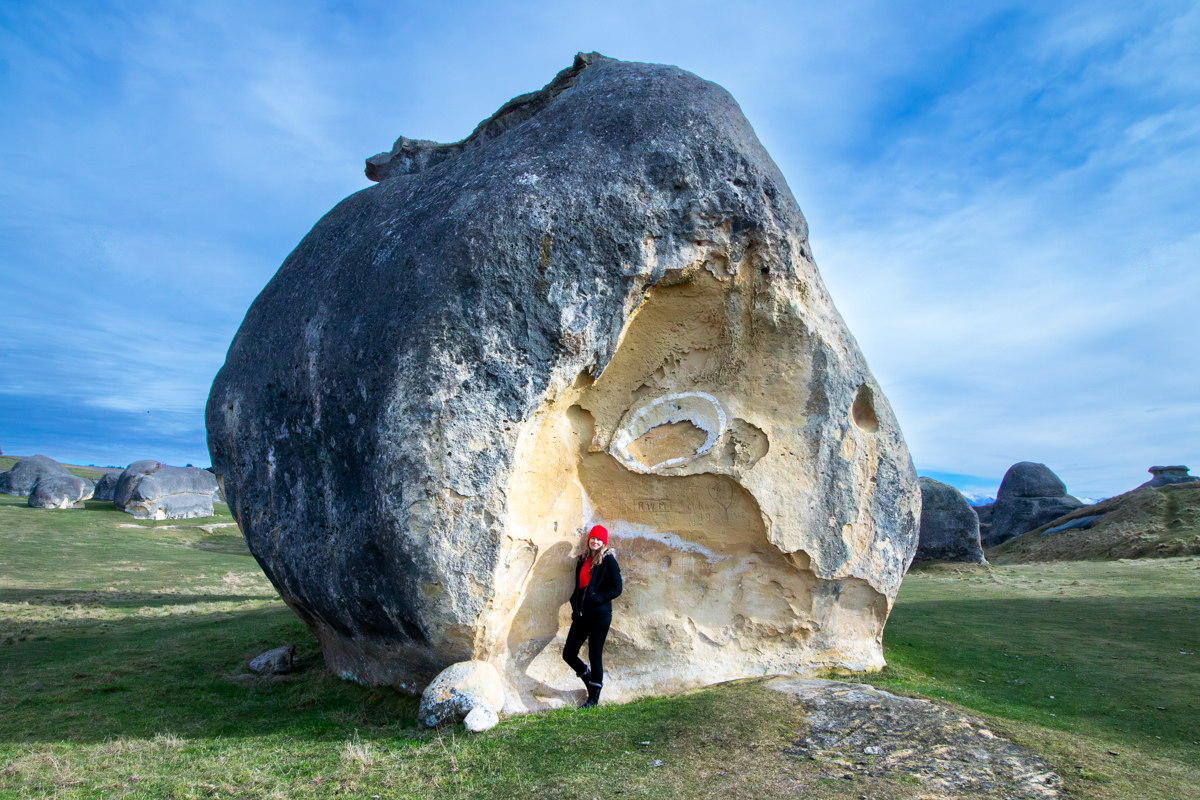
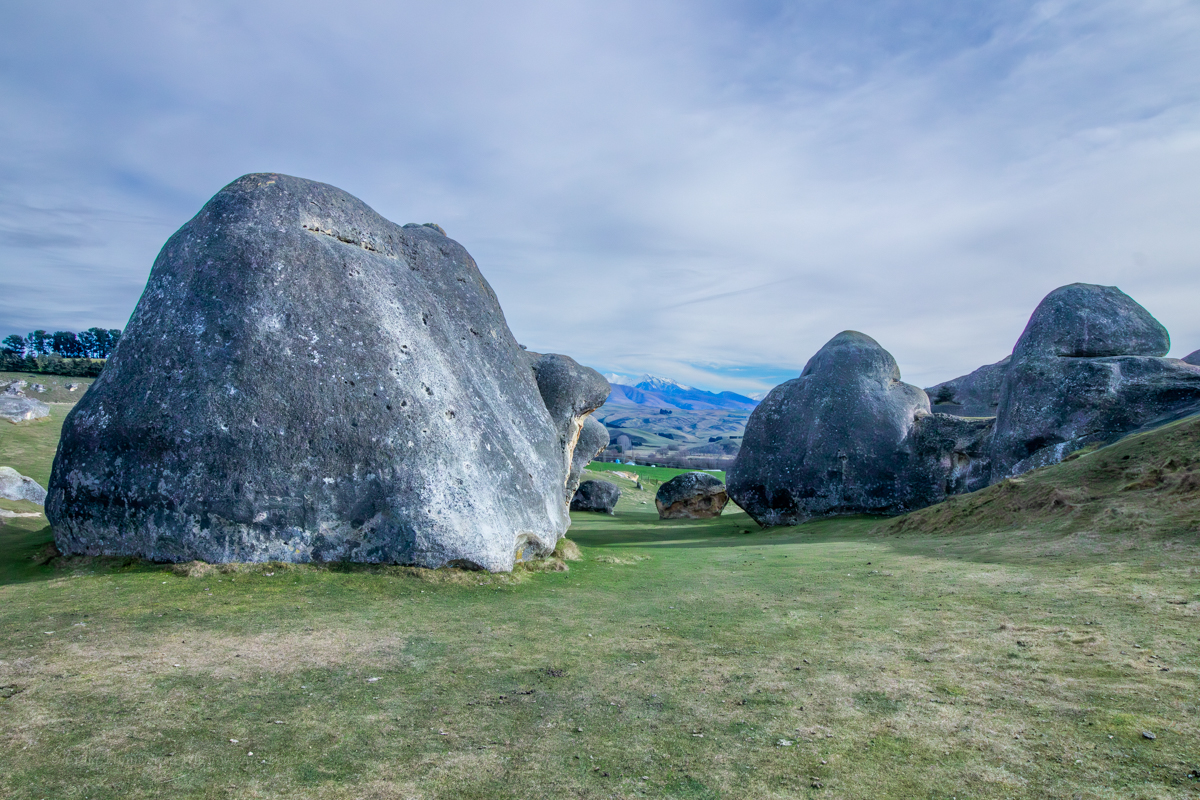
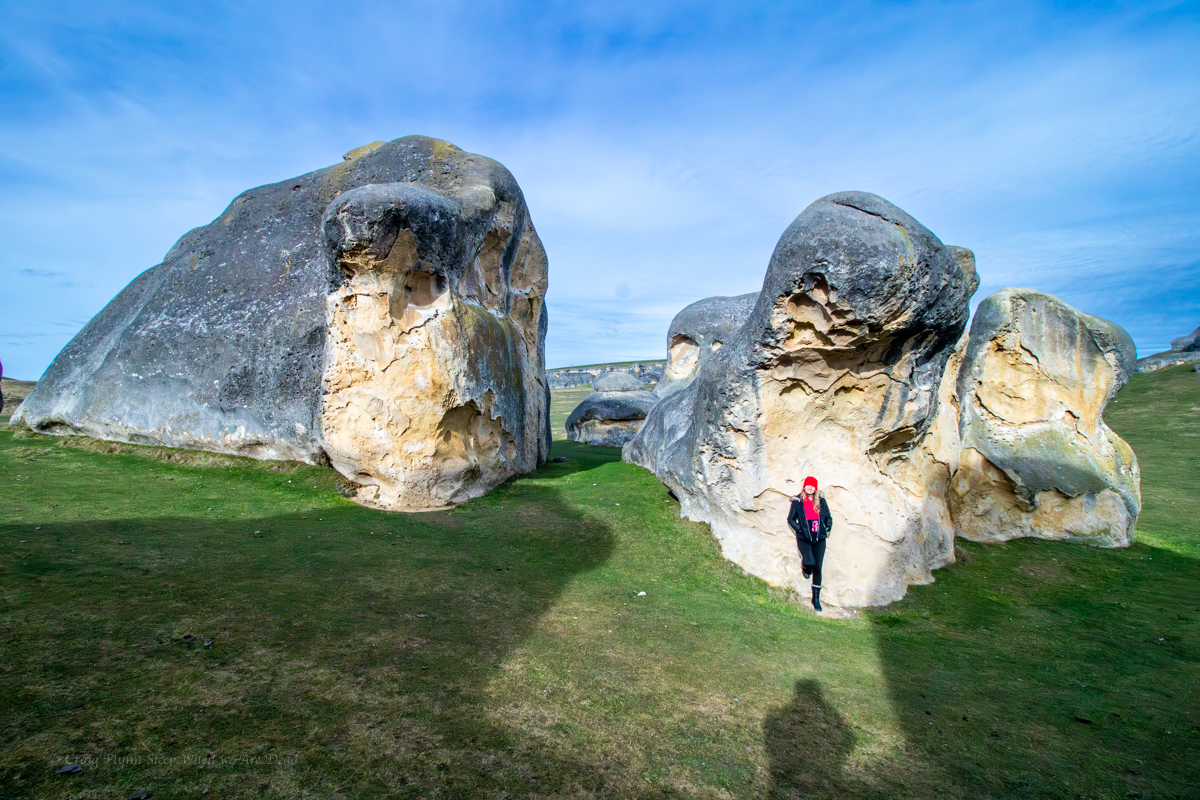
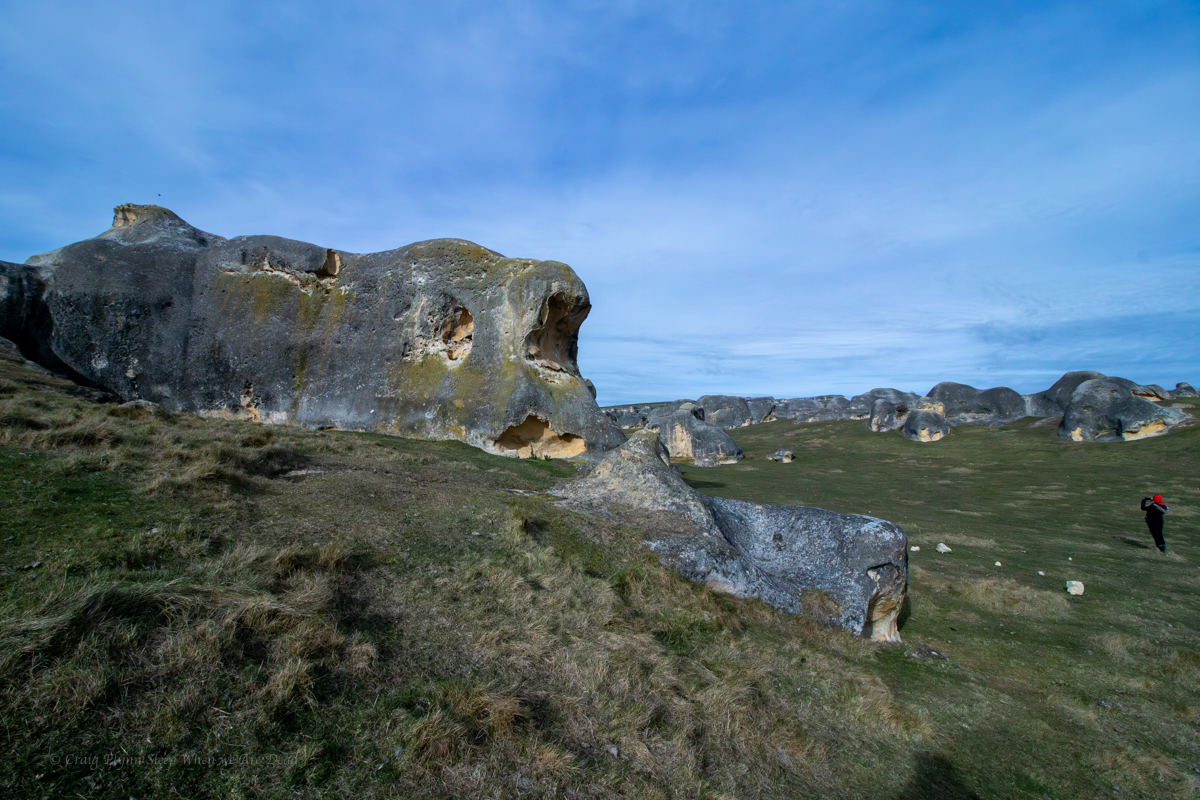
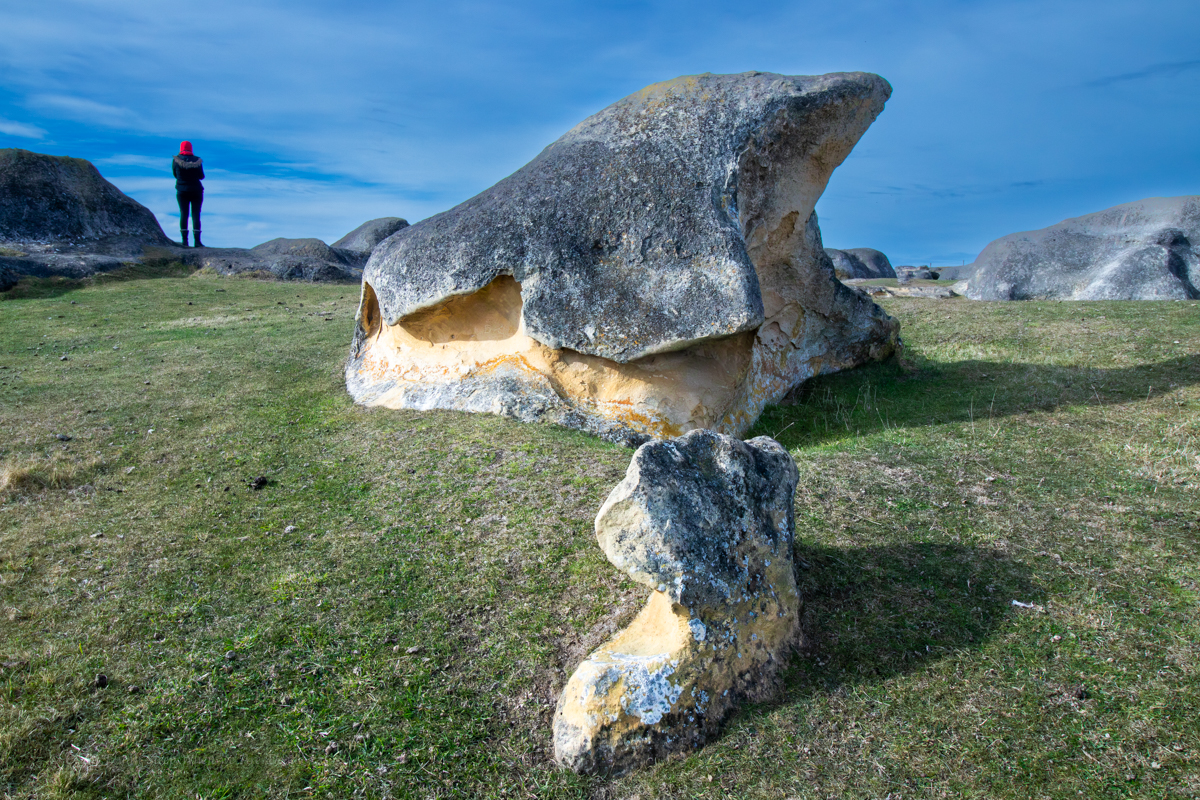
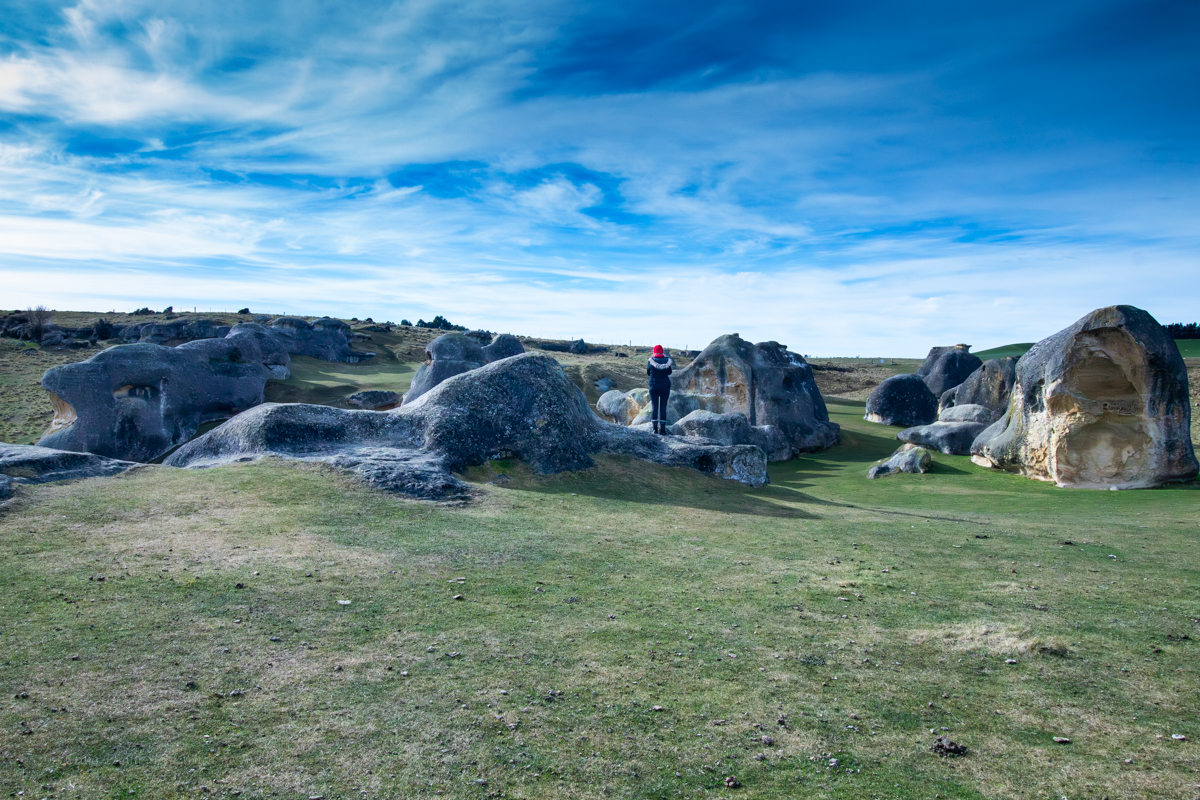
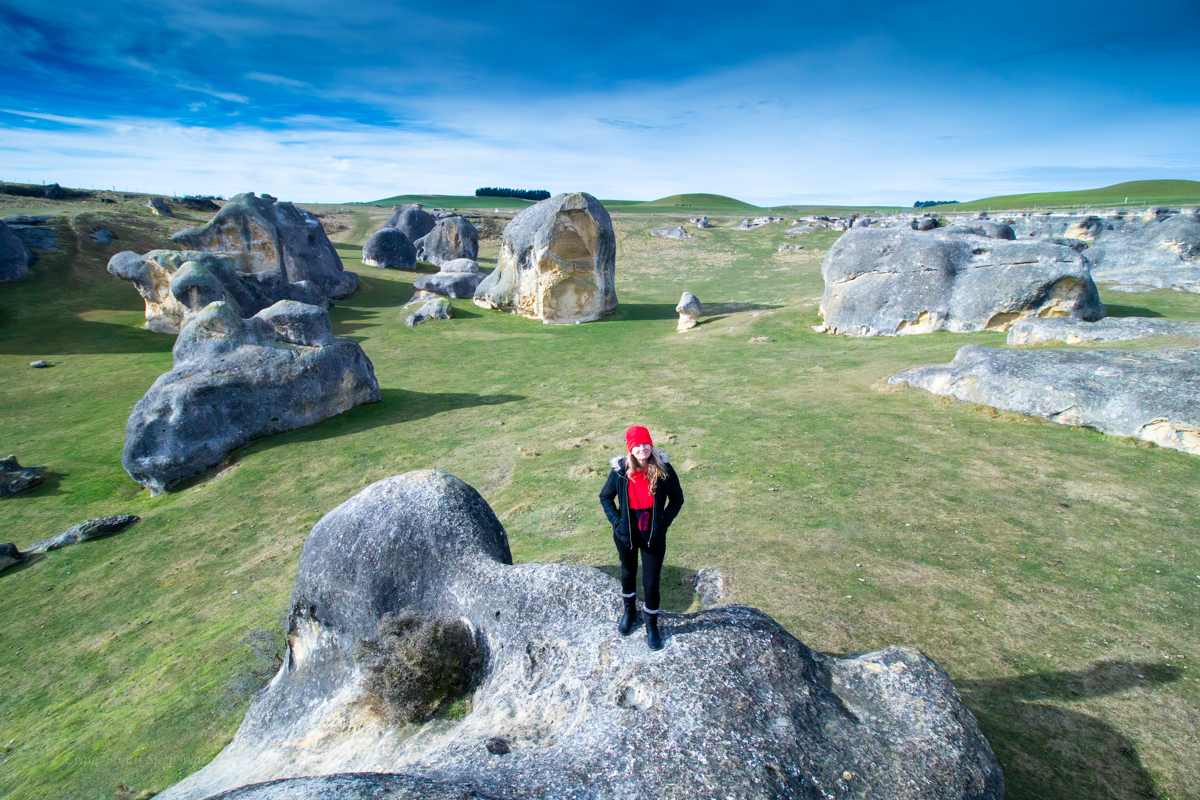
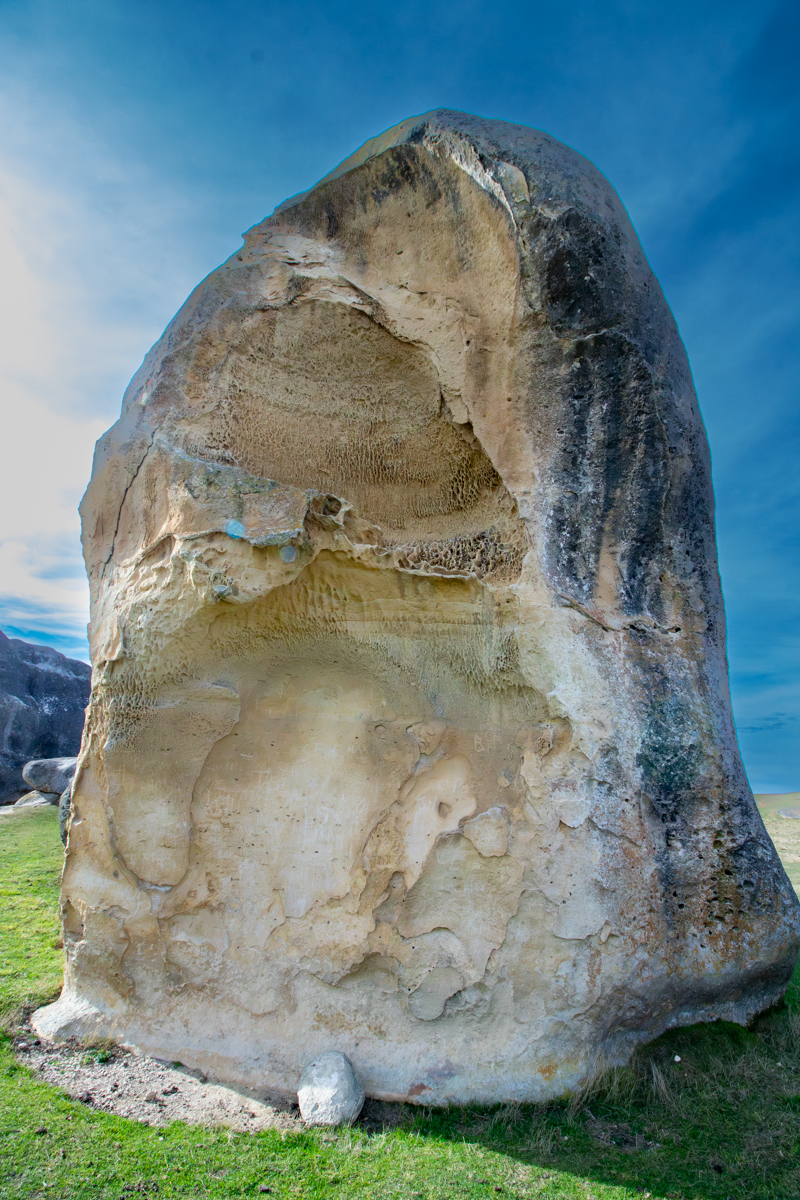
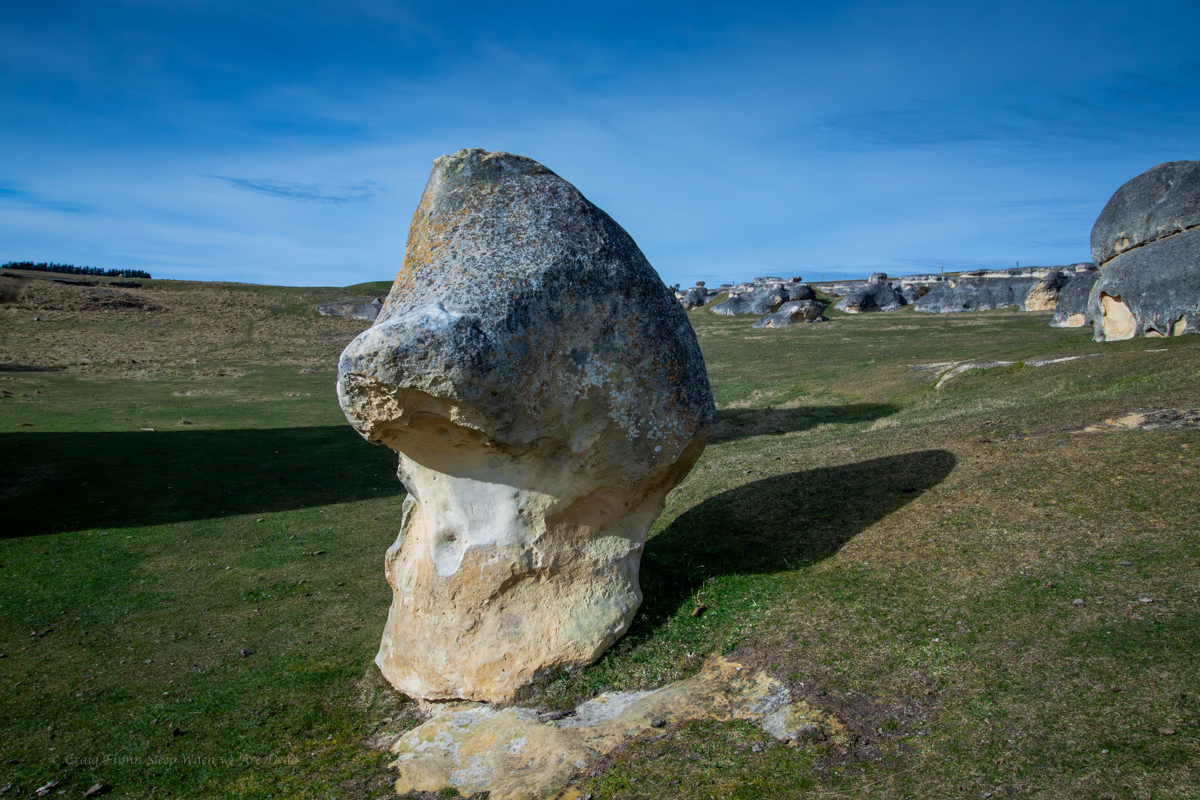
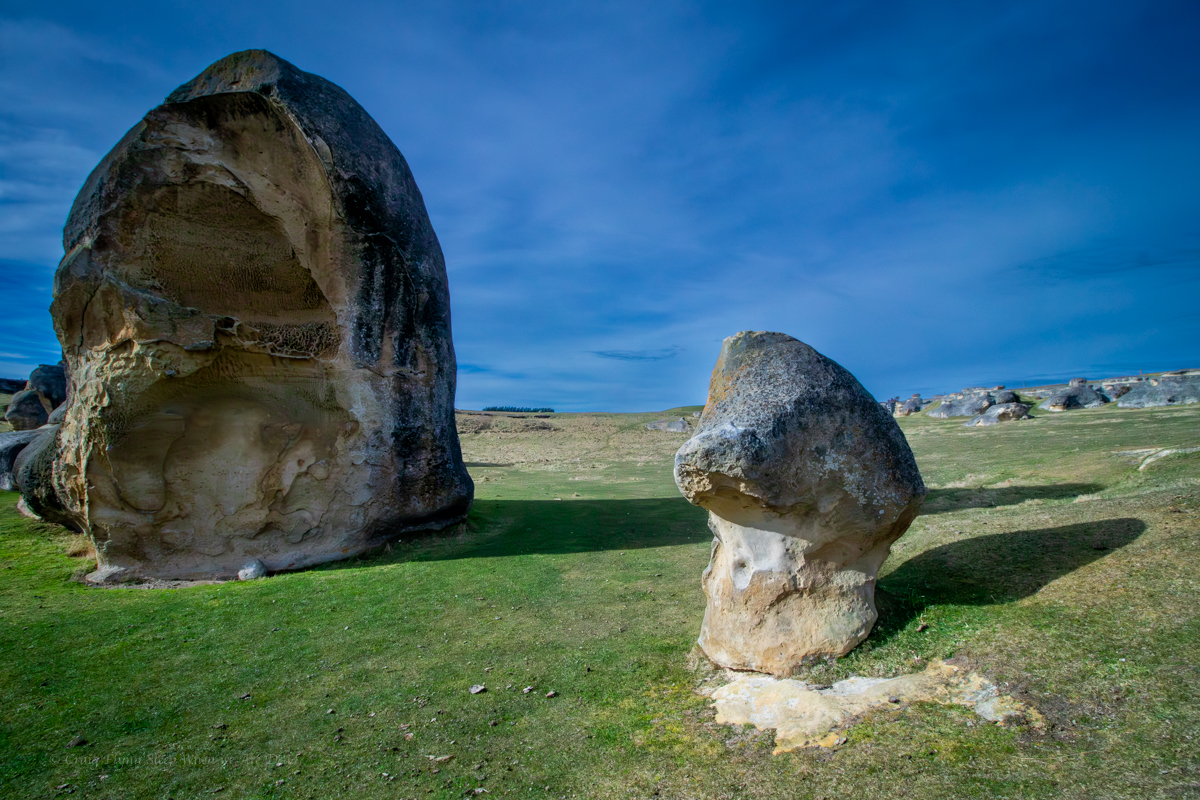
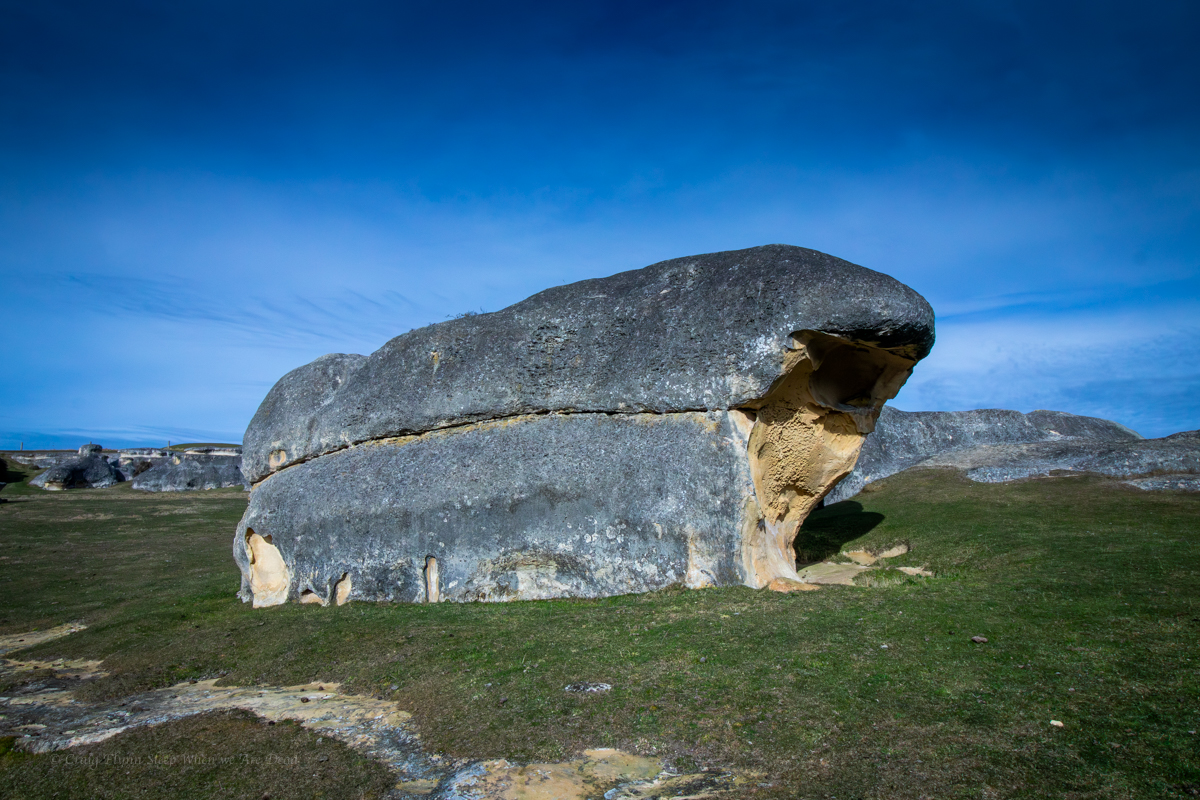
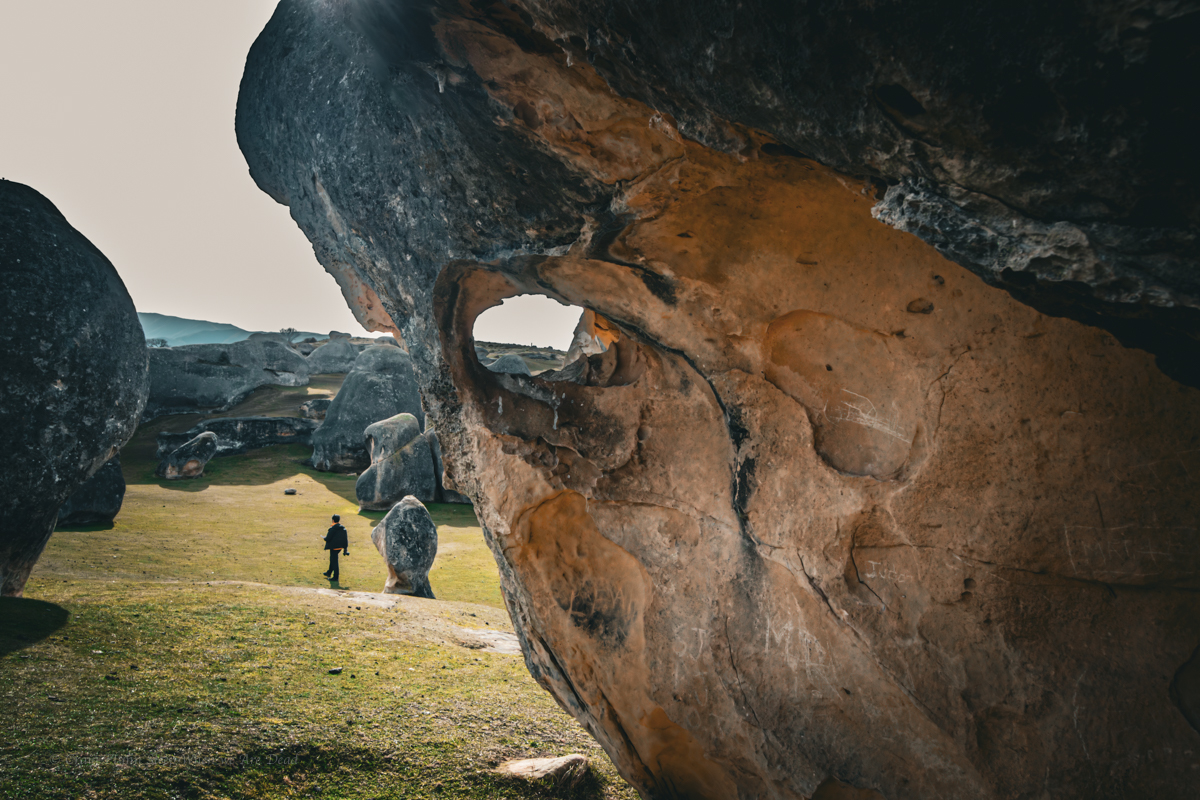
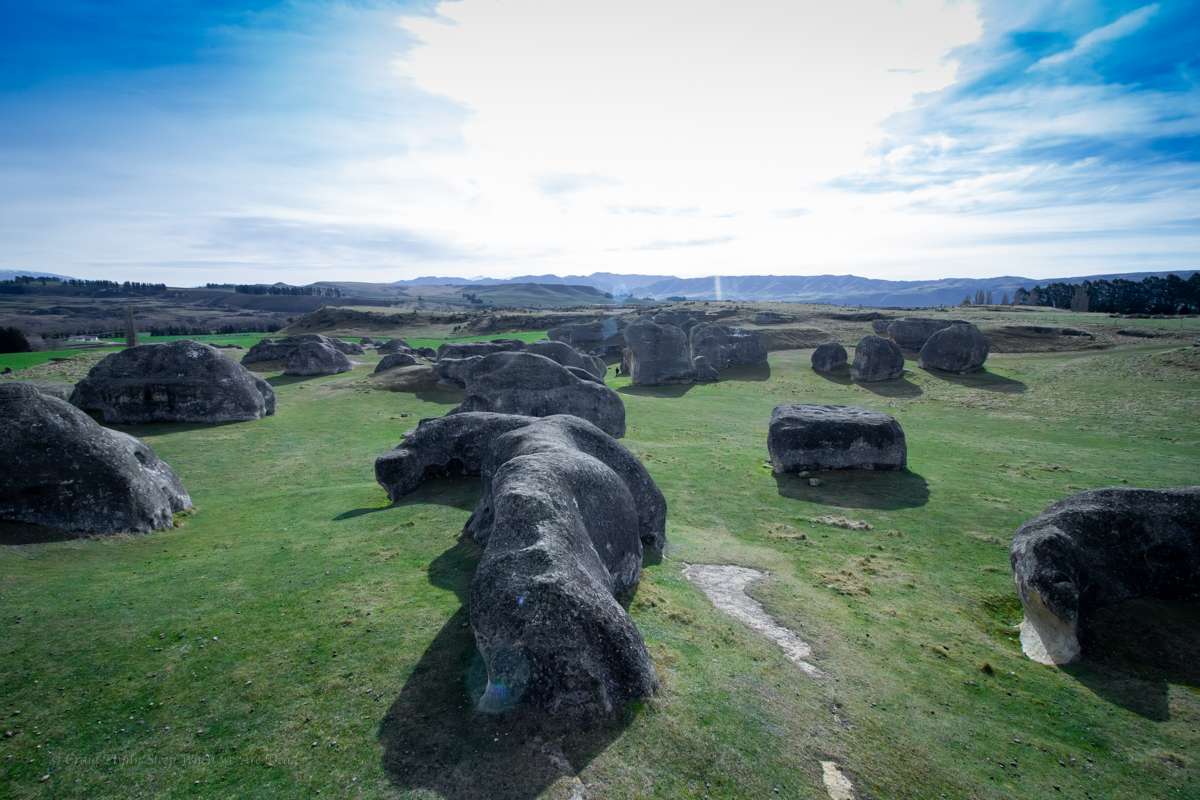
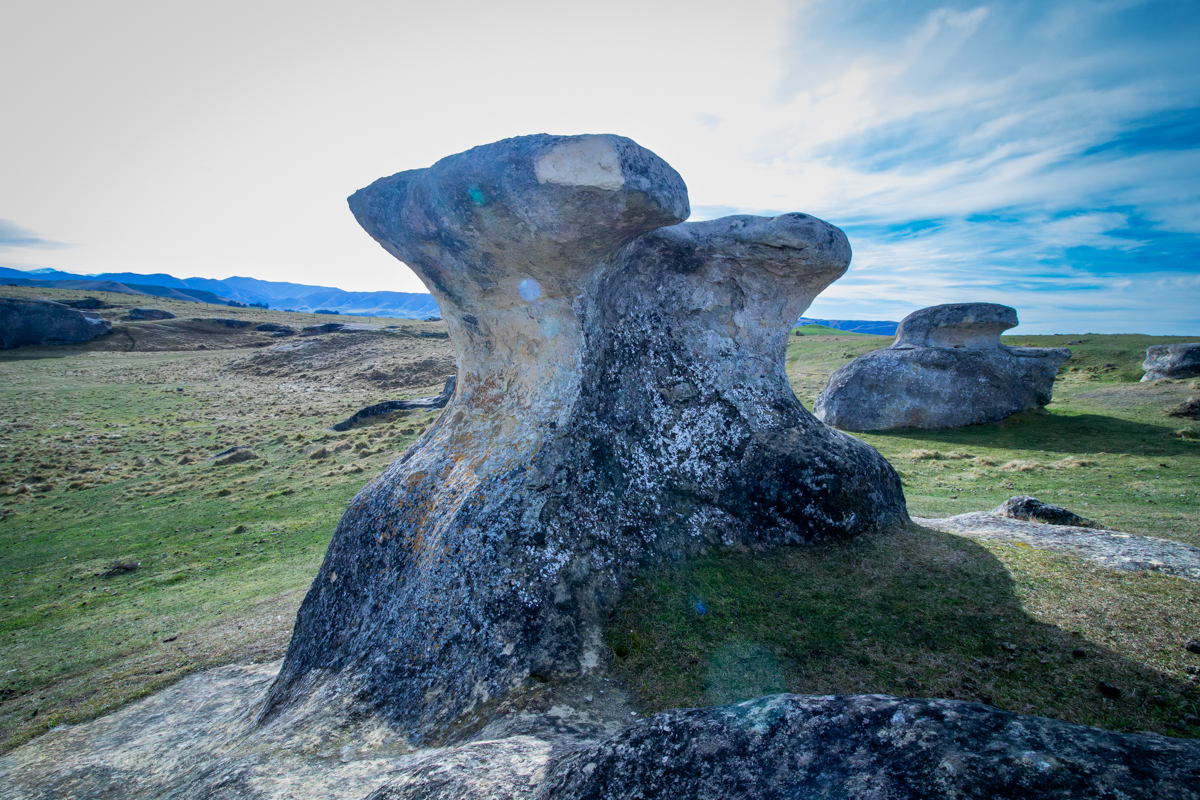
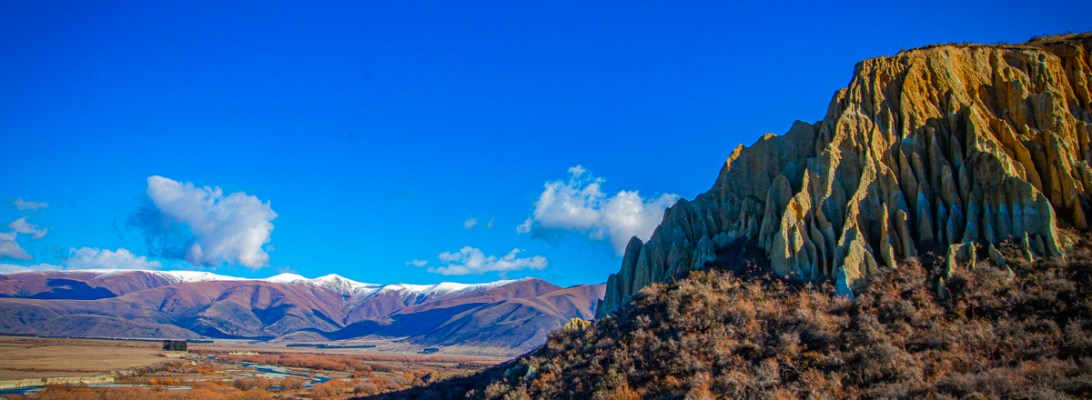
One of the more interesting ones was Elephant Rocks near Duntroon.
Once again these are just in old mates paddock and it’s a honour system donation to enter.
What are they?
Well they are big rocks sticking out of the grass.
More specifically they are the disected remnants of the Otekaike Limestone formation sitting over Oligocene Koloamu Greensand.
That is. Big limestone rocks sticking out of the grass.
The site was used as a filming location for the film version of that famous fantasy book that was filmed in New Zealand.
No, not that one! The Chronicles of Narnia.
The rocks look nothing like Elephants, nor witches, lions or wardrobes.
But they are pretty cool.
From here the plan is to push through to the east coast
From Aoraki we head down the valley to Lake Pukaki.
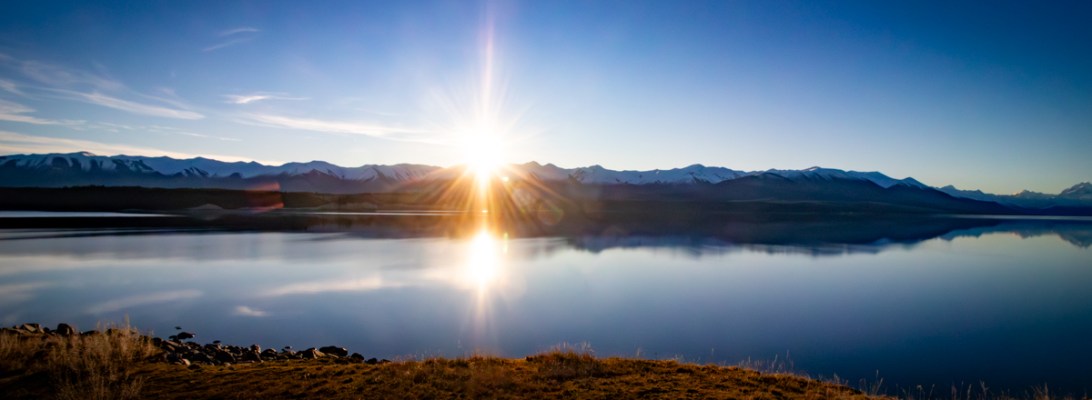
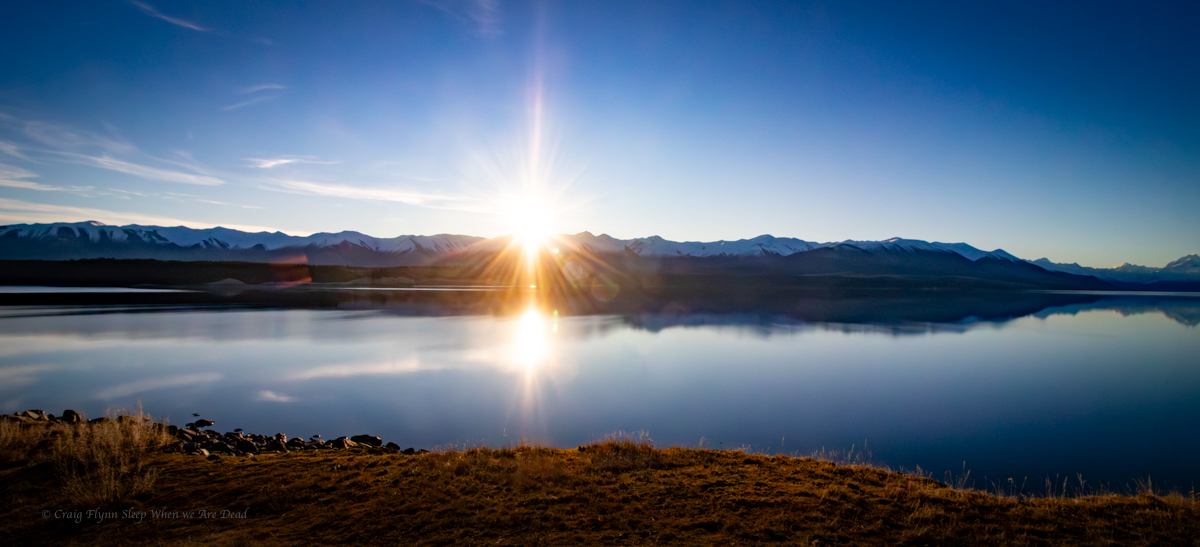
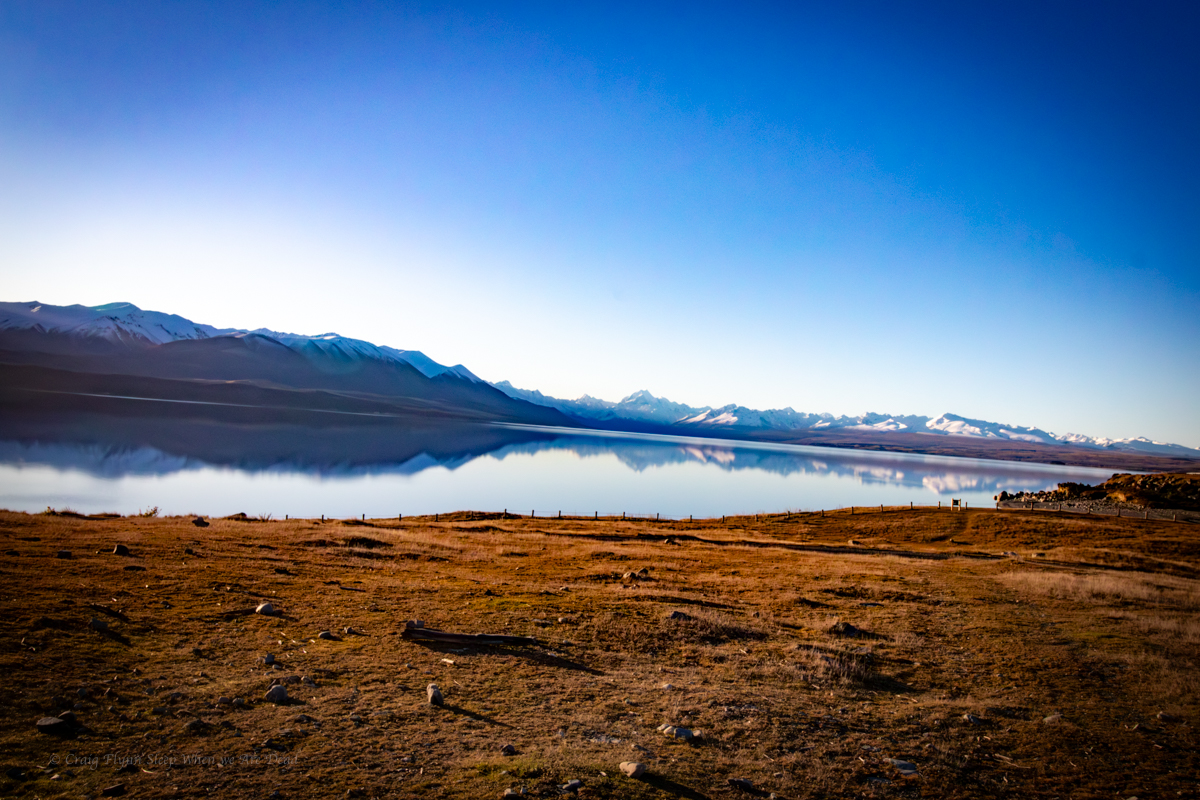
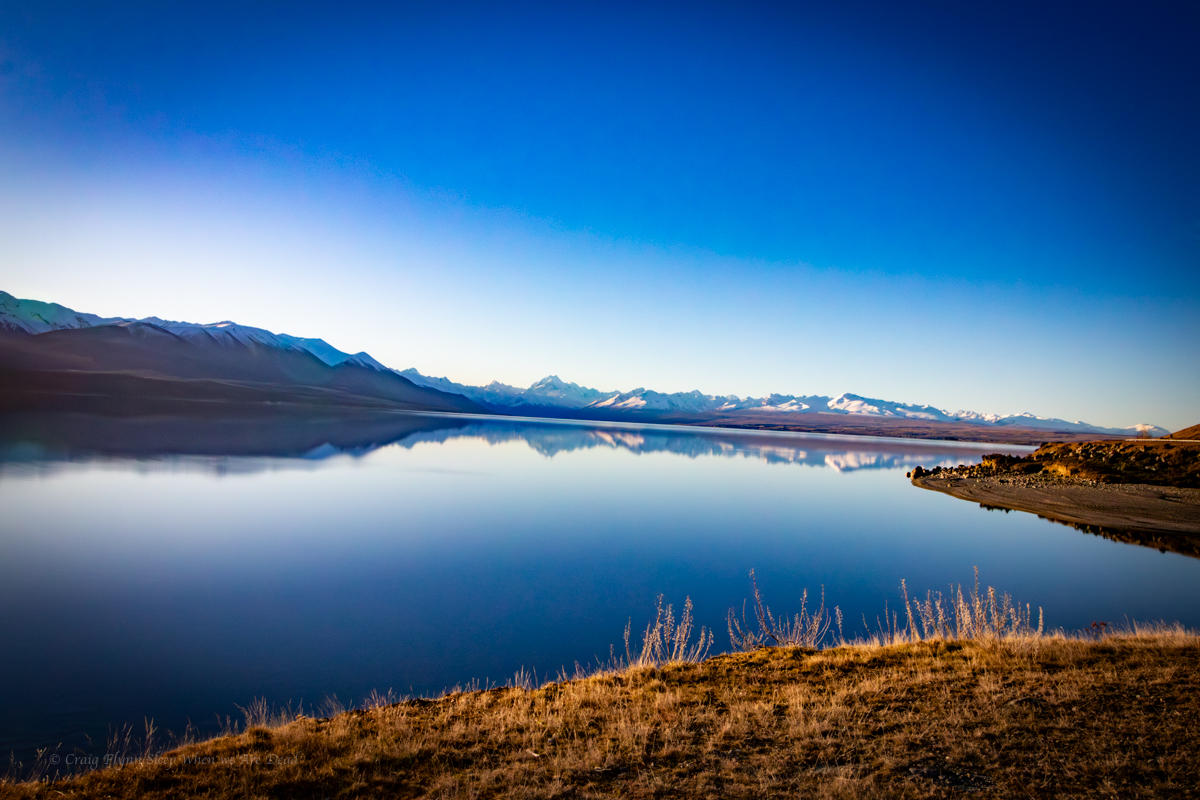
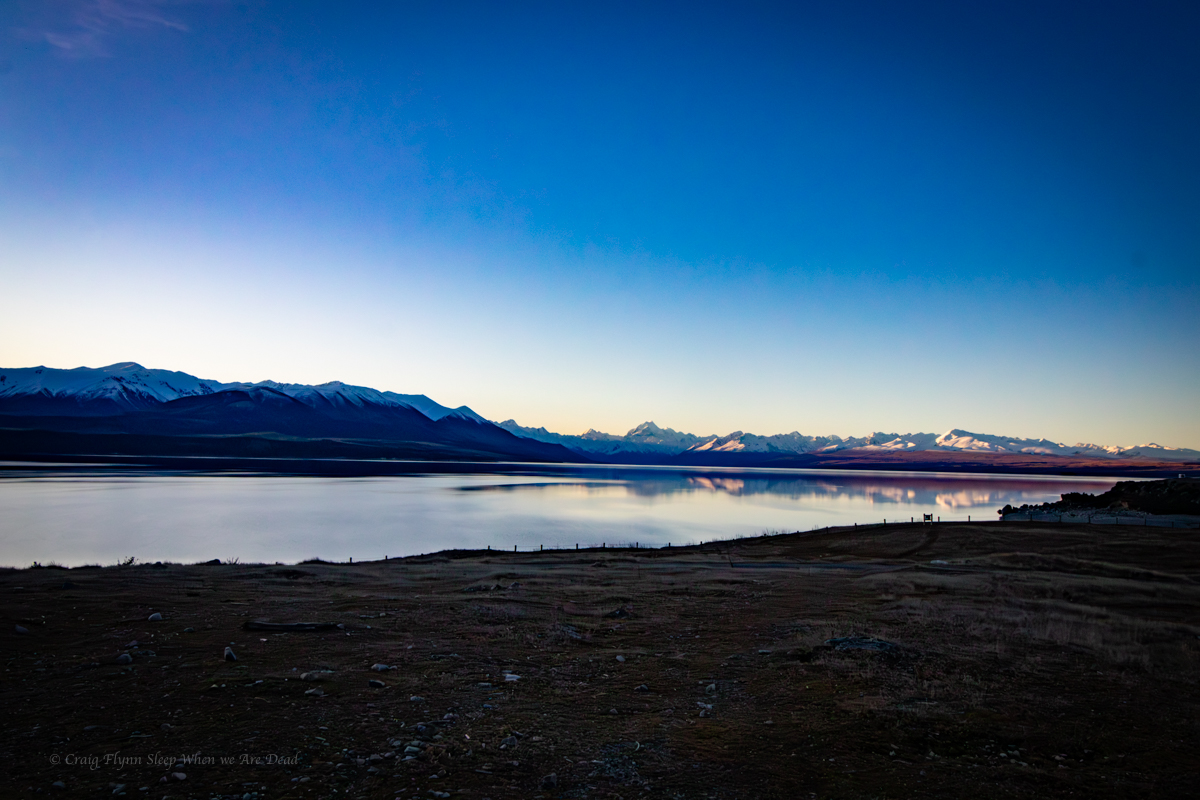
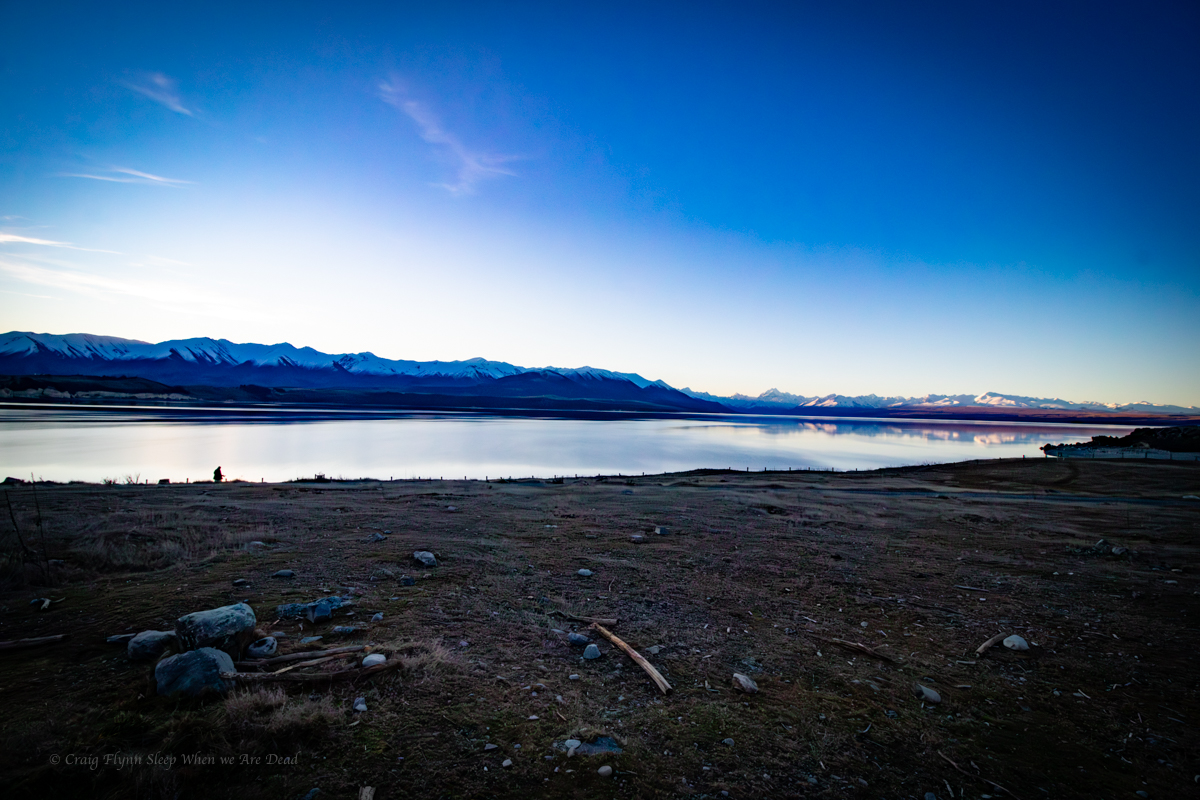
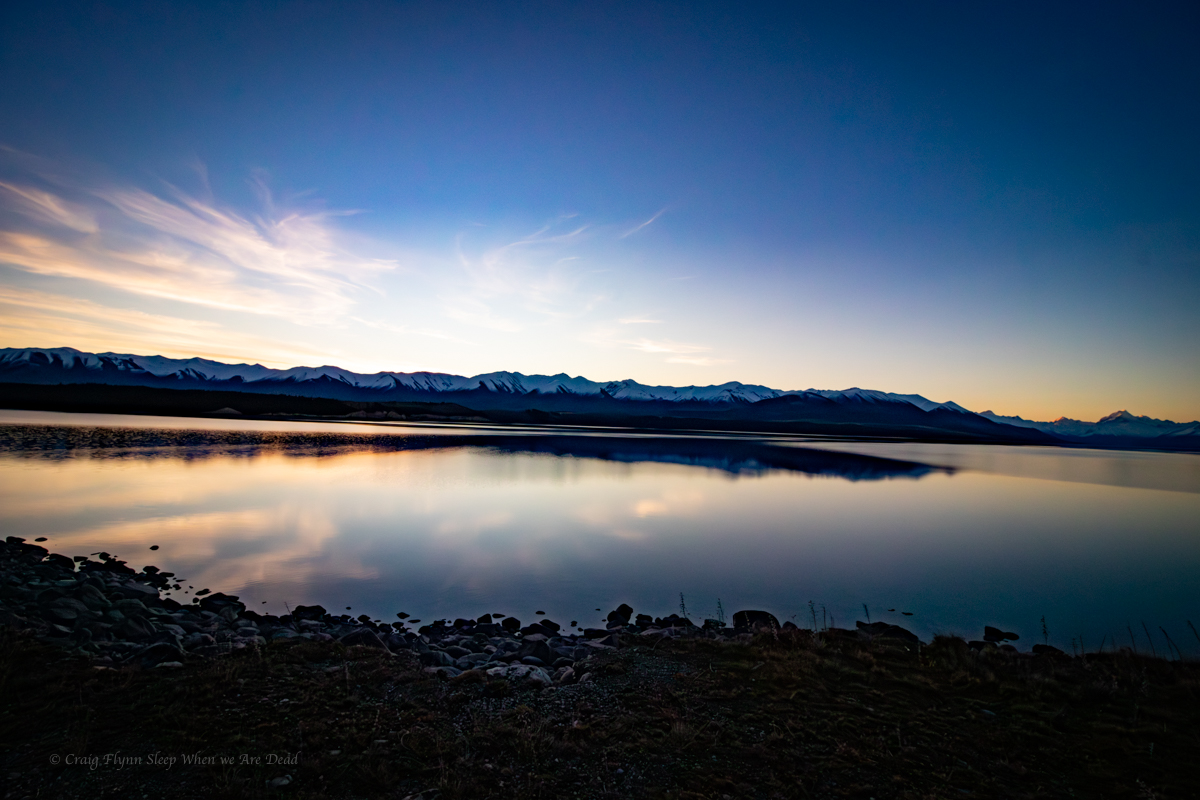
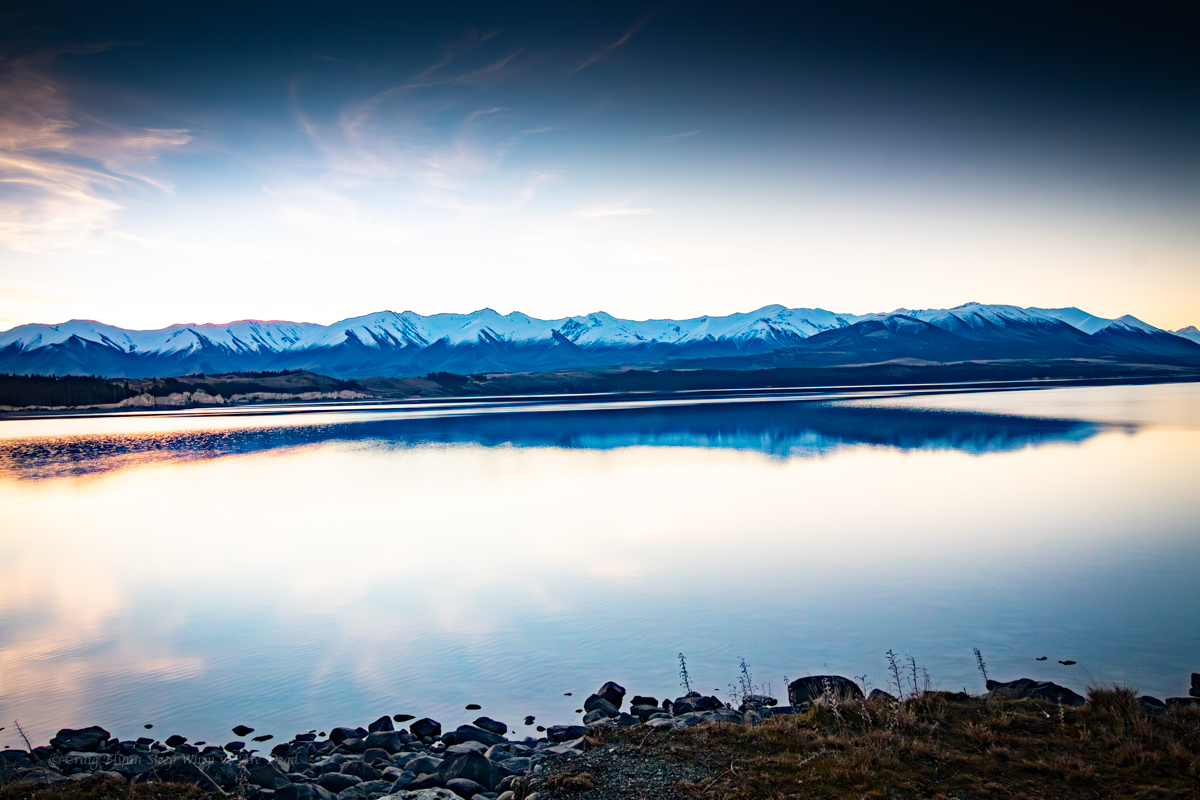
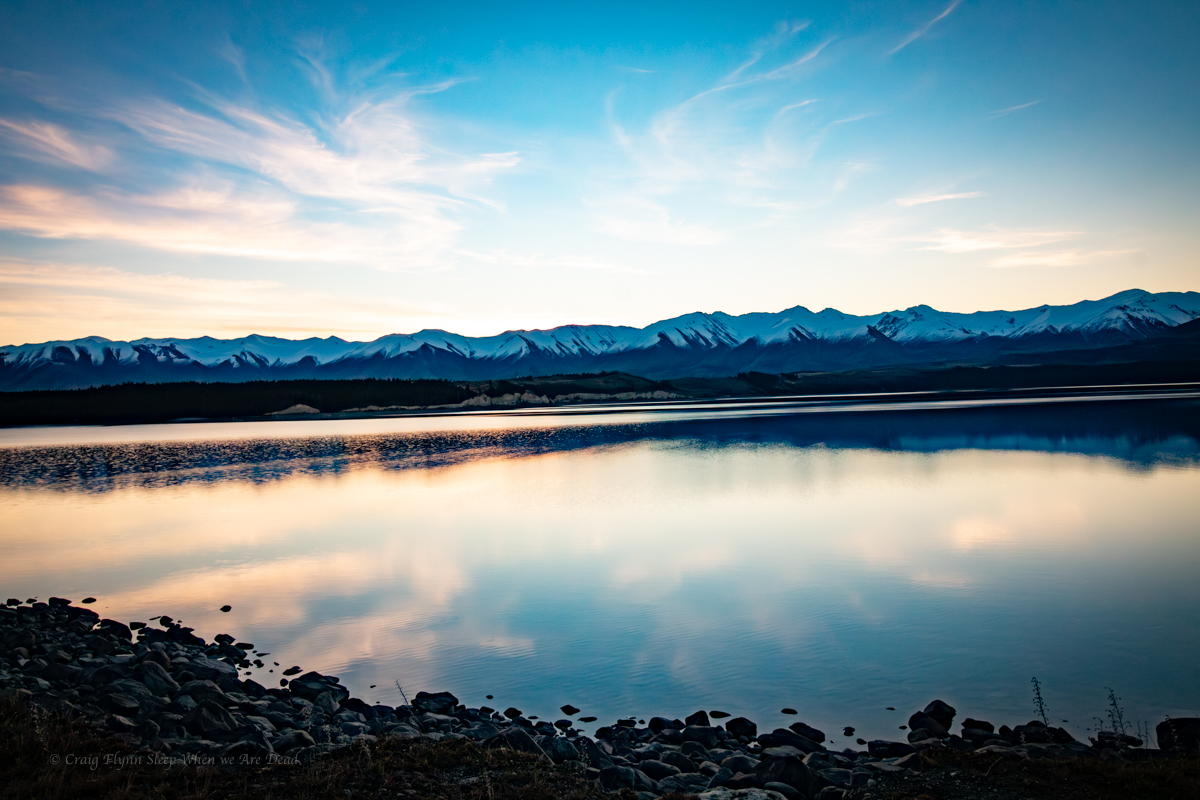
One of the larger freedom camps we’ve come across to date, we set the van up with tremendous views across the expansive lake.
The reflections off the snow capped mountains made great photos with a grand view of the sun set.
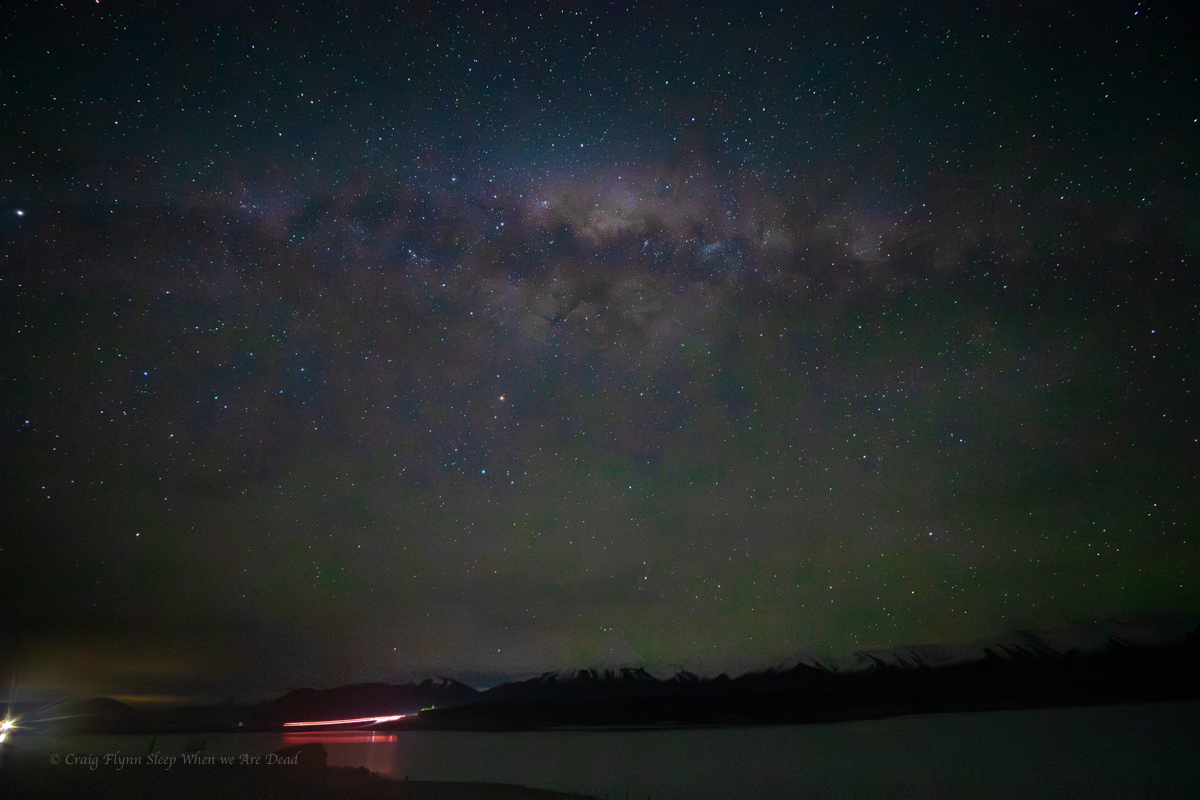
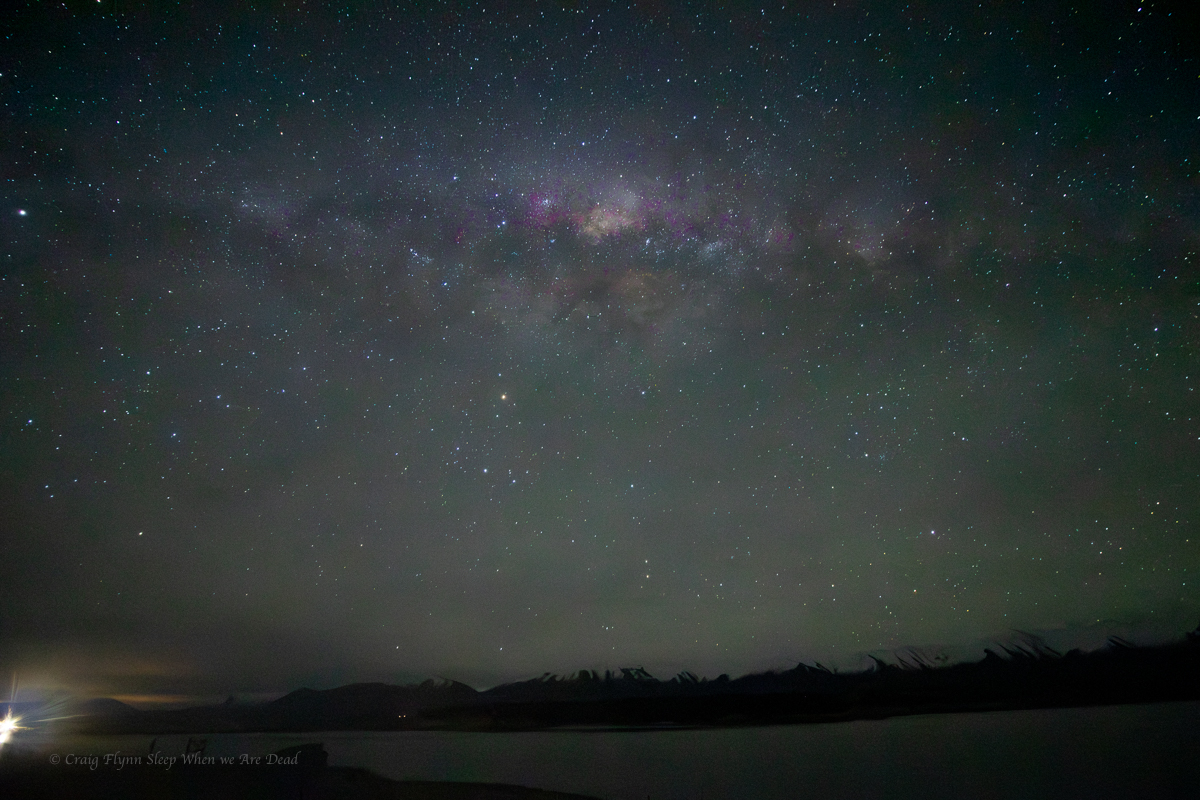
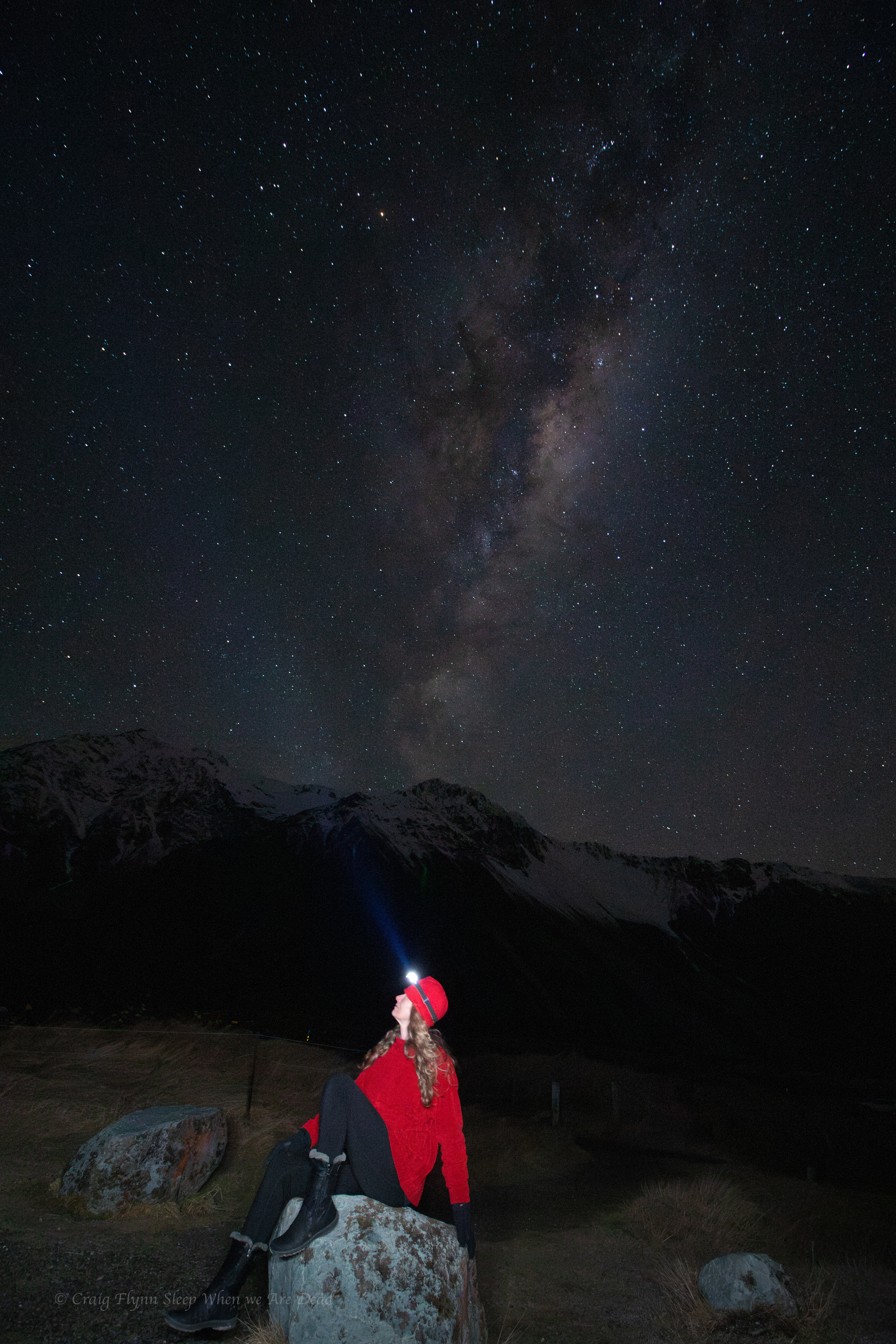
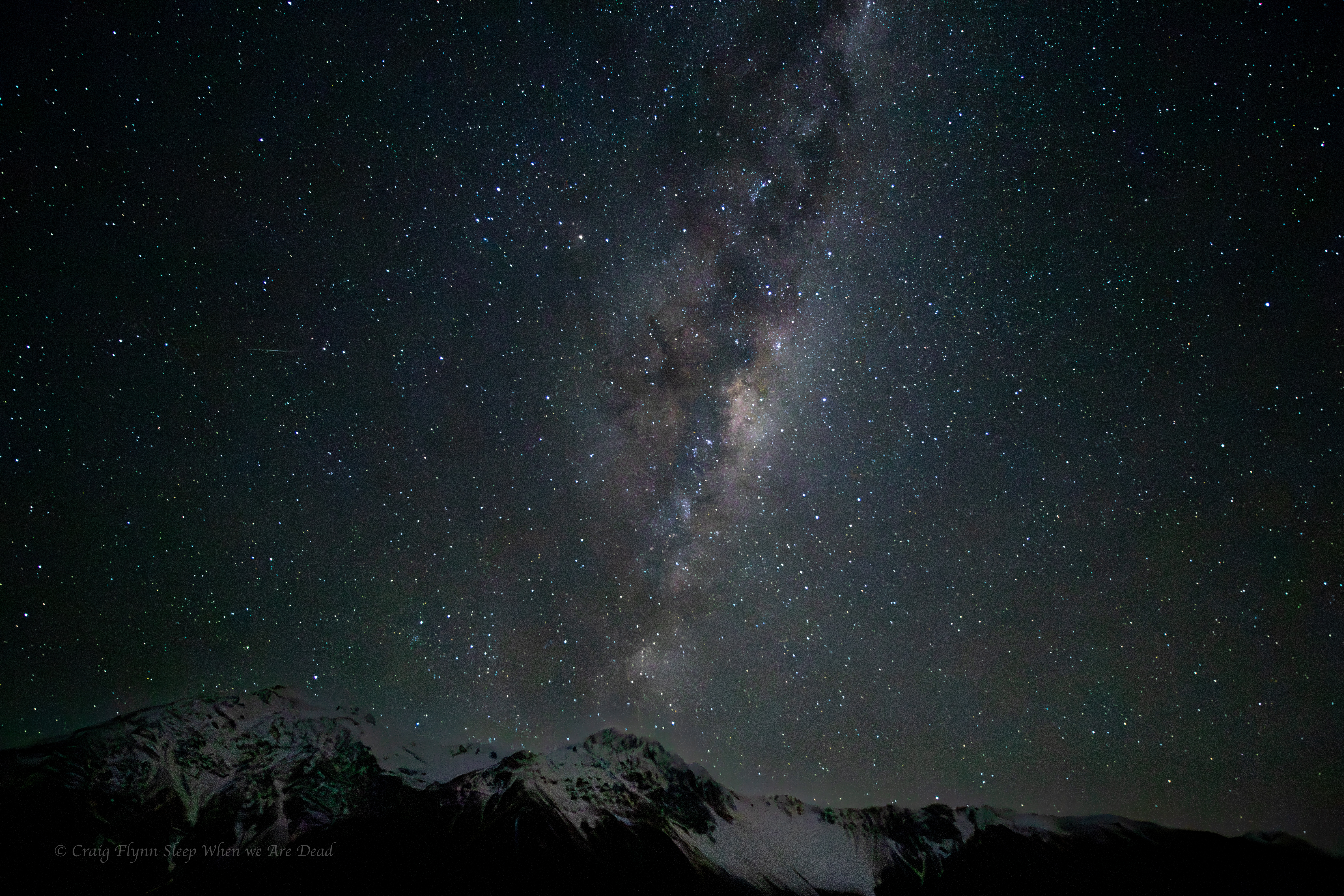
This also gives me an idea. I do a few calculations and check a few things and work out that in the wee hours of the morning the Milkyway should be splayed out horizontally above the mountains.
Now I just need to decide if I really want to interrupt my sleep to crawl out of a nice warm bed and stand in the cold….
Milky over the lake with a truck passing over the spillway.
Another hour and it might have presented as more of an arch over the mountains but it was 2:30am and -6ºC. I wasn’t hanging around.
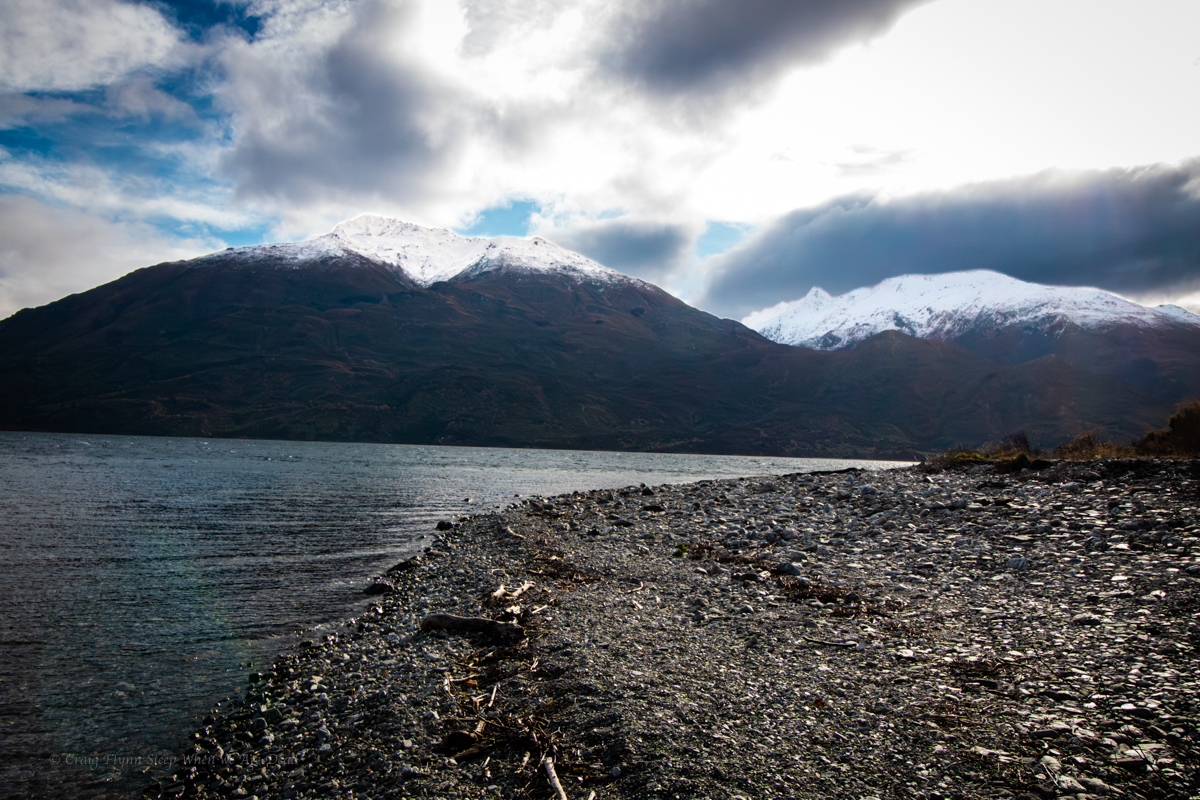
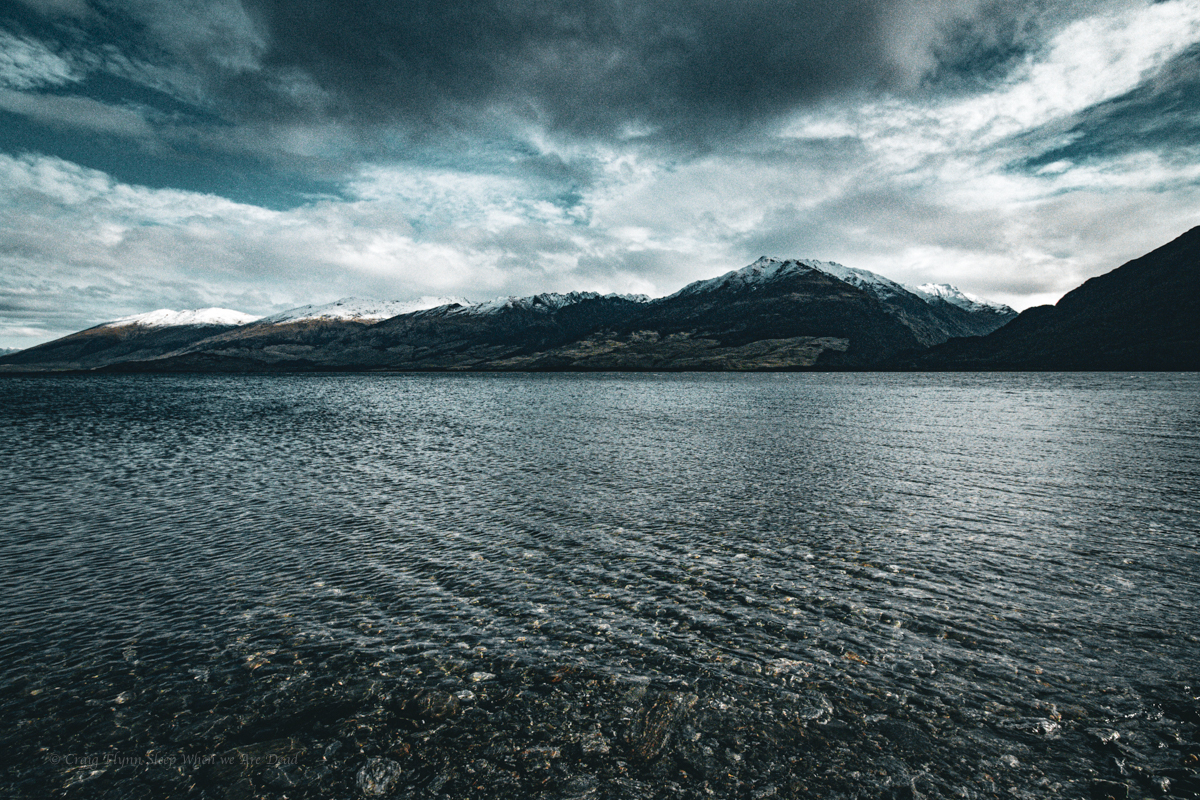
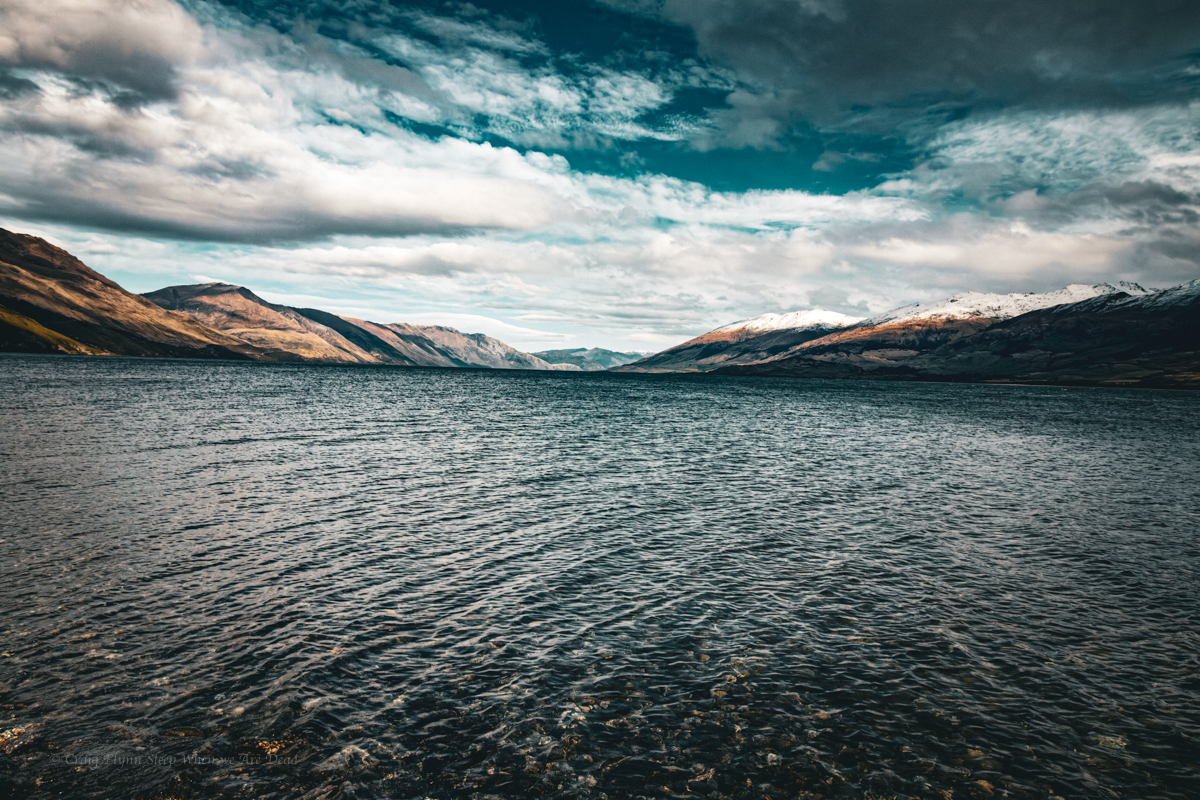
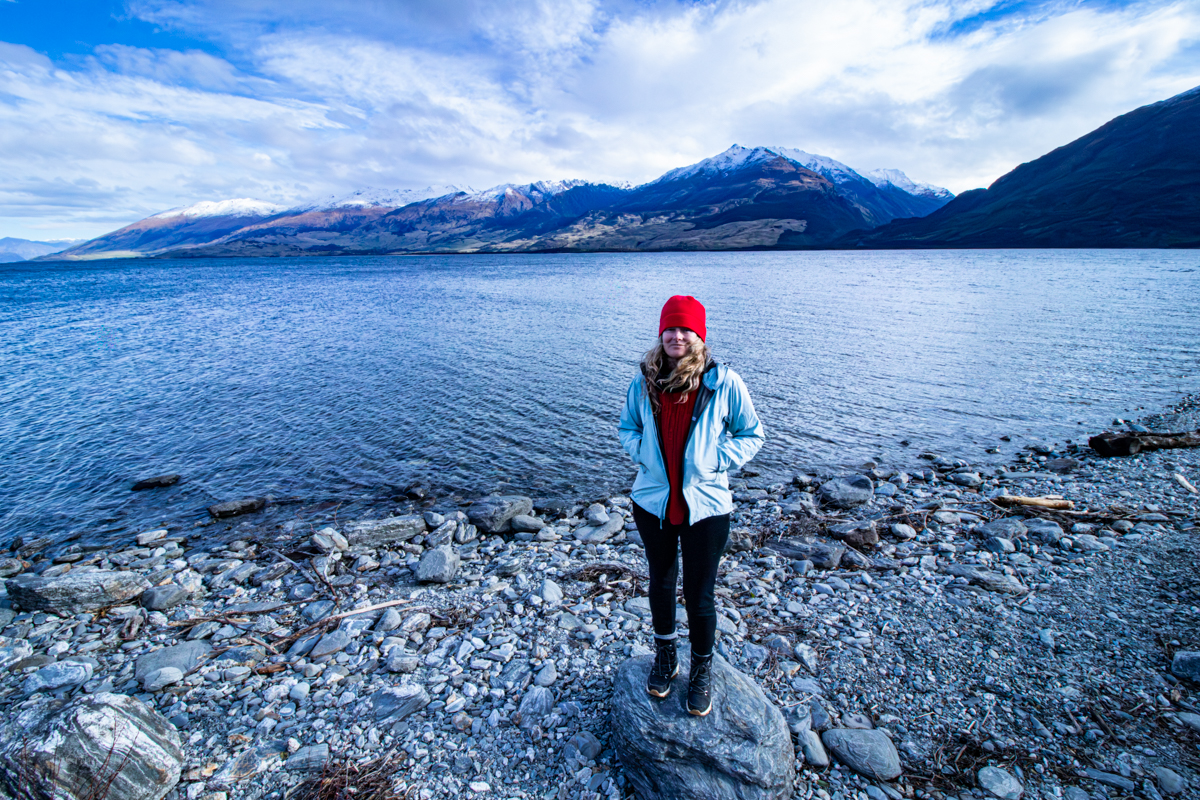
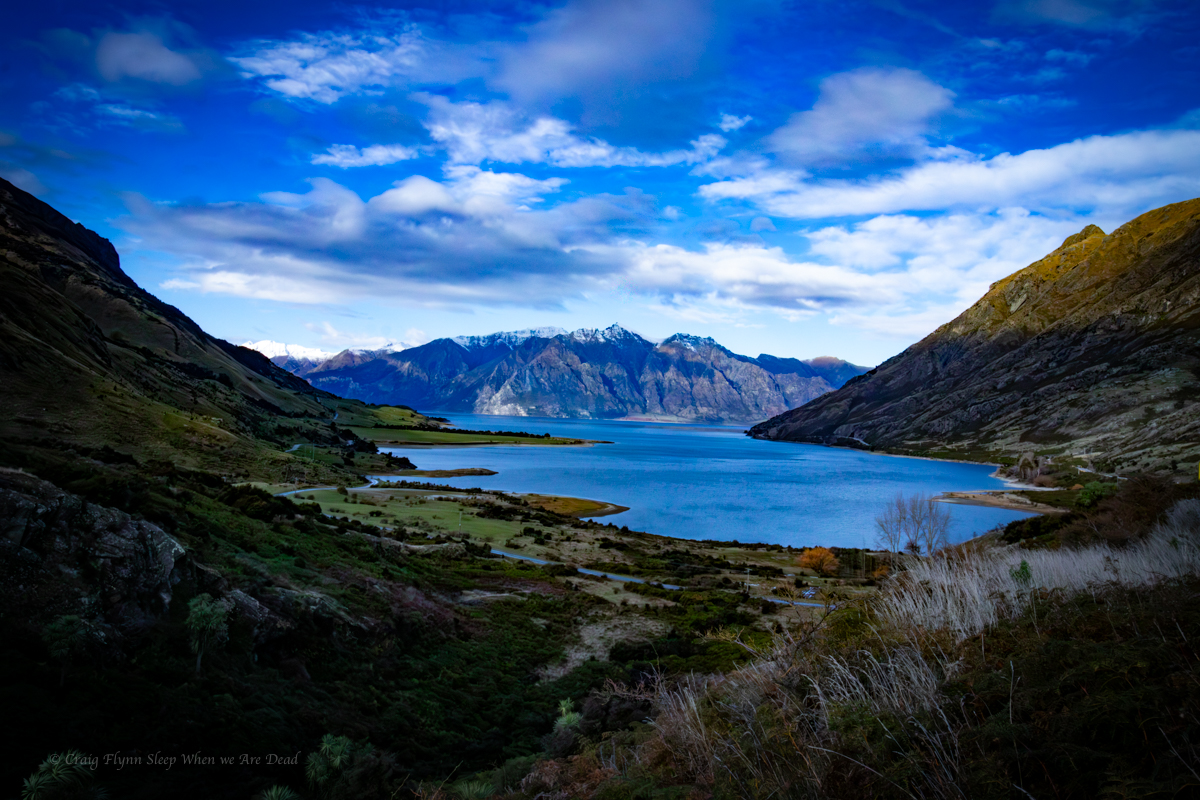
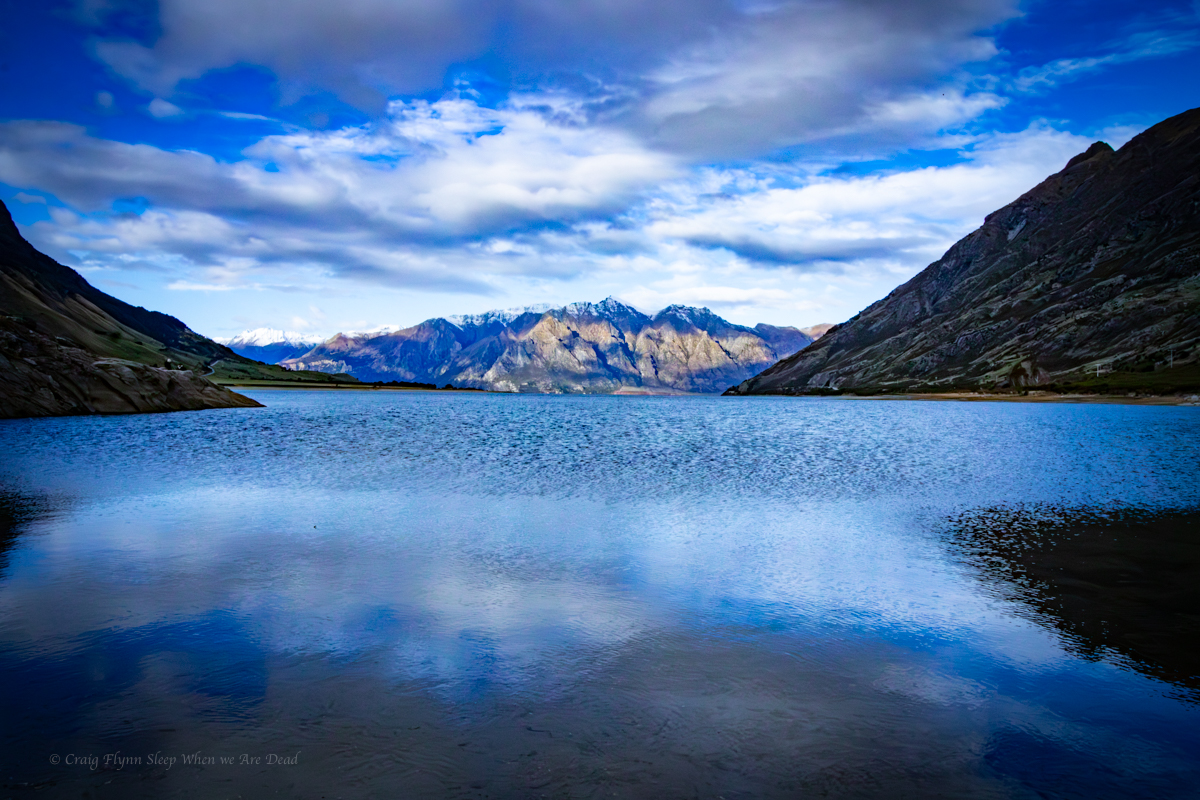
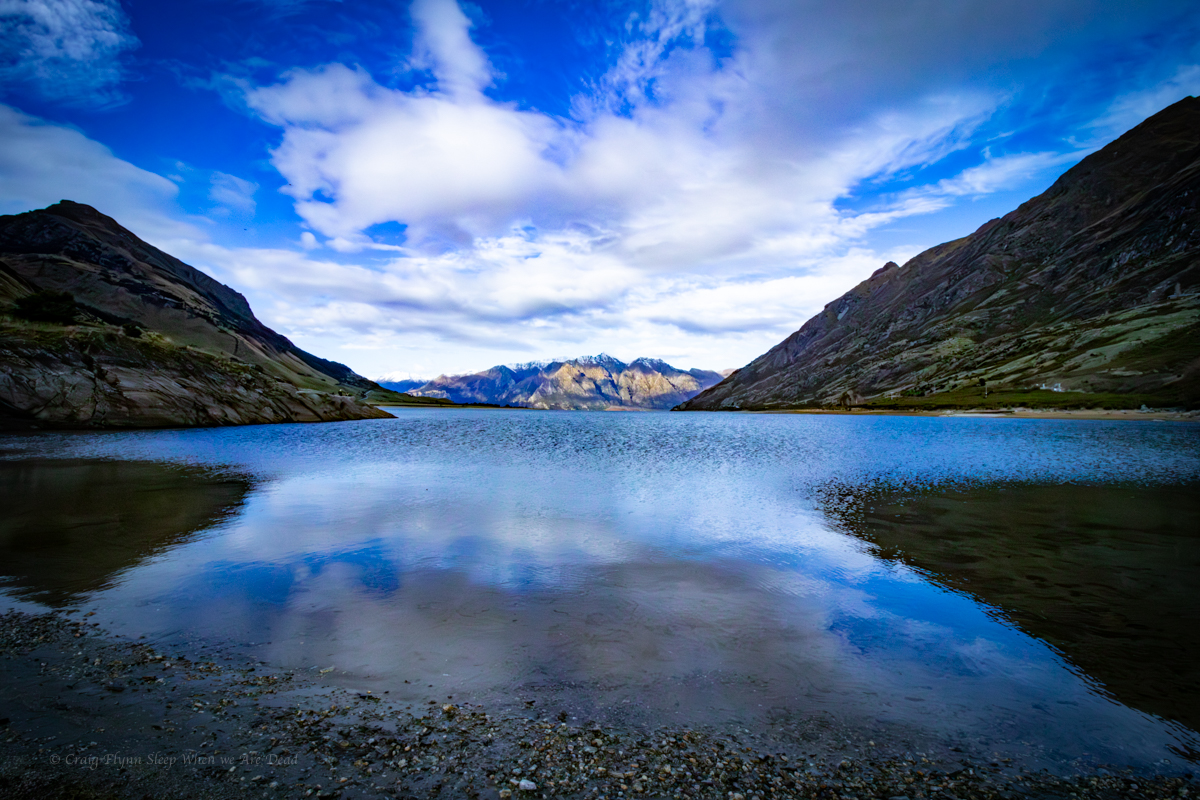
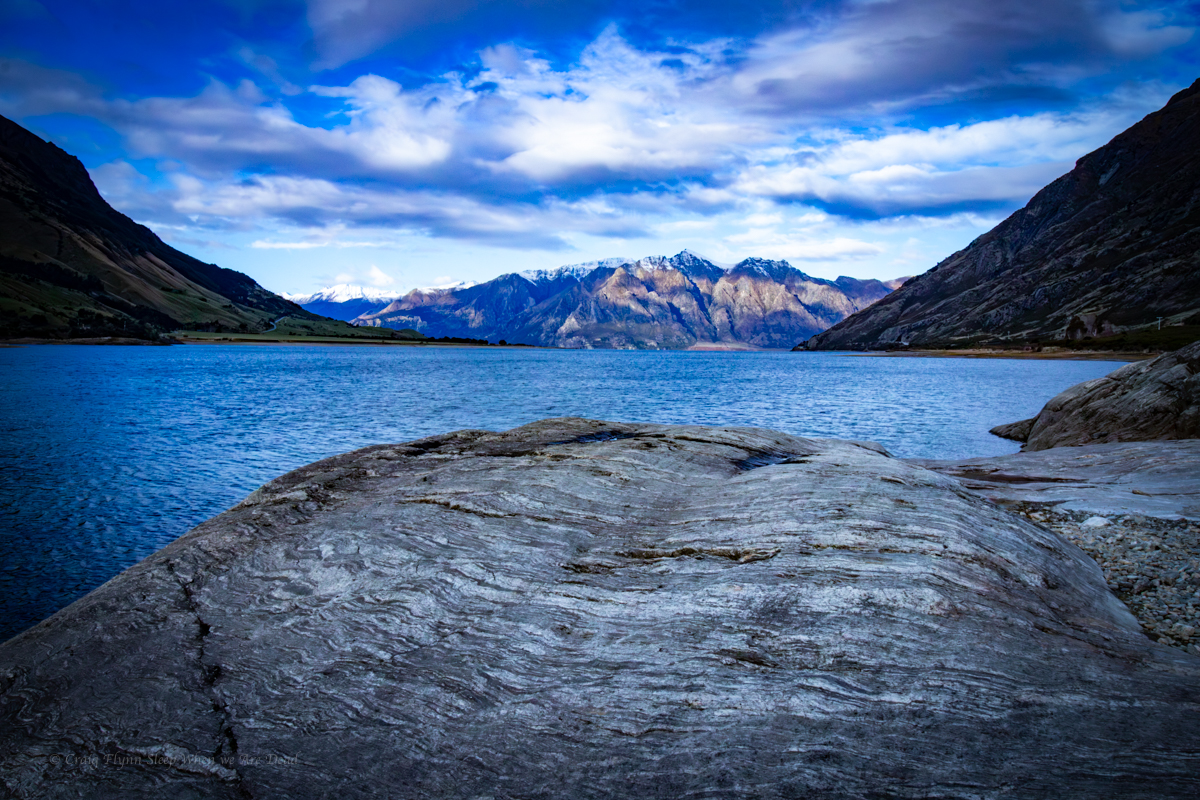
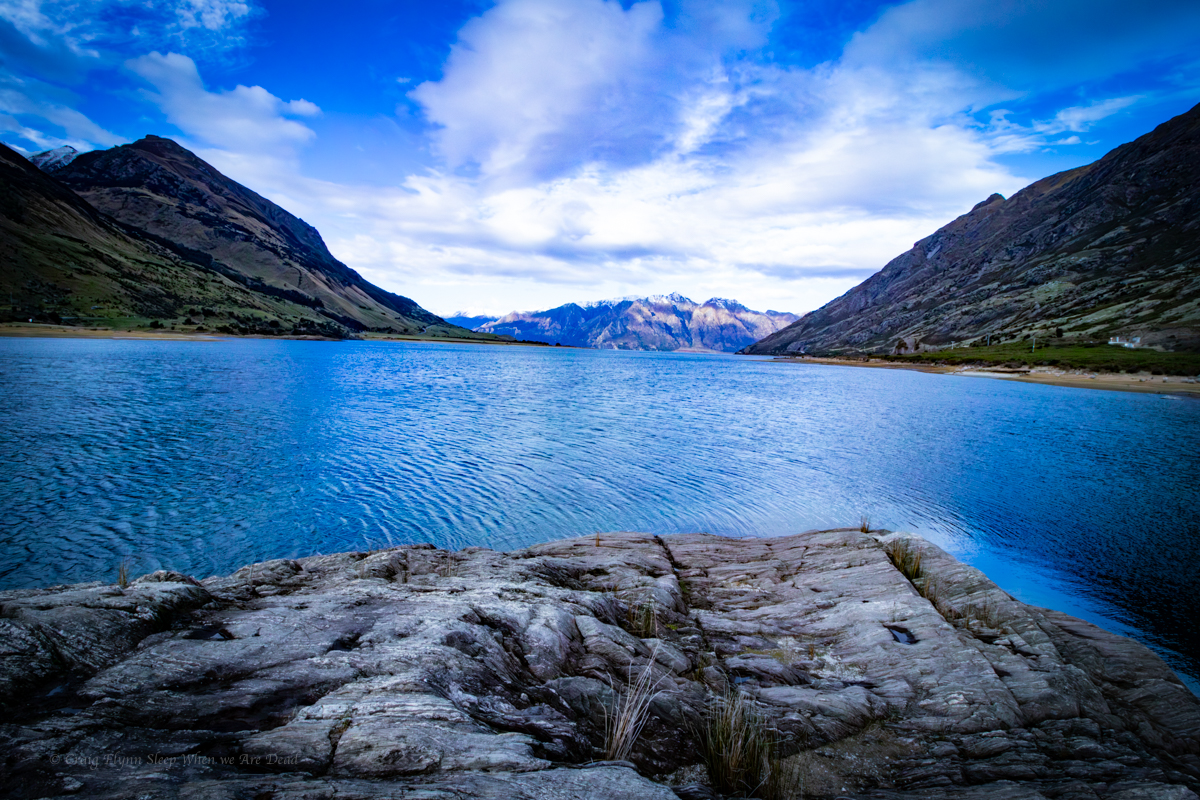
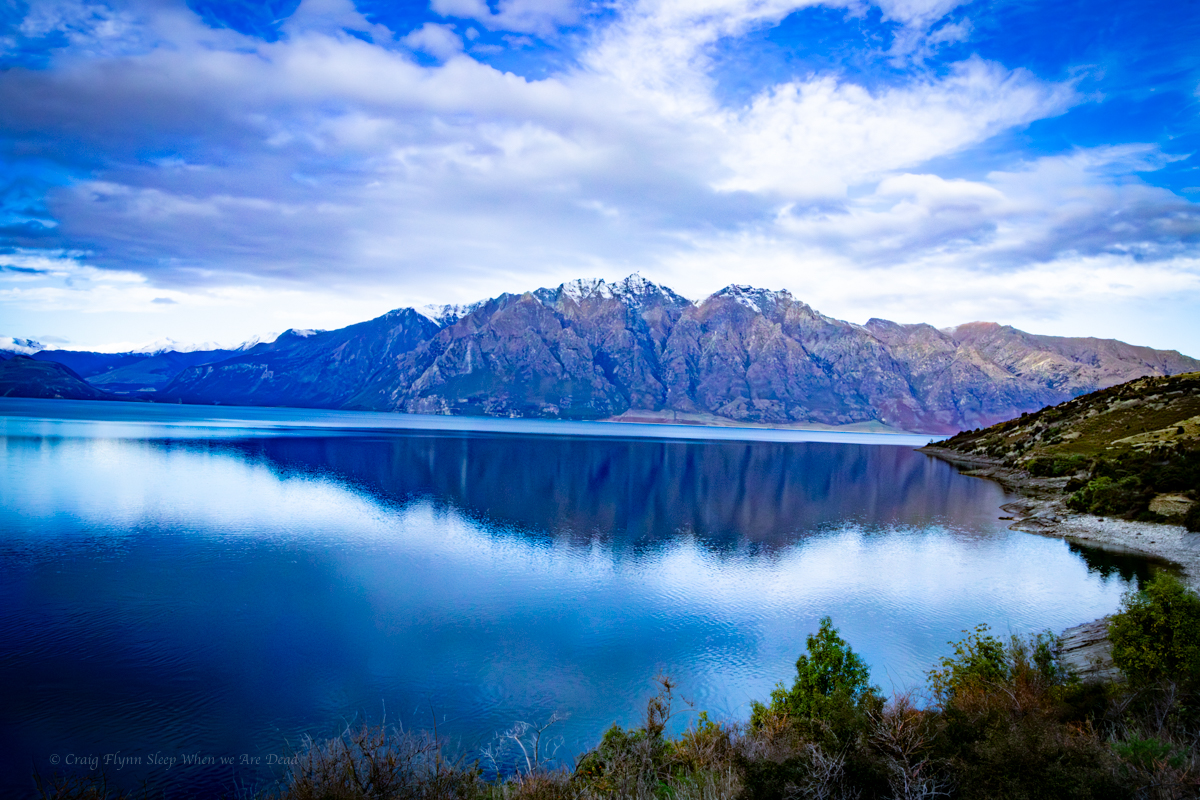
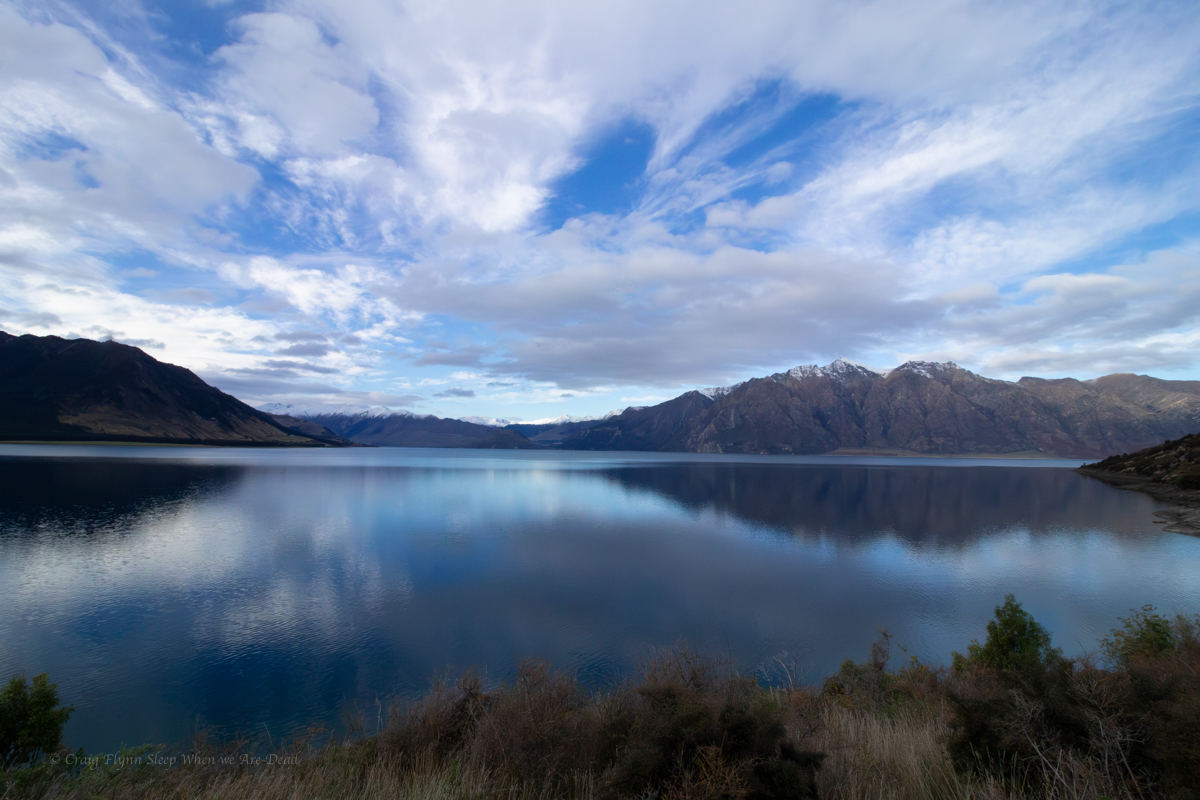
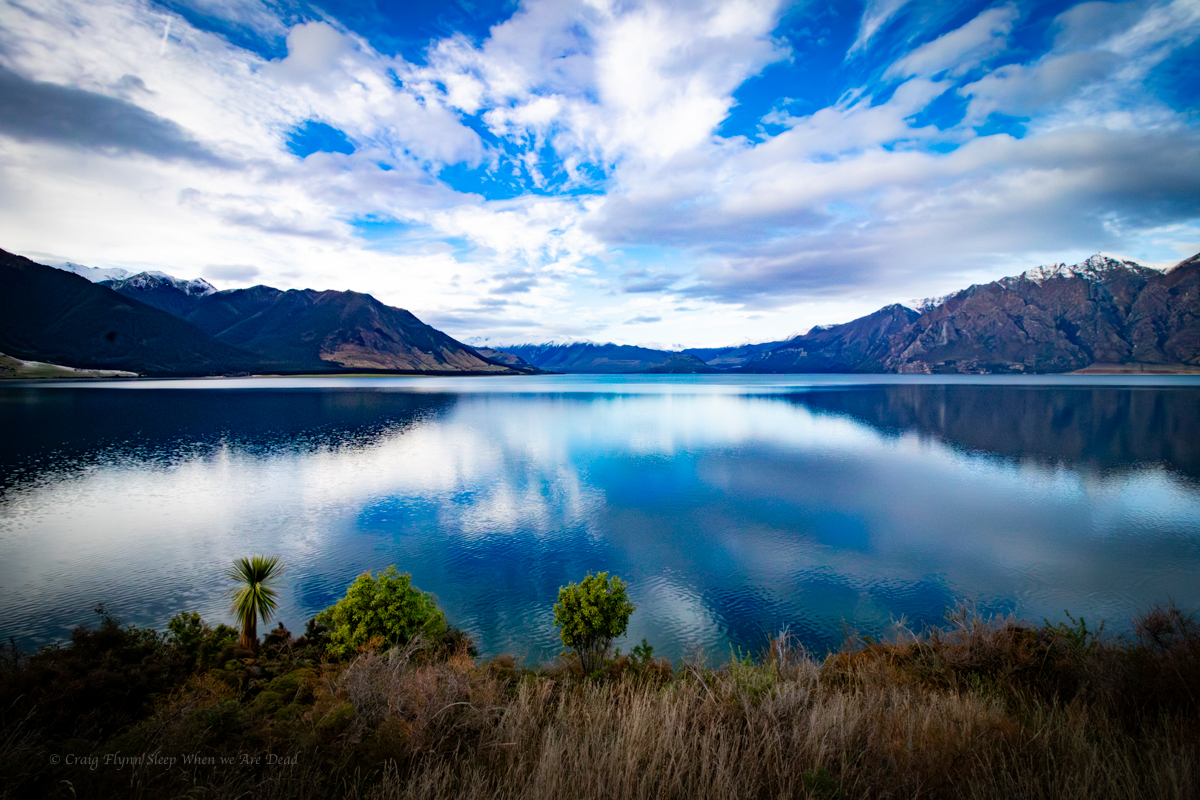
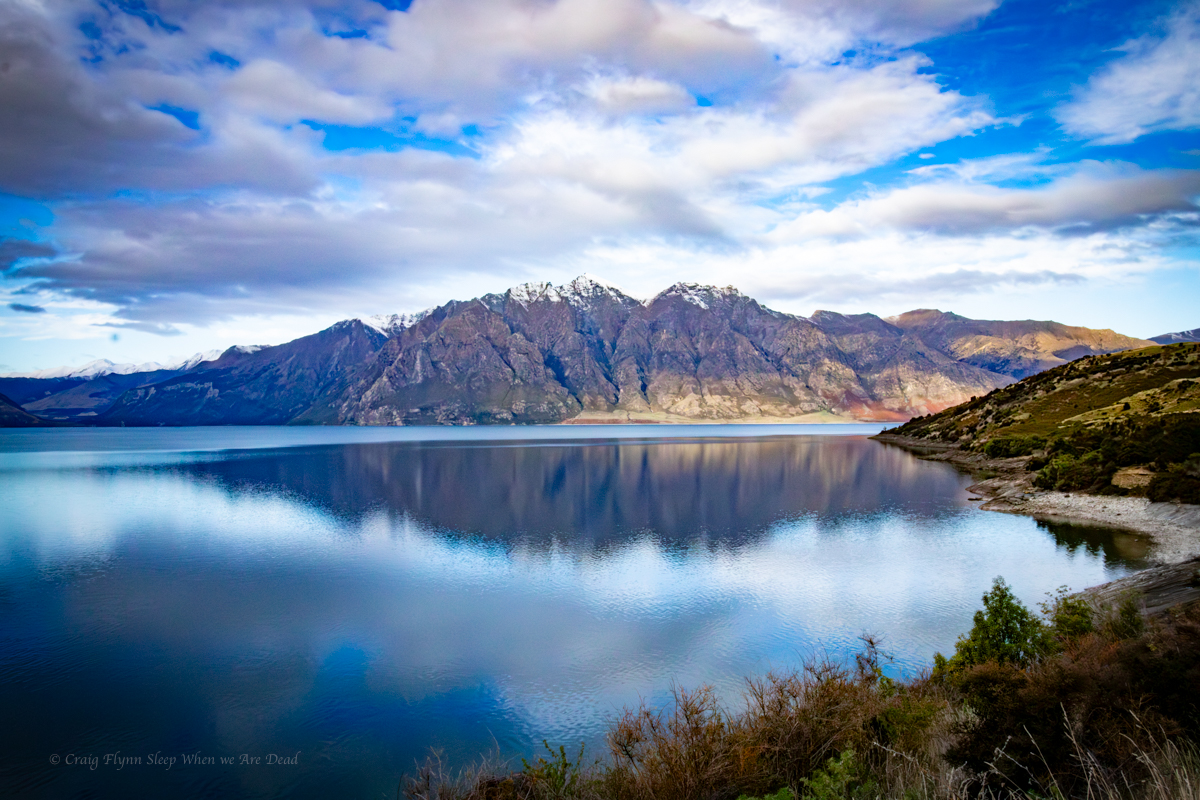
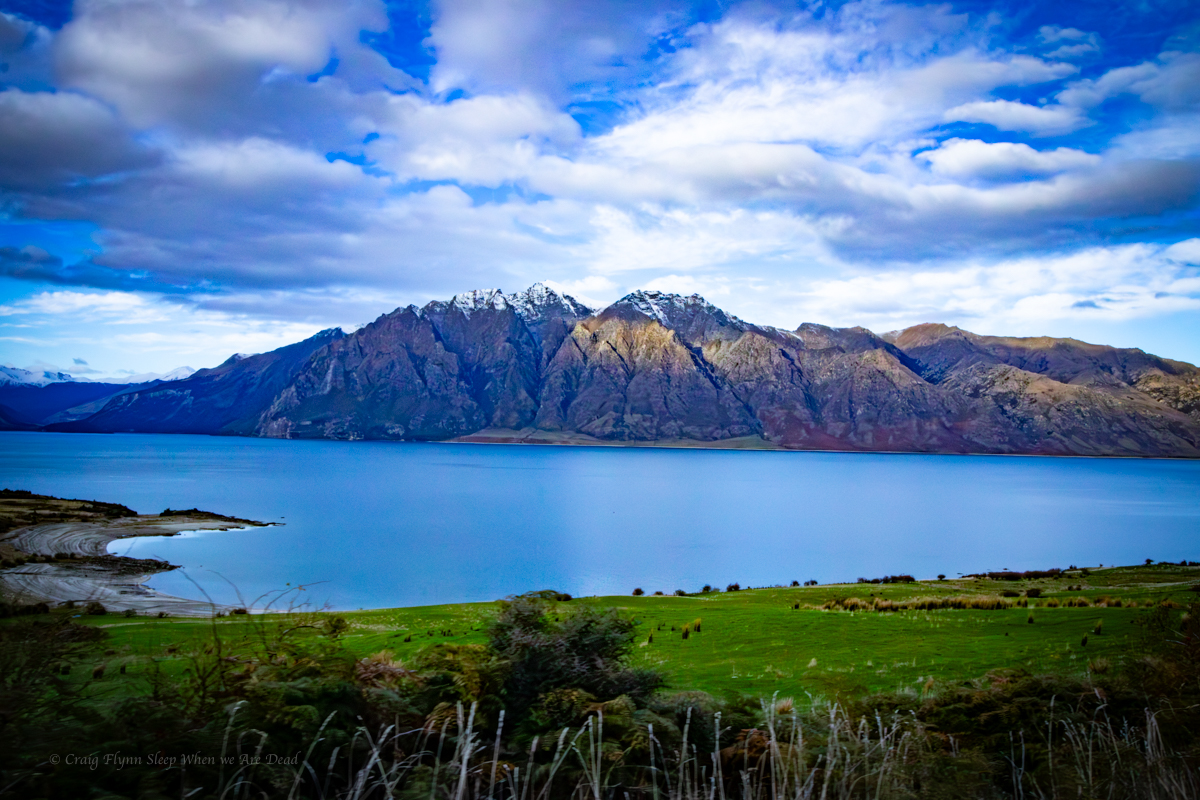
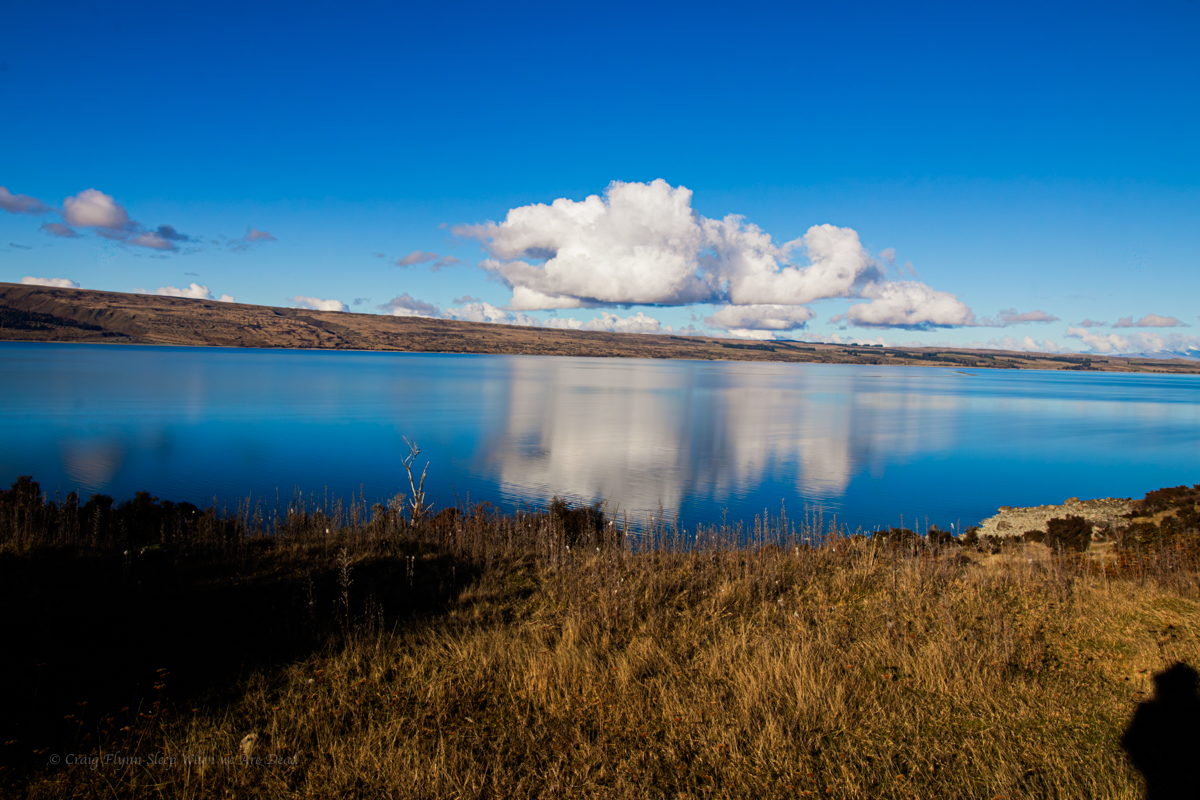
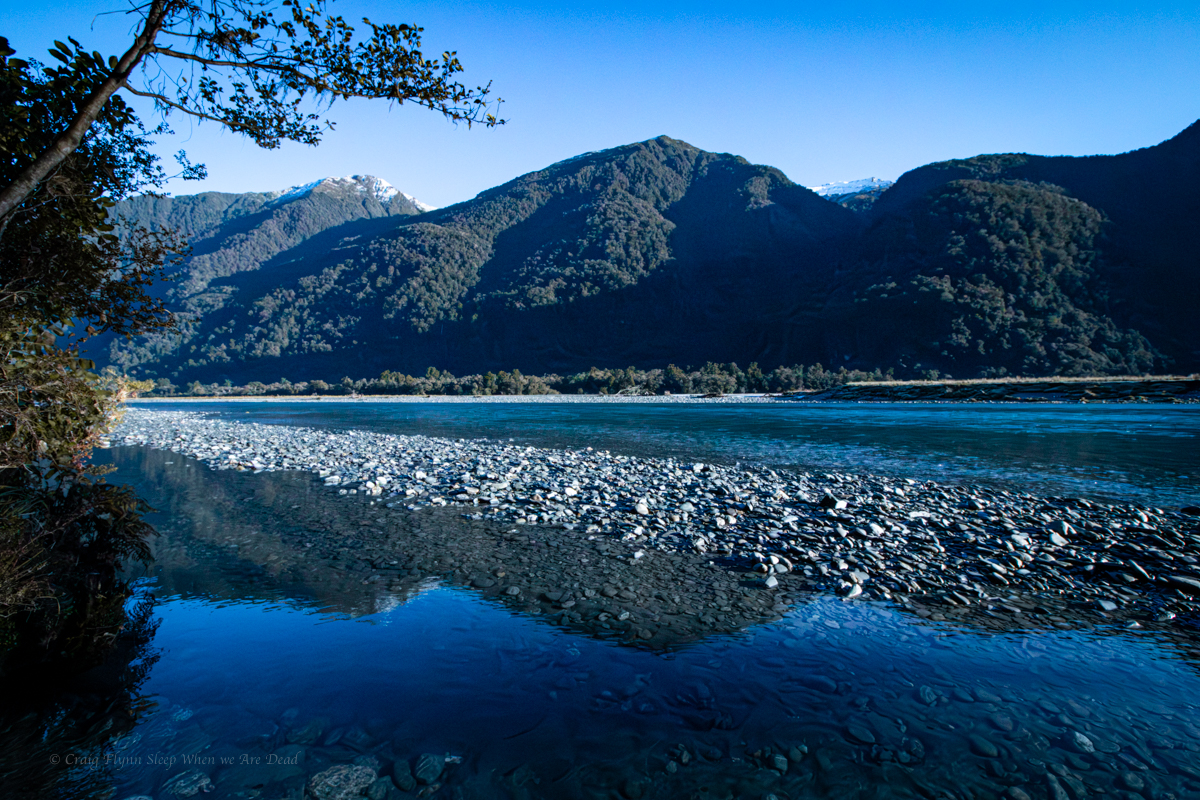
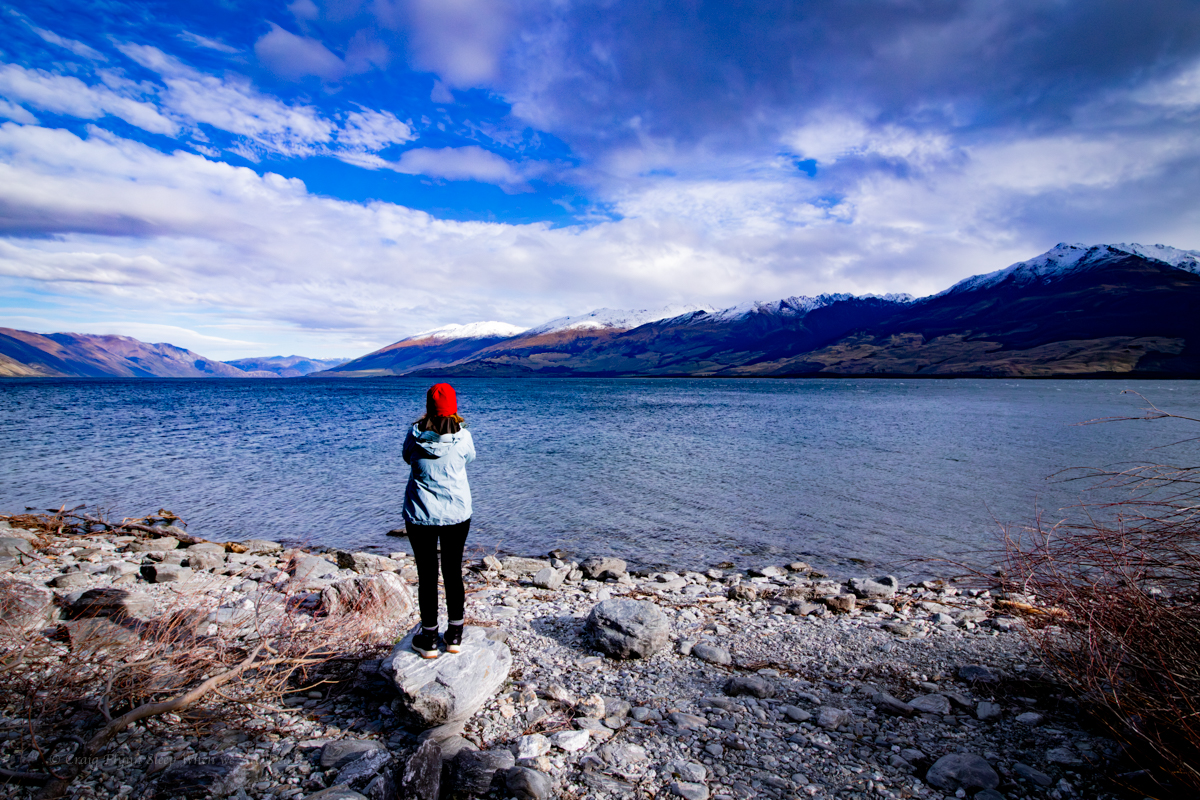
Lake Pukaki was just one of the amazing lakes we drove past / stopped at / were amazed by.
This might sound naive but the size and amount of lakes caught me by surprise. I mean, I knew the rivers and creek systems were a lot higher flow but kinda just assumed they tumbled off the mountains and flowed into the ocean. Coming from the driest habitable continent on earth the shear amount of lakes contained by our little cousin across the ditch, and their size, blew me away.
Below is a random collection of photos of just some of the ones we stopped at for photos.
Anyhoo after the epic nightscape shoot we sleep in a little then head to Elephant Rocks.
From the Clay Cliffs we make our way up to White Horse Hill campground which is nestled below the towering peak of Aorali/Mount Cook.
White Horse Hill is a paid ground. During the winter the main toilet/shower blocks are closed off as the frequent negative temperatures lead to burst pipes and what not. What you are left with is two of the smelliest drop toilets I’ve ever encountered, And I’ve done long weekends at Newnes Camp ground in it’s heyday.
Take the biggest breath you can here and hold it as long as you can, a young whipper snapper was heard giving advice to her younger brother…..
Don’t let that put you off though, the scenery is well worth a skinny loo or two.
We roll in late afternoon and set the camp up. The temperature is already -2ºC and falling. The little diesel heater fitted in the van is amazing.
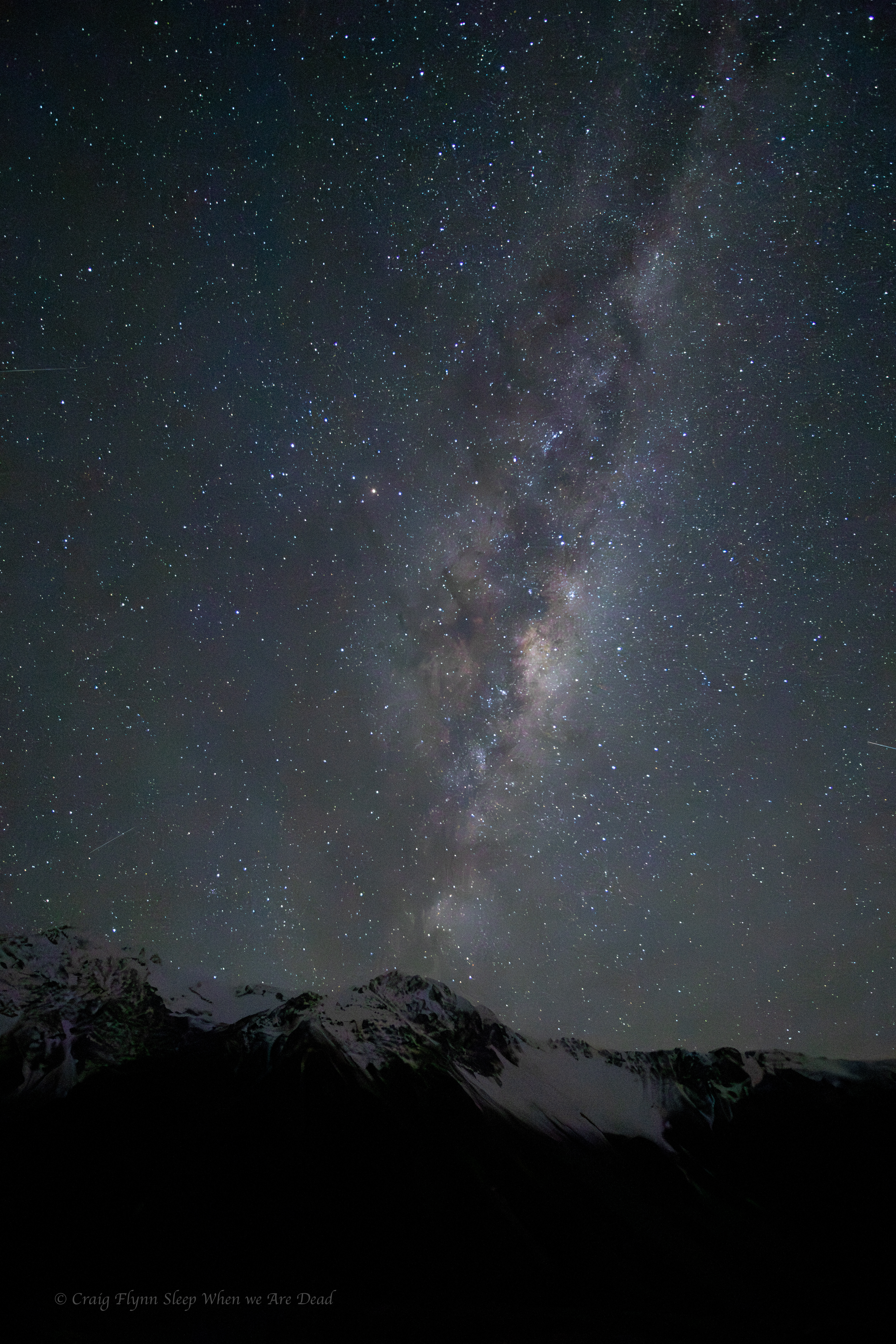
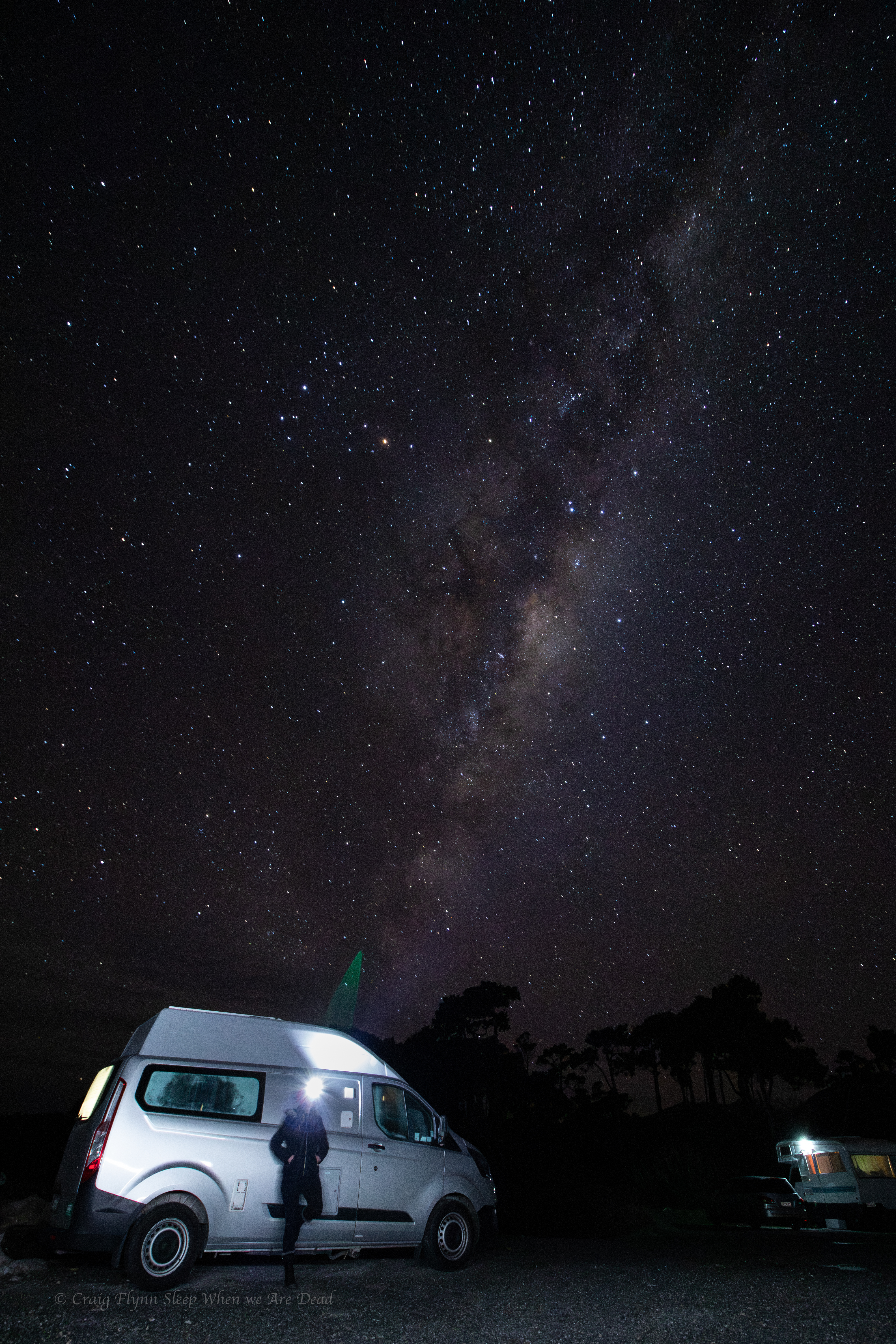
As night settles in and the temp plummets to -8º we decide to brave it for the sake of the most amazingly clear night sky.
Clicky Clicky to see full photo
The next day we head out on the Hooker Valley Trail.
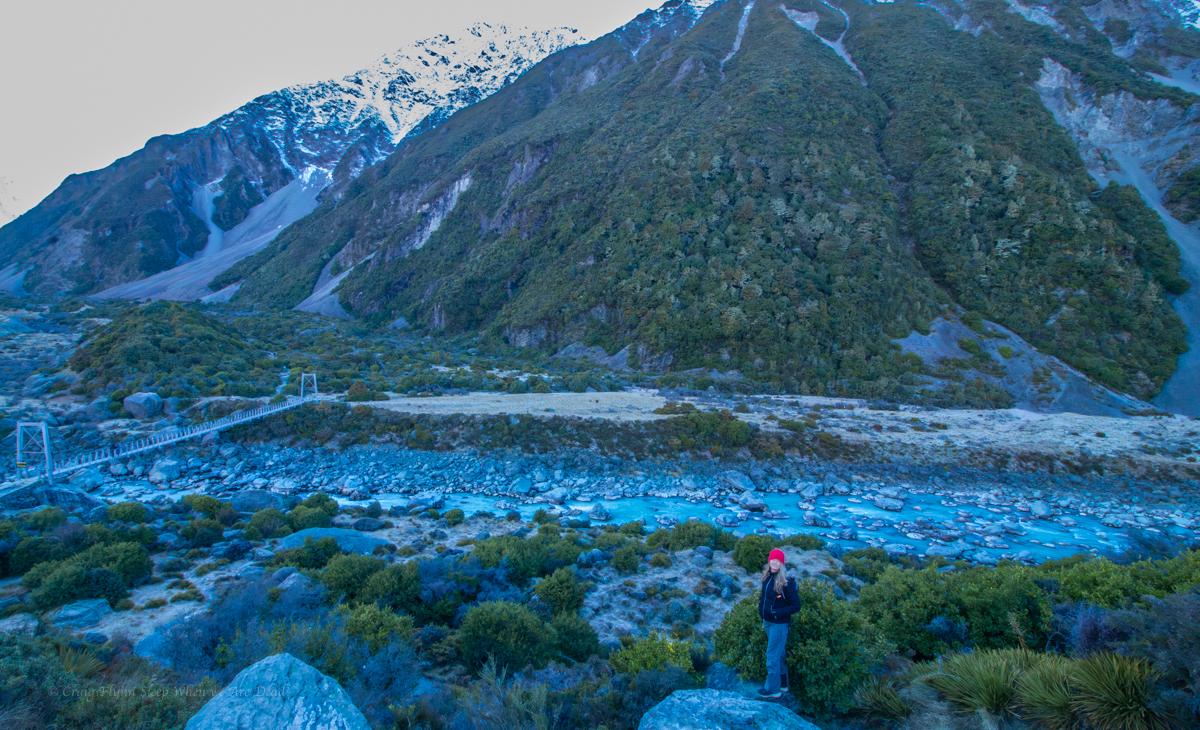
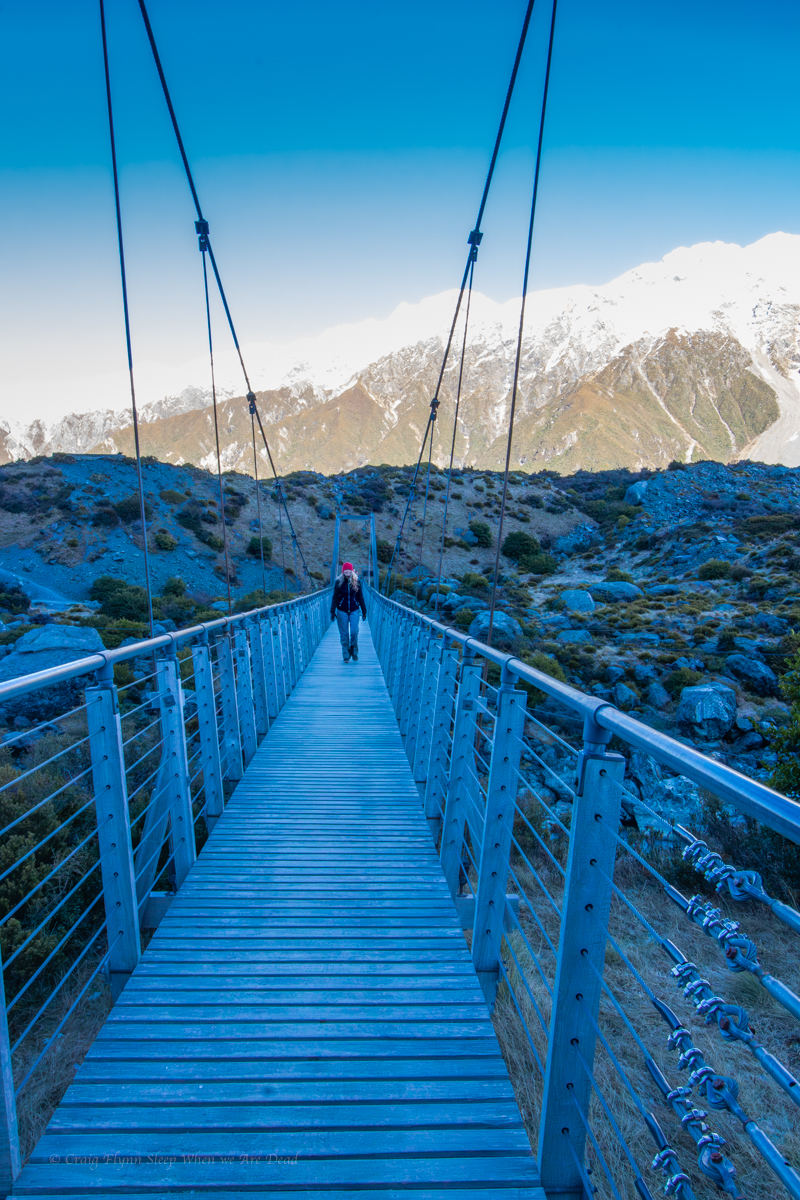
Normally this gives the closest access to the base Aoraki the general public will get and also views over the proglacial Hooker Lake, complete with icebergs, however only a short section of the trail was open at the time of our visit due to track work and a bridge being washed out.
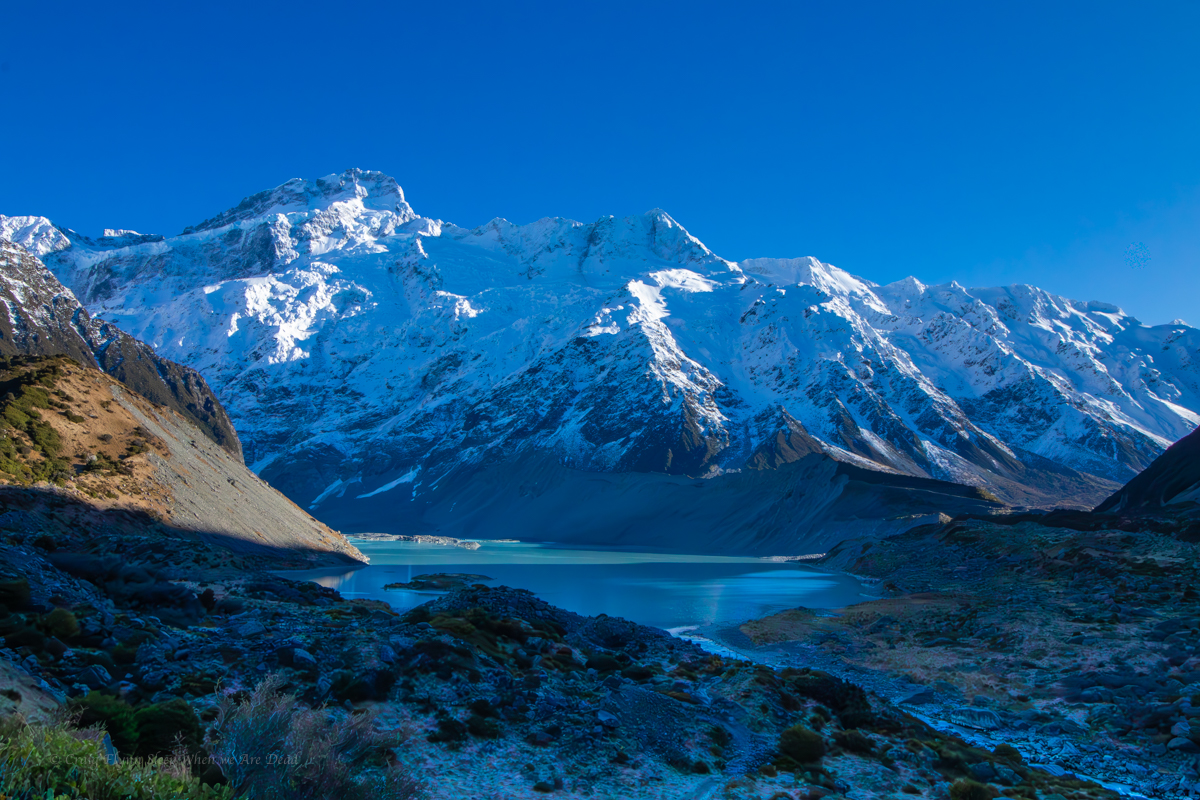
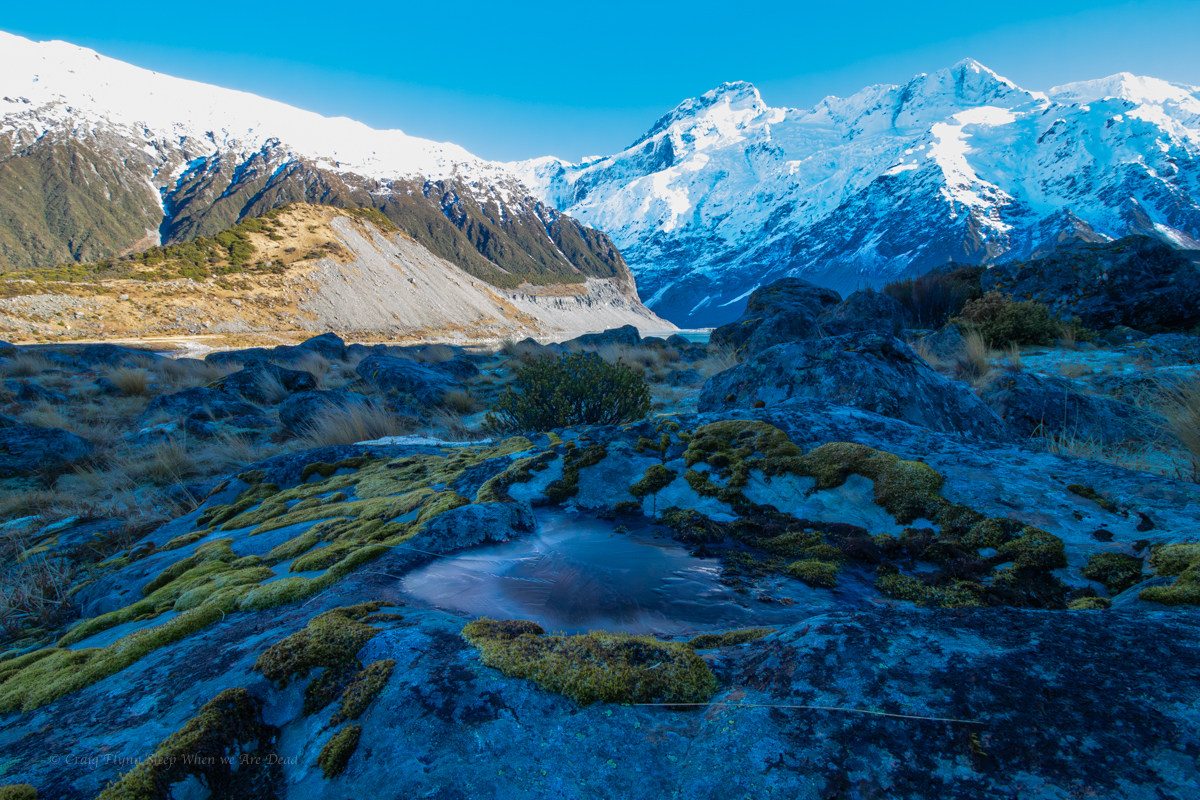
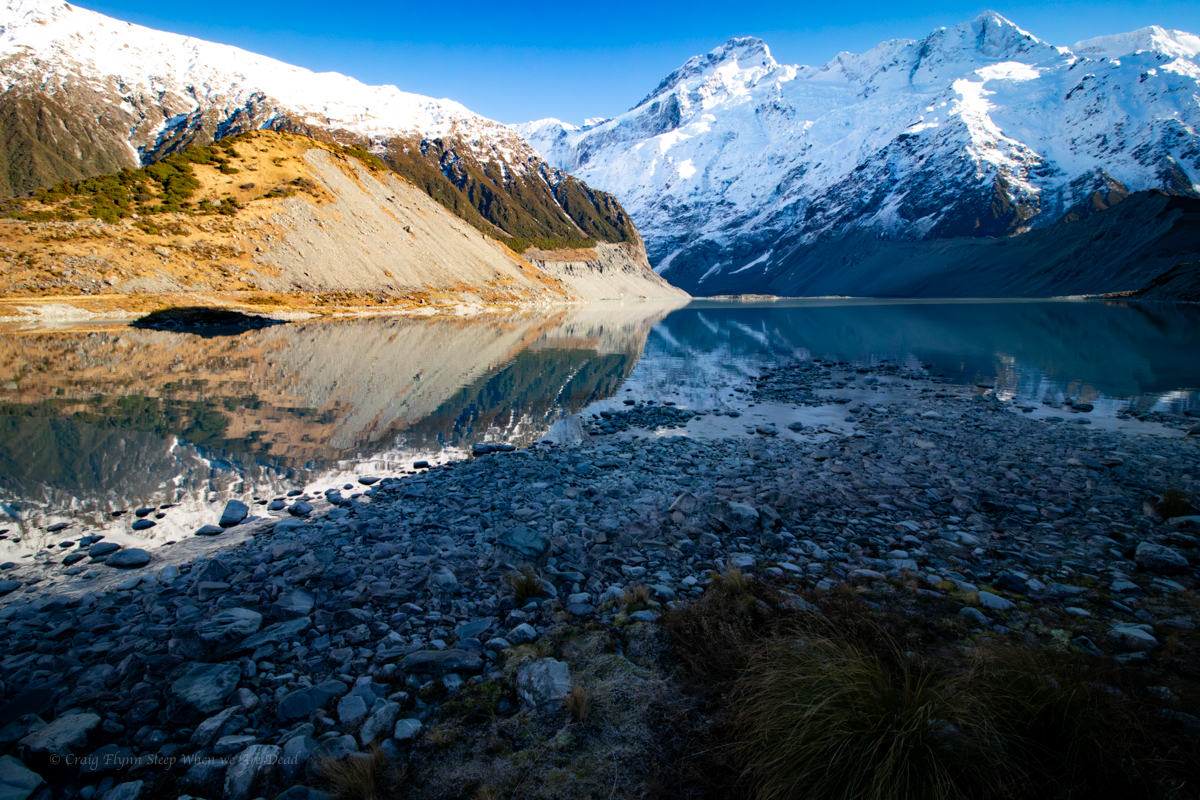
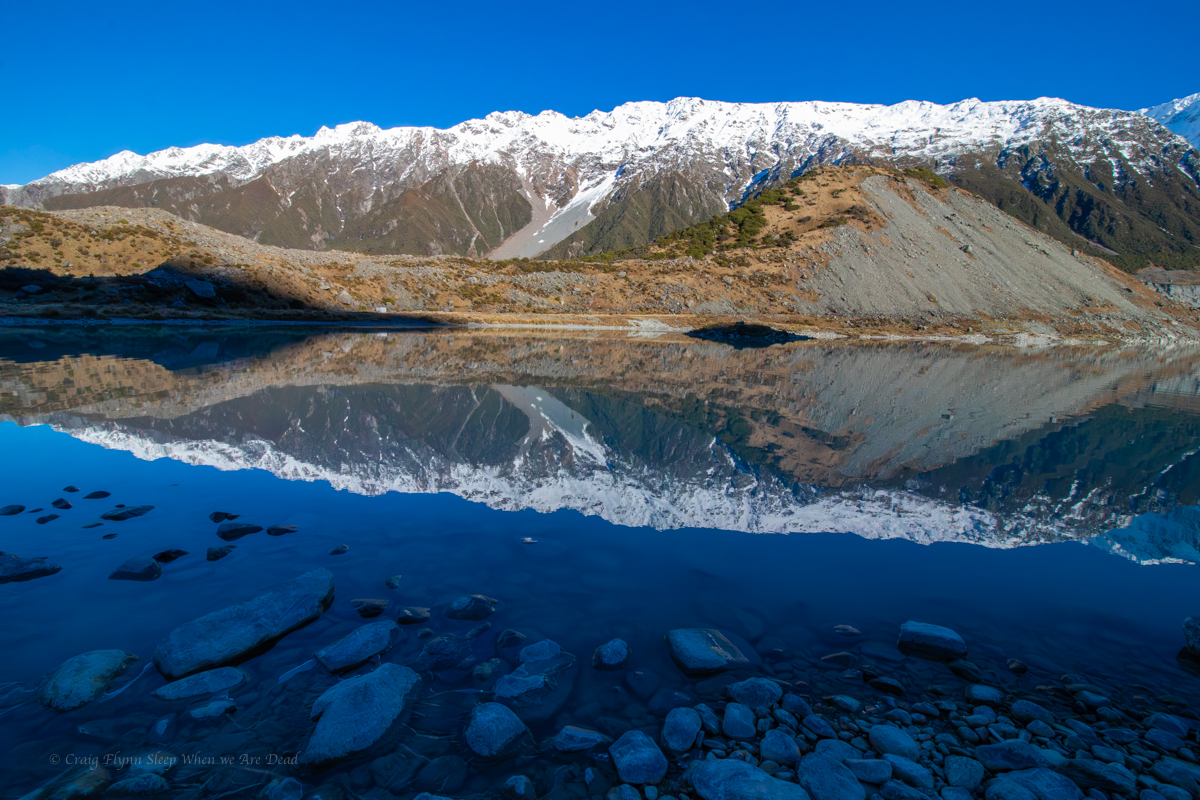
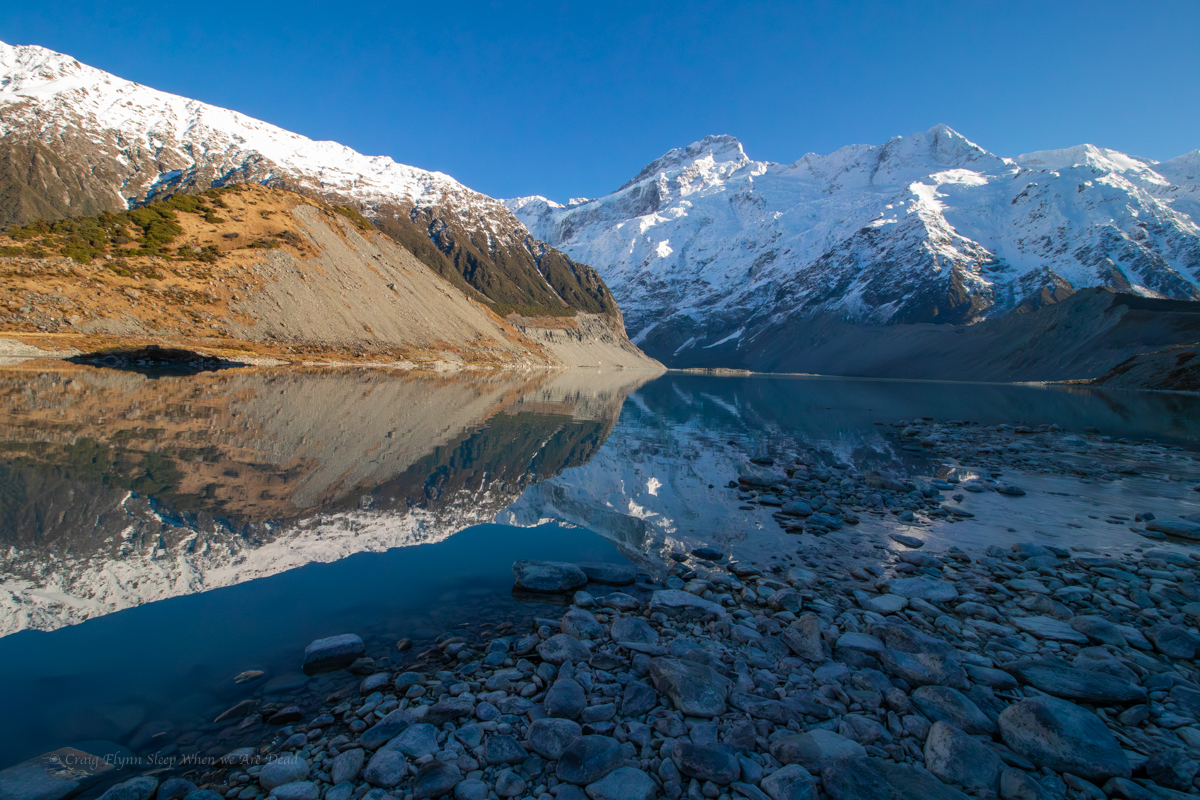
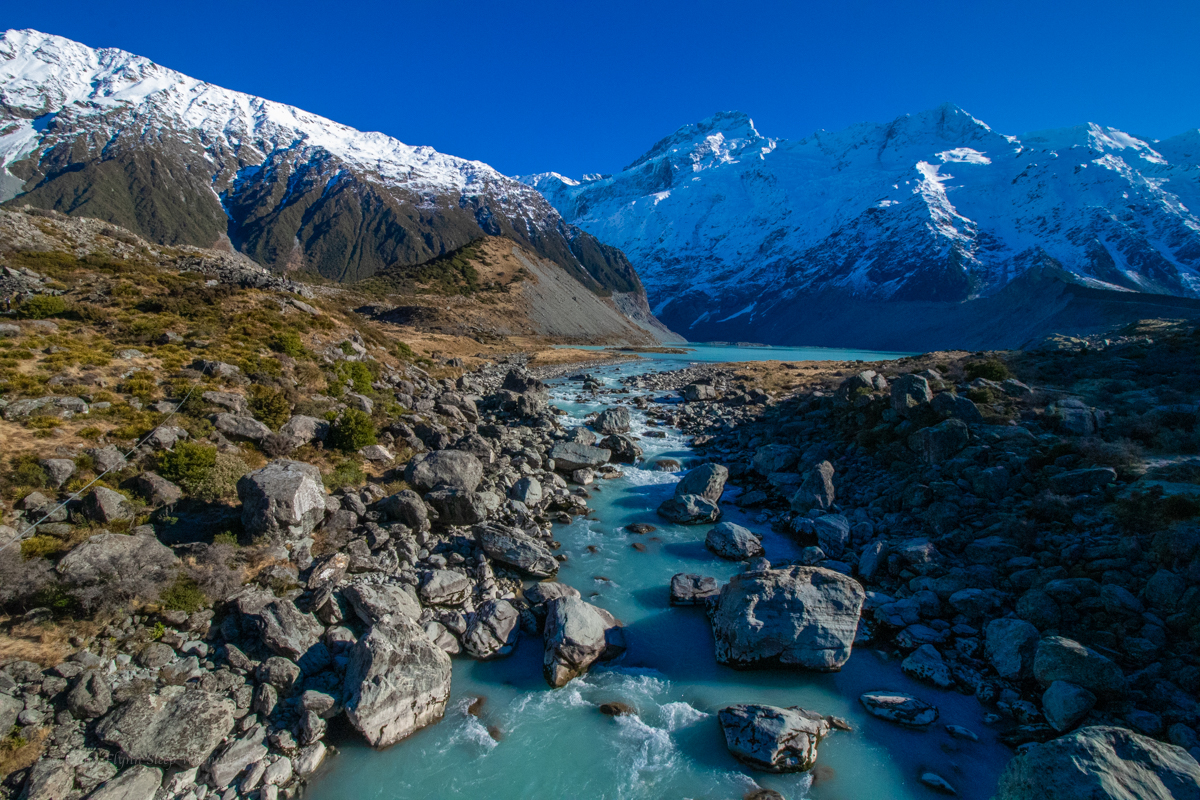
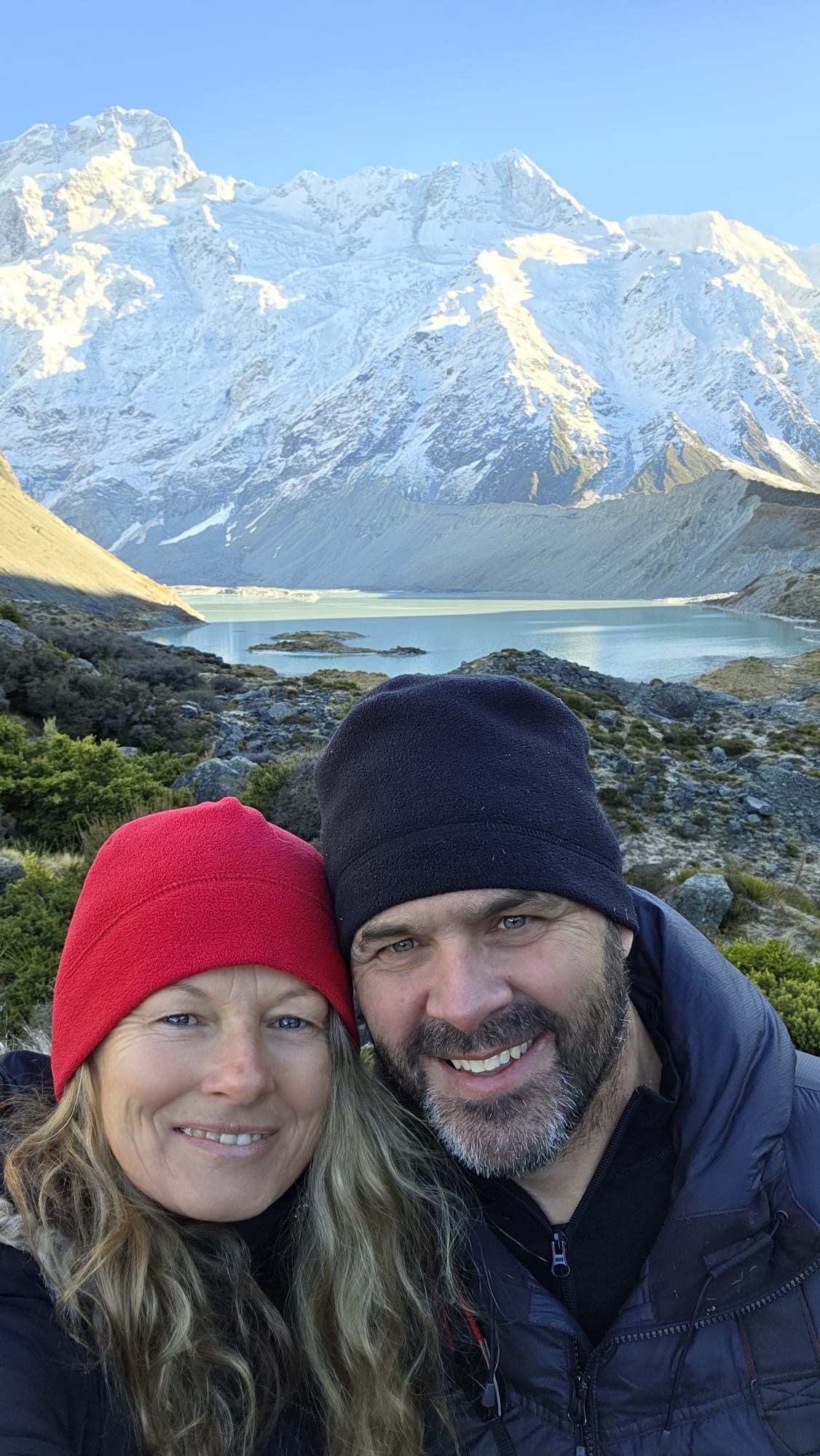
the short open section did, however provide great views over the Mueller Glacier and it’s lake.
Next we return to the van and duck over to the village for a coffee. While there we dropped in to the Department of Conservation information centre.
Wow!!!
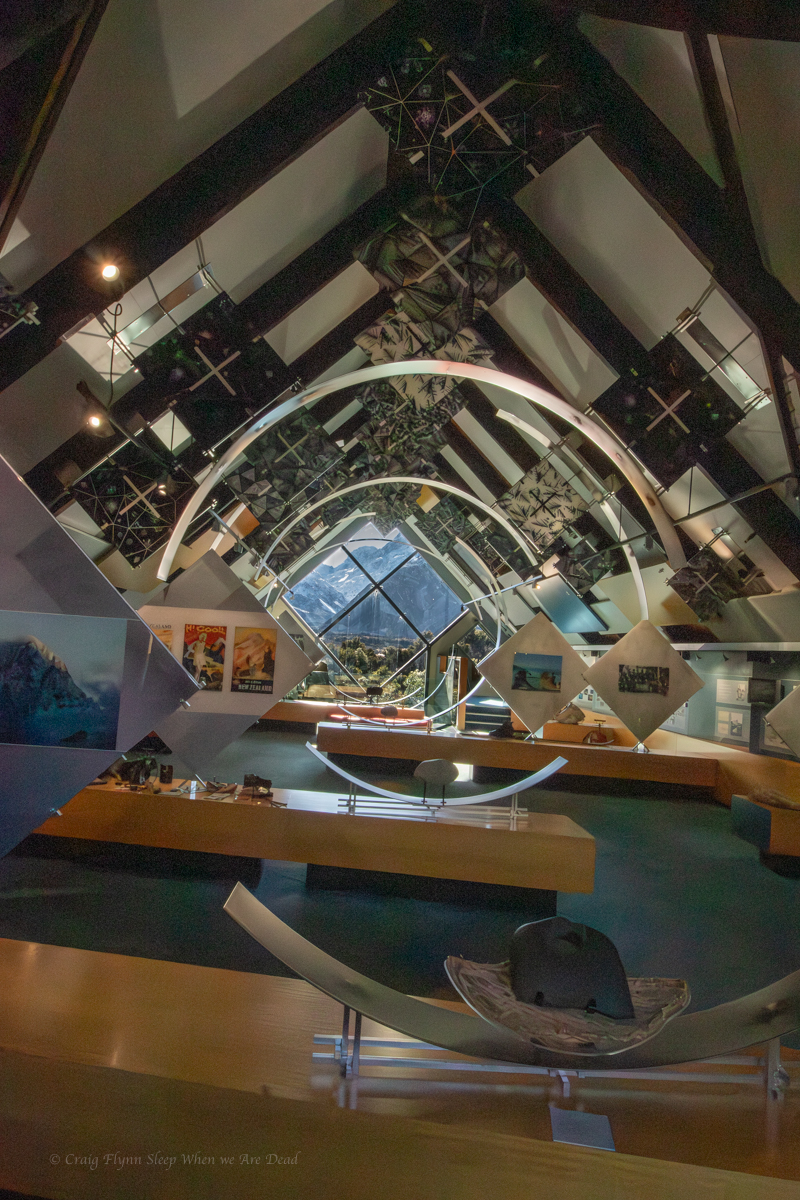
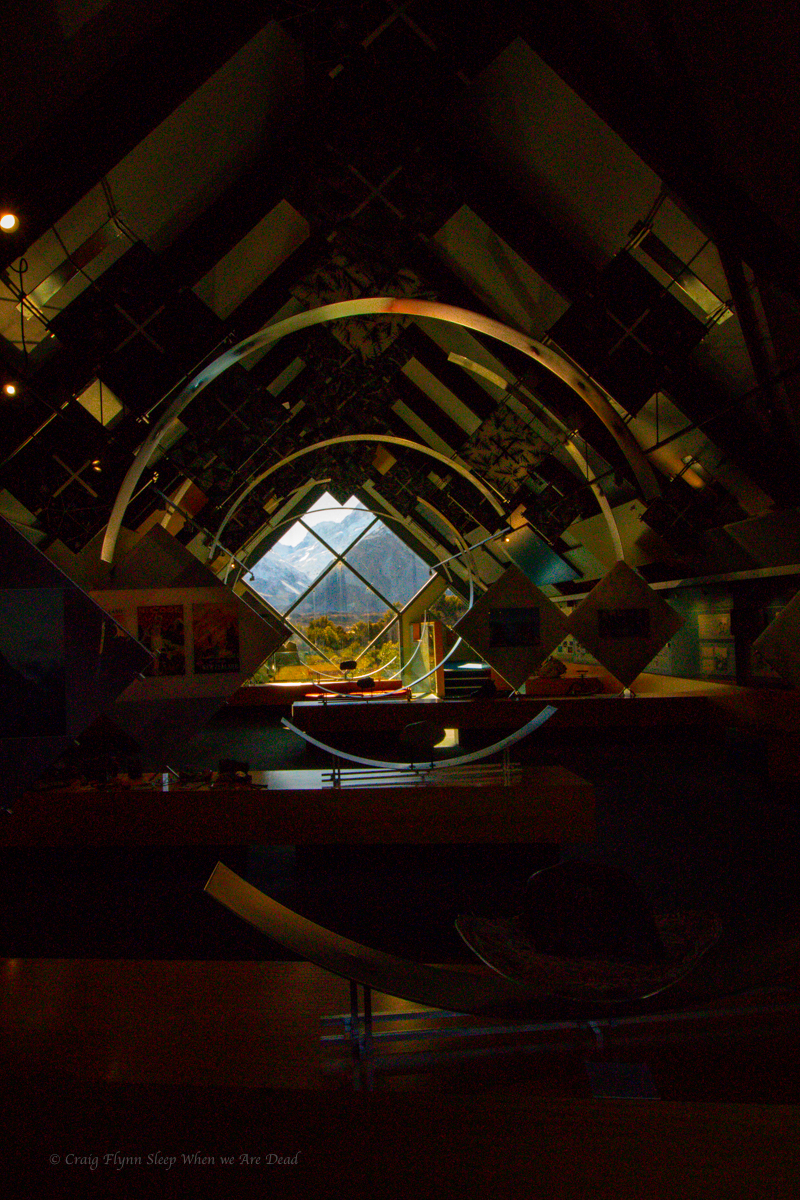
What an amazing free resource. If you were in the area and the weather was bad you could easily spend a whole day in here. There are displays and videos and more lots more.
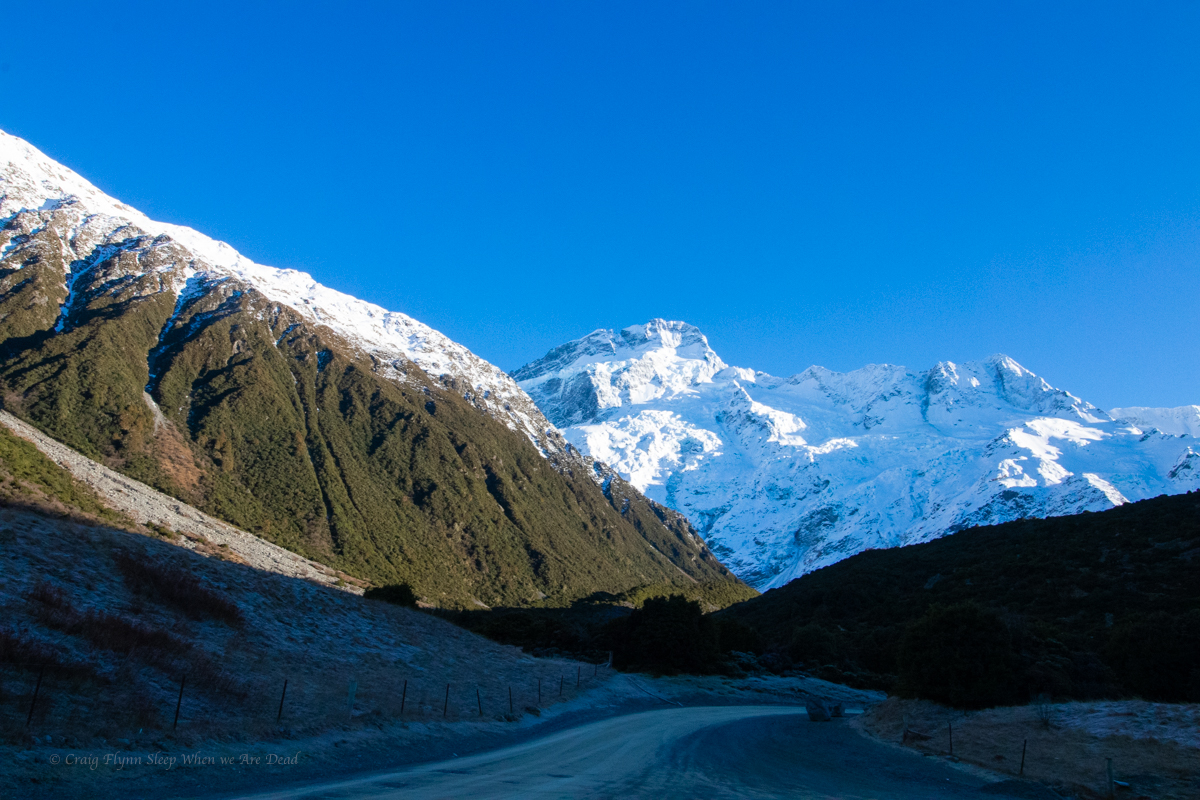
But today was a blue bird day so we have a quick look and then head over towards the Tasman Glacier.
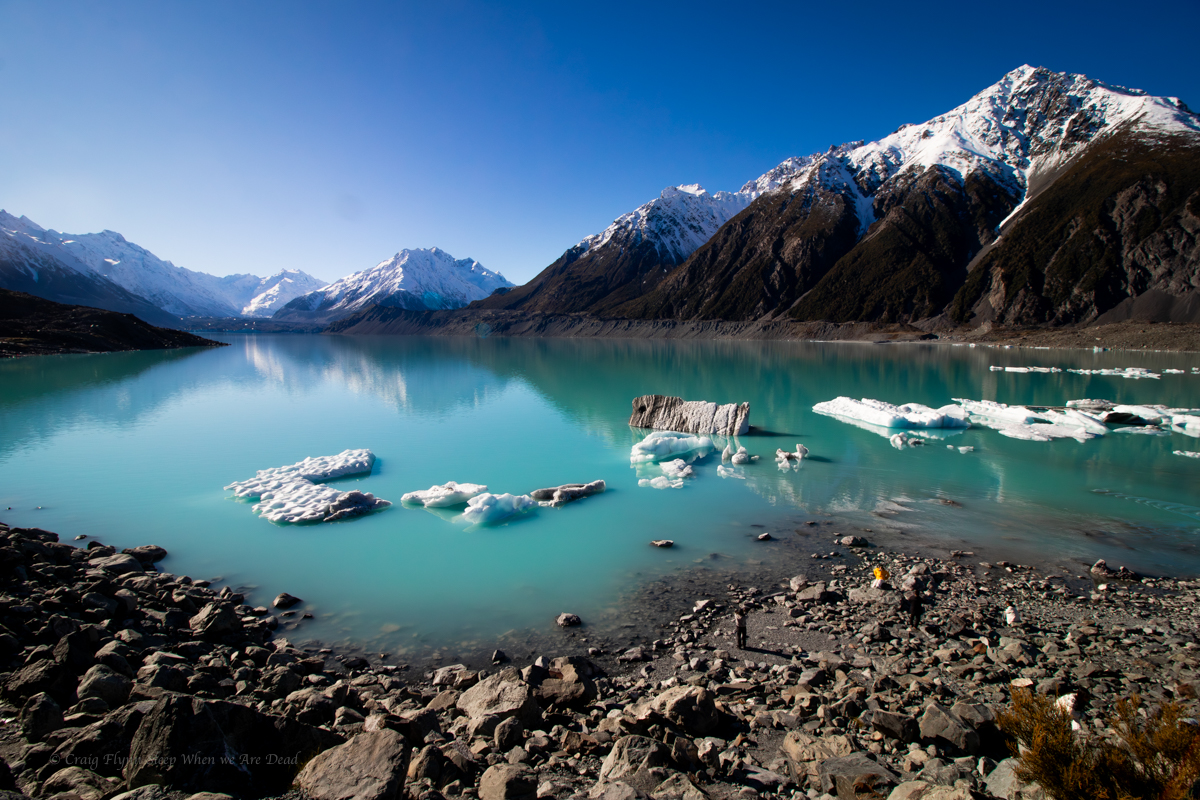
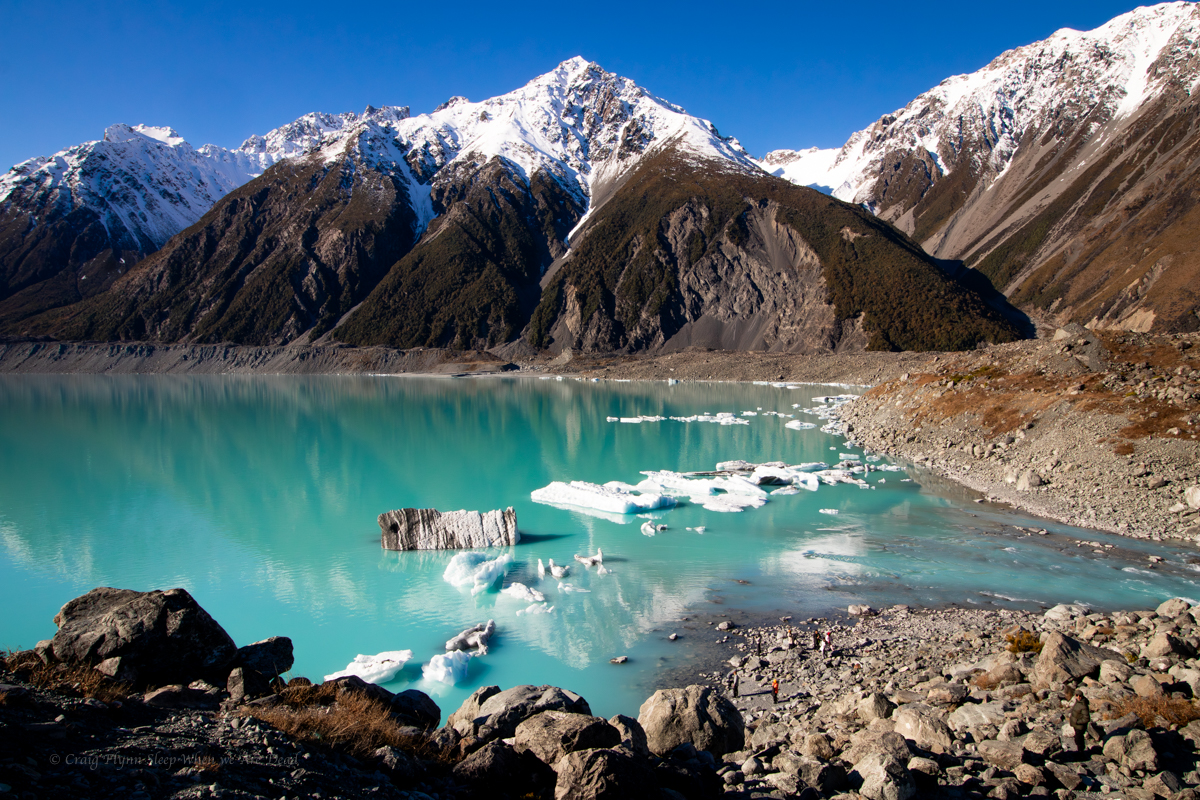
Here you can take helicopter tour or a boat tour on the lake. We opt to just do the tourist walks.
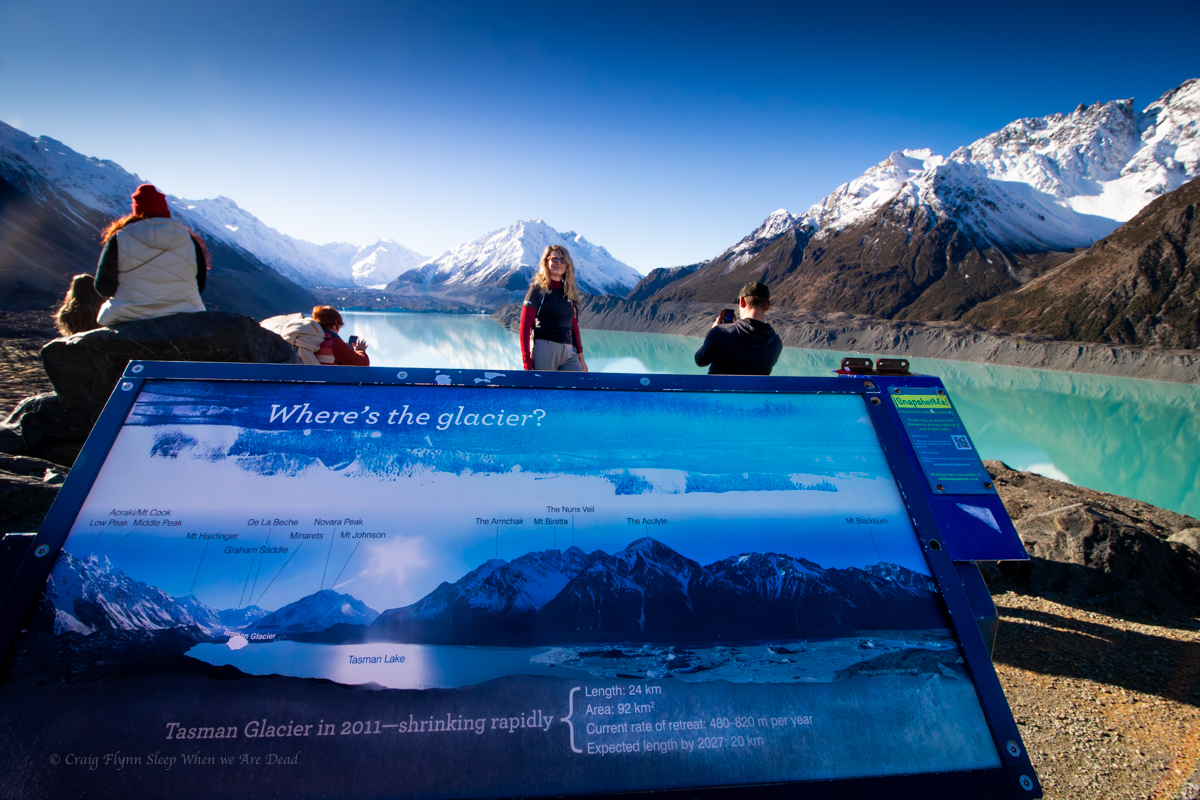
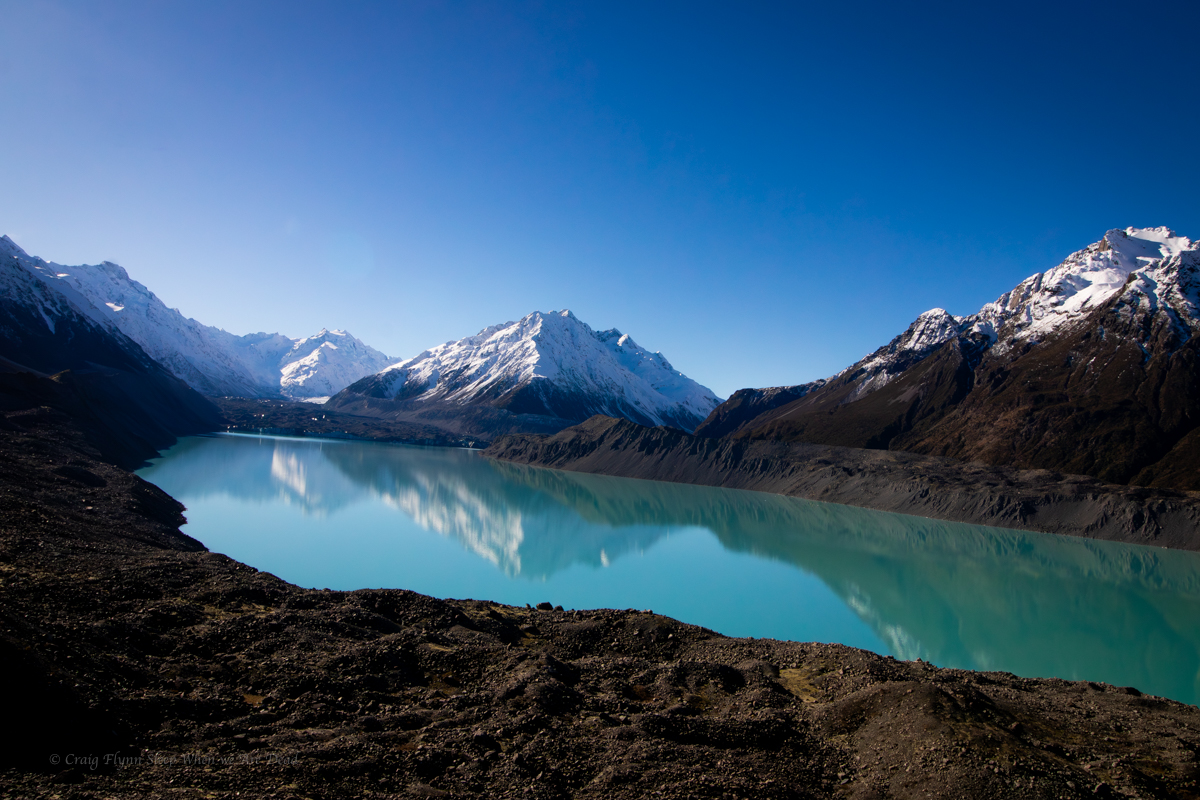
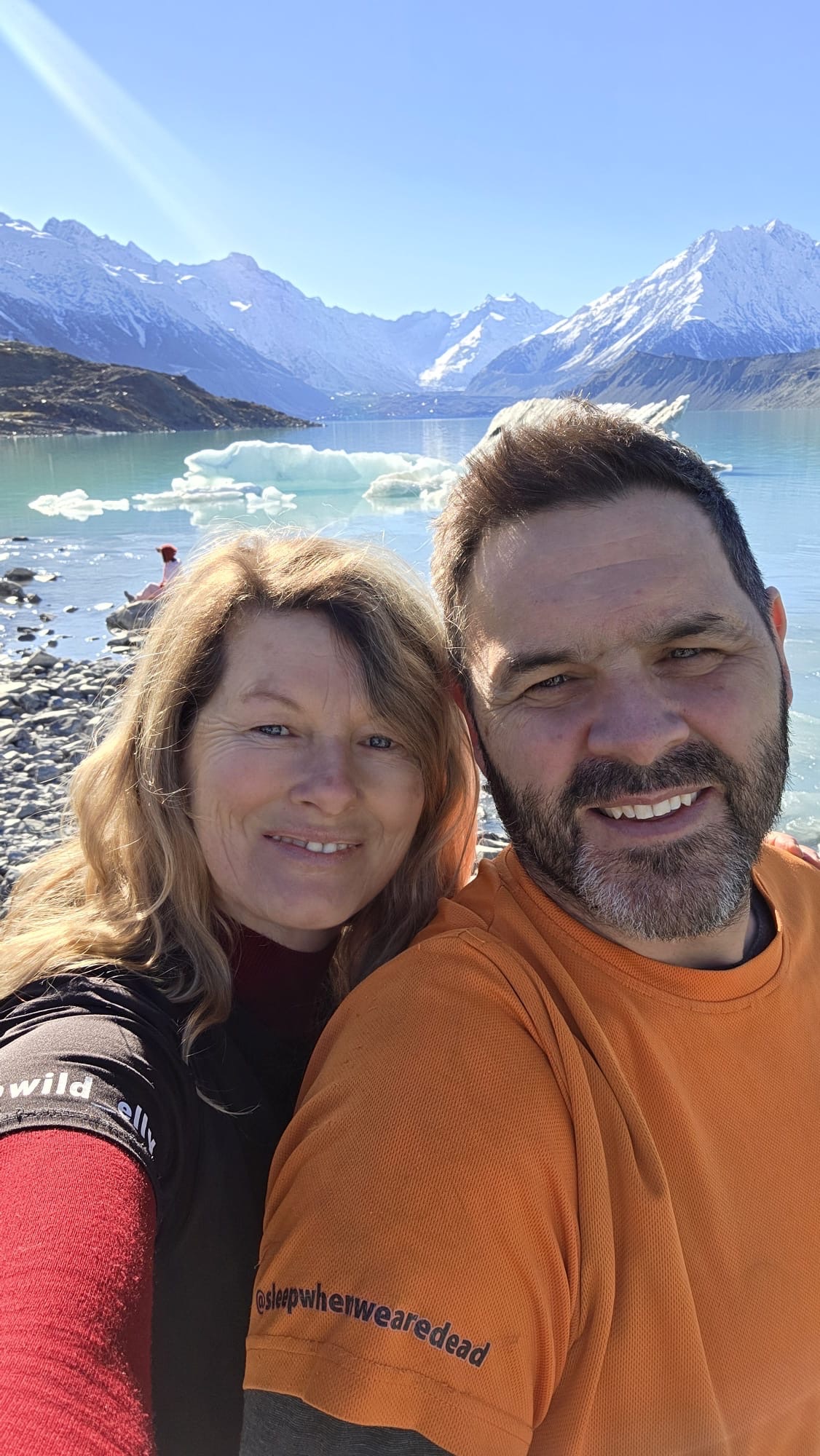
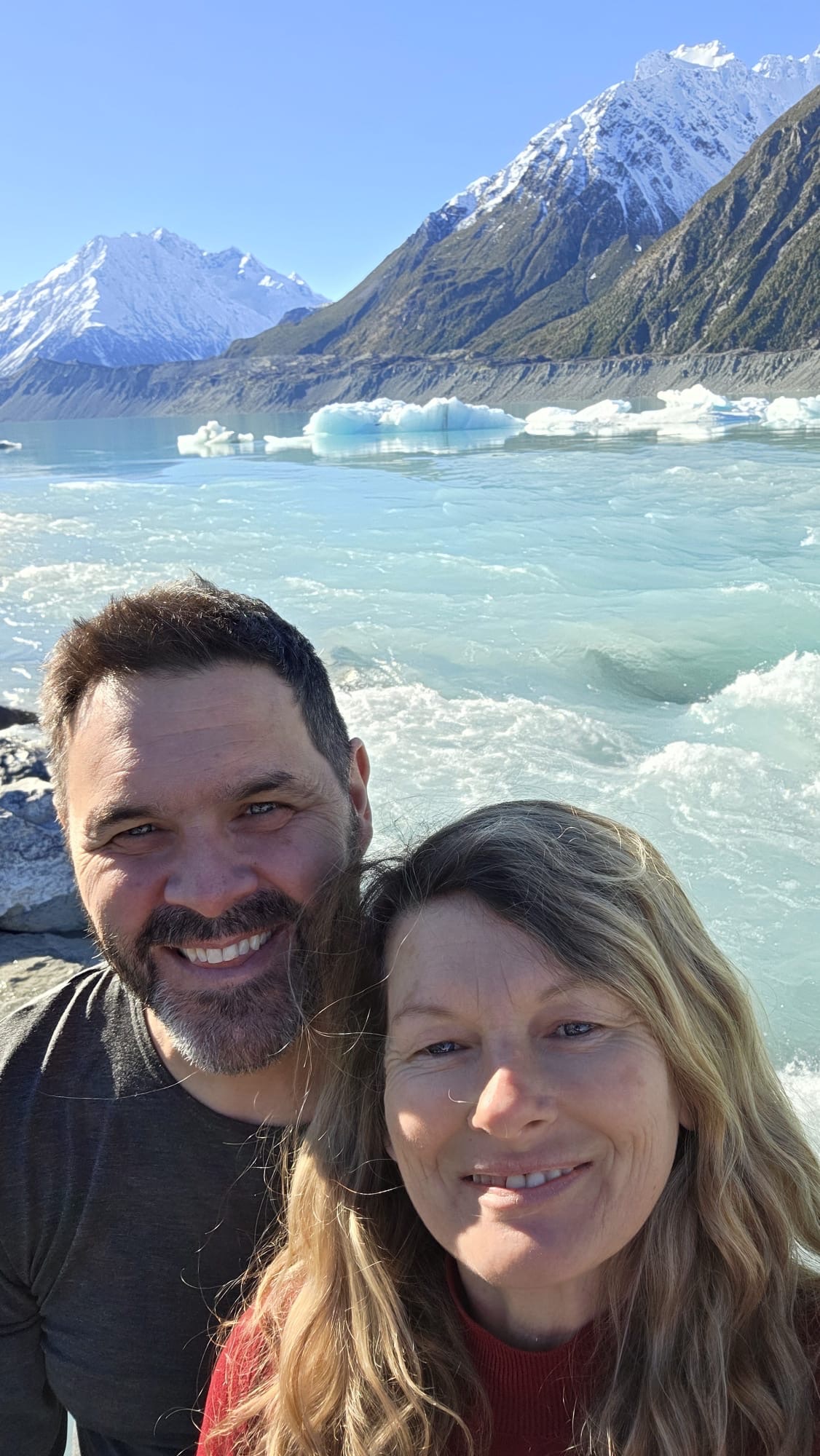
Sitting between NZ’s two tallest peaks the Tasman is New Zealand’s largest glacier, being up to 4km wide and 600m thick in places. It had remained a fairy constant 28km long through out its recorded history up until it starting to retreat in the 1990s. It’s currently 23km long and retreating on average 180m/year.
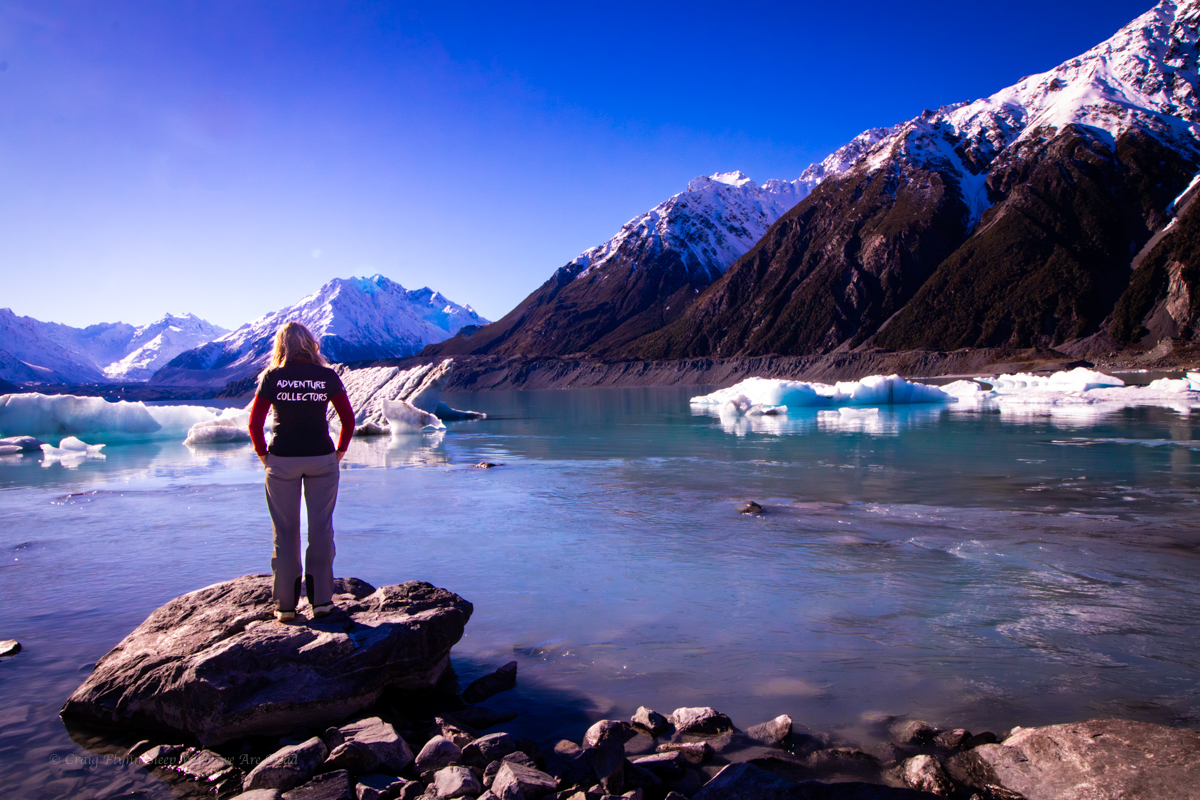
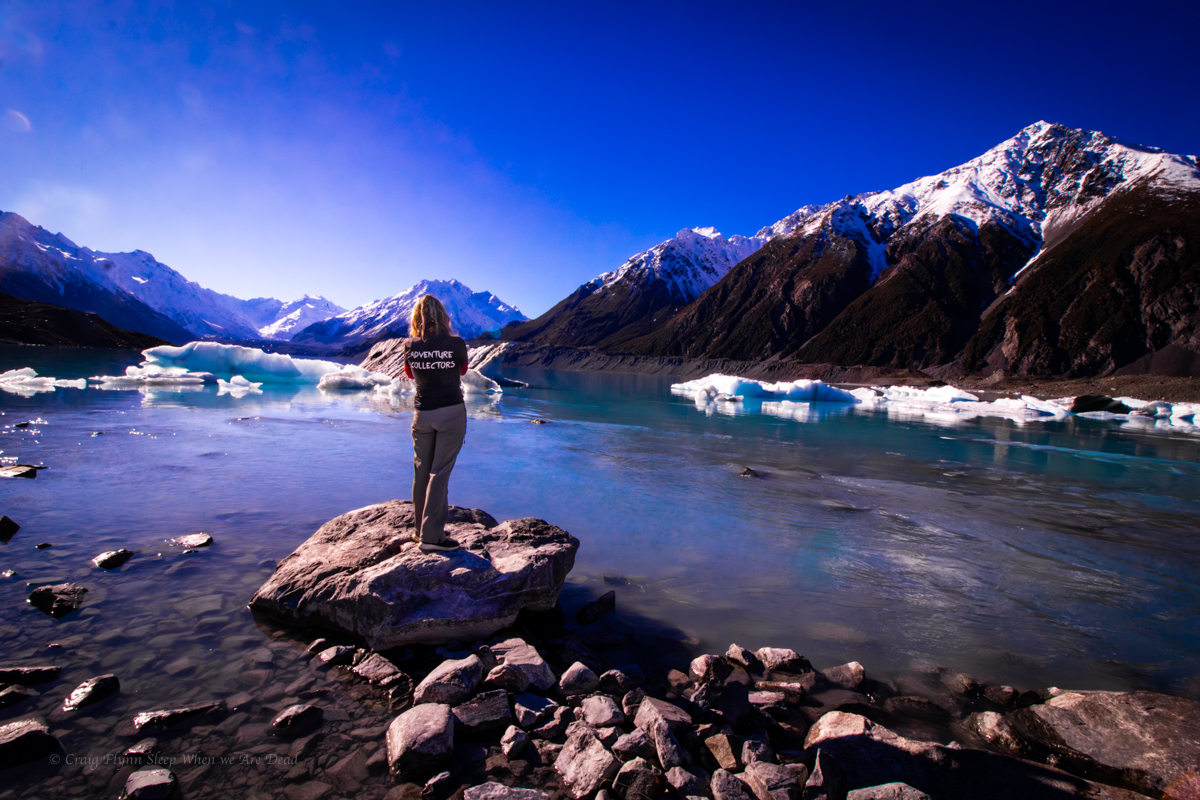
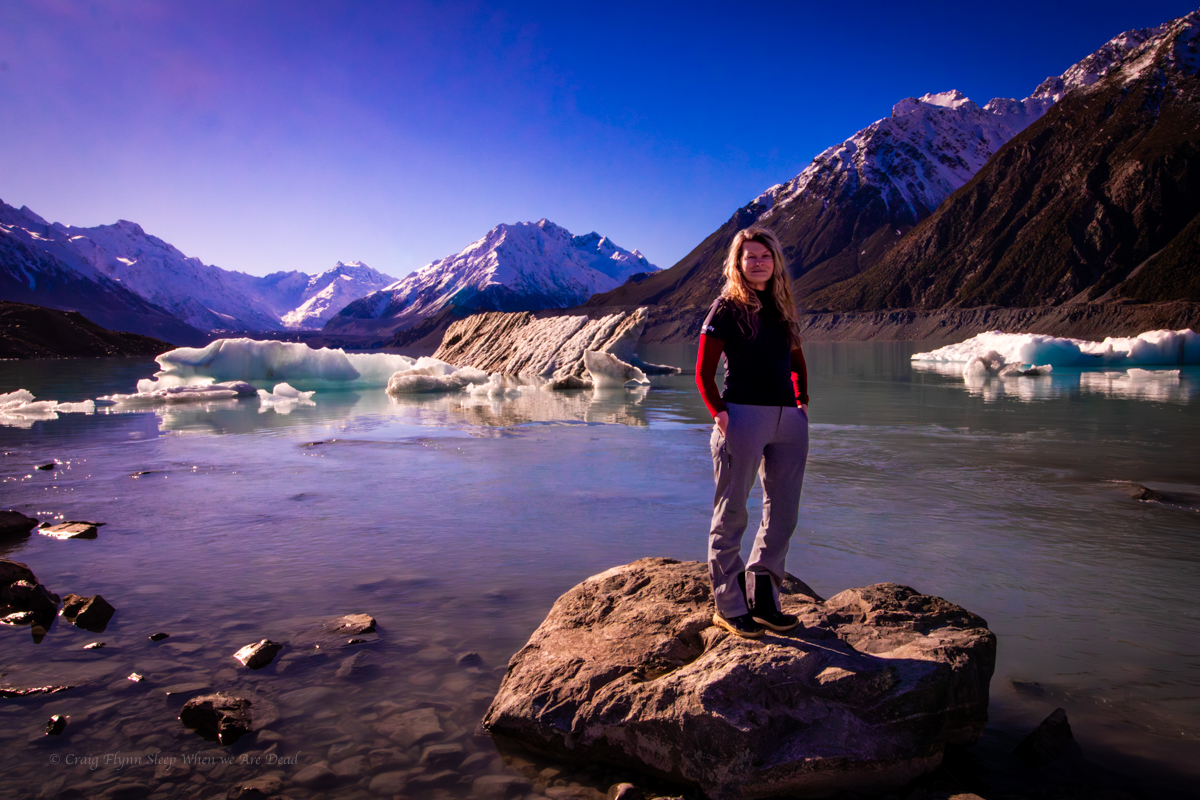
Looking up the lake from the tourist lookout the glacier is’t much to look at. Compared to the white snow and crystal blue ice on the Franz Josef, the Tasman crunches up and contains a lot more rock and minerals (Glacier flour), giving it a dark, almost dirty appearance. Without the information sign at the I doubt most people, me included, would pick it out in the distance.
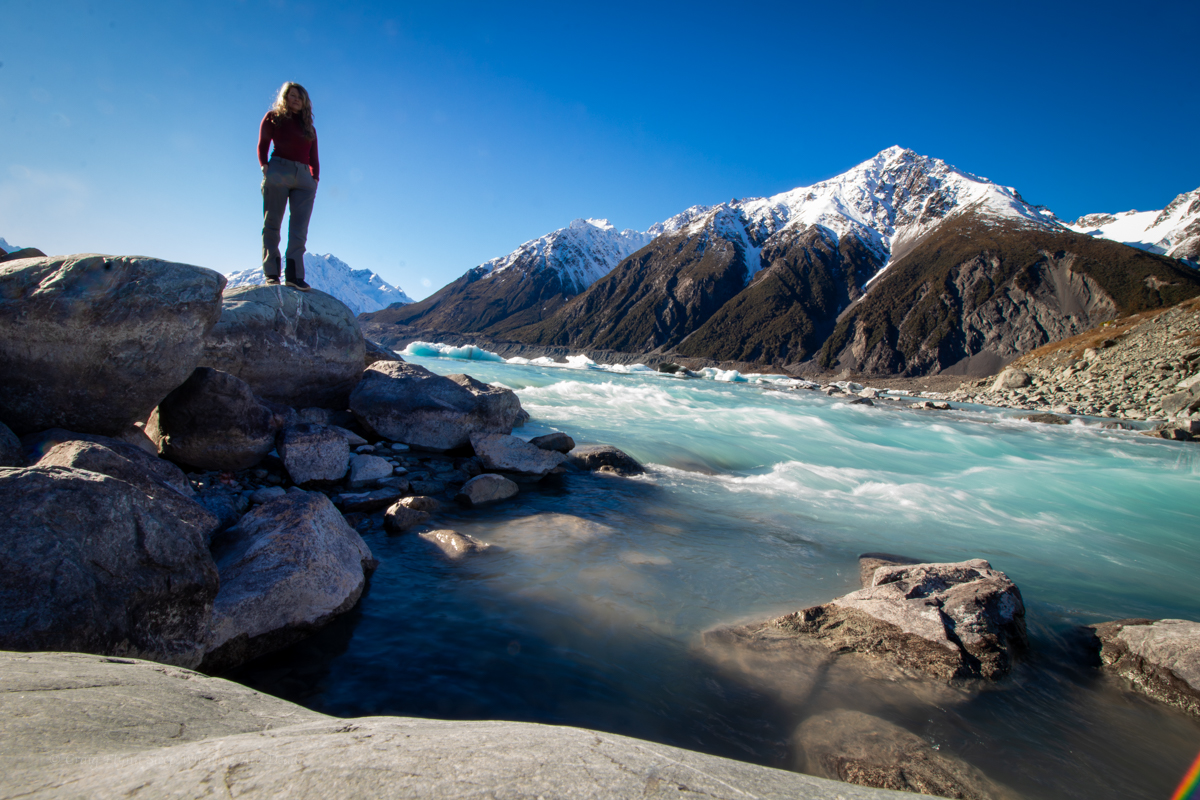
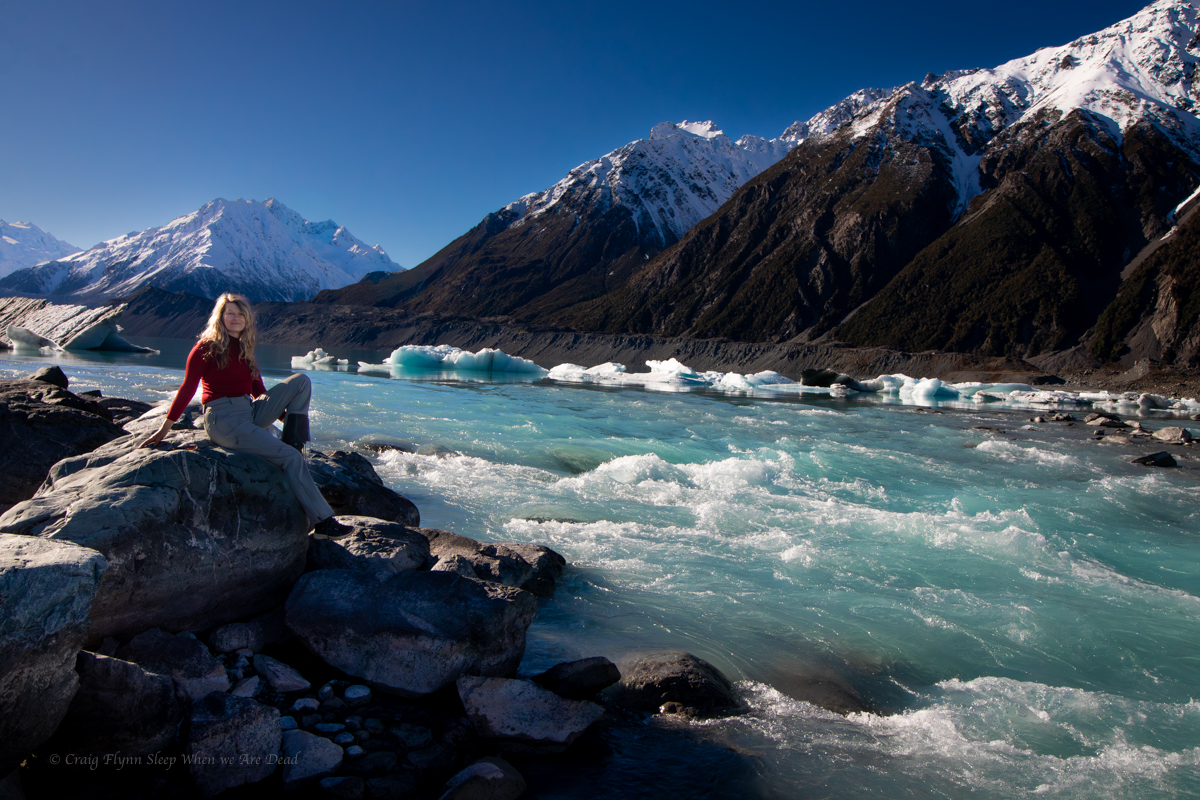
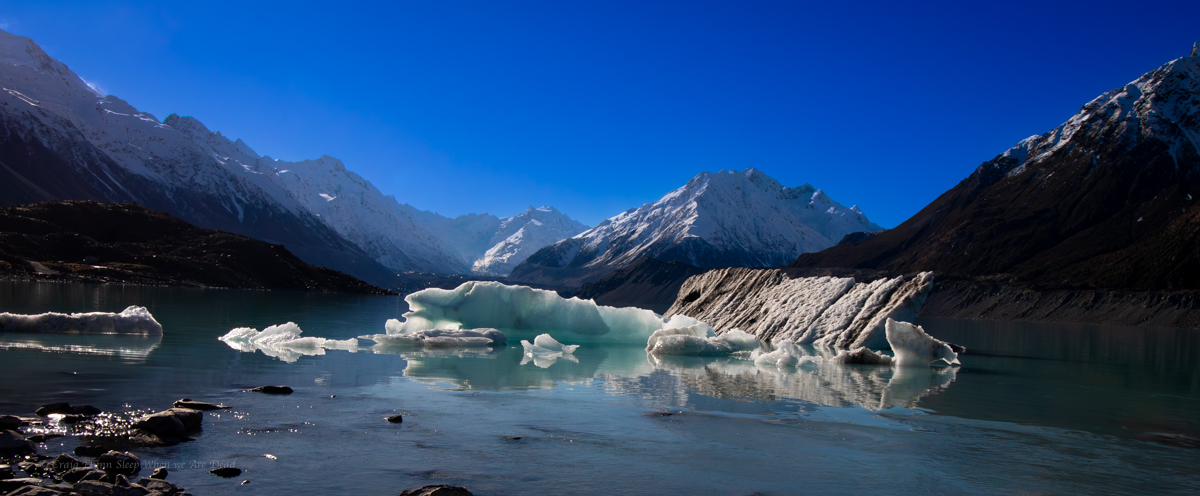
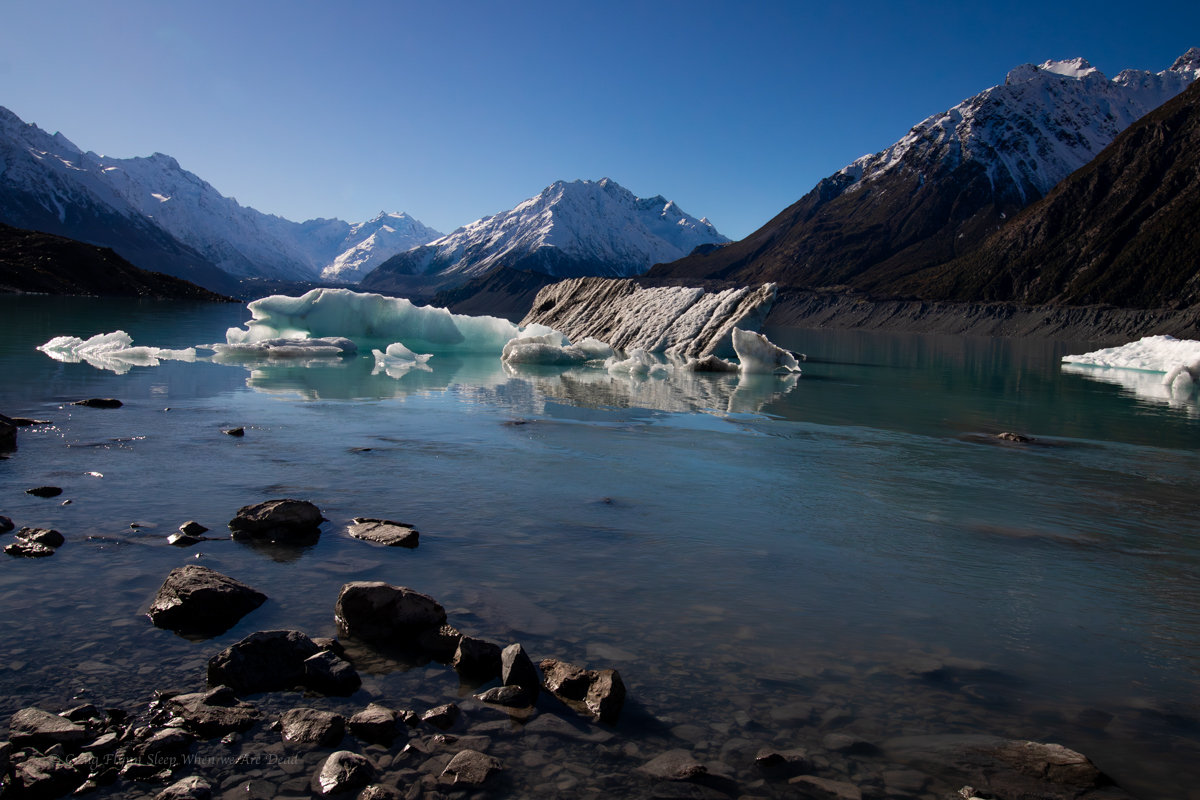
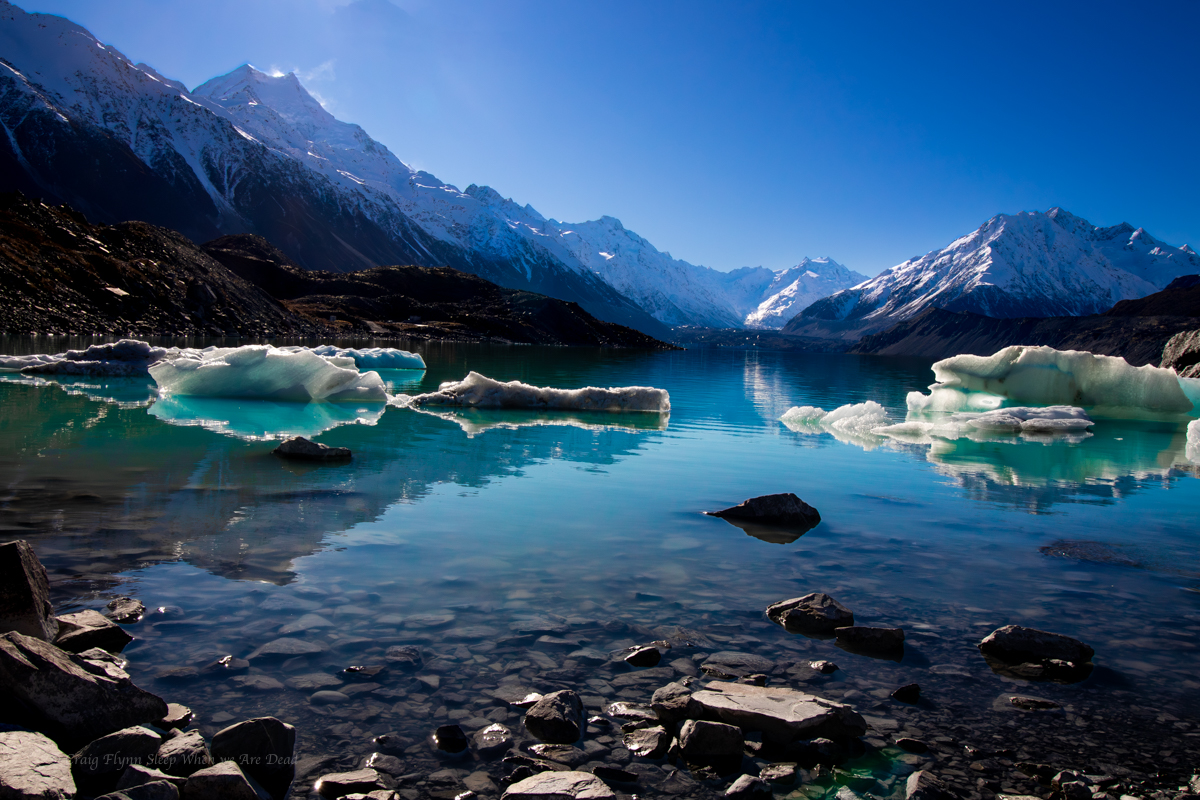
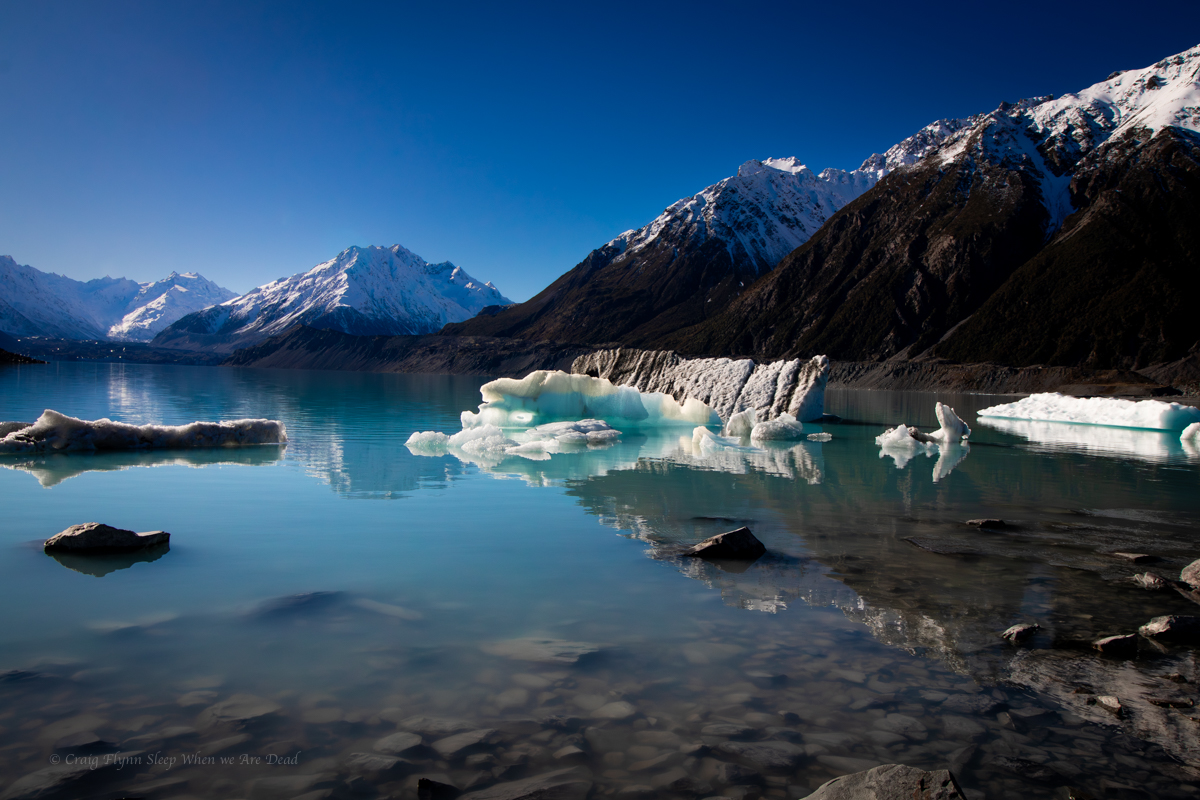
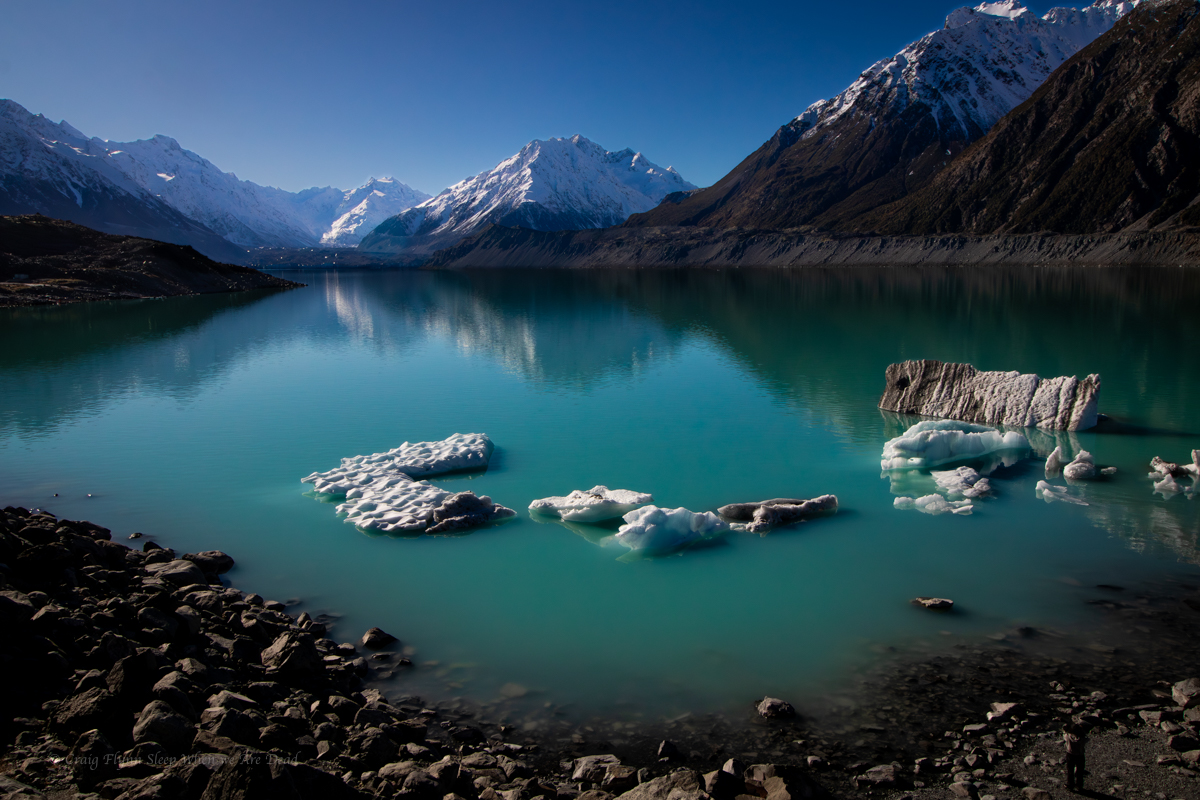
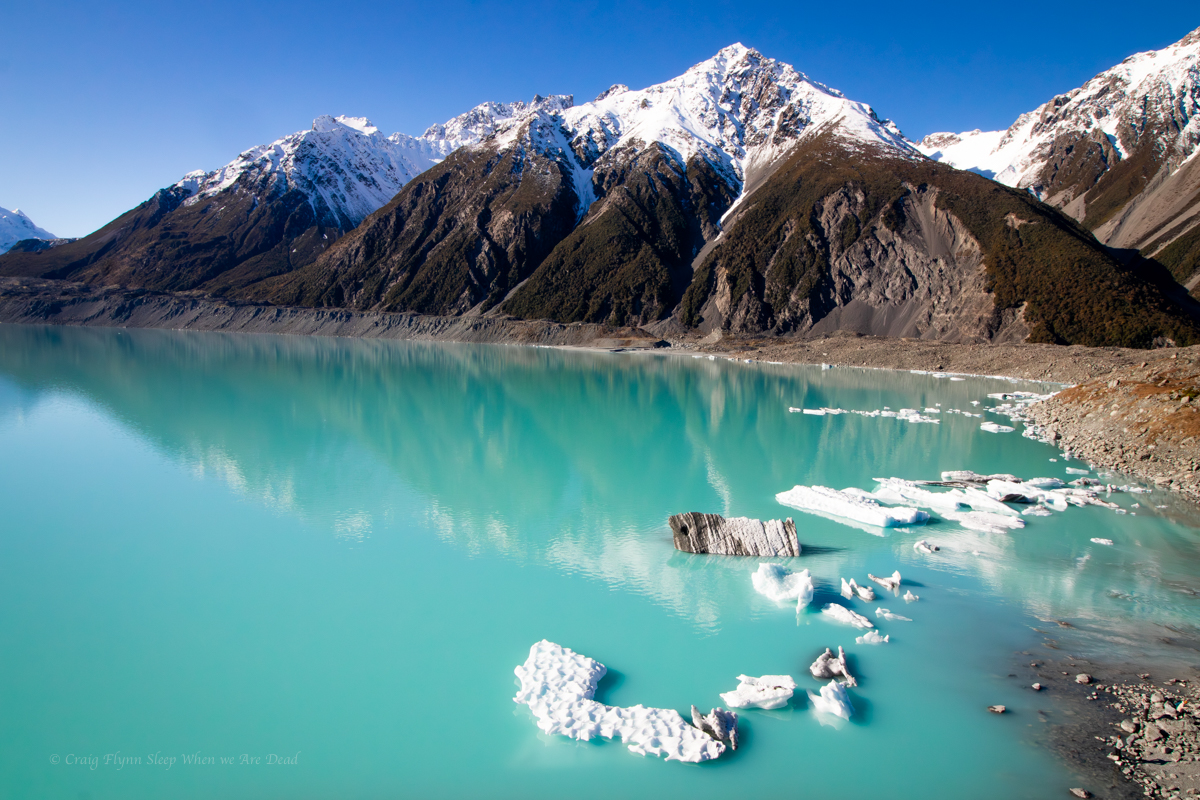
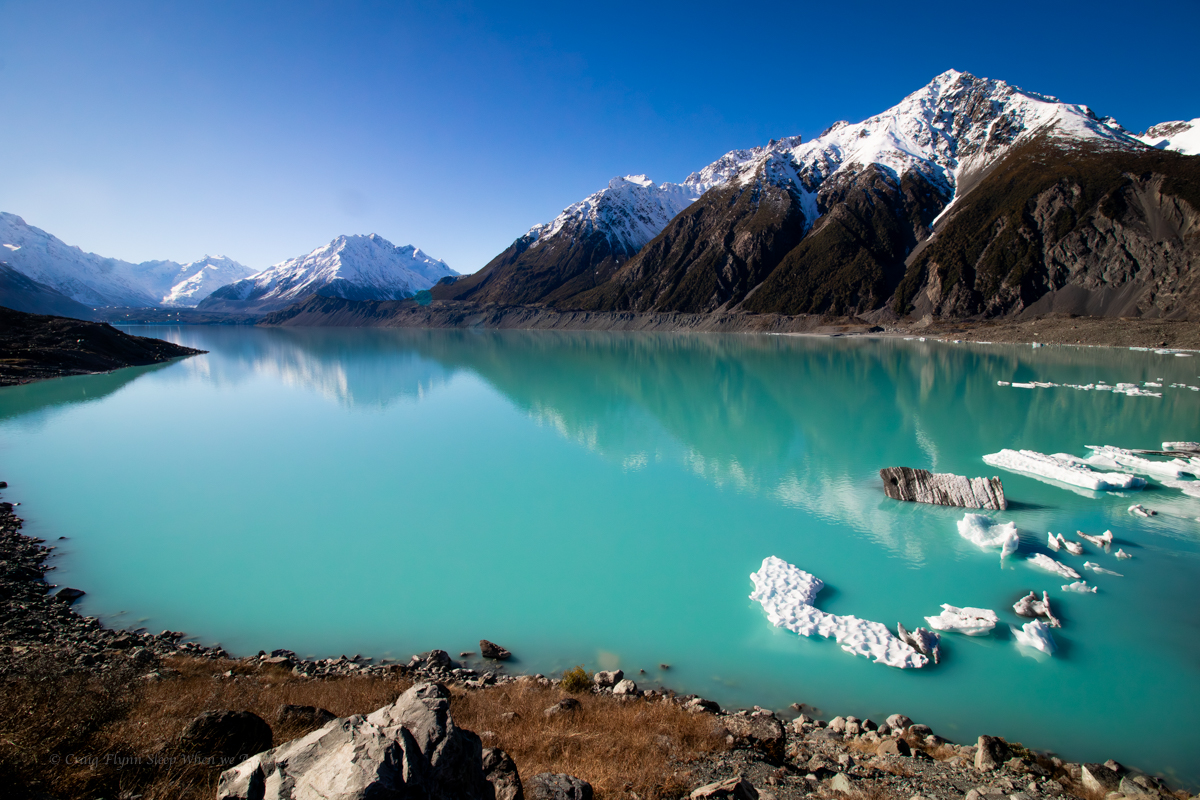
The lake, however is stunning.
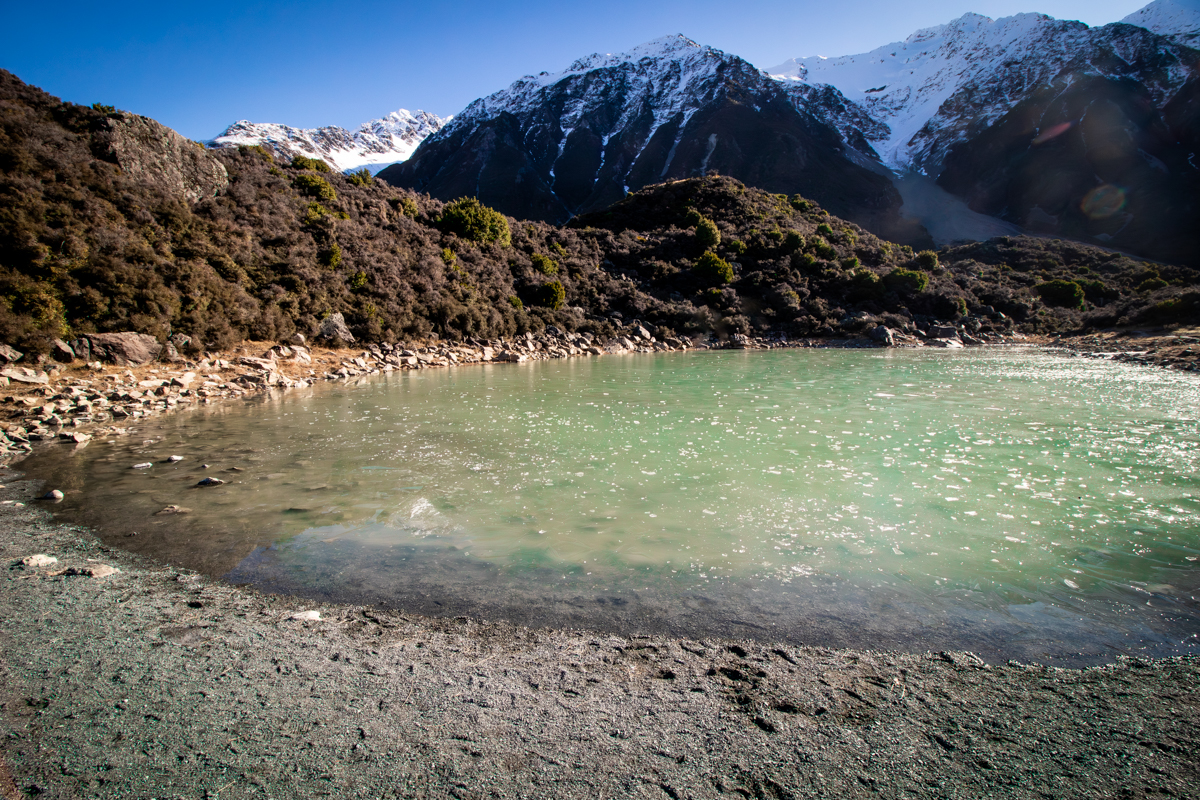
The Blue Pools. When named they were connected to the glacier and very blue. Now they are cut off they are more a stagnant green.
Back at the van we start heading back down the valley.
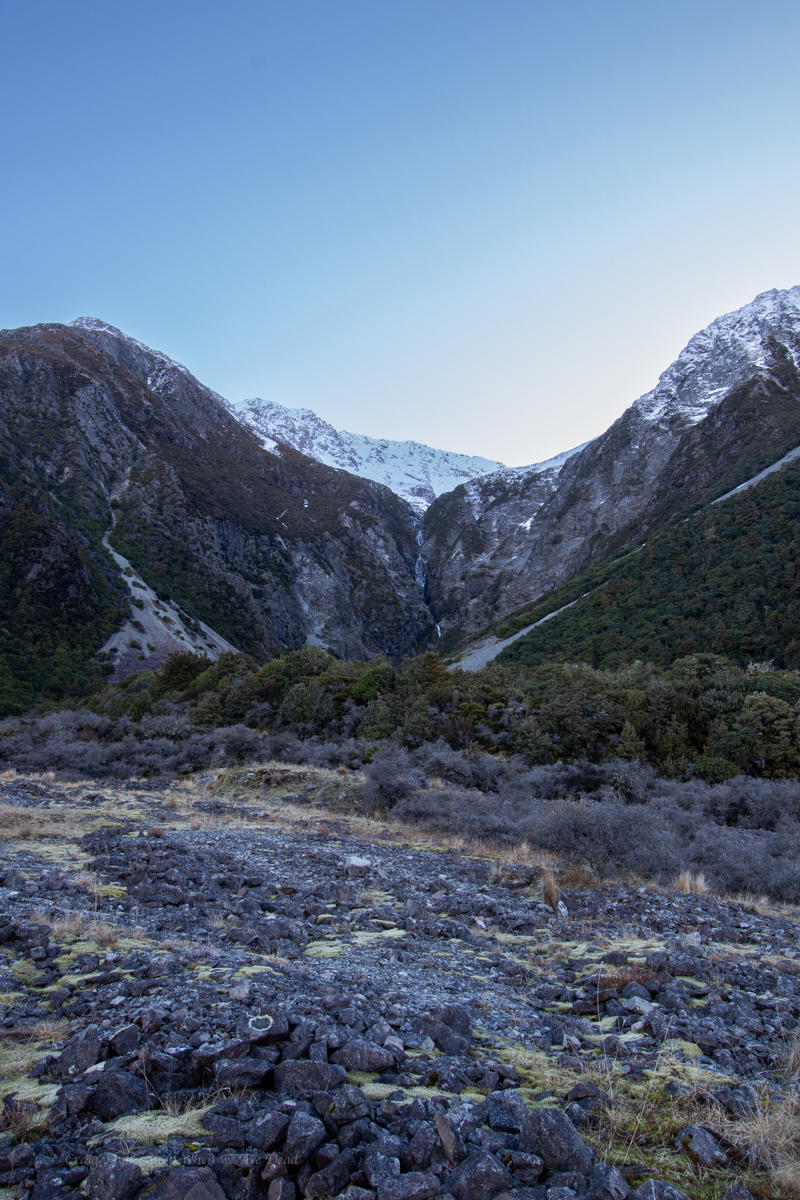
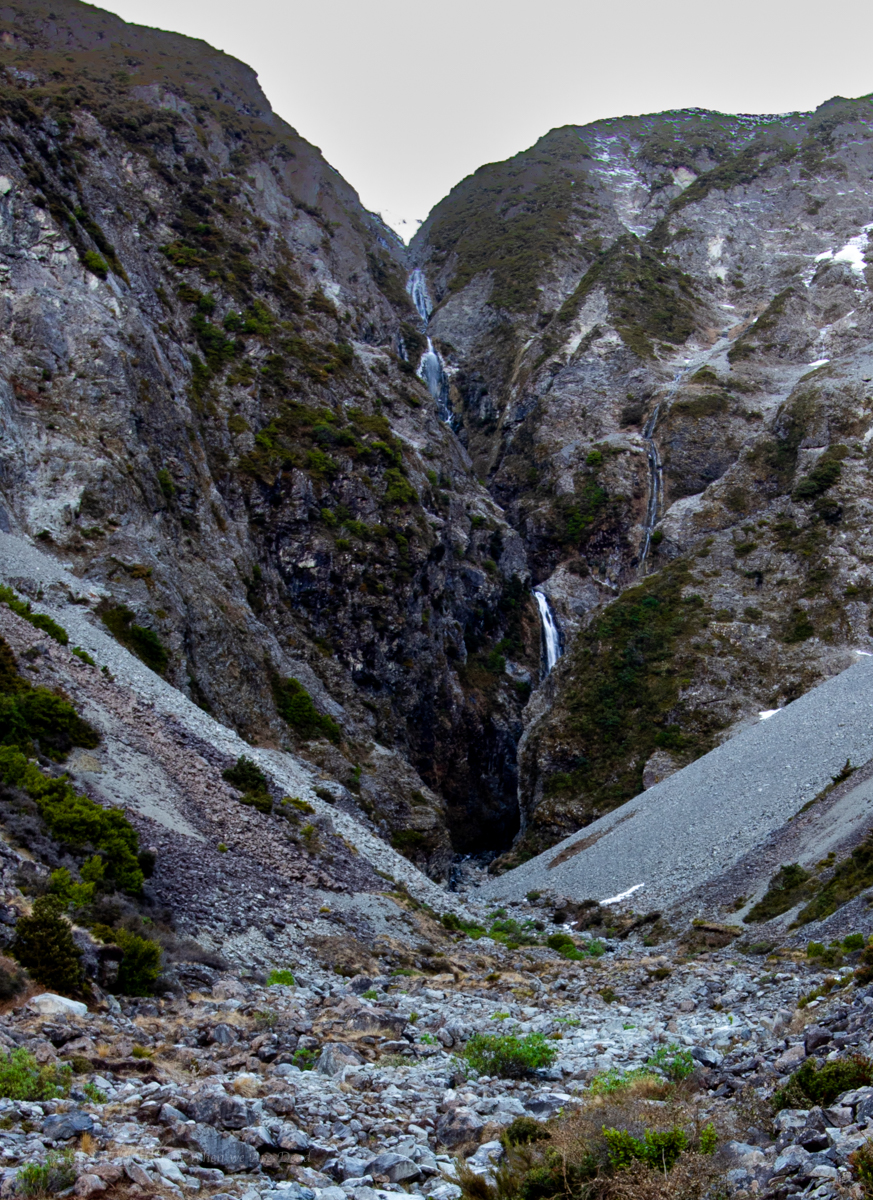
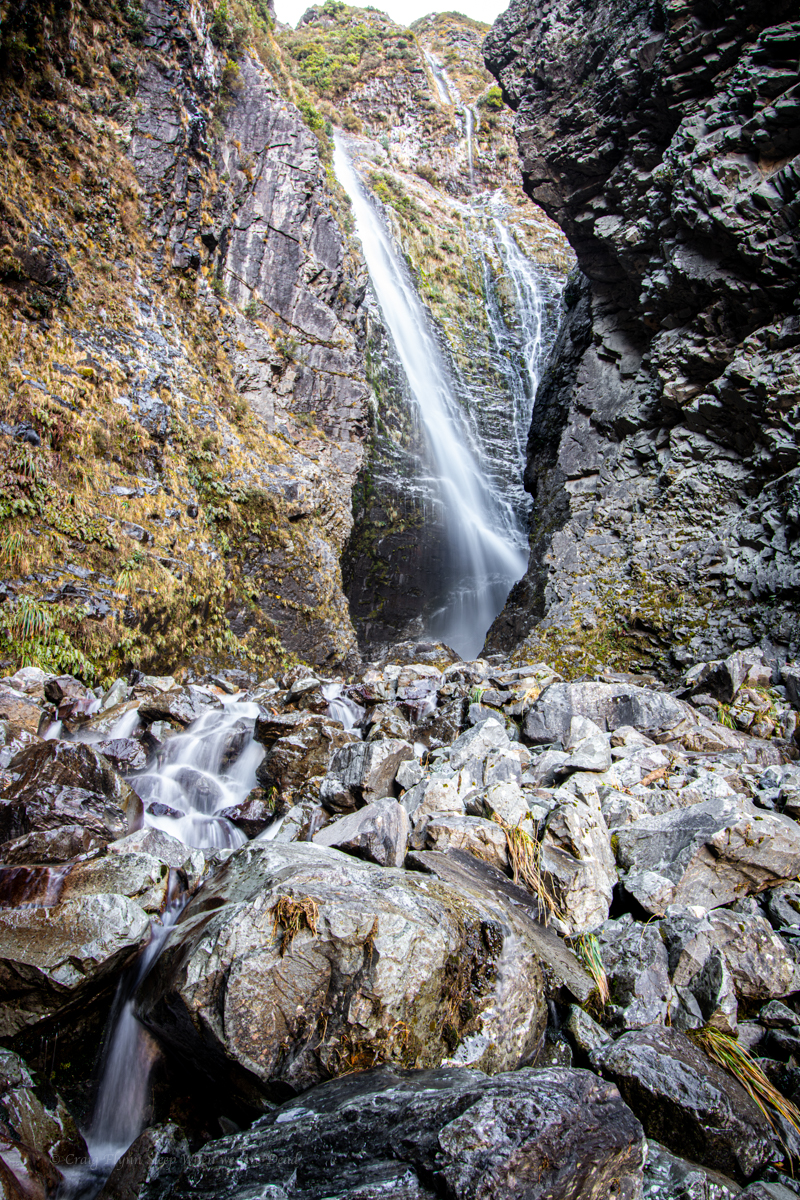
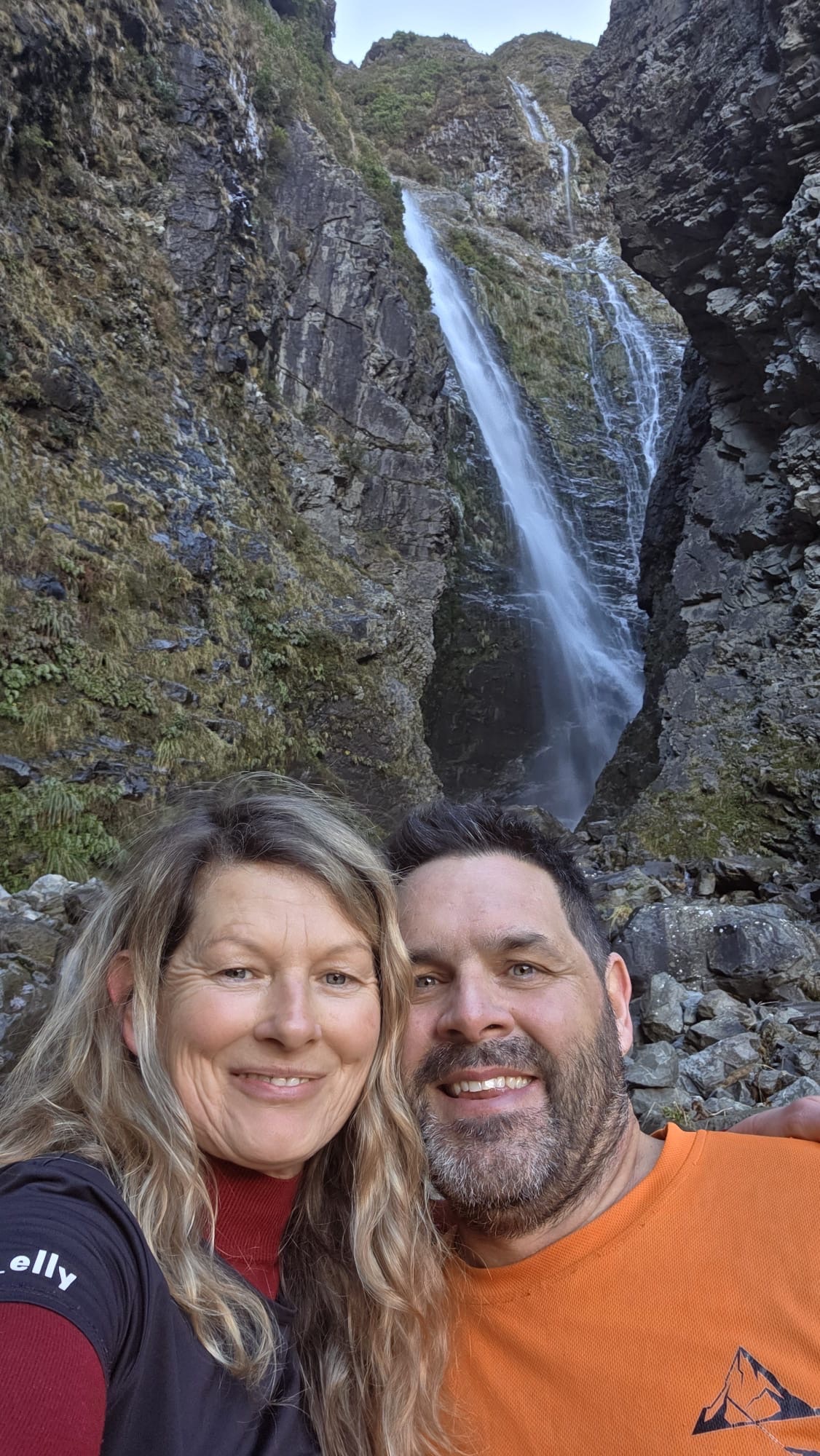
On the way in I’d caught a glimpse of Wakefield Falls. It caught my eye on the way back out.
Is that waterfall frozen?
Looks like it.
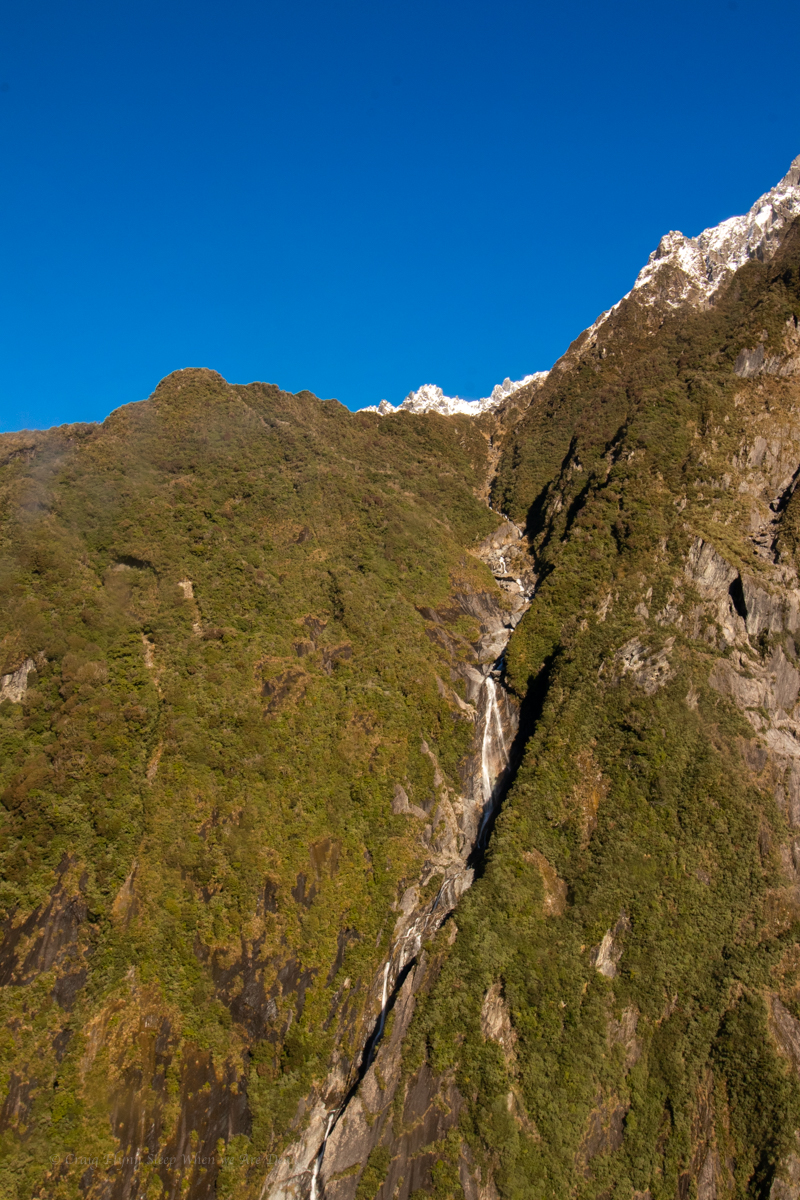
It’s difficult to come to terms with scale here. That waterfall tumbles 230 vertical meters.
We pull over for a better look.
Na, it’s flowing. Looks like a cracker of a slot it’s tumbling into.
Should we go for a look.
hell yeah.
I grab the camera and off we go.
There is what appears to be a former tourist trail that comes and goes through the scrub and scree.
Did I mention it is hard to come to terms with scale here? It becomes apparent it’s further than it first looked.
Belatedly I realise in my excitement to get going I failed to grab my puffer jacket and beanie. This is how silly tourist get themselves on the news kids. Luckily not today though
Halfway up we meet to Russian(?) guys coming back down.
Did you get to the waterfall? ask we
Yes yes. Beautiful. Very careful. Very careful.
We push on. We reach the end of the flatter basin and the terrain gets steeper and looser. We had been yeeting up but slow here. A rolled ankle, rock fall or dislodging the scree here would be bad indeed.
There is still a fair way to go. Says Kylie. We should set a hard stop point.
Good idea.
It had been about 2:15pm when we left the van. We decide at 3:15 we need to turn around to get back prior to loosing the light.
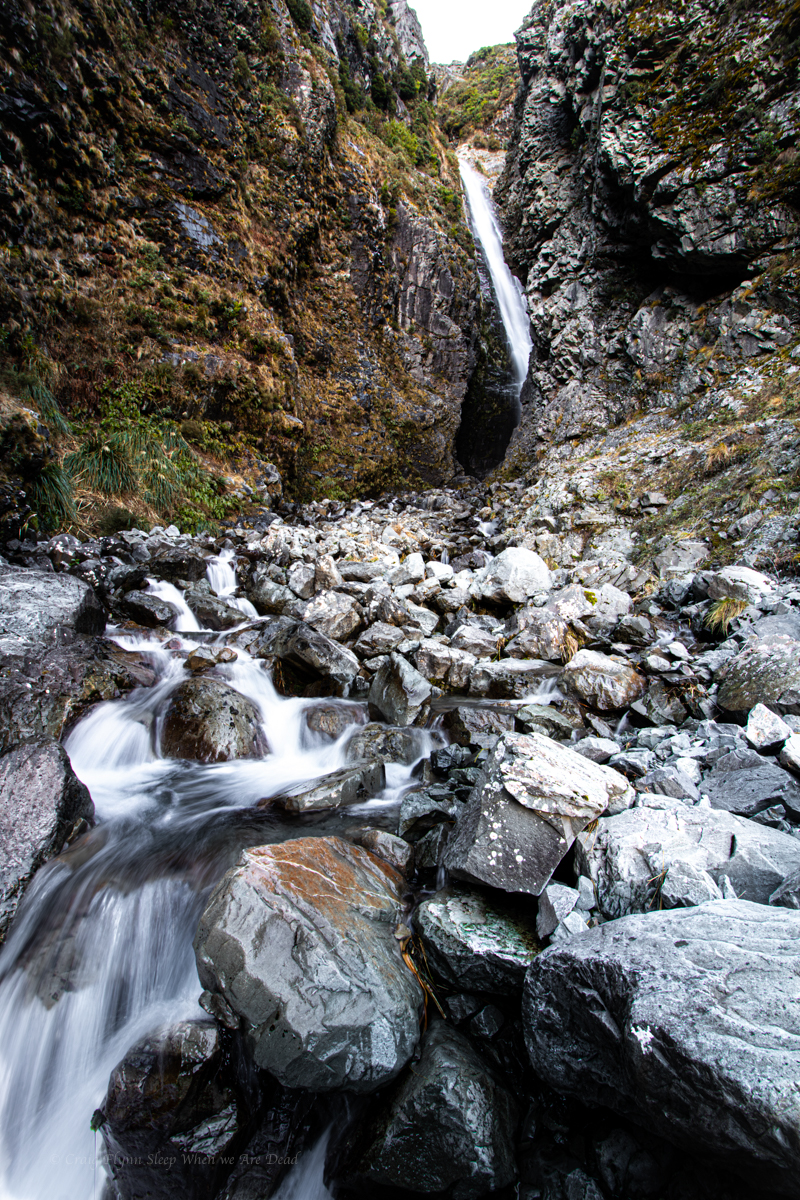
I think we gained about 200m of elevation from the road. A bit after 3pm we get to a point where we had a a reasonable view into the slot where 3 streams of the falls converge.
We are so close. Another 10-15min and we’d be at the base of the falls. but hard stops are hard stops and but I know by the time I get the camera set up and get some shot we’d be close to time so thats what we do.
I’d guesstimate the bottom tier you can see here is about 50m tall
We get the shots and video in and scoot back down.
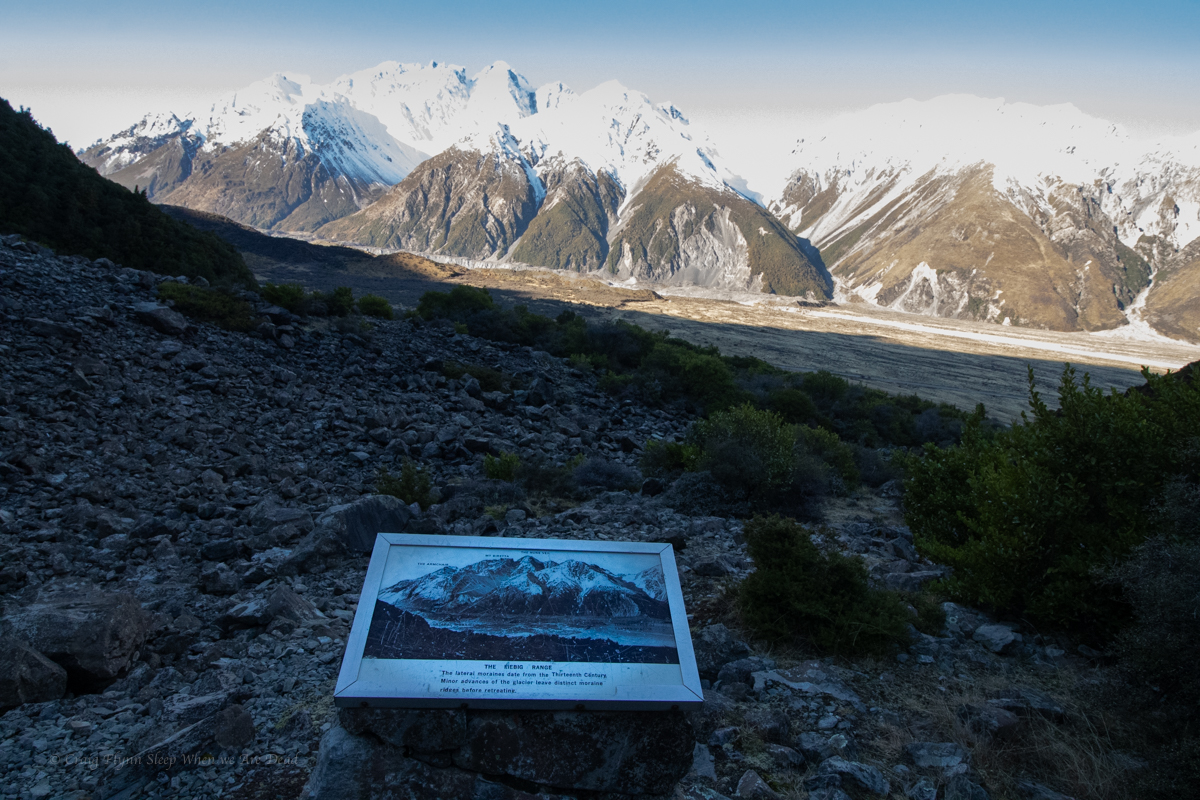
Part way down we come across this old information sign. Weird spot but I guess the old tourist track came up to this vantage point.
Explaining how the moraines pushed up by the glaciers formed dams in the rivers as the glacier retreated. or sumfink
Back at the van we chug down the road making for a freedom camp at lake Pukaki
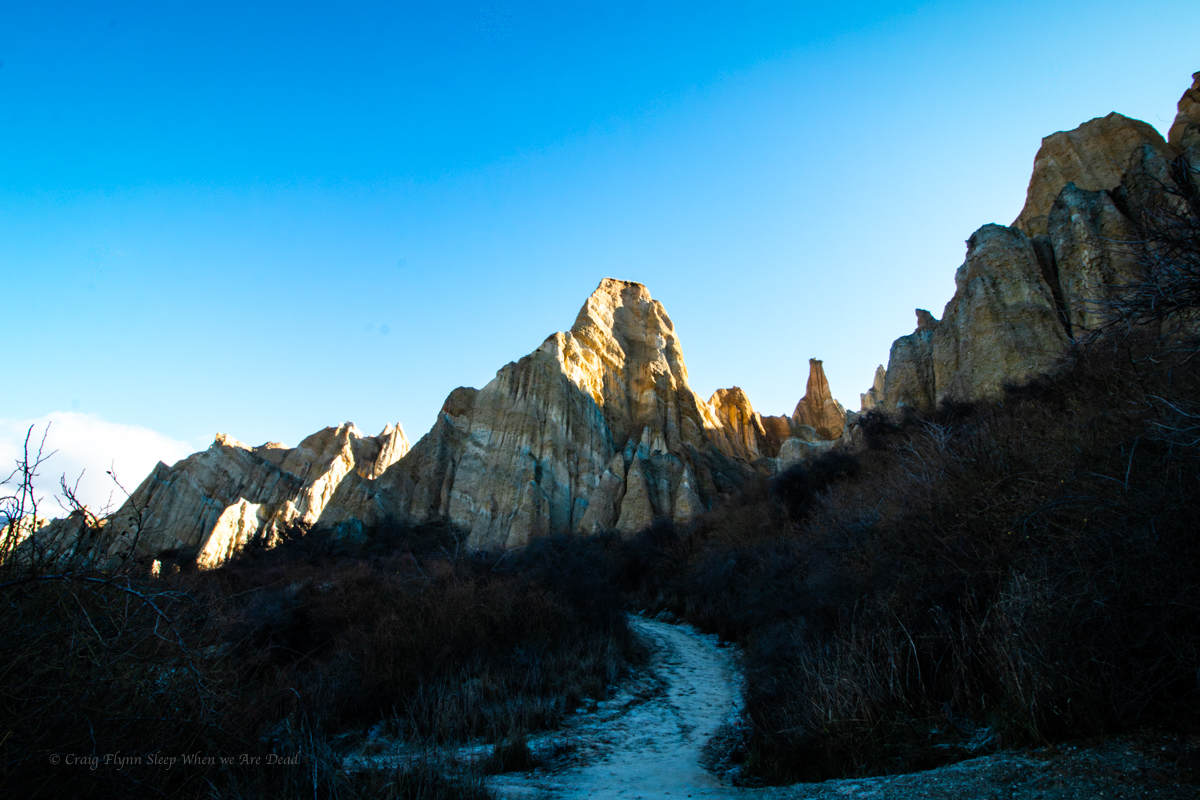
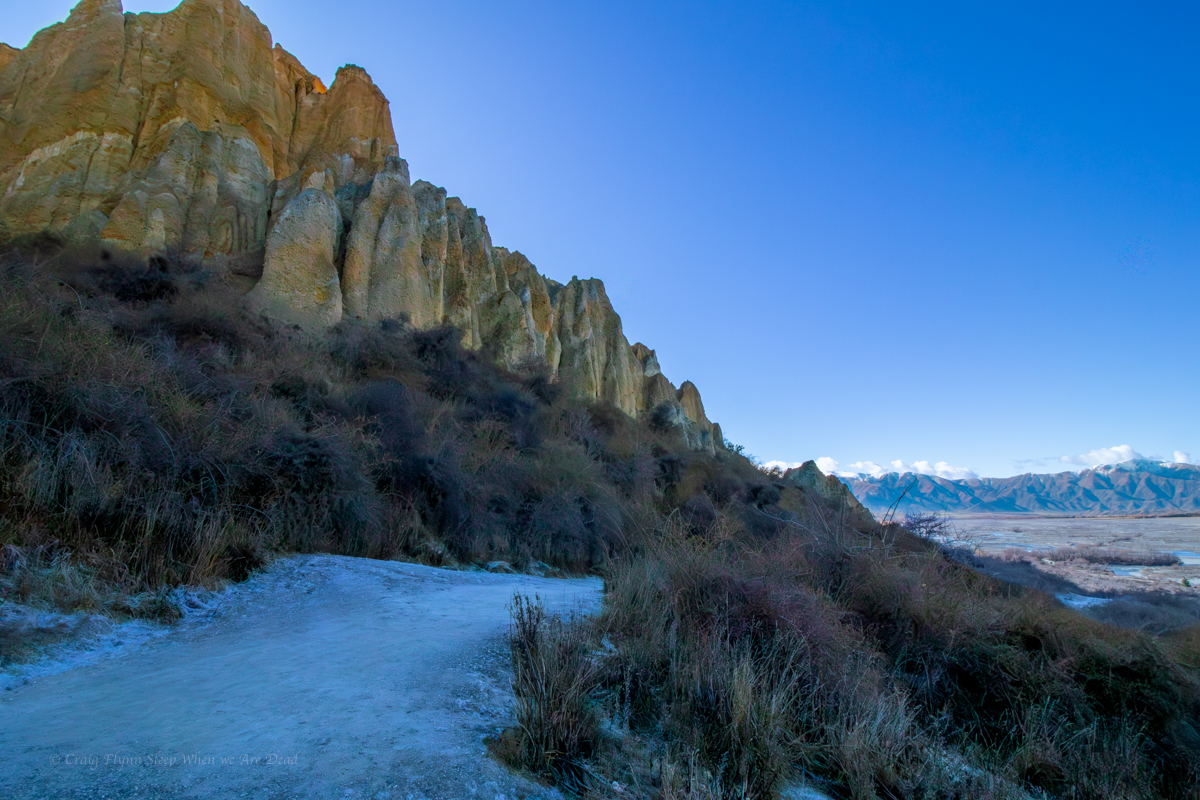
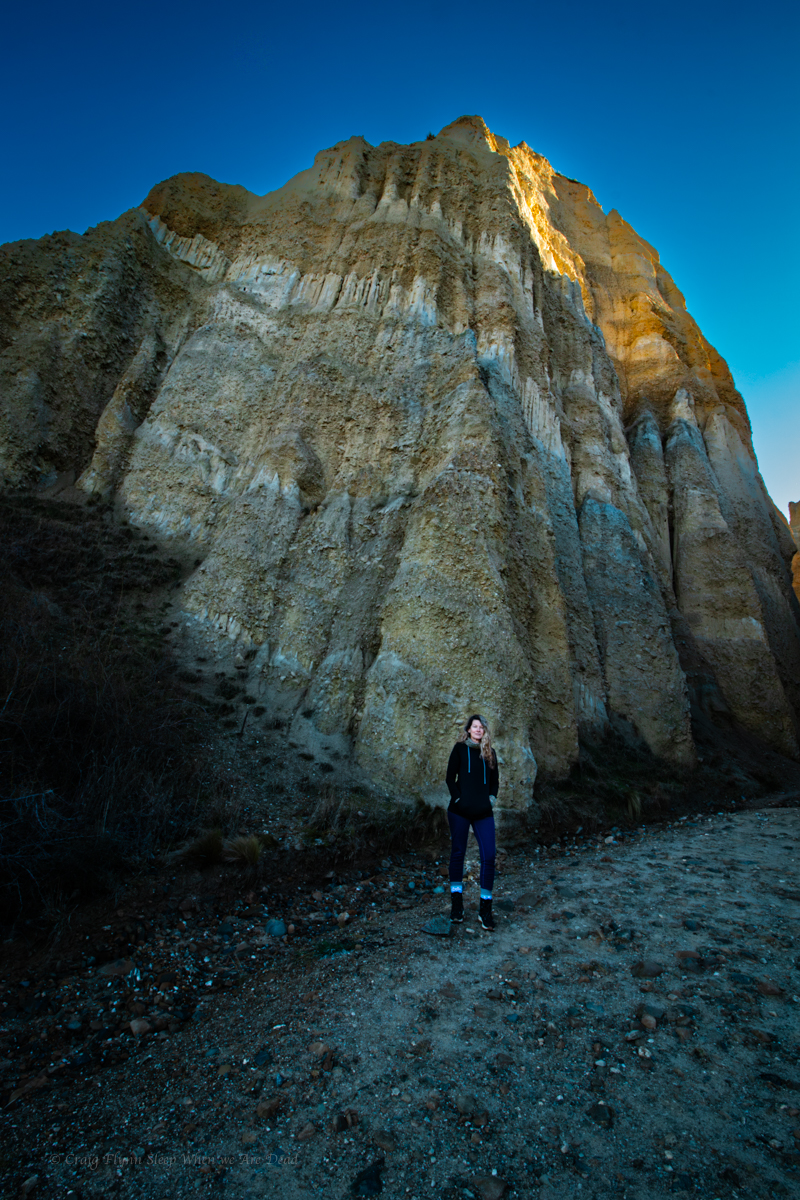
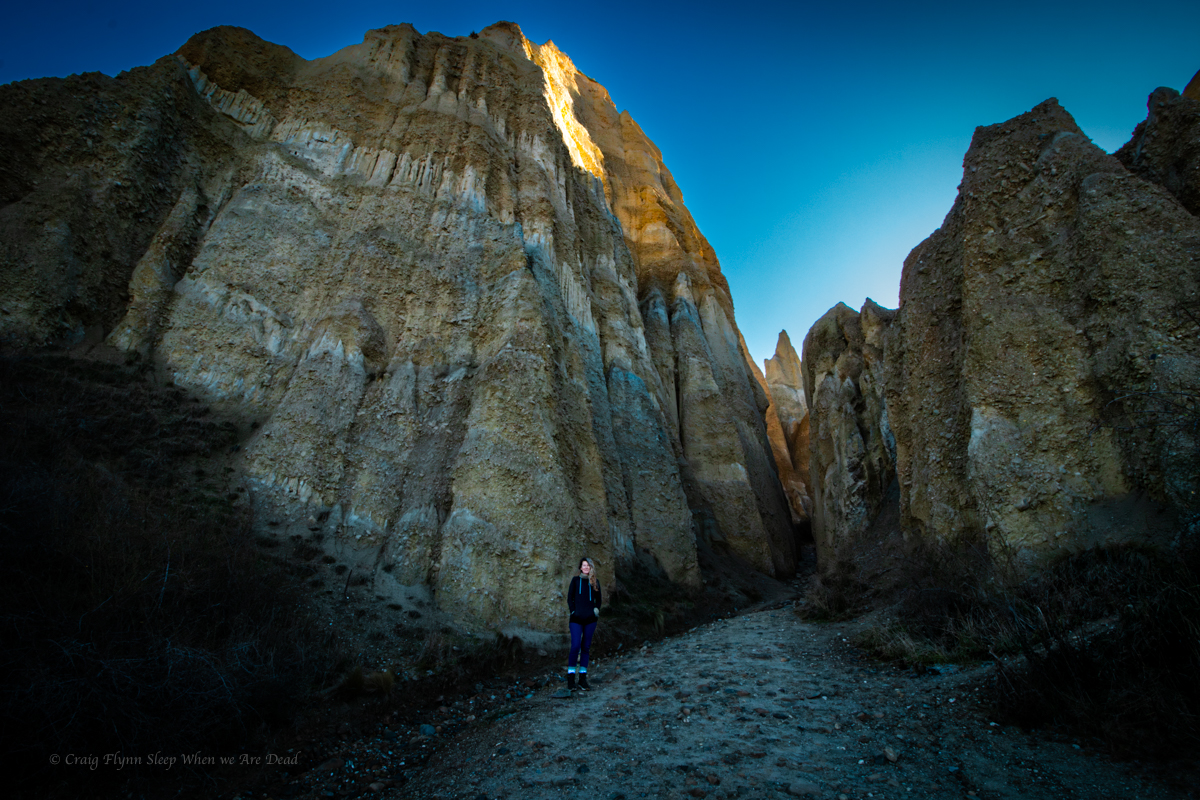
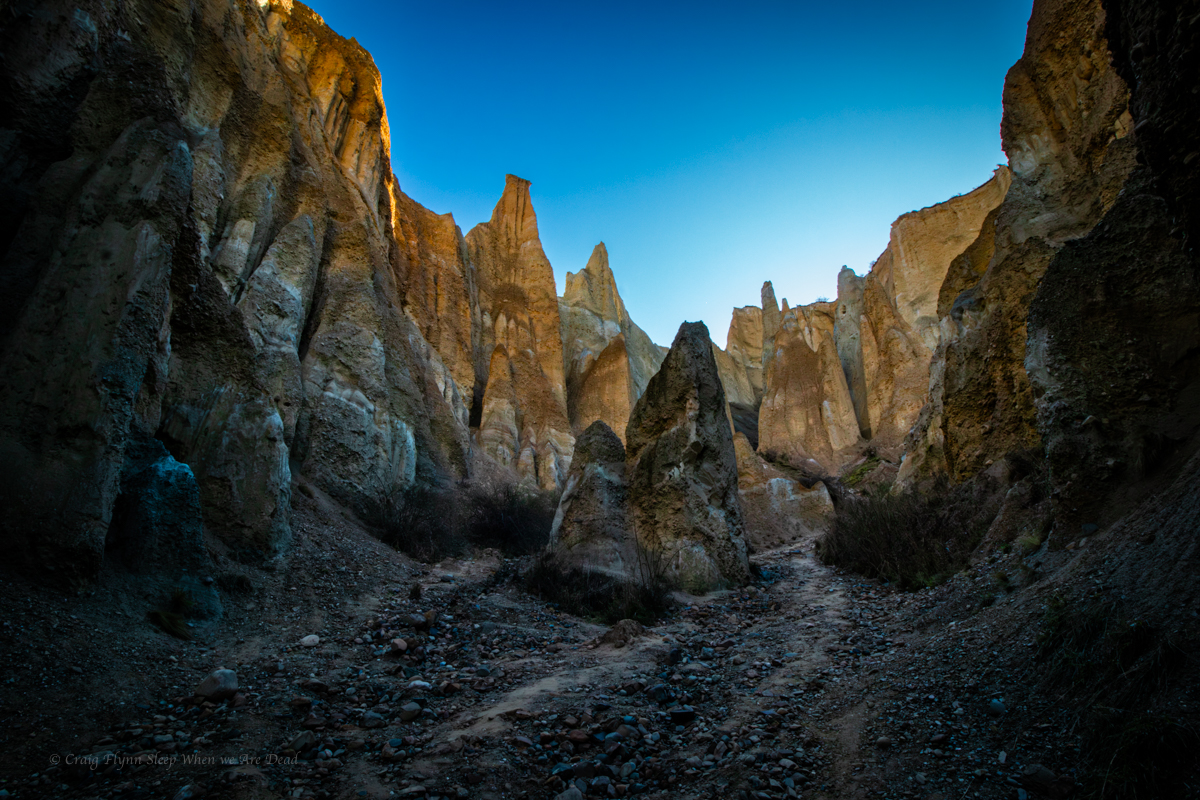
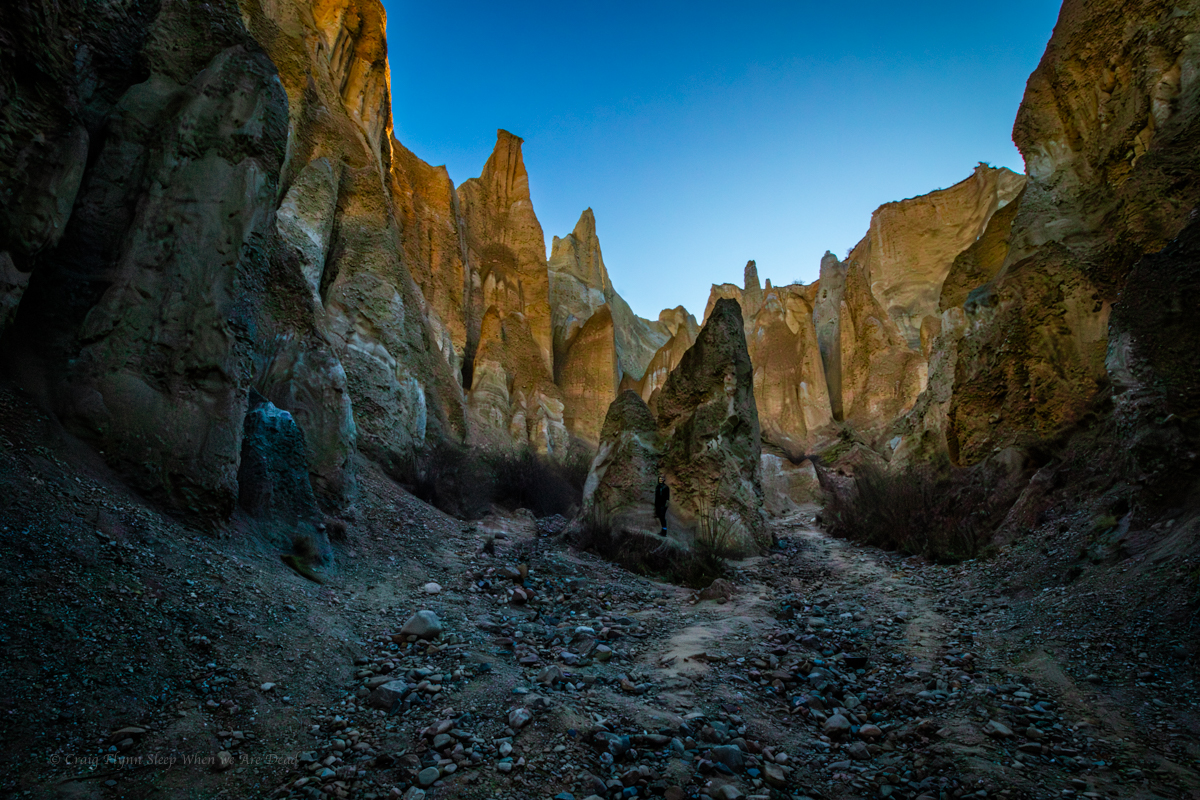
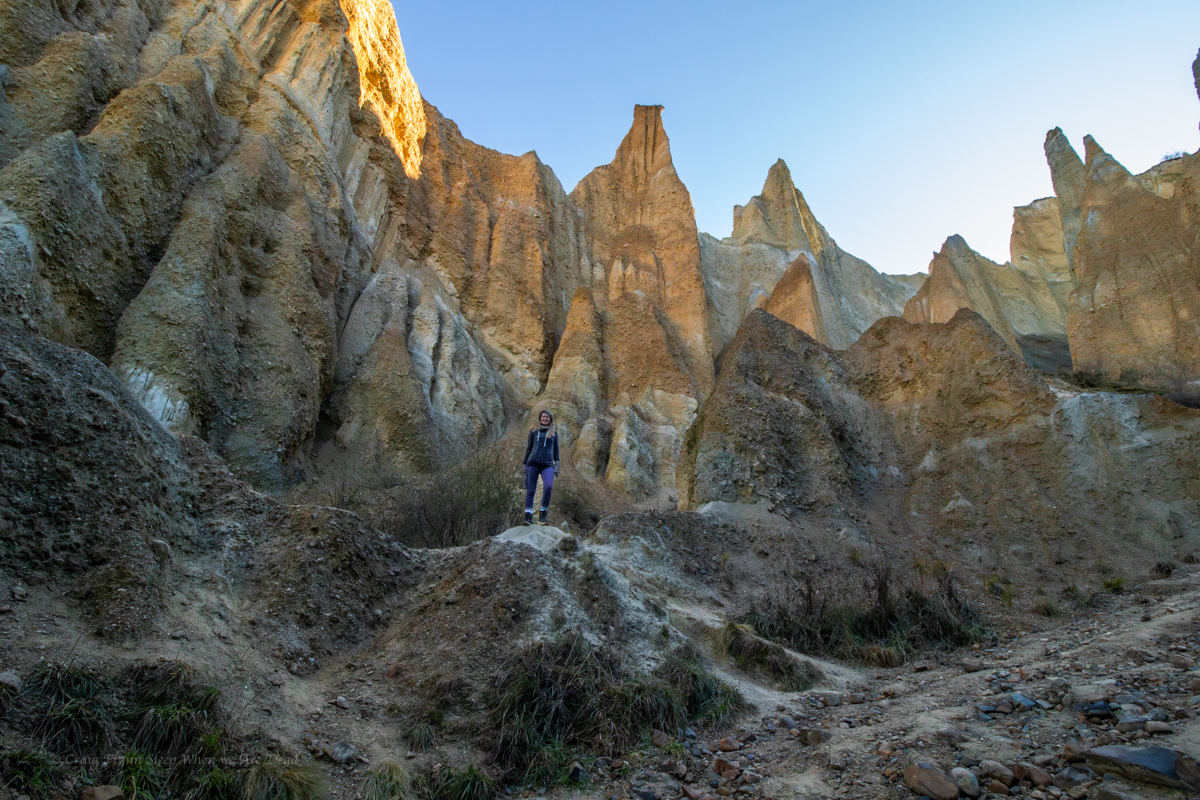
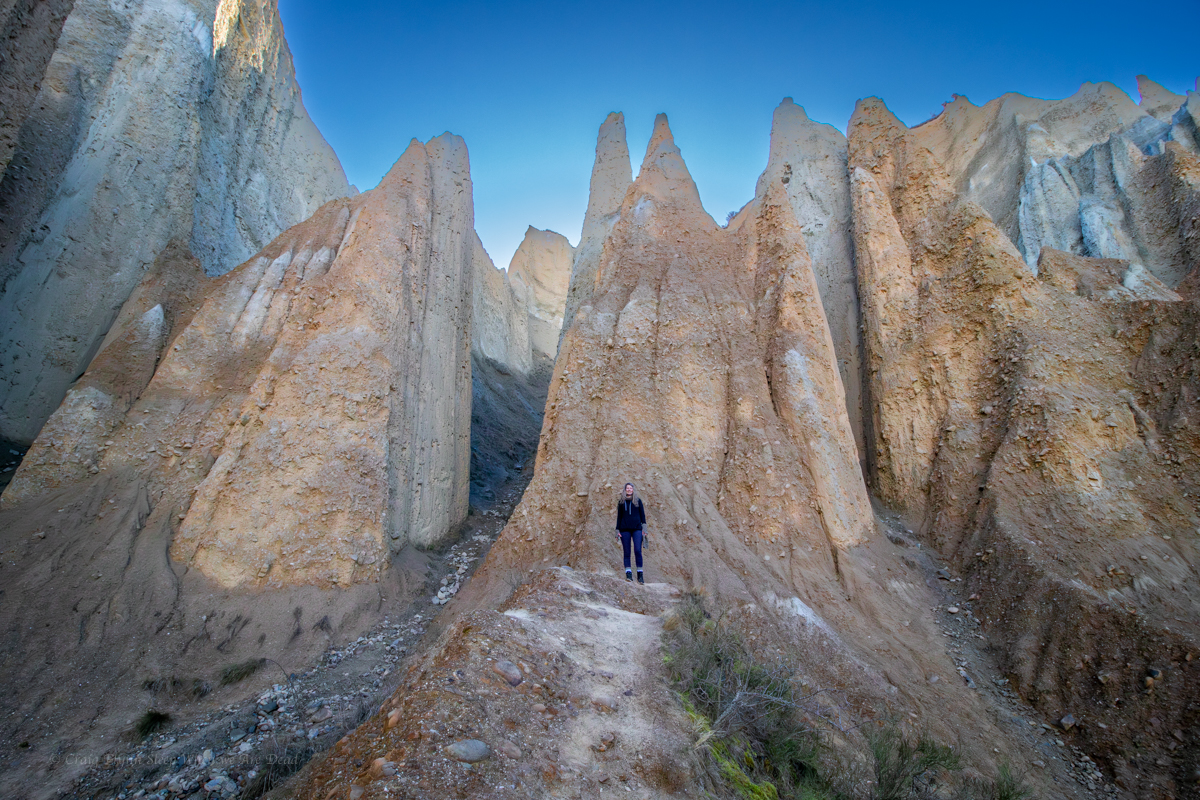
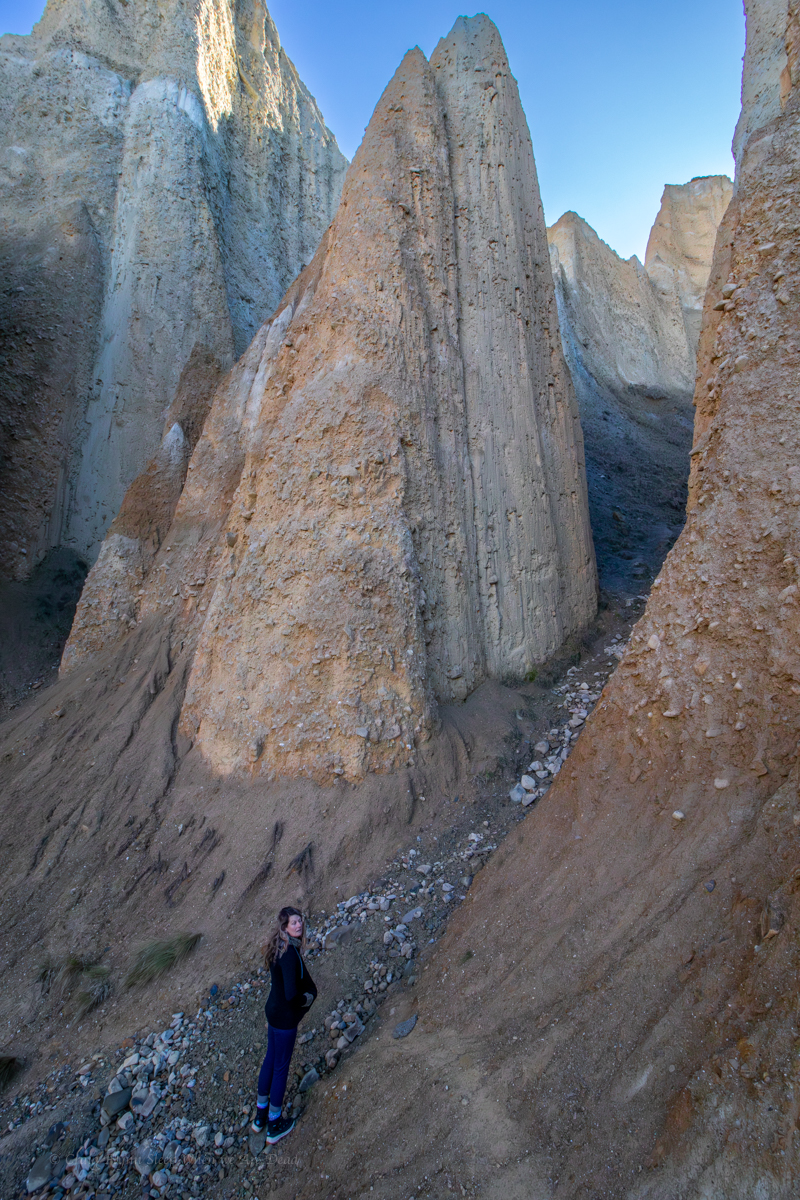
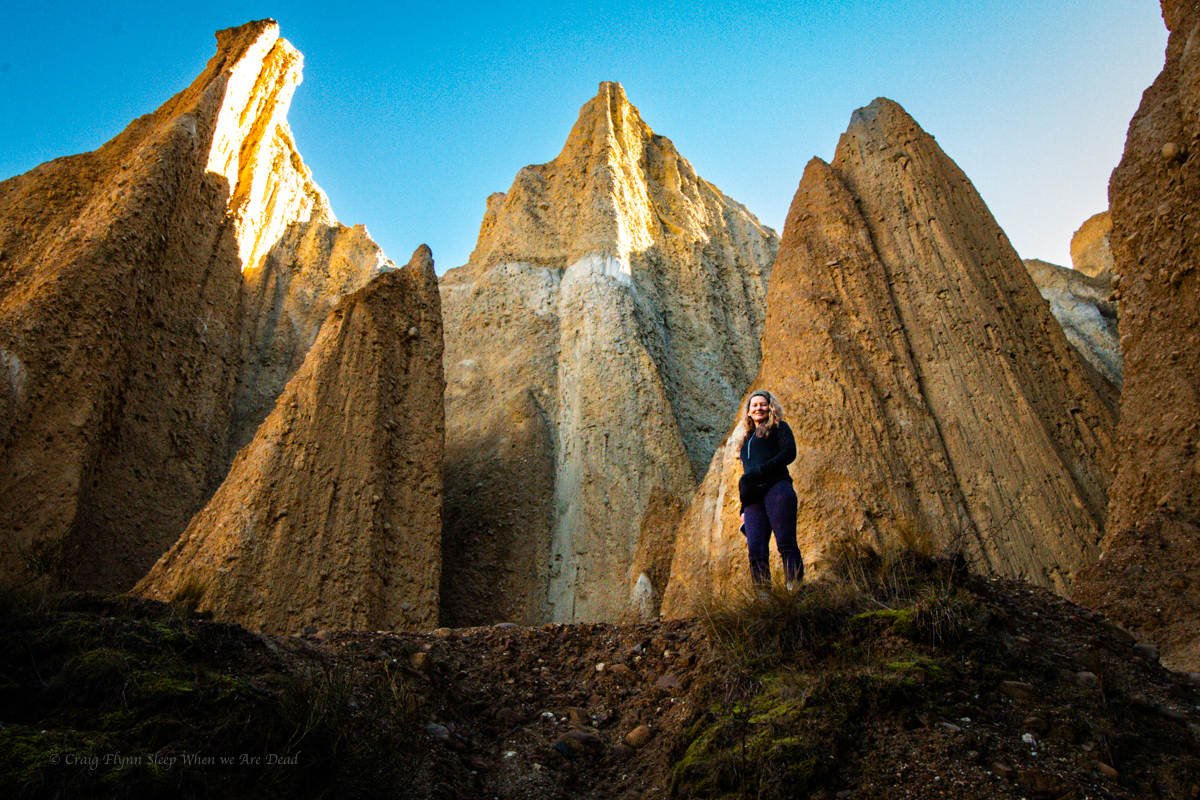
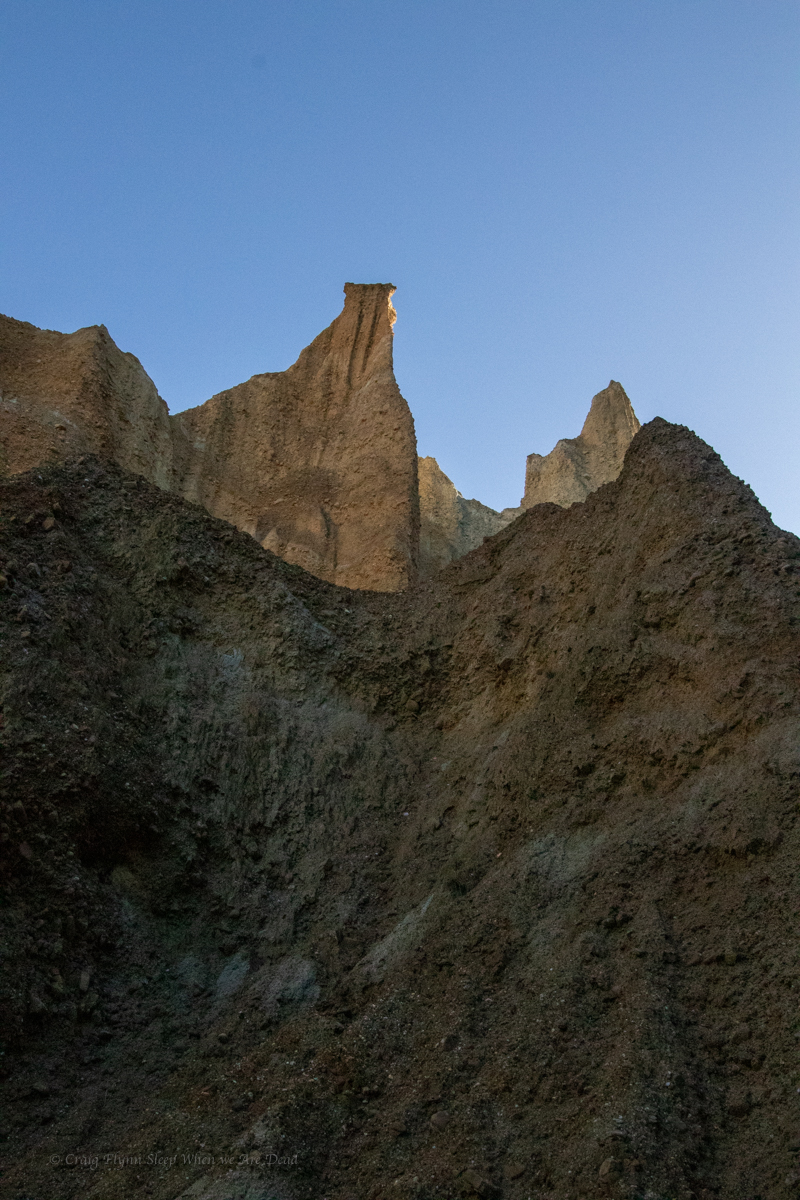
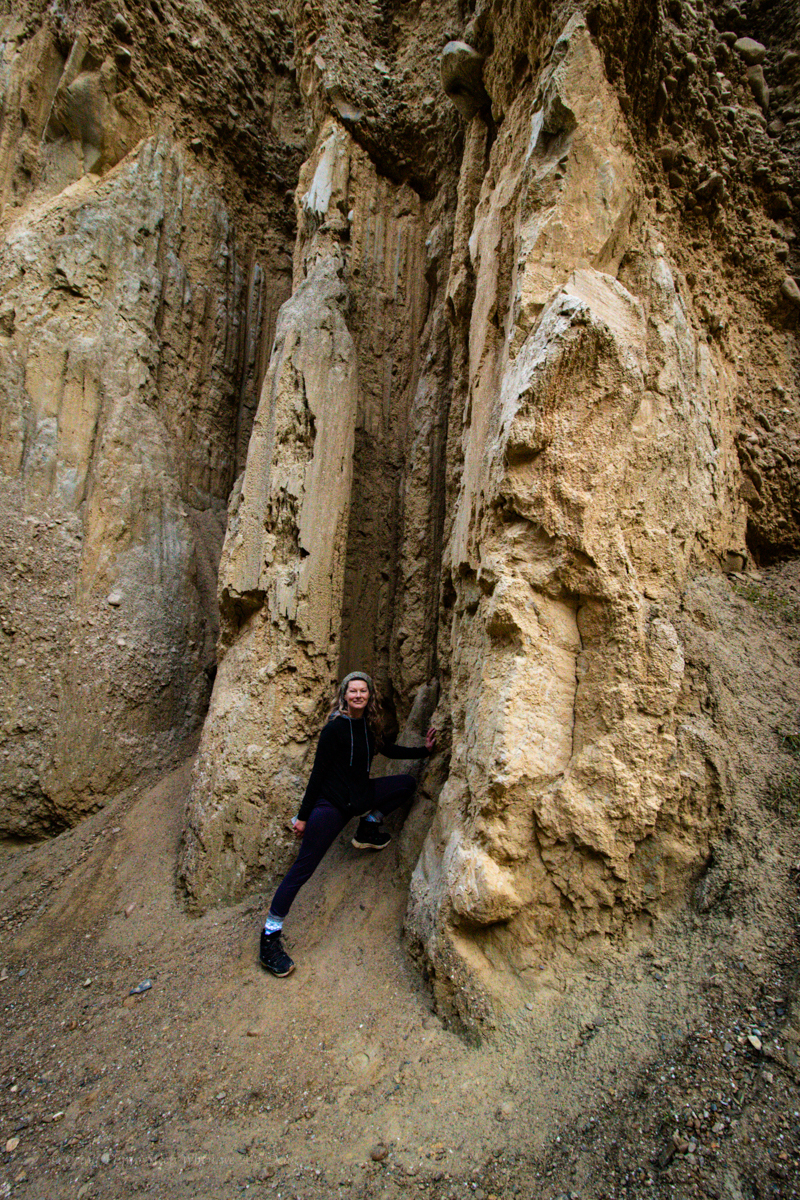
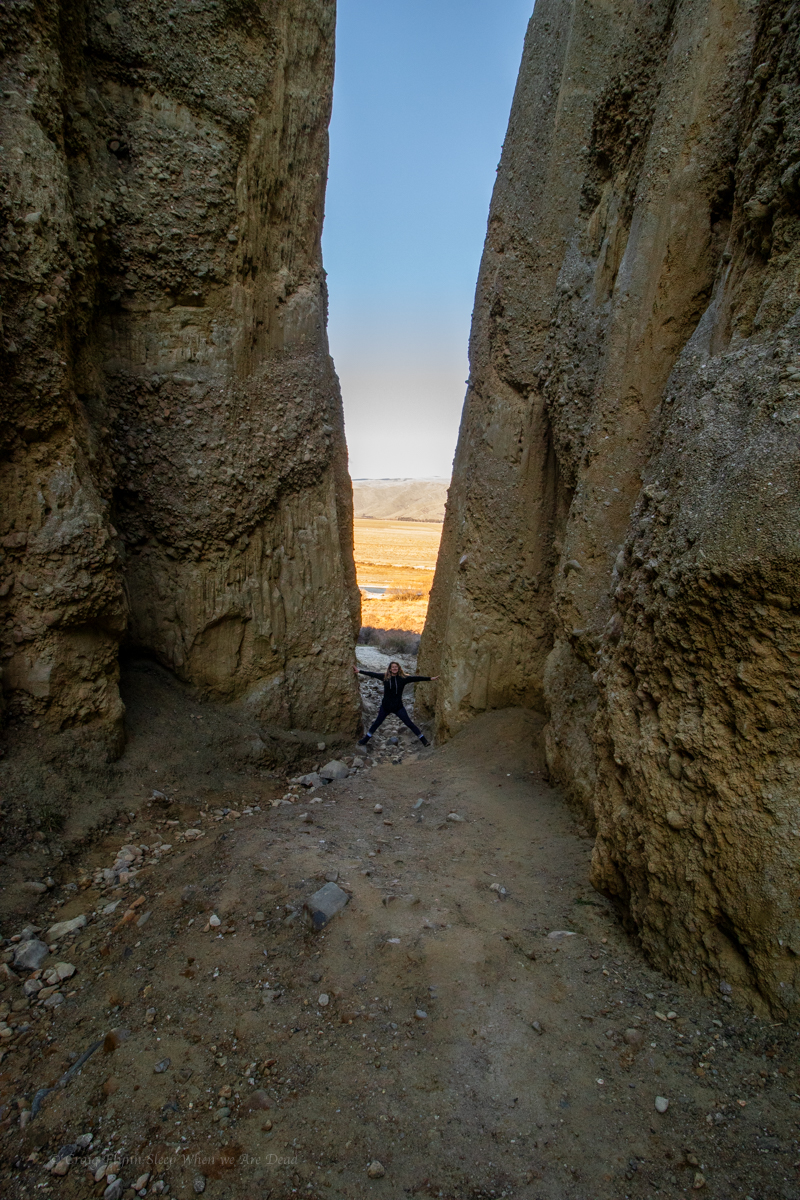
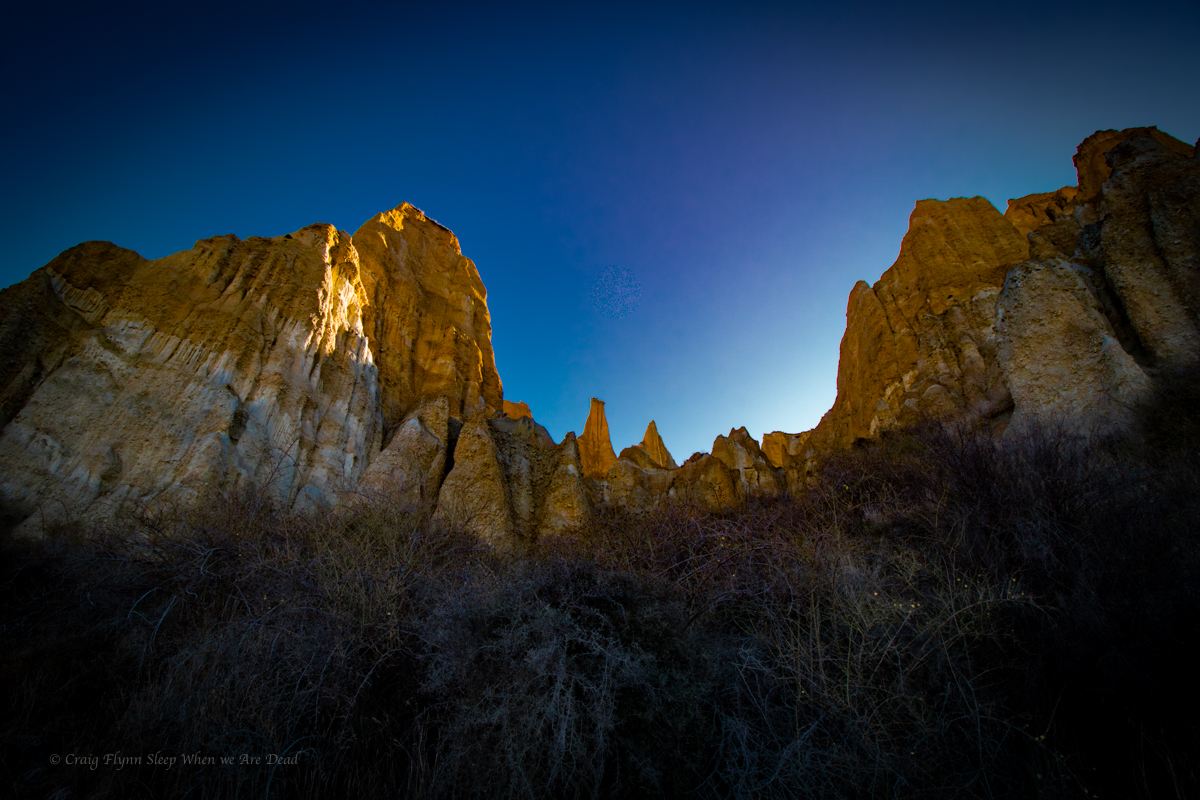
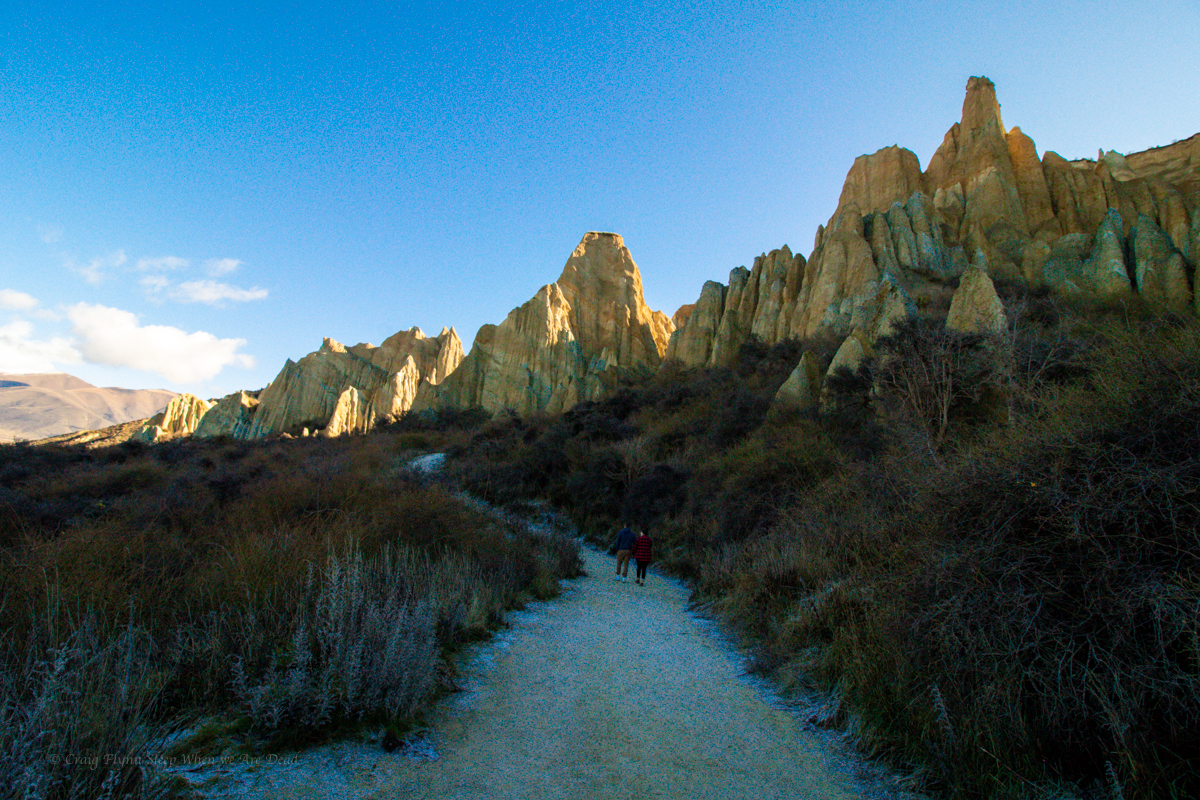
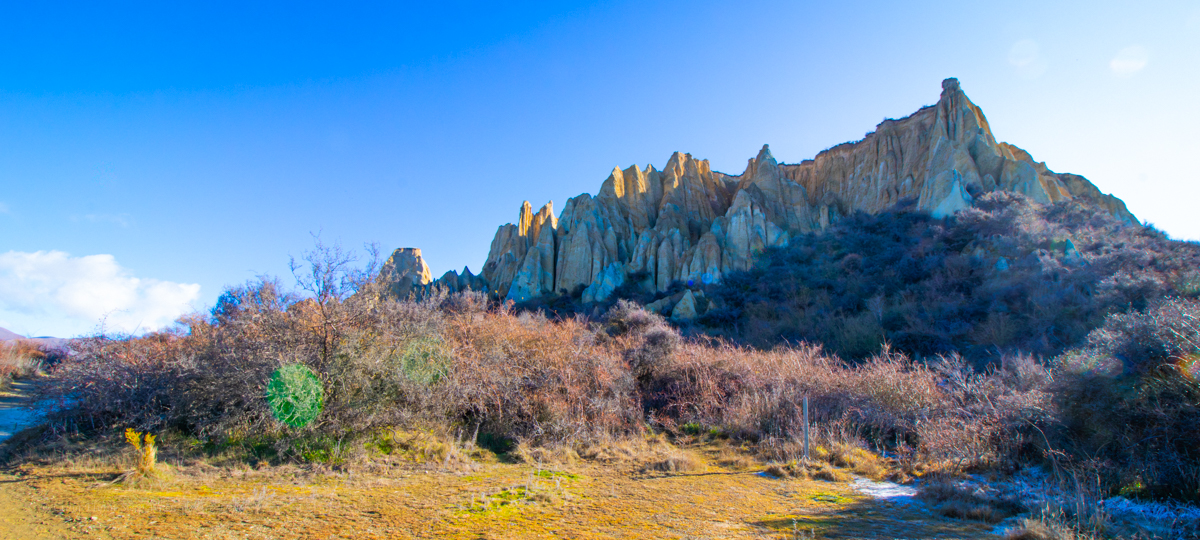
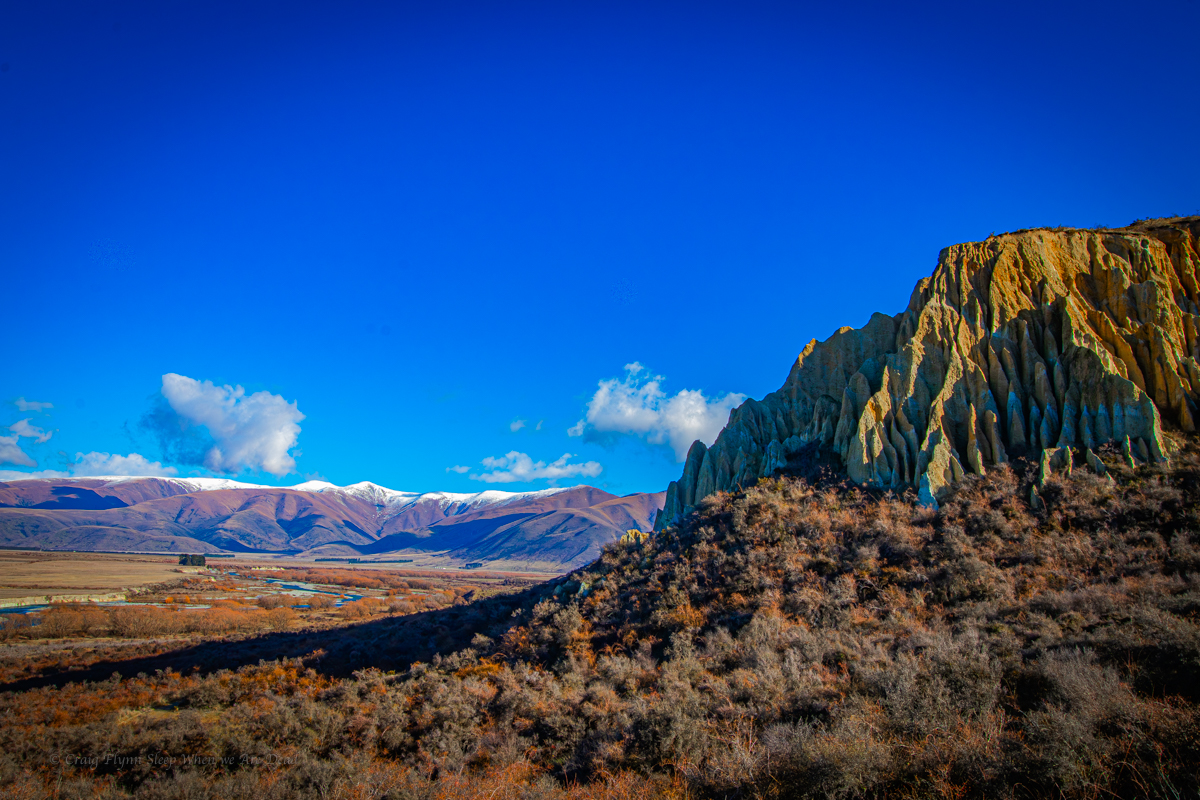
From Wanaka at the end of the Haast Pass we head up to Omarama for another geological wonder, the Clay Cliffs.
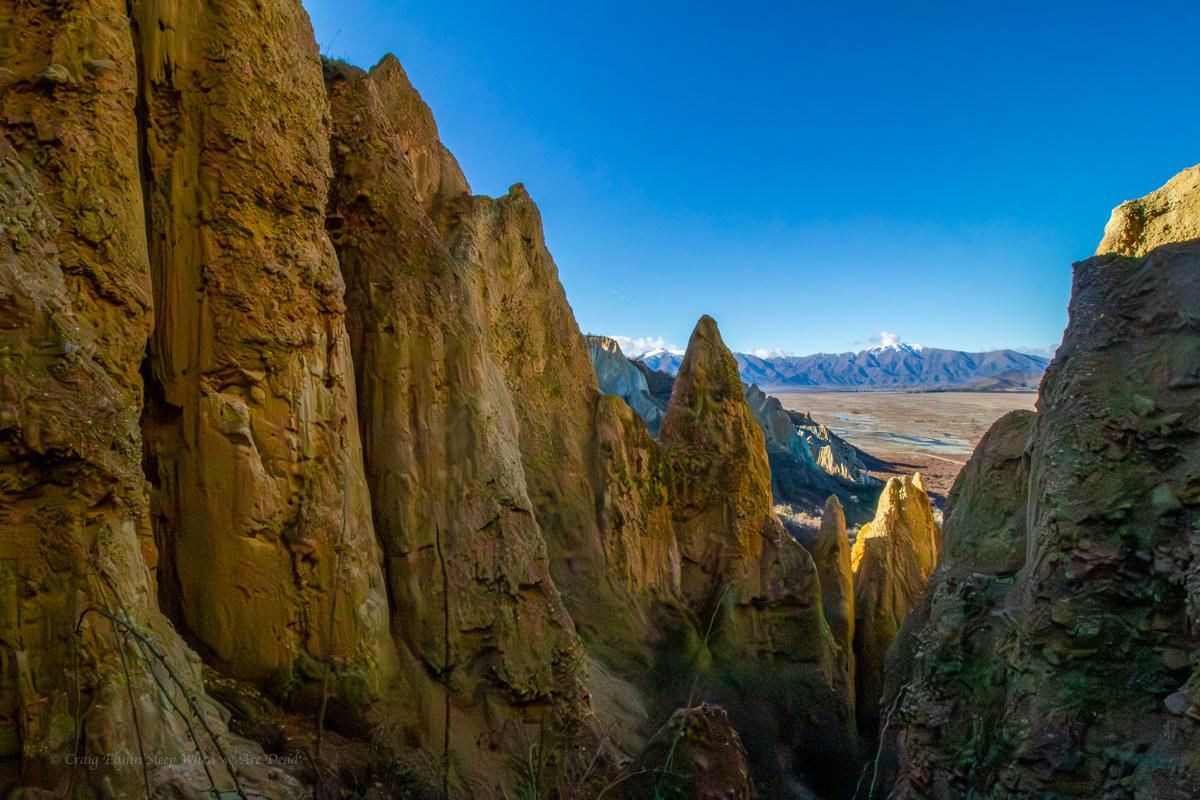
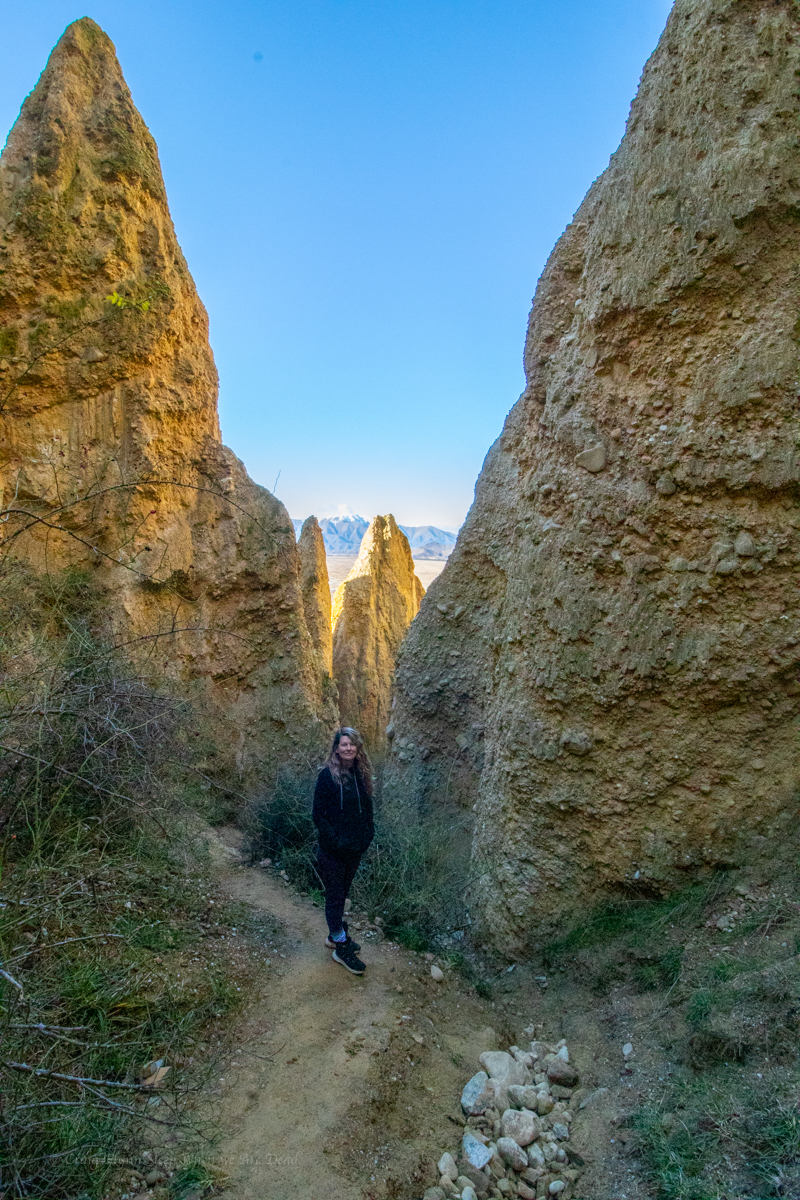
We miss timed it a bit and got there pretty much at noon which meant the contrasting light made photography difficult but hopefully the epicness of the landscape still came through.
The Omarama Clay Cliffs are on private land and there’s a honesty system donation to enter.
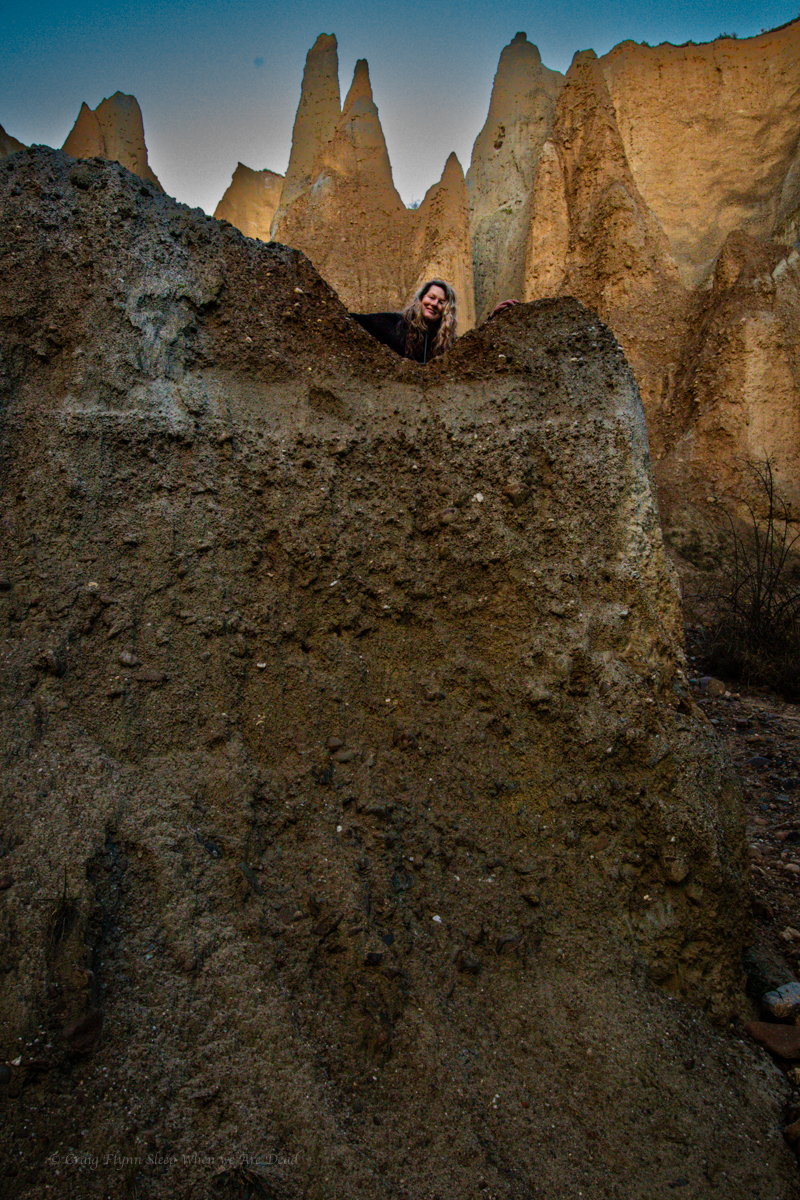
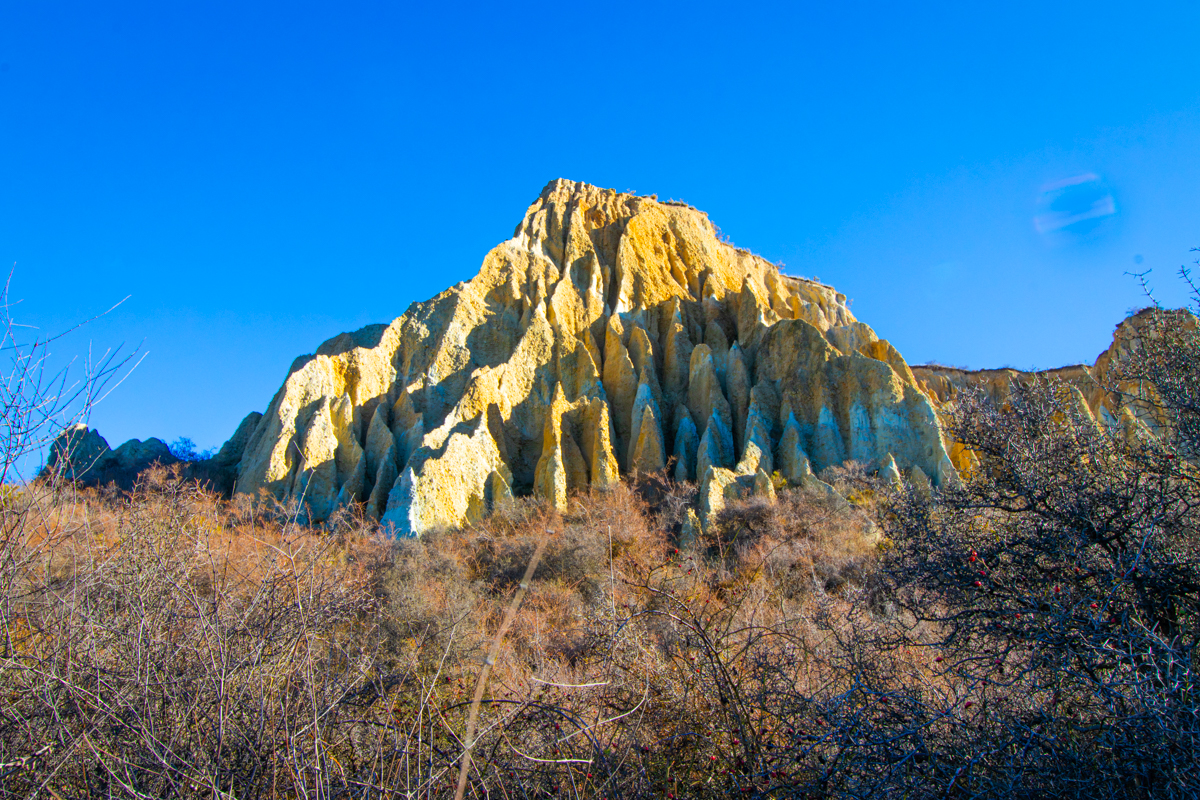
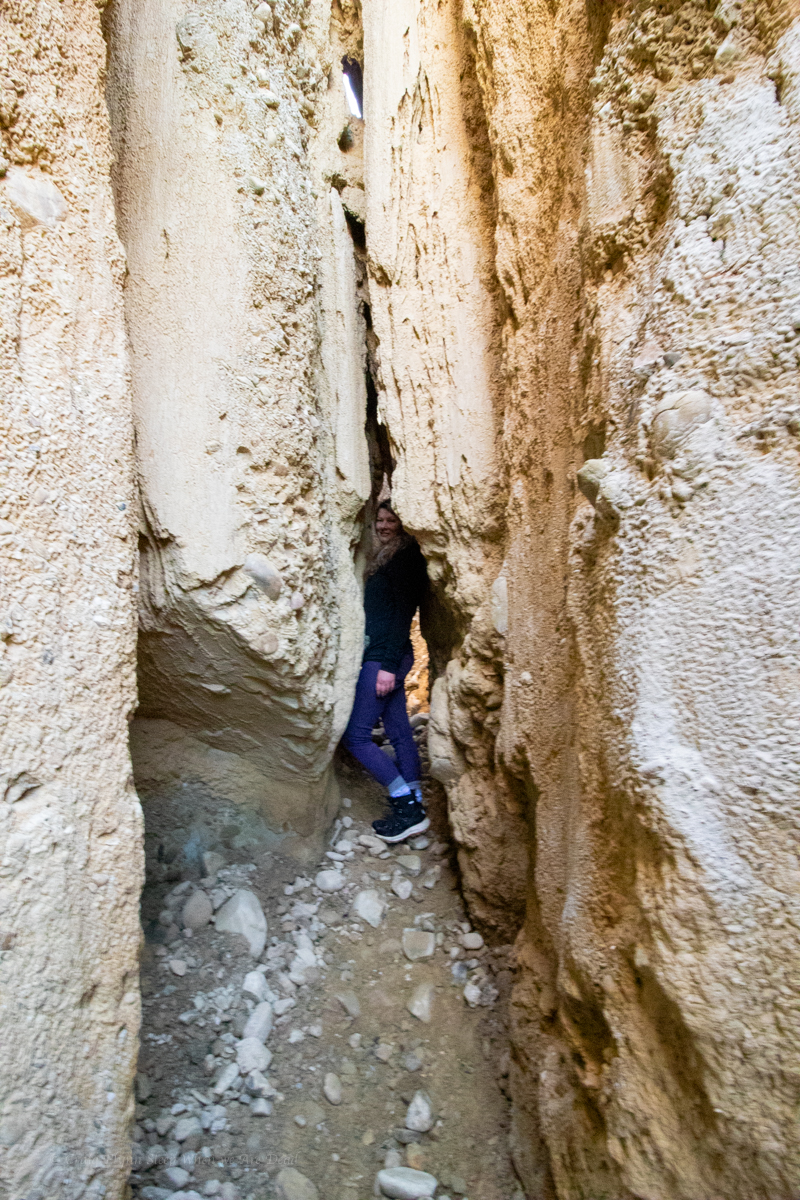
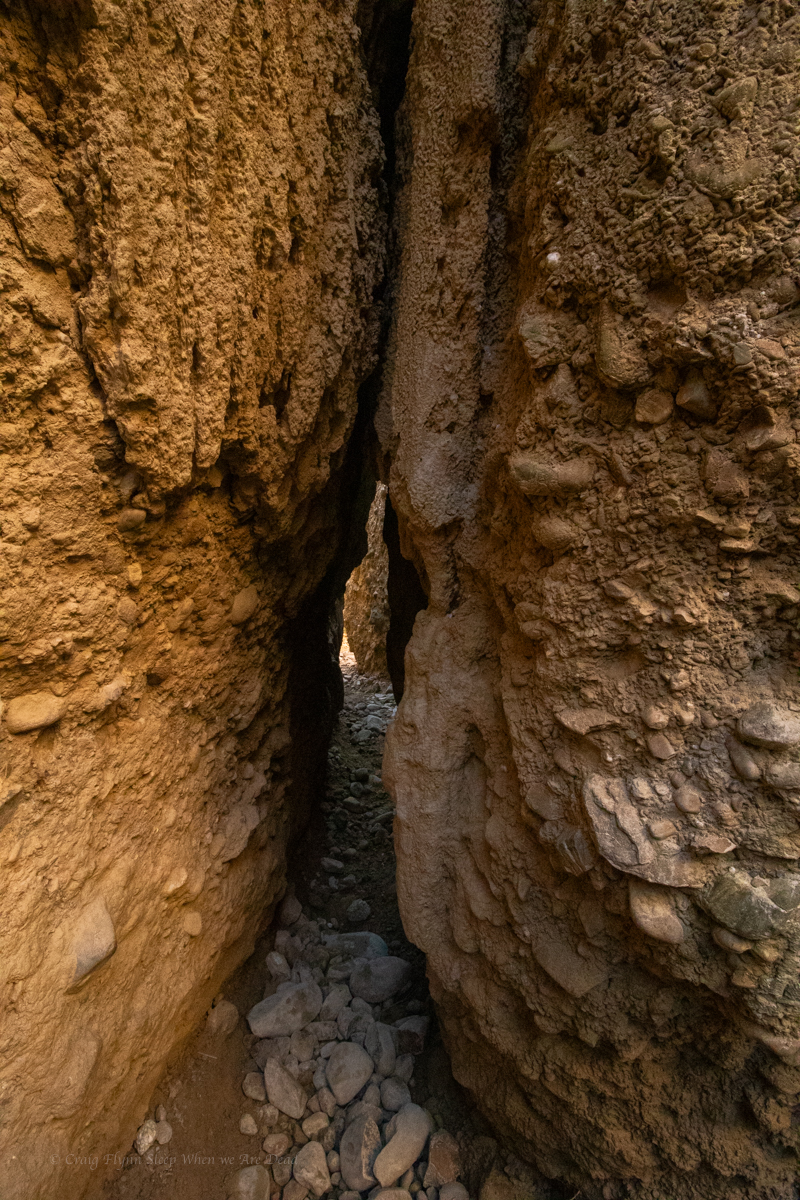
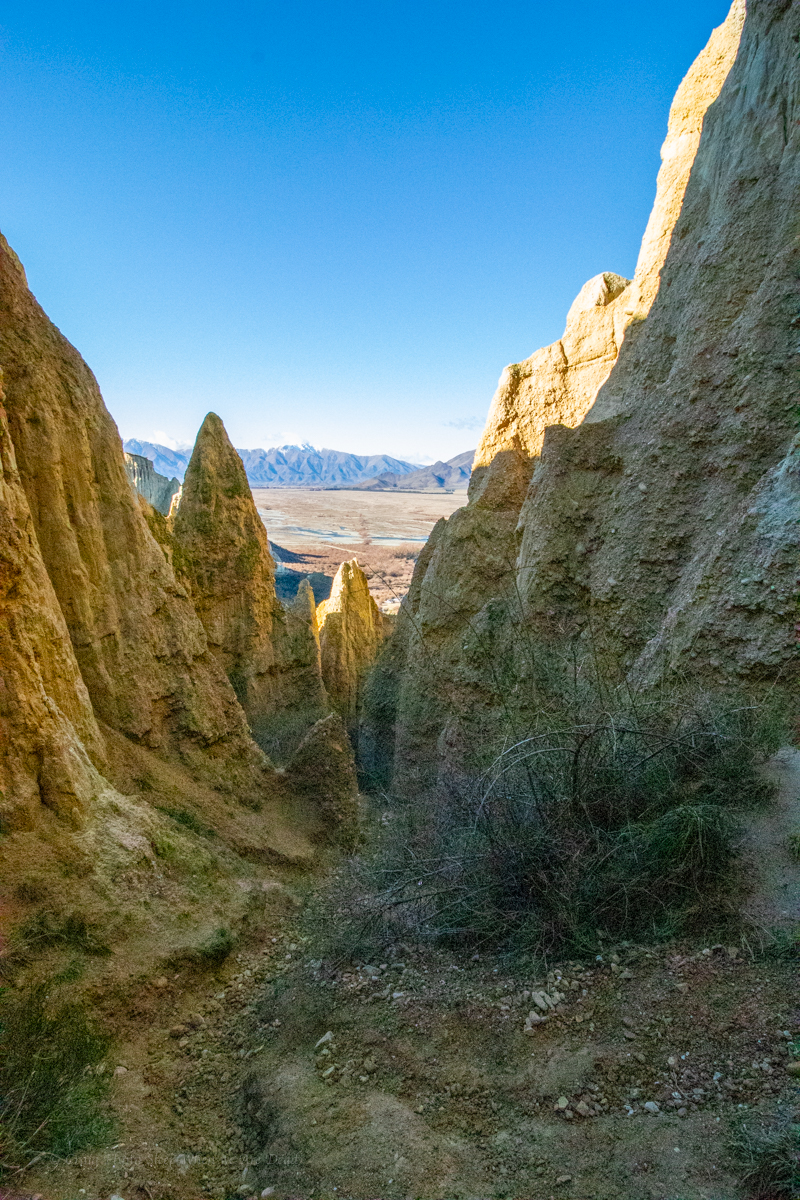
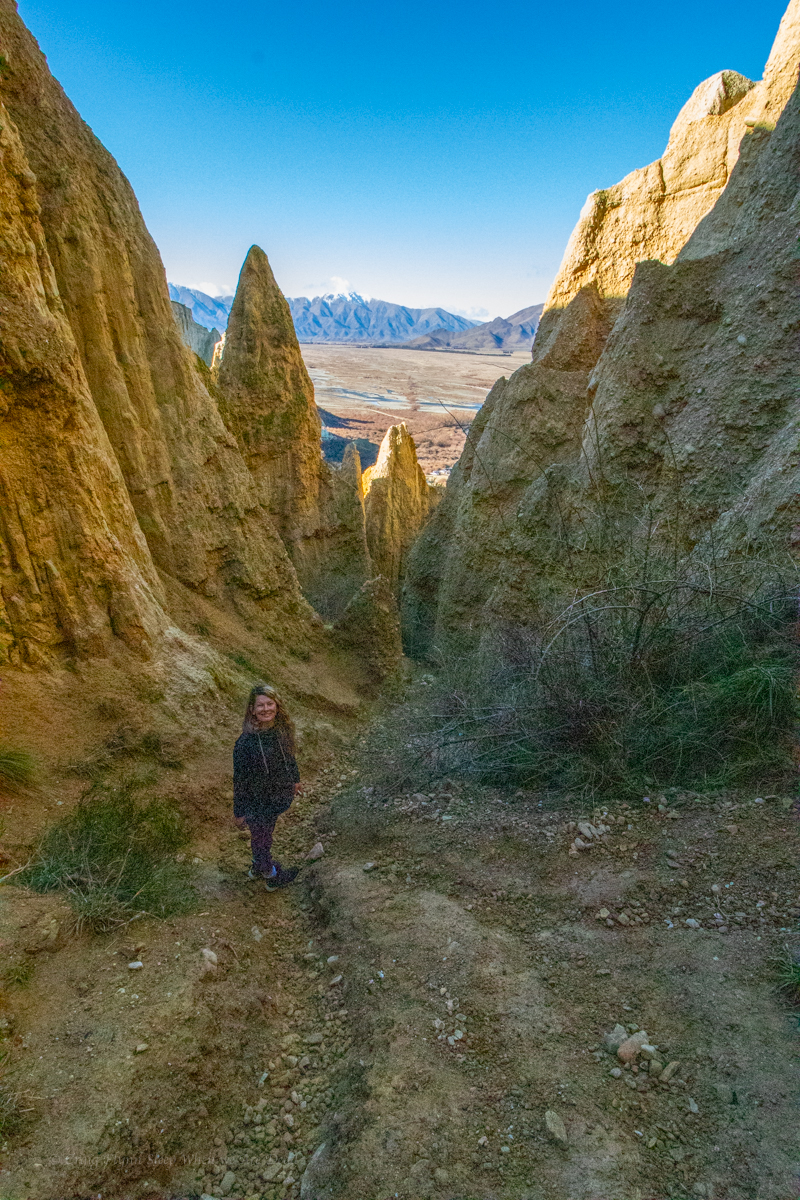
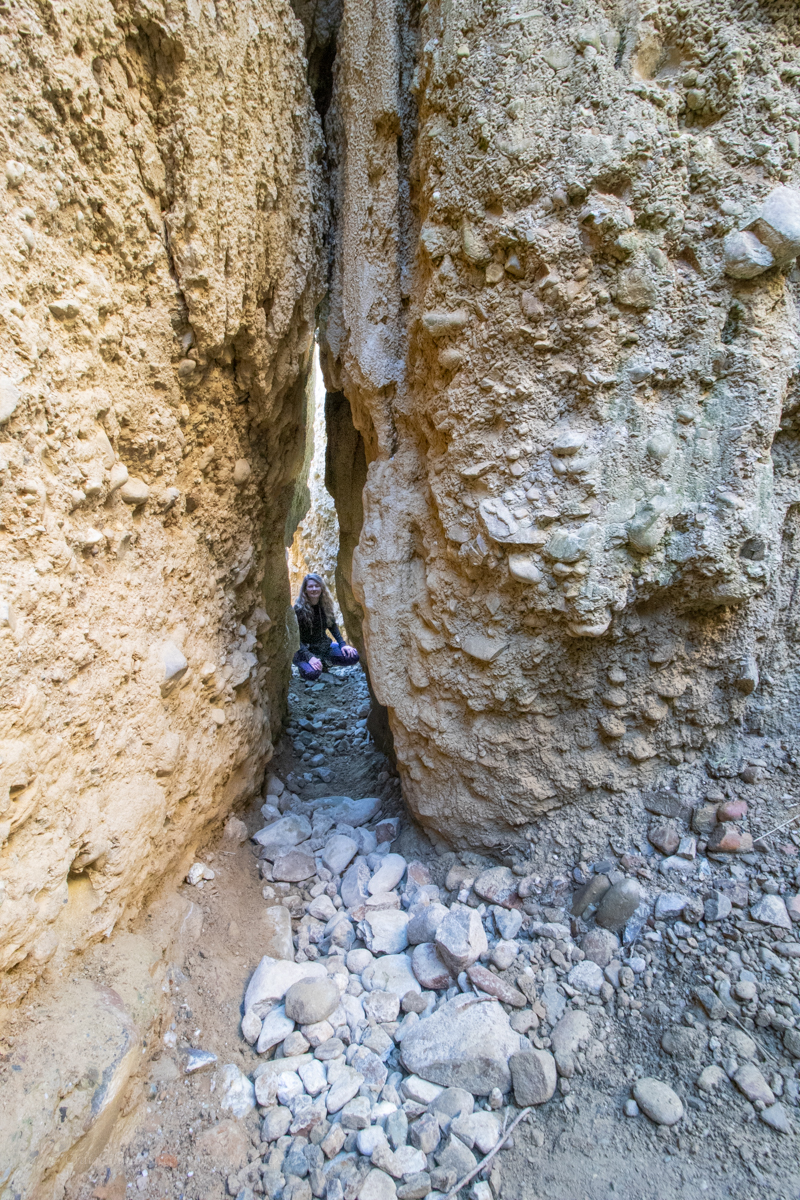
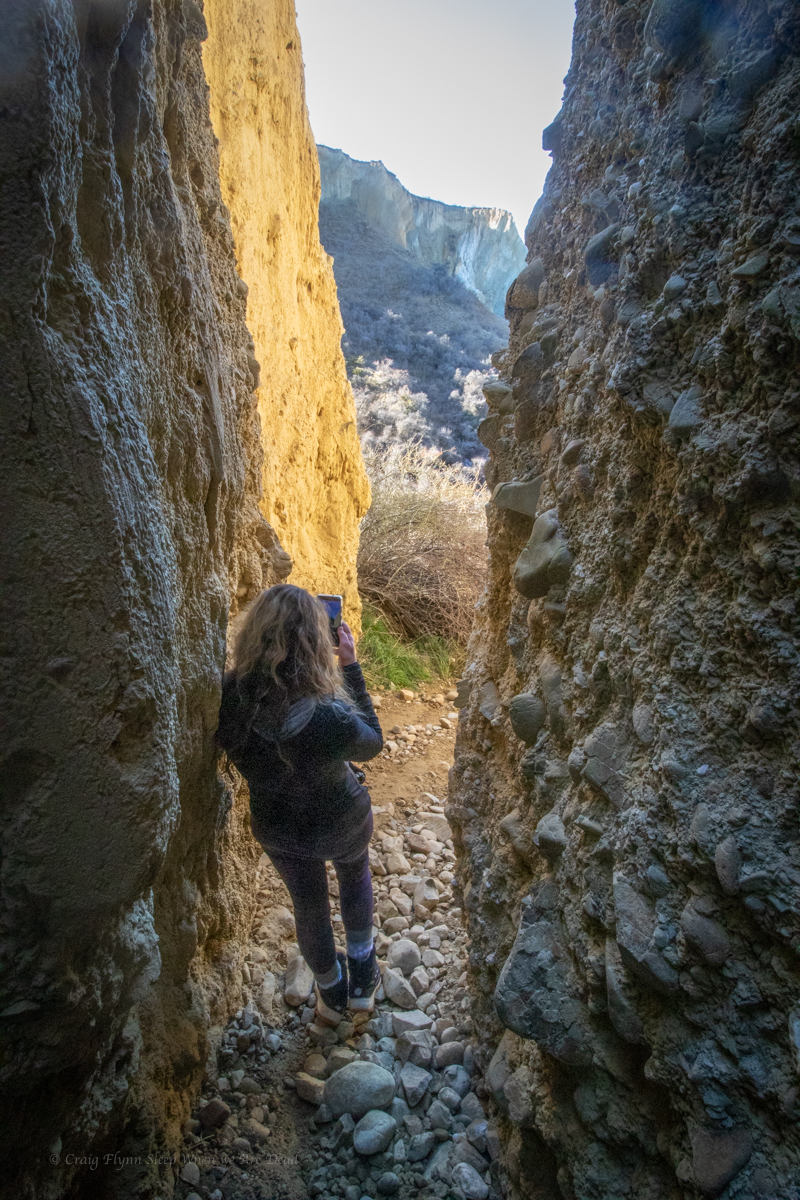
Formed from millions of years of sediment deposit at the bottom of a lake then uplifted and tilted, the Clay Cliffs are a classic example of what is termed “Badlands erosion”
They really are spectacular.
Kylie has a much better and more scientific explanation of these formations.
Here’s what she said
“I still remember the first time our lecturer brought us here and told us to “run wild and free” as he explained to us this magnificent example of tectonics in action. The Clay Cliffs are sedimentary deposits that were once the base of river bed. Due to the position of the Ostler Fault line under the South Island of New Zealand the river bed has been uplifted overtime and then eroded to form these strikingly alien planet like features.
New Zealand is an amazing country to see Earth in motion, similar to Iceland where tectonic forces are still very much at play building the landscape as we speak. Unlike Australia that is so ancient it only erodes now.
Anyway the Clay Cliffs are totally cool, I’m still finding new parts of it to explore every time I come back.”
Click to make the photo go biggish
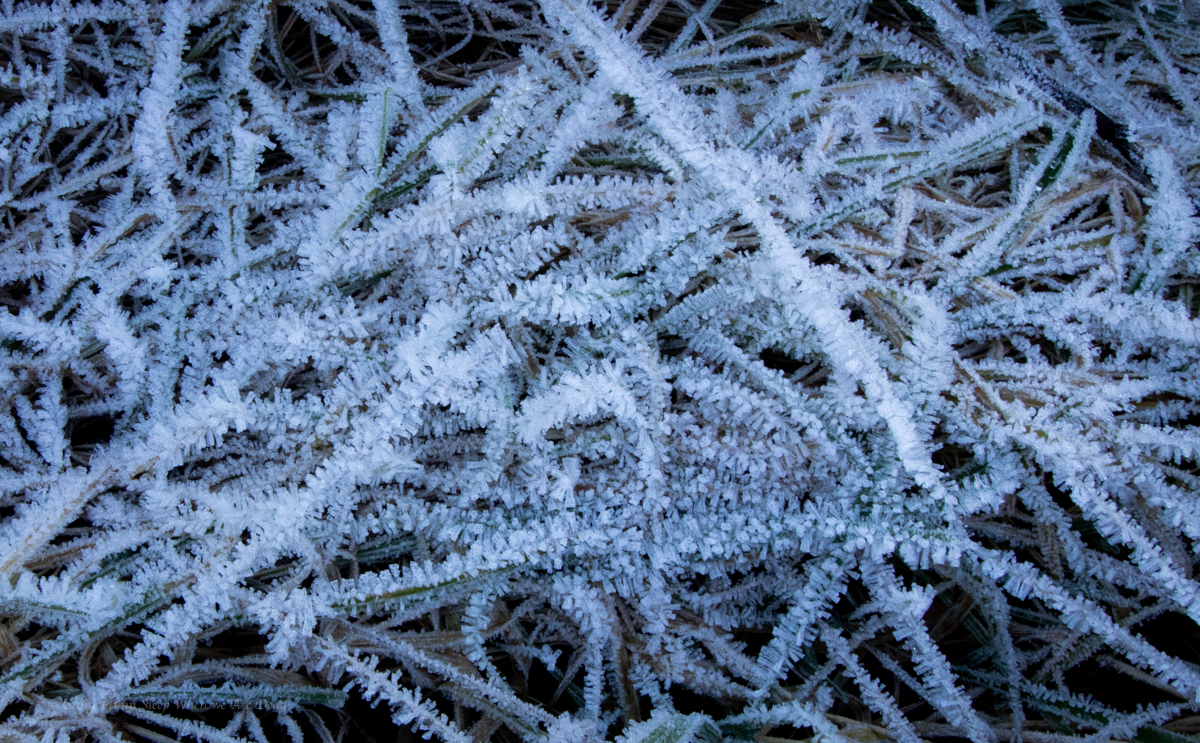
it was still a little chillyIce
After spending most of the afternoon here we jump in the van and make tracks up to Aoraki aka Mount Cook.
We’ve seen some amazing thing so far and the next adventure was one I was looking forward to.
We opted for a super early wake up at Bruce Bay and made our way down to Haast for breakfast and coffee. Today we would be driving the Haast Pass, in an of itself a great scenic drive but we were leaving ourselves plenty of time for exploring.
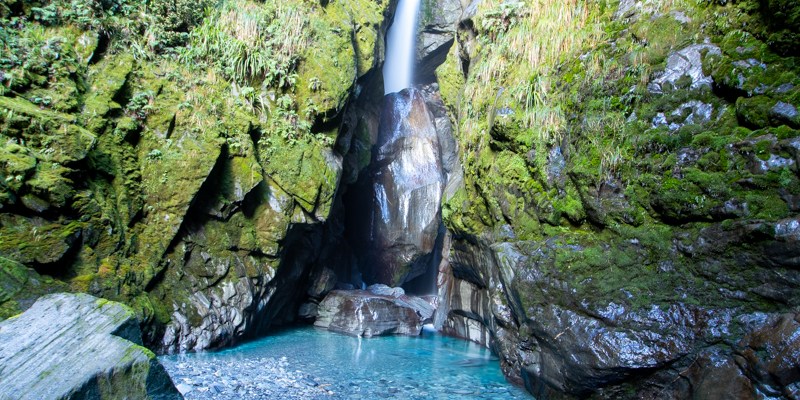
Haast Pass is home to some of the most popular canyons in New Zealand. It would be too cold to descend them this time but with the constrictions often ending in stunning waterfalls just off the road we planned to take most of the day exploring them.
Some of the waterfalls are sign posted tourist attractions, others you just need to keep an eye on the bridge names and find a place to park. We had several picked out that we wanted to check out but there were plenty more.
Note: The Haast river is known to have Didymo, an invasive fresh water algae also known as Rock Snot, so if you enter the river bed or water it’s important to Check Clean Dry shoes and gear before entering another waterway or traveling.
Anyhoo our first stop.
Depot Creek
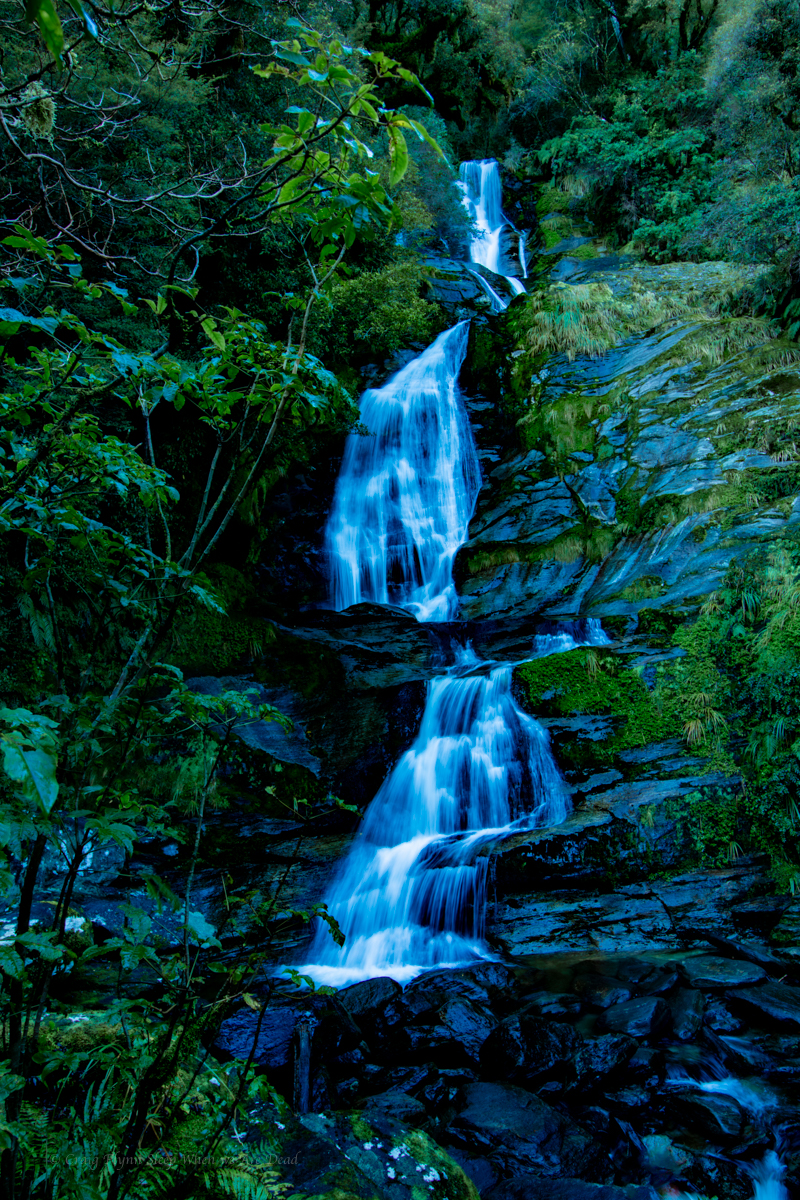
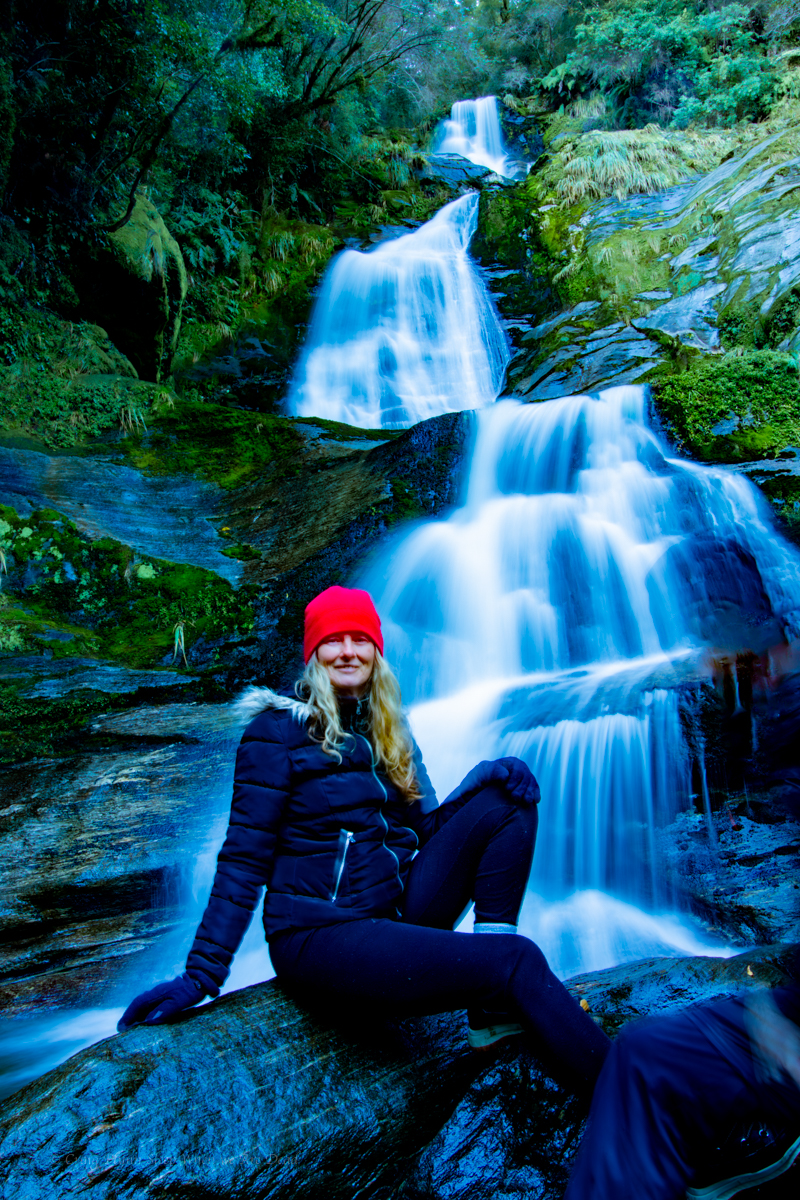
A camping area on the right just after the bridge made a good spot to park and a trail headed off leading upstream. Less then 5min later we came to the 10m tiered Depot Creek Falls.
Click to see the full photos
Imp Grotto
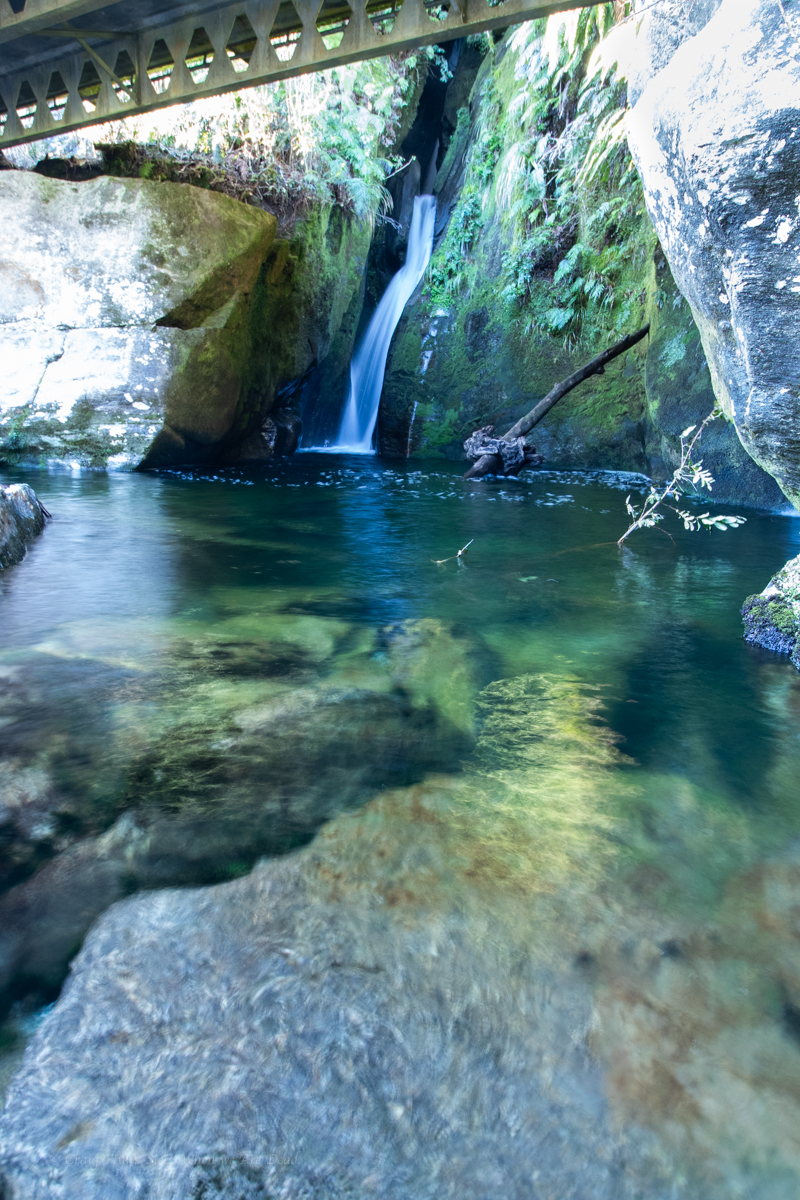
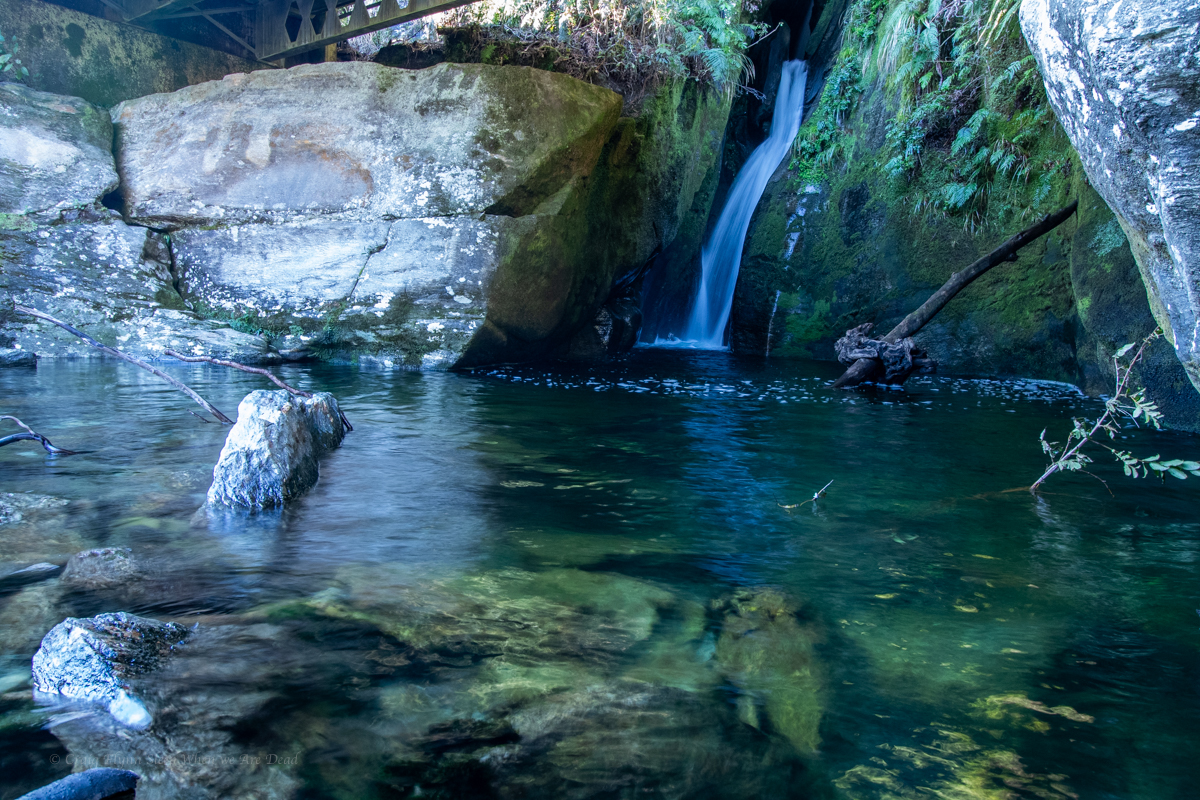
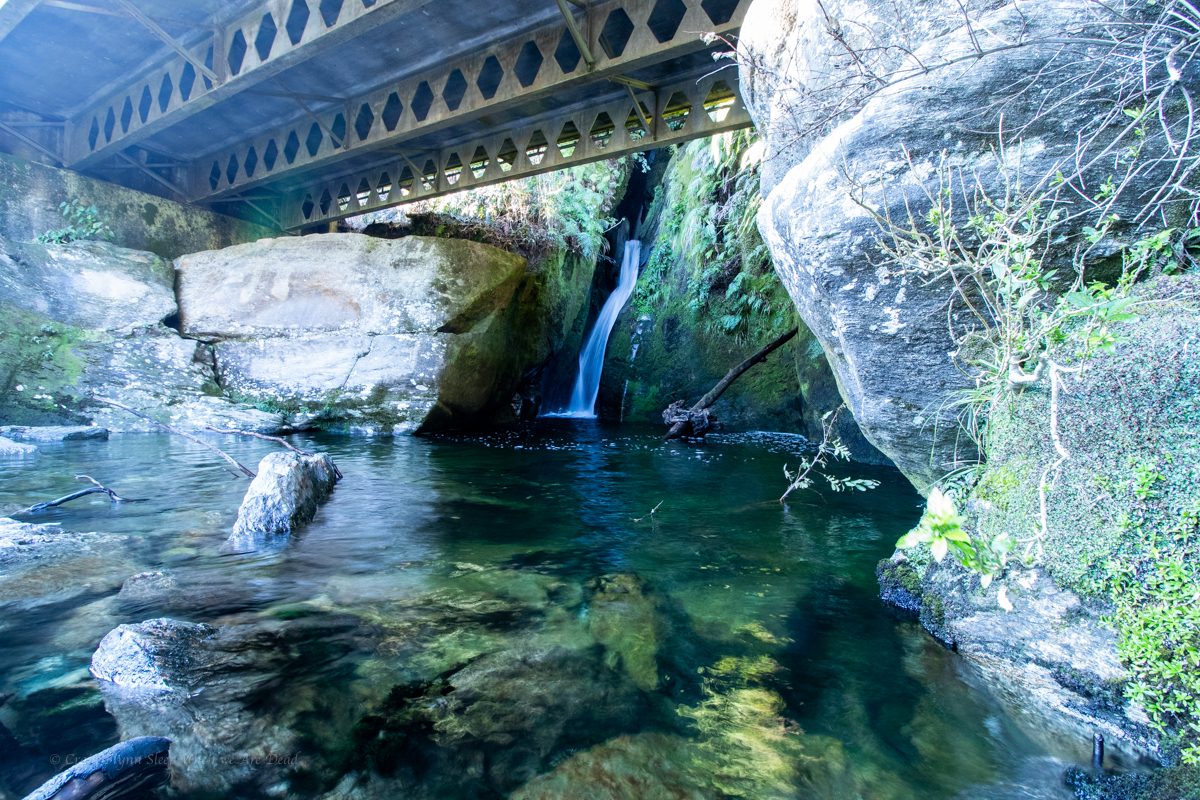
When I say the canyons open with a waterfall near the road, Imp Grotto finishes right under the bridge. We had to park a little up the road and walk back but it’s a cool spot
Roaring Billy
Not far up the road Roaring Billy falls is a signposted tourist stop. A dedicated parking area gives access to a trail that takes you down to the Haast river for views across to Roaring Billy falls, it’s around a 30min round trip with a bit of time taking photos. Thou the mountain mist made getting a decent shot hard today
Douglas Falls
Another small waterfall right by the road
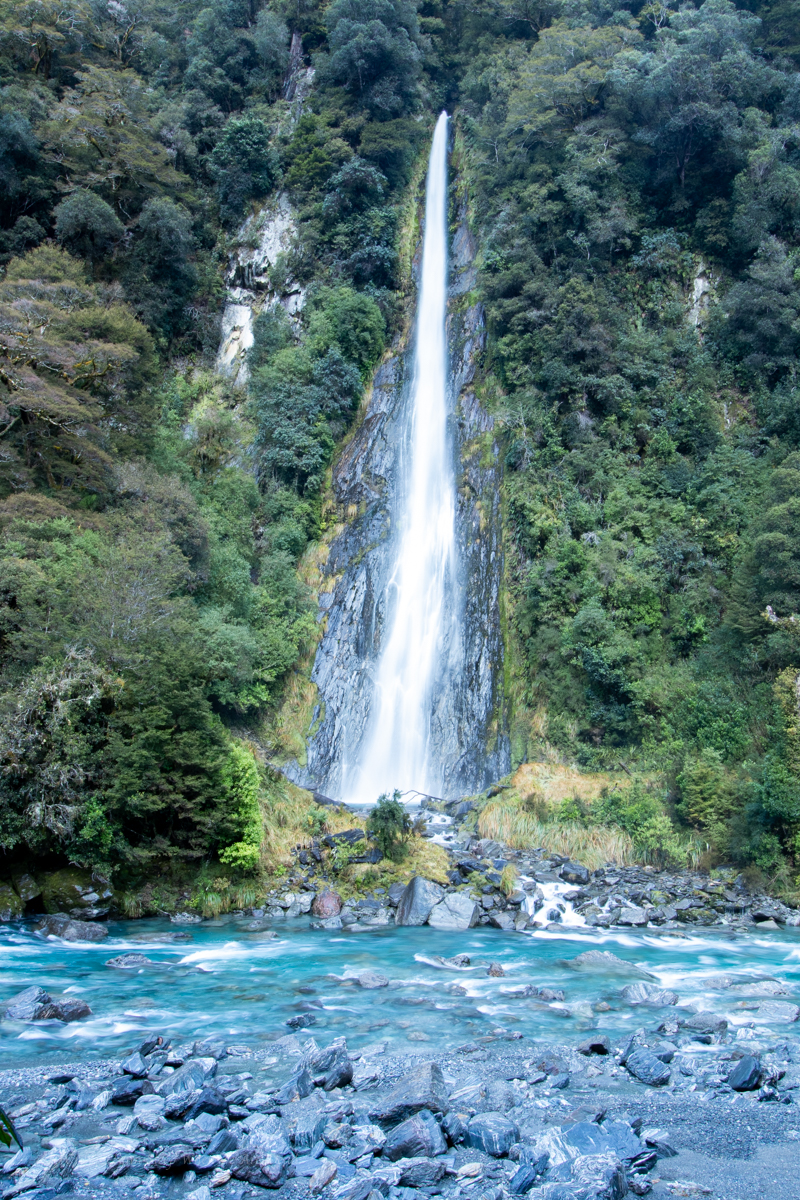
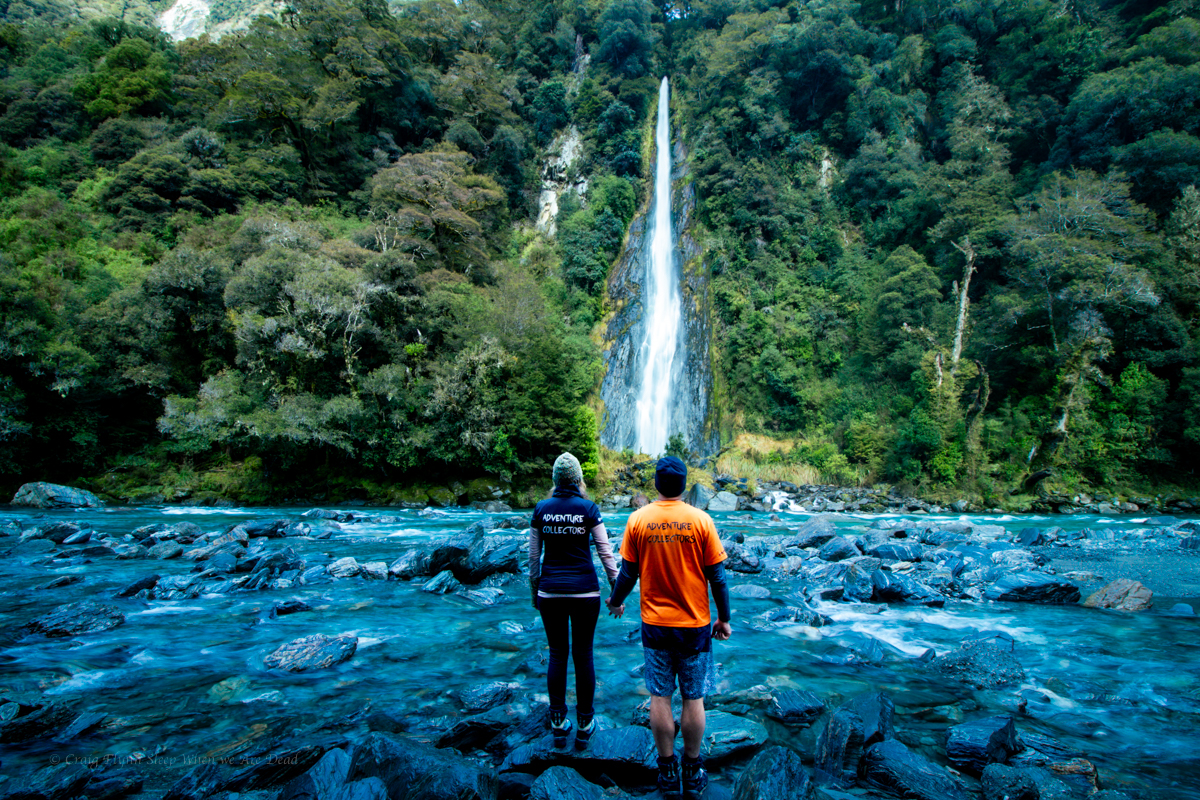
Thunder Falls
Thunder falls is signposted with a constructed tourist walk down to the stunning 30m waterfall
Pyke Creek
This one was a little harder to get to. Being directly fed from the Brewster Glacier the water is even colder. Kylie decided to sit this one out. I carefully made my way up stream on a rough track that at times traversed narrow ledges. Im handy in the outdoors and a good scrambler with a head for heights but this was at the limit of what I was willing to brave on my own in unfamiliar terrain so take care.
In summer you might be able to work your way up the creek itself but I’d imagine with ice melt the water flow would be treacherous as the canyon descent has rarely been repeated.
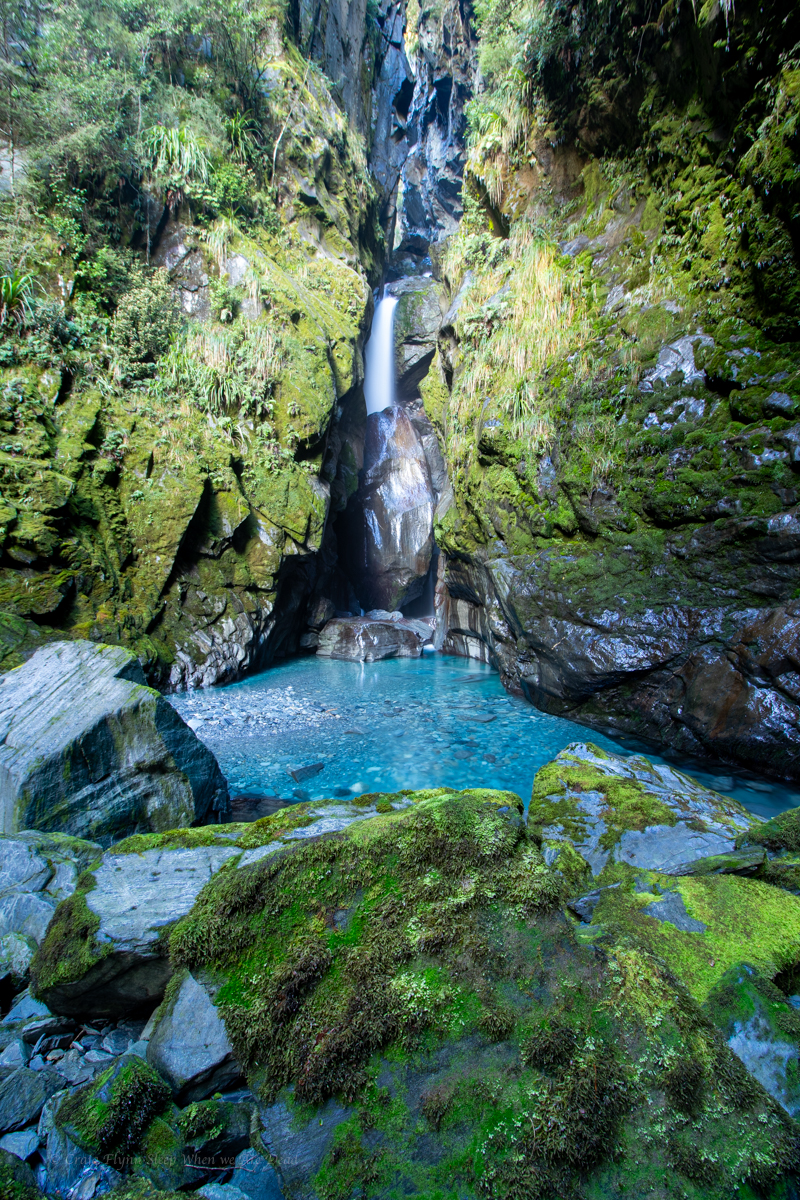
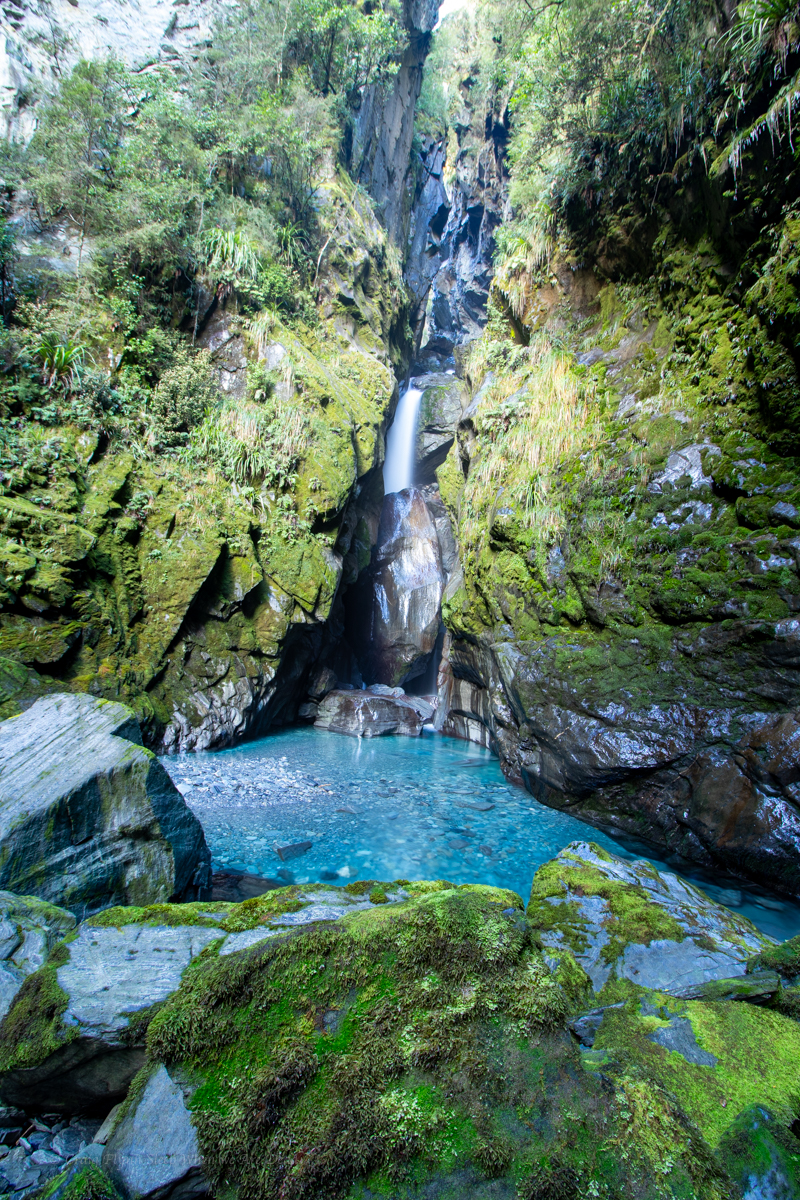
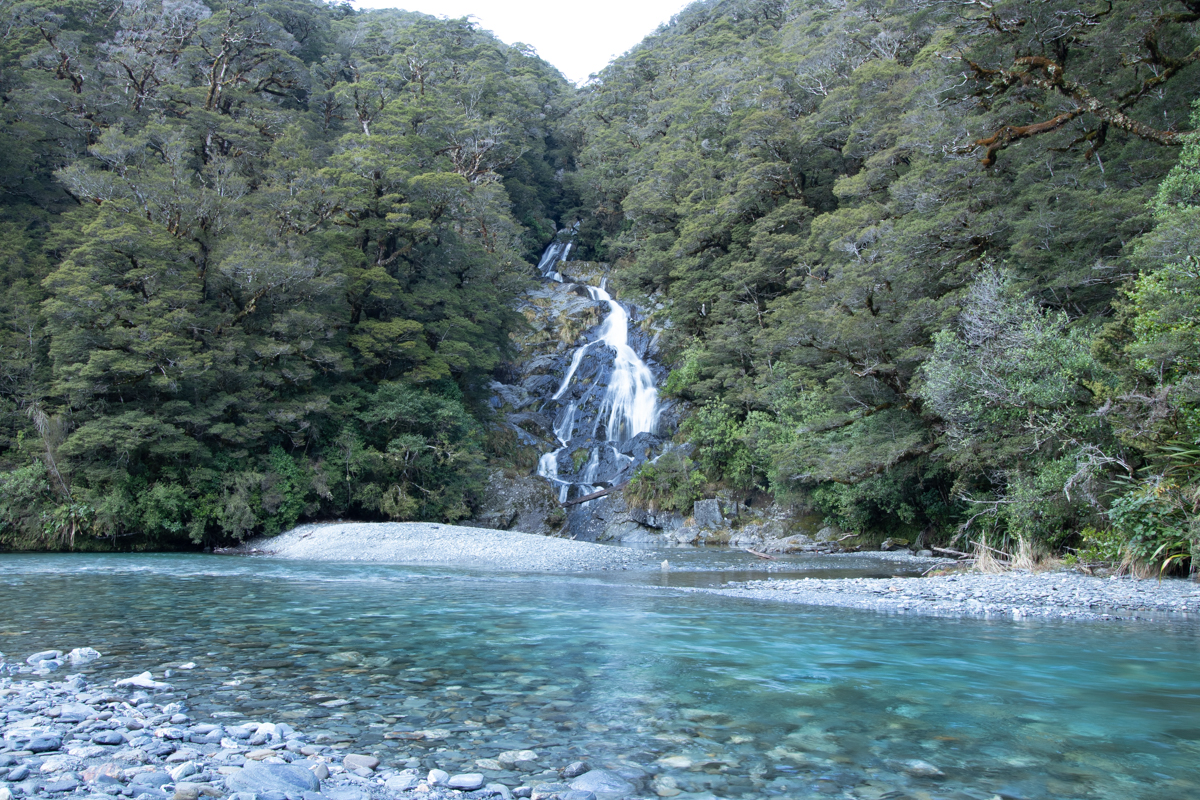
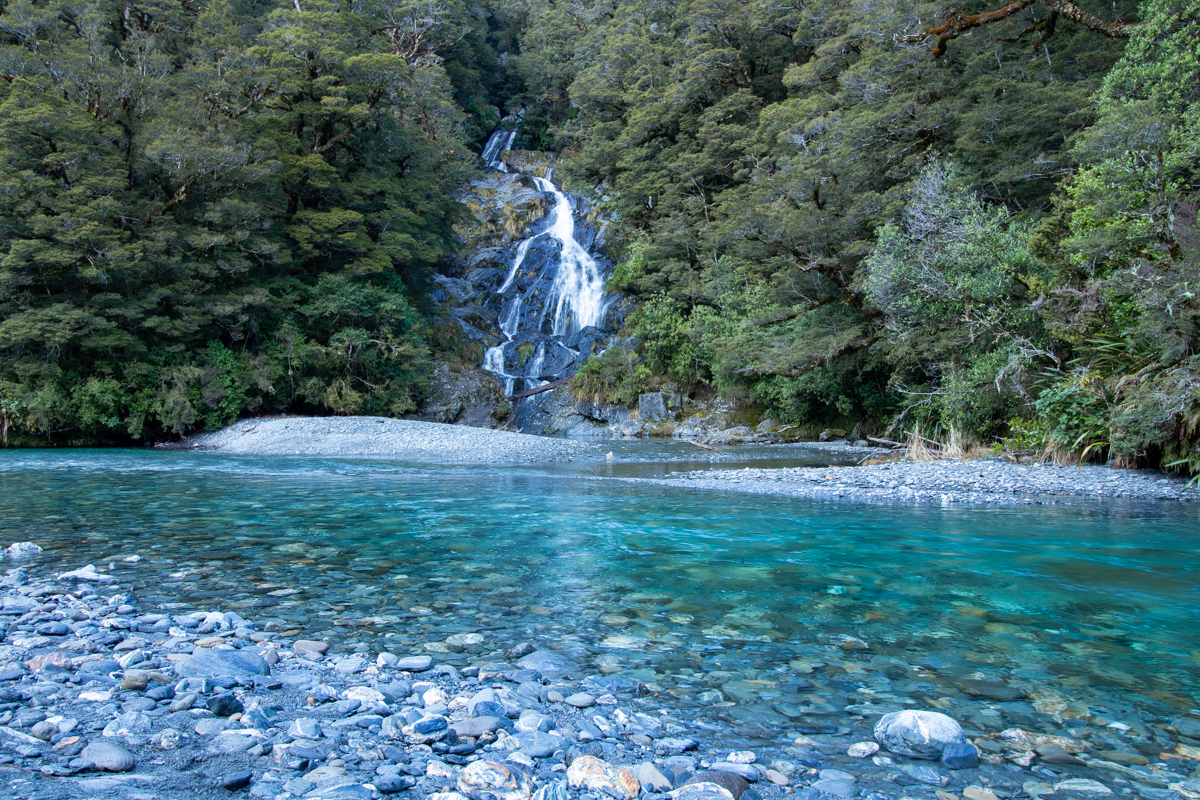
Fantail Falls
Another signposted waterfall with dedicated car park and walking track to views across the river towards the falls.
Robinson Creek
One of the more popular canyons in the area for which the bottom chamber is easy to get to
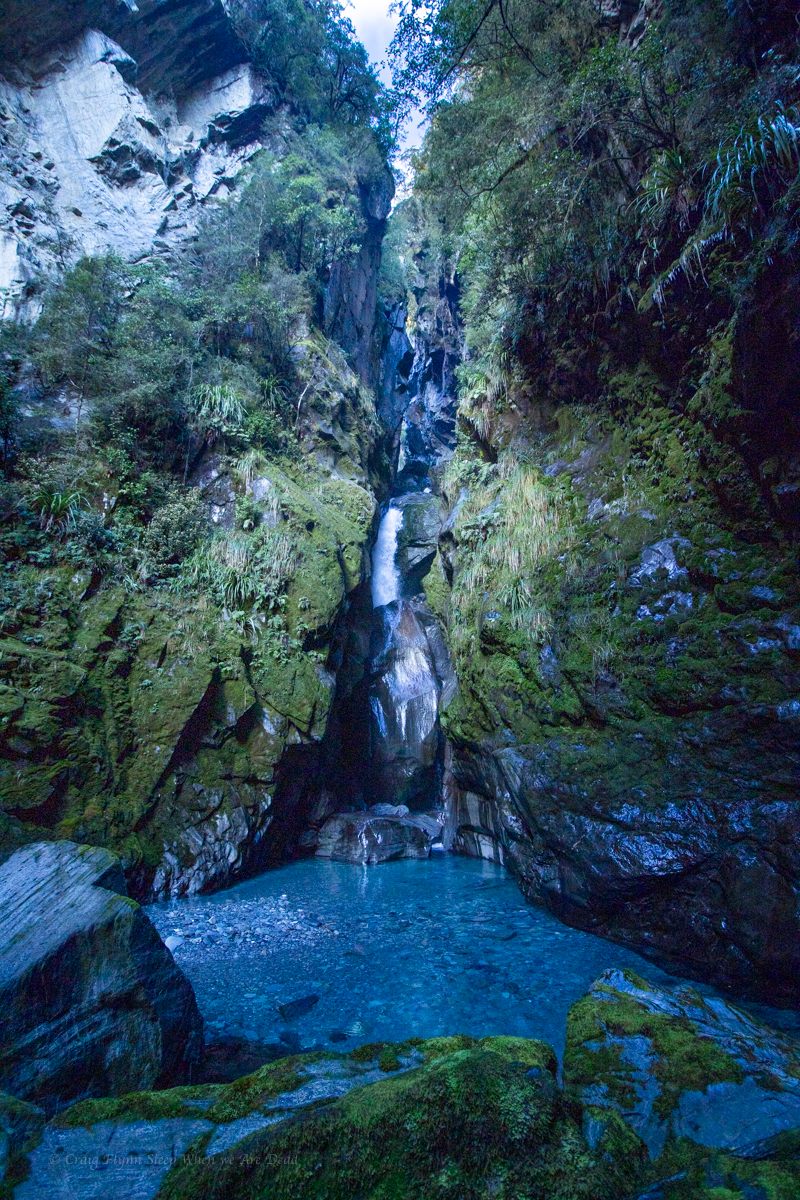
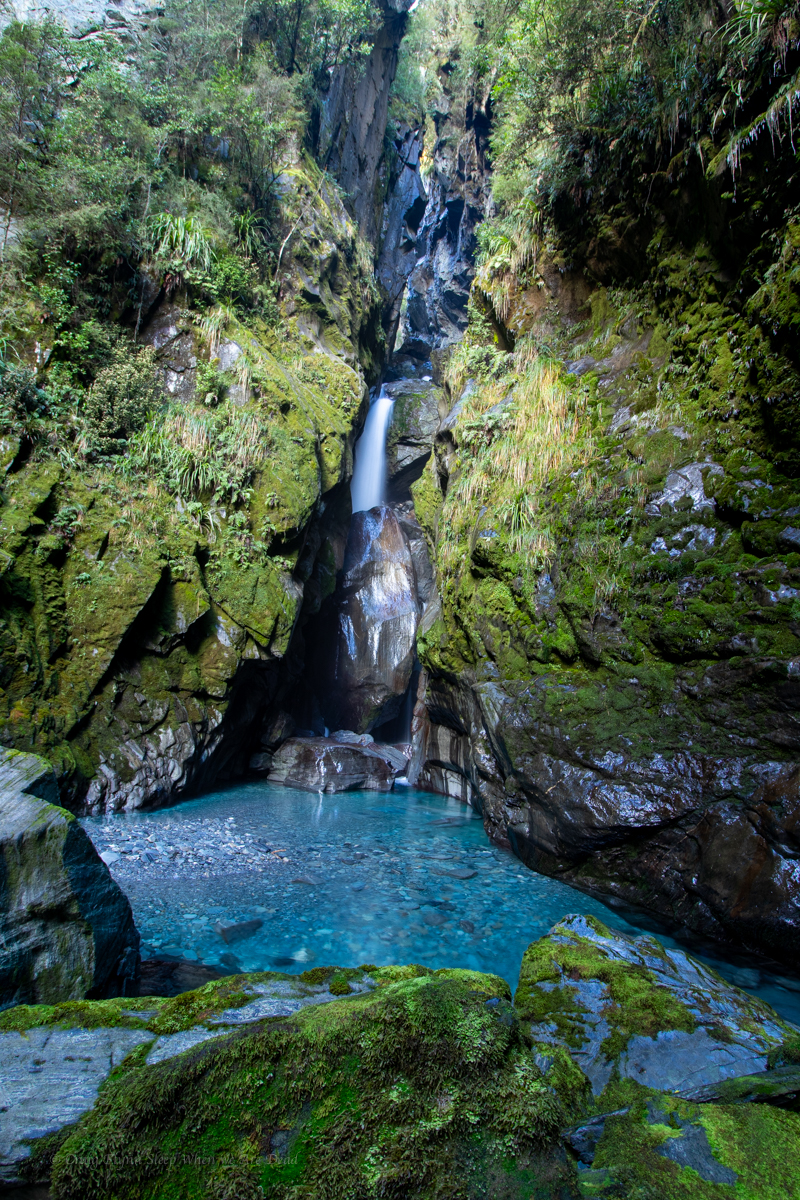
Wilsons Creek
The show case canyon in the area, Wilsons creek is spectacular and if you are willing to brave cold water and wet feet you can visit the last little bit just in off the road.
Other waterfalls within 5min walk of the road or visible from the road that we didn’t visit this time around include
Orman Falls (10m high)
Joes Creek Falls (150m High)
Gunboat Falls (150m High)
Diana Falls (15m High)
We decide if possible we’d spend a night at a van park to get a descent shower and stuff. A quick google search revealed Mt Aspiring Holiday Park to be cheap as chips and referenced something about a hot hub.
Calling ahead the lovely Erin assured me they had plenty of spots and if we could get there by 6:30 we could book the last allocation for the hottub.
How much is it said I
$10 each for 25 minutes. Says she
Book us in said I.
We got there around 5 and Erin informs me she’d given us their best non-powered site. She wasn’t wrong, close the kitchen and amenities while not too close but better it gave an amazing view out the back of the van to the snow capped mountains reflected off the lake.
No only that but she also said no one had booked the 6pm spa spot and she was keen to leave early so if we wanted to pick up the key to the spa at 6 it was ours for the night, just put the key in the safe when we finished. Winning.
But wait, there’s more!
Um, I saw a sign for a drying room how much is it to use that?
What gear do you have?
Just some old boots, we were in the Haast and have done the check and clean and gave them a good scrub but it would be good to get them dry.
Oh yeah of course, no charge. Leave them outside the door and when I get a chance I’ll pop over turn the heating on and put them in for you.
I like Erin.
So that’s an unpowered van site, pretty much unlimited use of the hot tub (TBH we were tired and hungry so only took the 30mins anyway but still.) and they turned the ski gear drying room on all night just for us for a grand total of $68NZ.
We do a nice diner in the kitchen, get a good night sleep and then head to the Clay Cliffs of Omarama
On a massive high from Franz Josef Glacier we take a tip from Maya and head for Bruce Bay to find a camp for the night.
Maya explained not only was it a great freedom camp but in local Maori legend, Bruce Bay was where the semi mythical Māui first landed in New Zealand.
To gain land Māui had to kill the two Taniwah that guarded the bay. The name of the headland at the western end of the bay, Heretaniwha means “to tie up the monster”).
Archaeological evidence points to human occupation back to the 14th century and mind boggling in modern times Maya’s family farm has been there from the start….
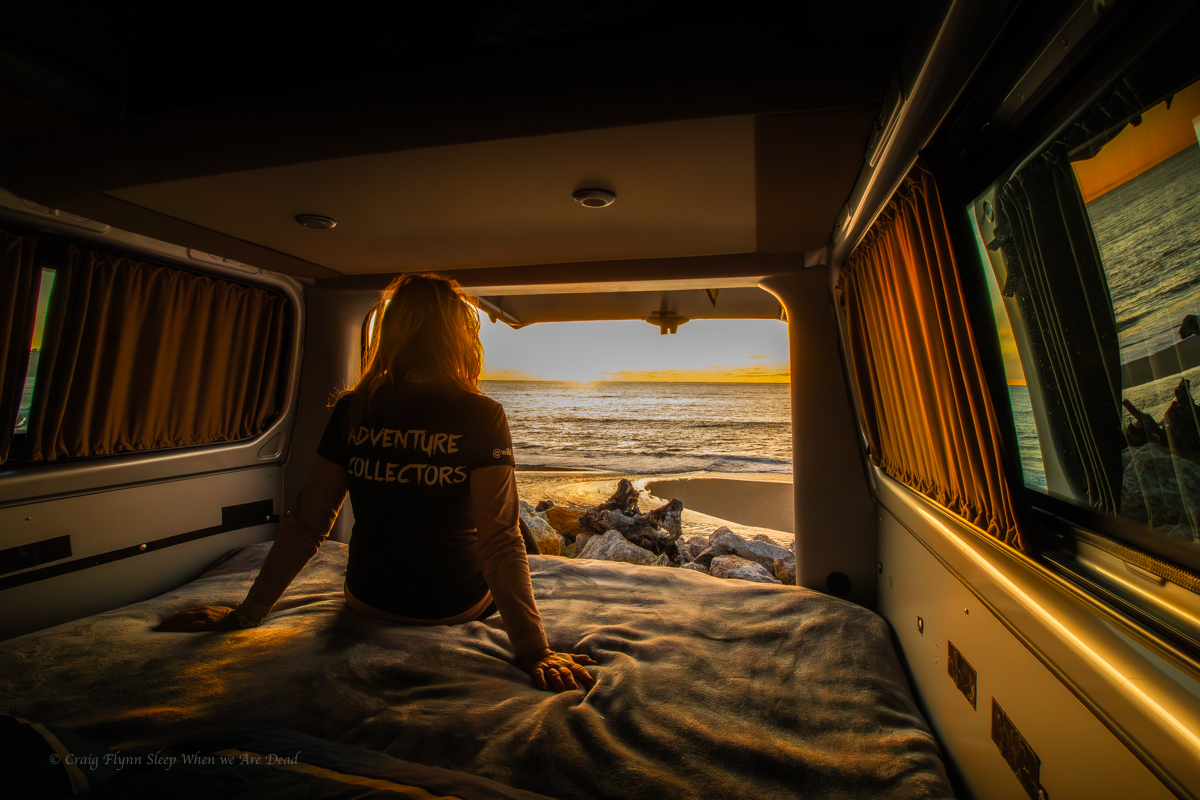
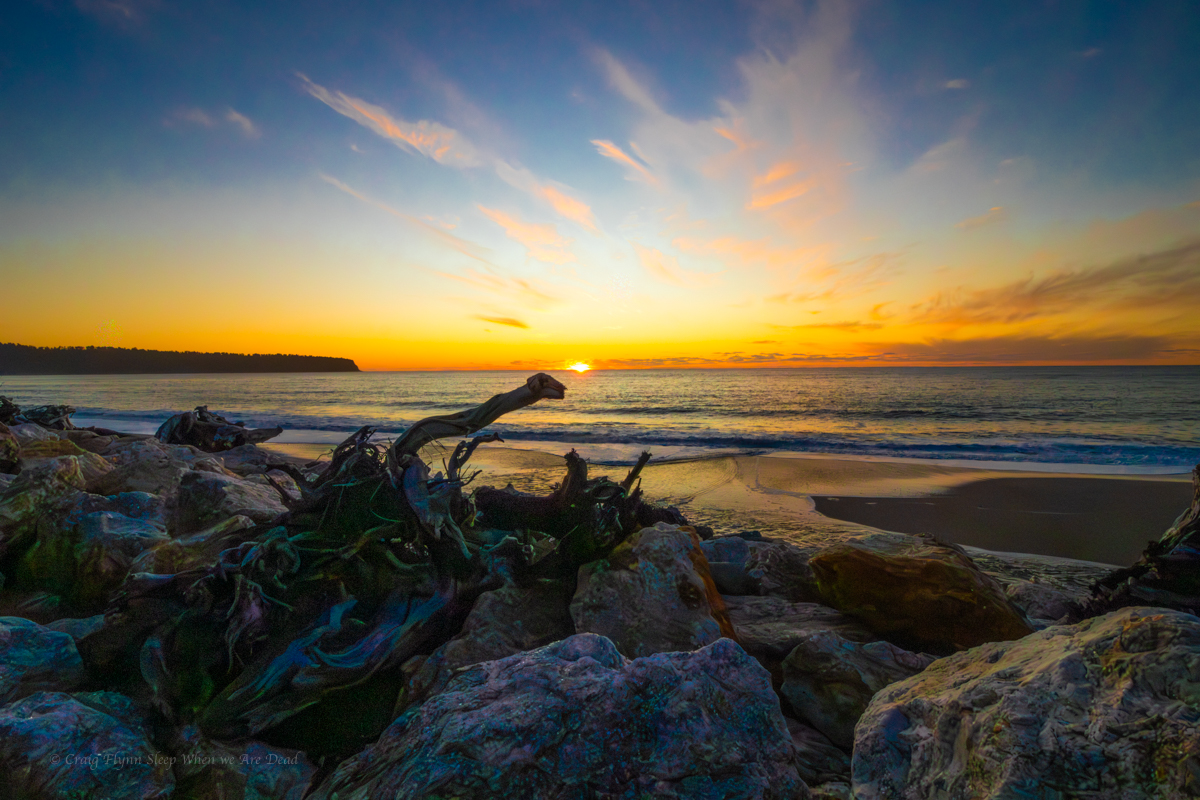
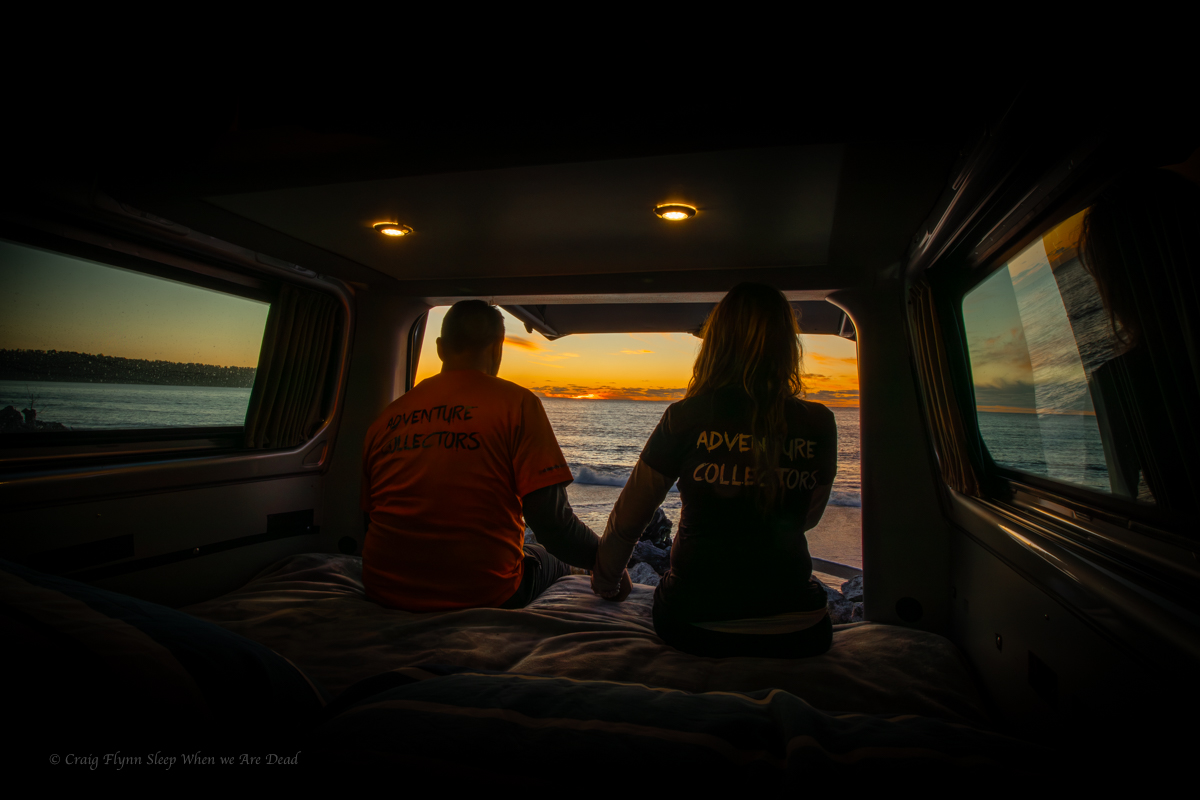
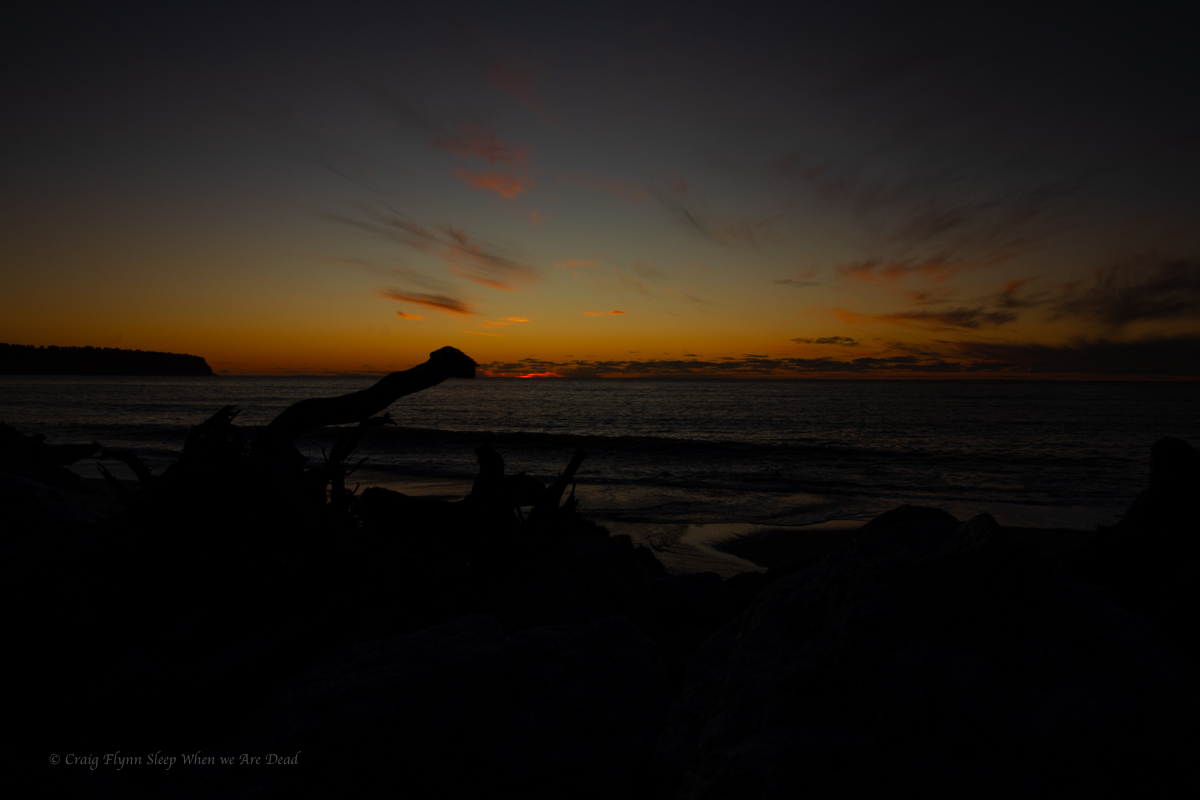
Anyhoo it was a great spot to finally catch a west coast sunset.
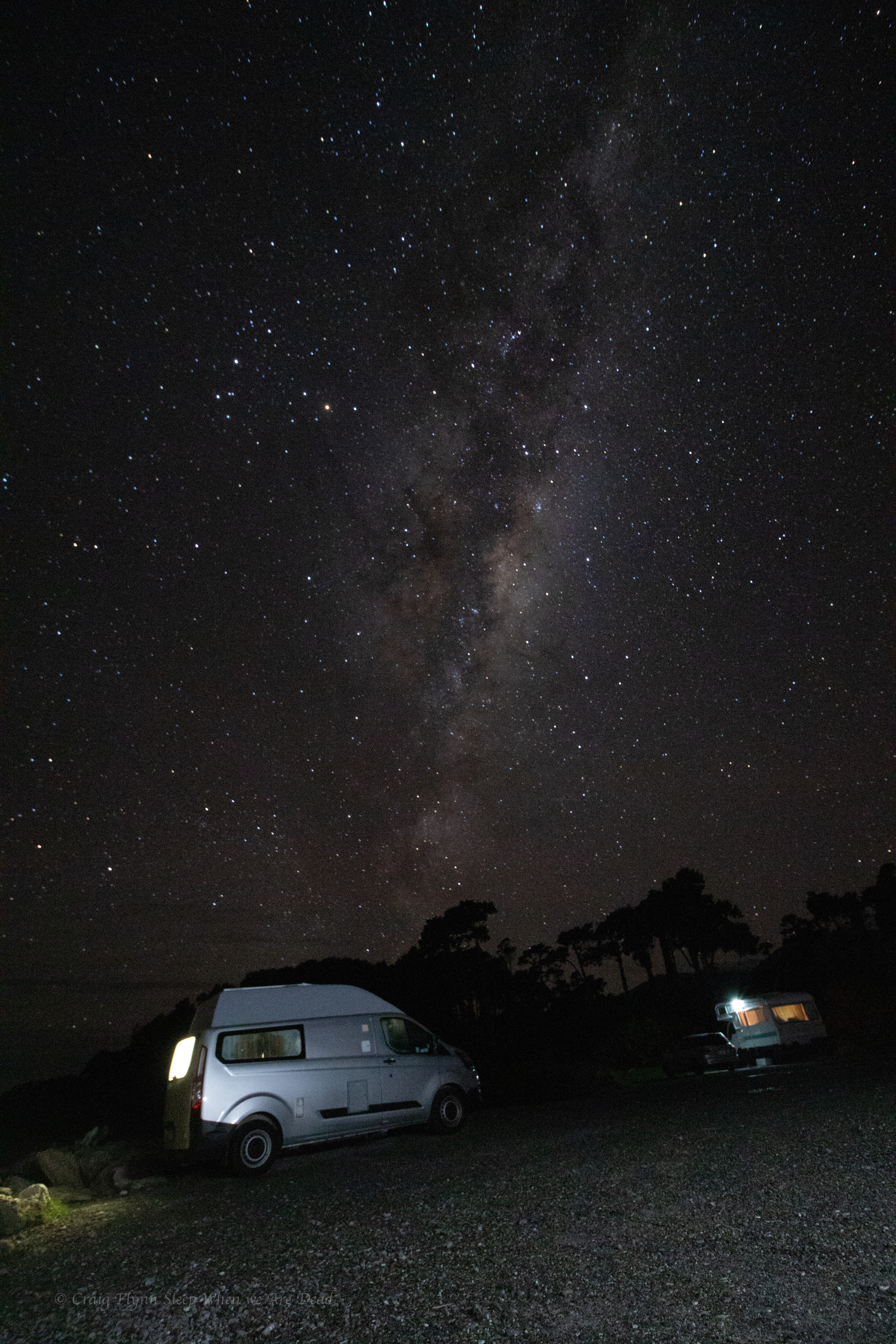
And with the sunset the clouds dispersed and I took the opportunity of dark sky and milky ways.
But we didn’t stay up too late as we wanted an early start the next day to explore the waterfalls of Haast Pass.
From Hokitika it was an early start to drive down for our next adventure.
When planning our itinerary Kylie had mentioned a walk up towards the base of a glacier she had previously done and loved and while we had been trying to keep it a low cost holiday we had also been tossing up splurging on helicopter tour.
I remembered my old mate and mentor, Rusty (RIP) having done a heli/hike tour onto a glacier and raving about it.
If we do the helicopter I’d love a snow or glacier landing, Say I.
That’s a great idea Kylie replies.
We begin looking into options trying to decide what would fit our wants and itinerary. Franz Josef Glacier Guides started looming large as the front runner.
This is the one part of our holiday where we decided to dam the expense and splash a bit of cash on. IMO it was worth every cent.
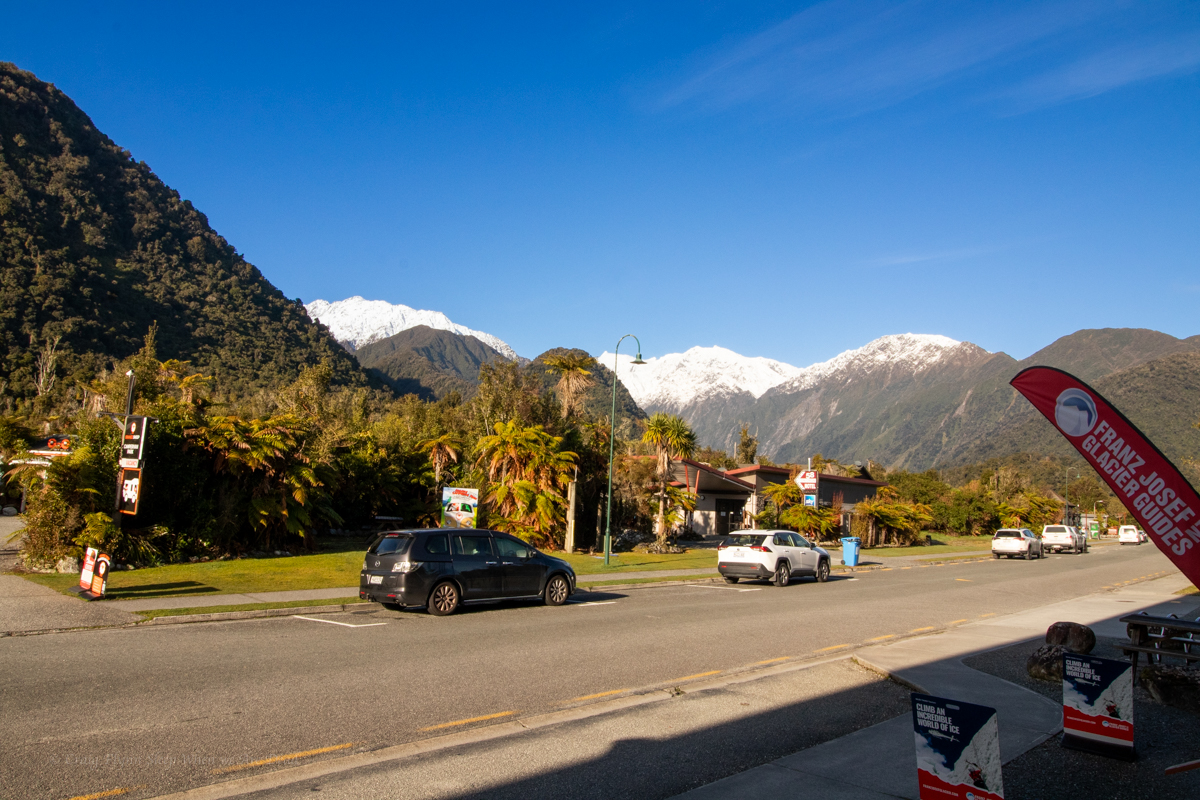
Just driving into town is mind-blowing as we get our first close encounter with the snowcapped peaks while walking down streets lined with giant fern trees.
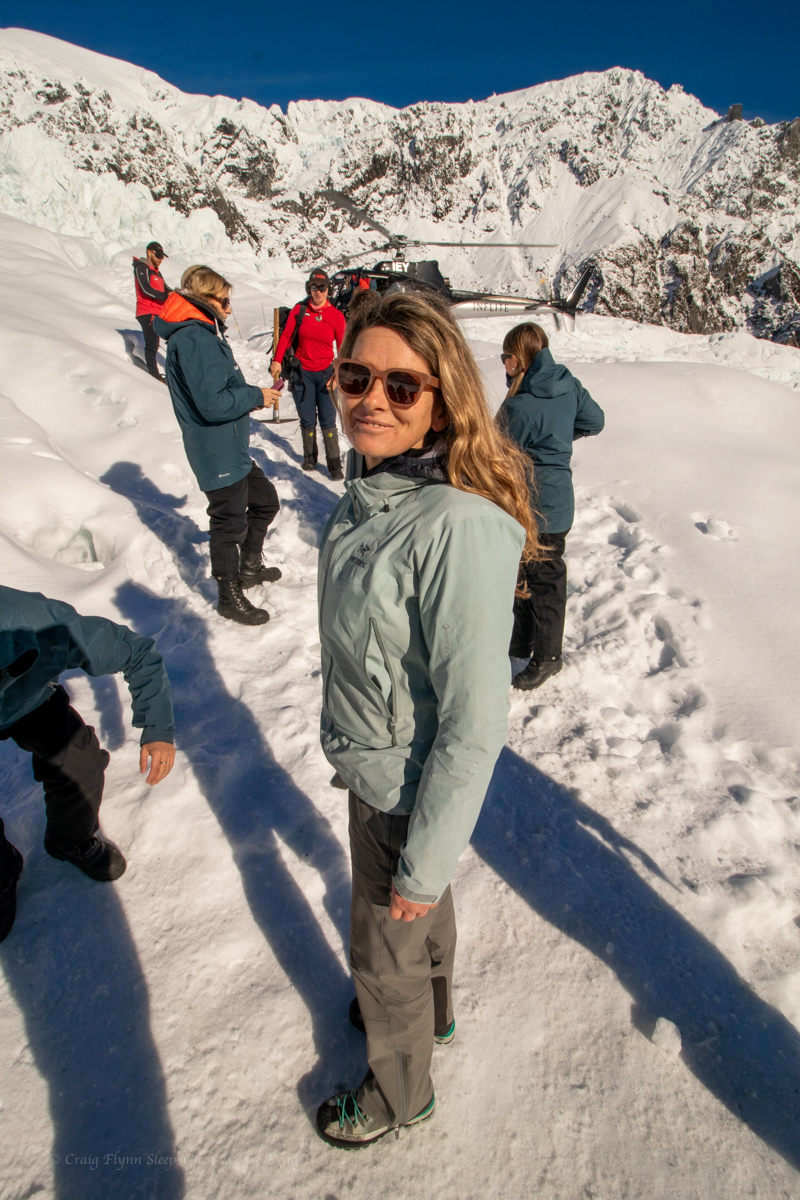
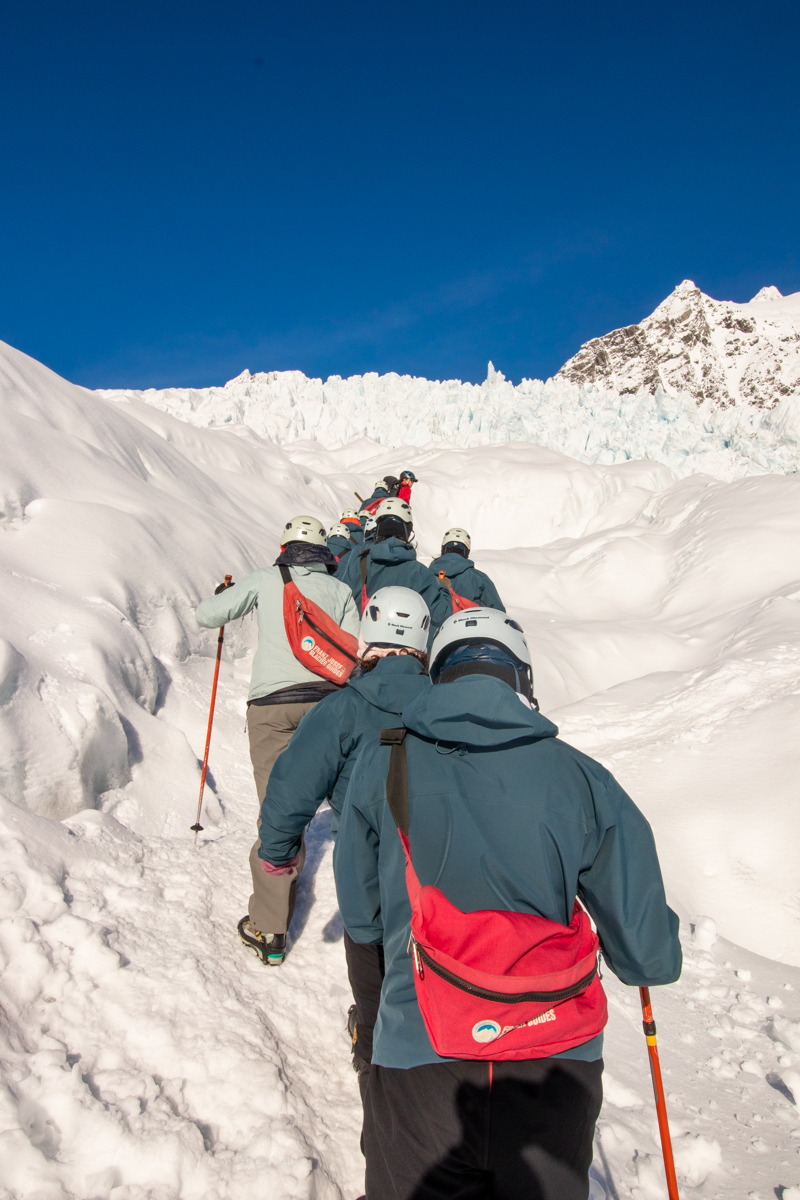
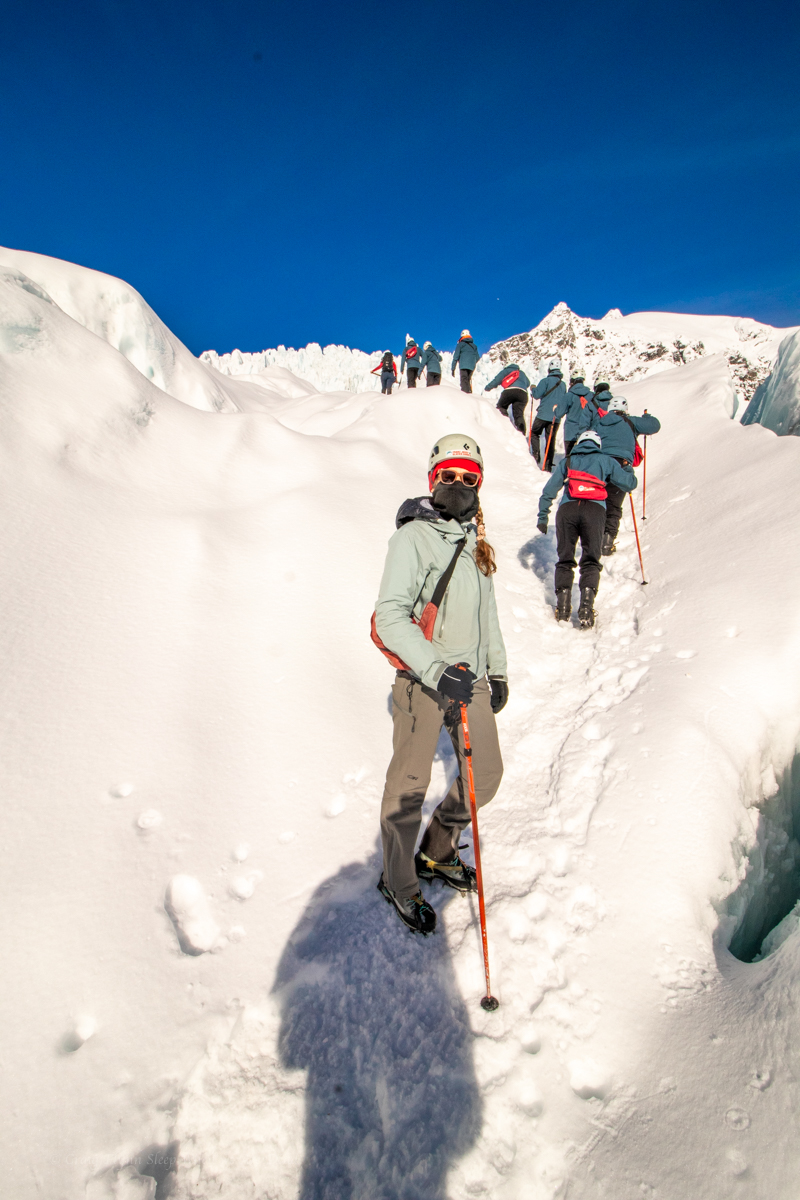
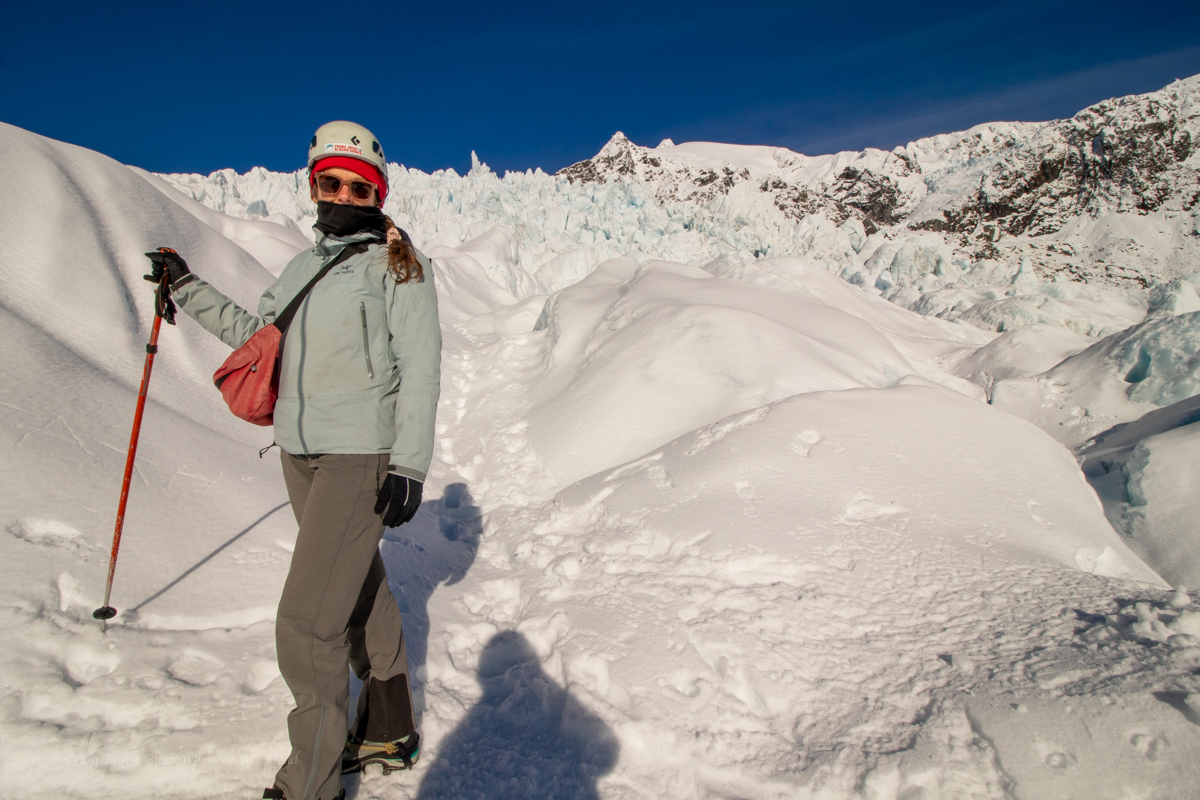
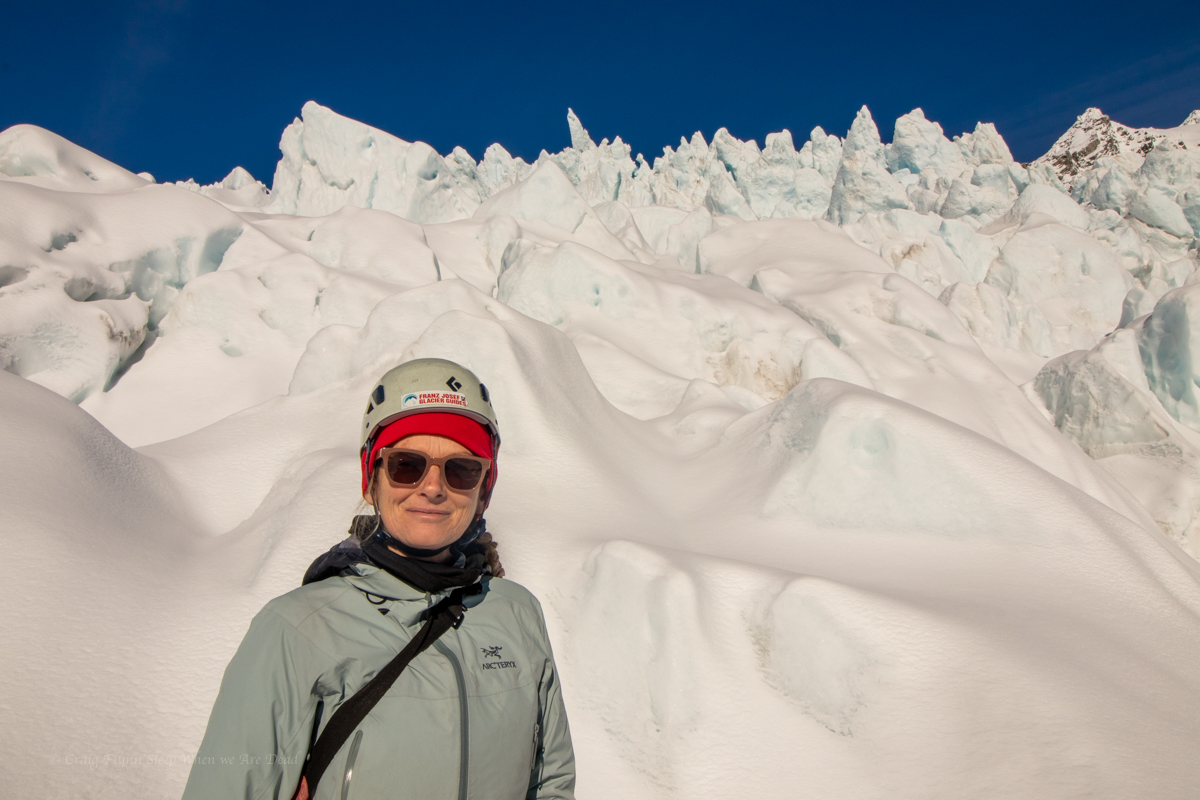
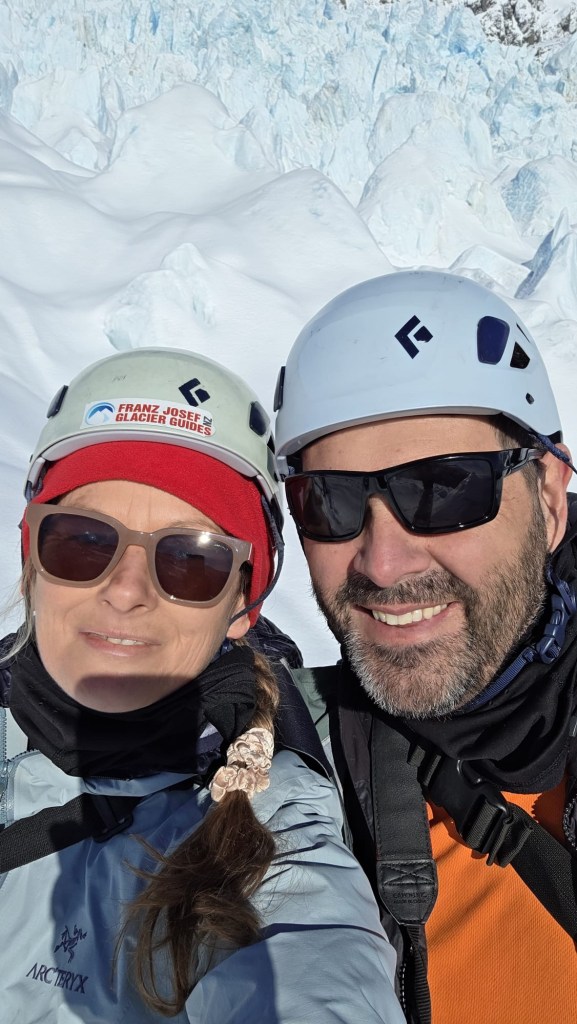
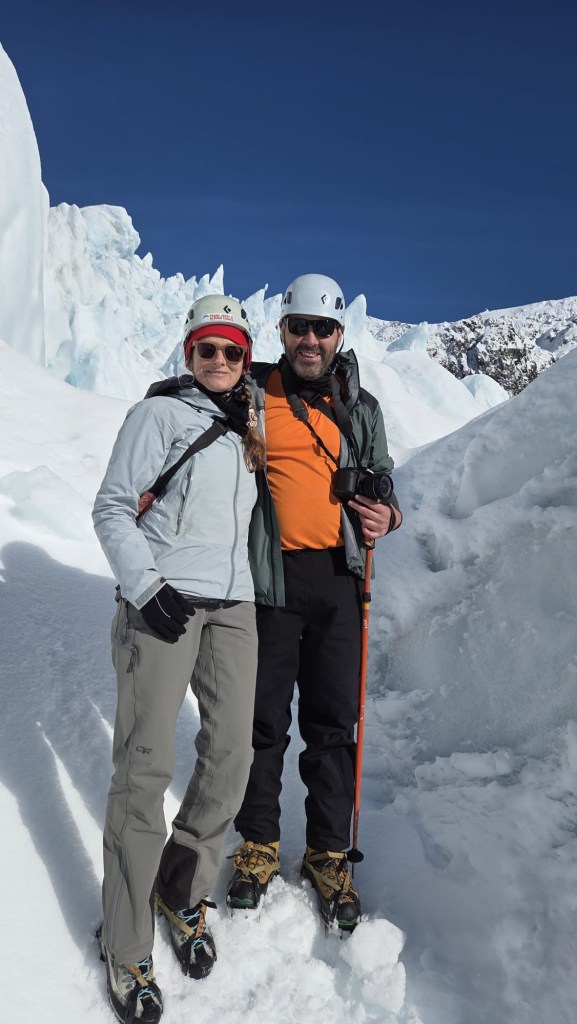
While FJGG supply all the outer layers to keep their clients warm they were more than happy for us to use our own gear (after confirming that it was suitable).
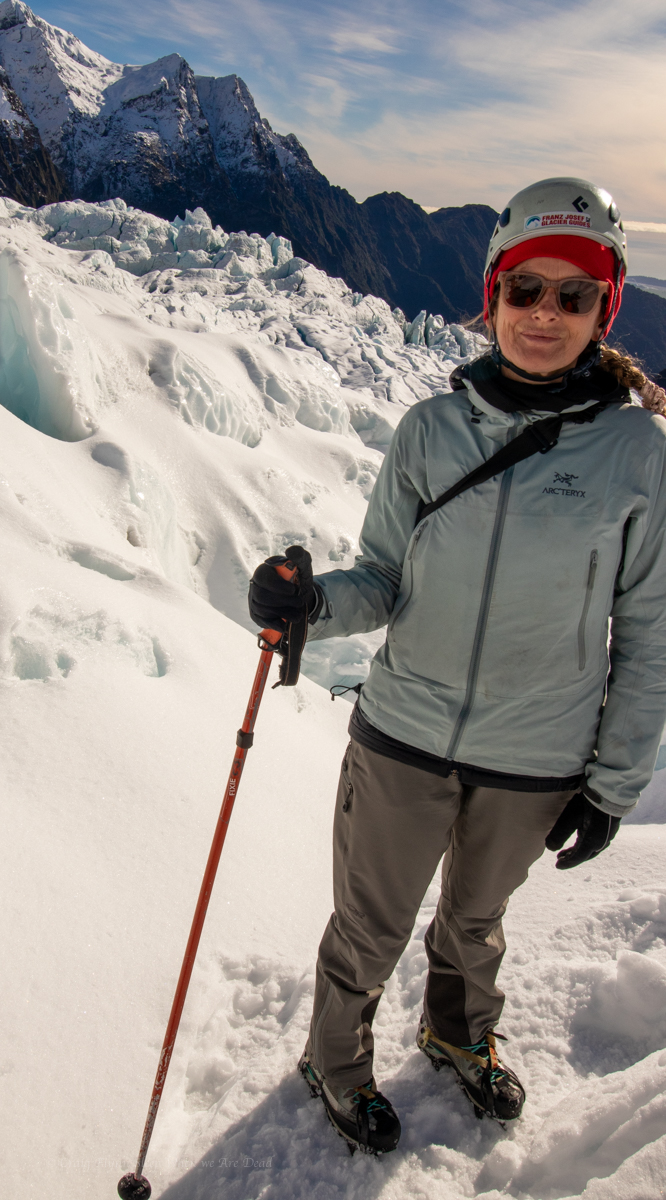
Our guide, Maya, was informative, funny and chill as she took us through the safety talk. That’s worst case, says she. It won’t happen today… I hope. Na, it won’t happen.
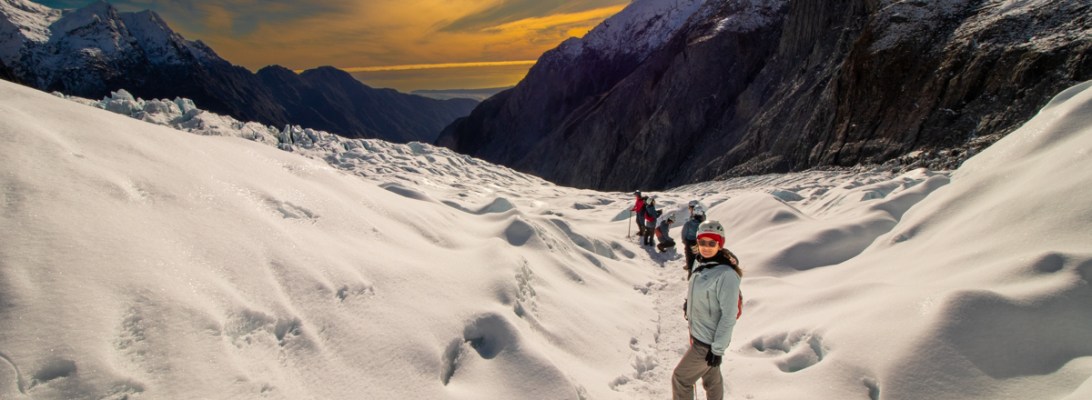
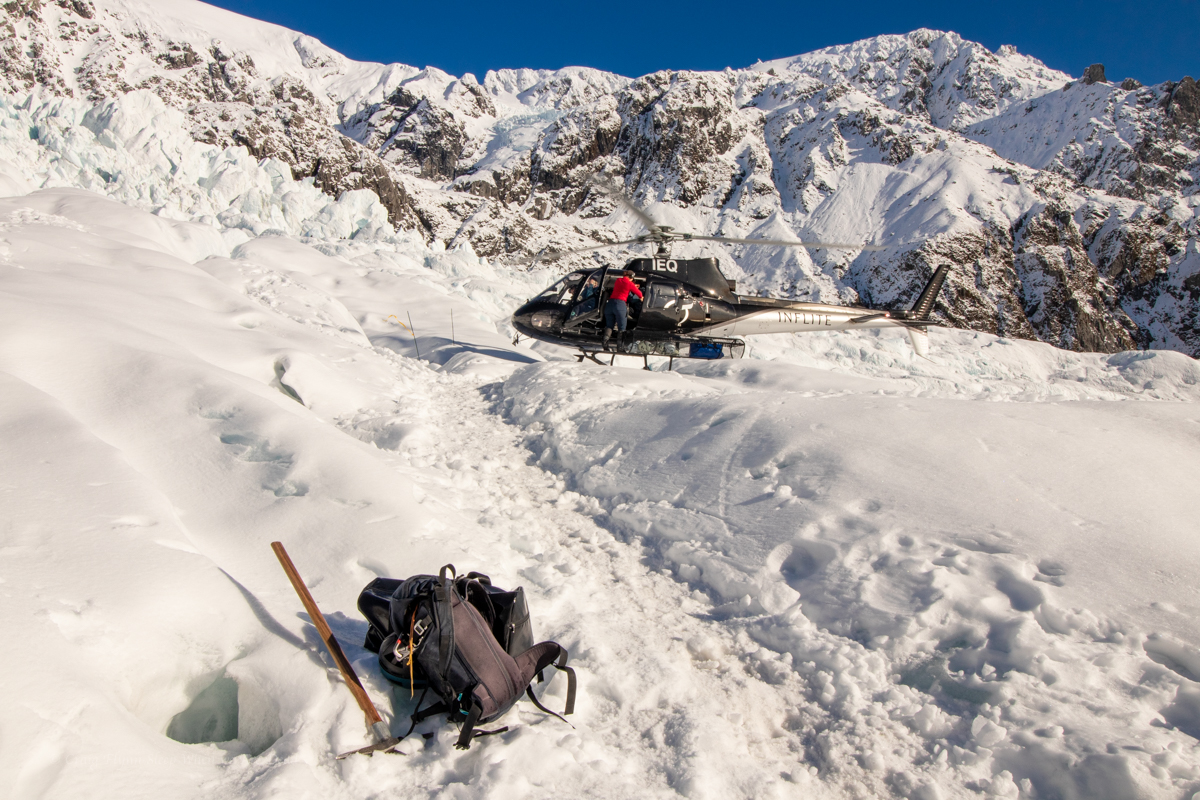
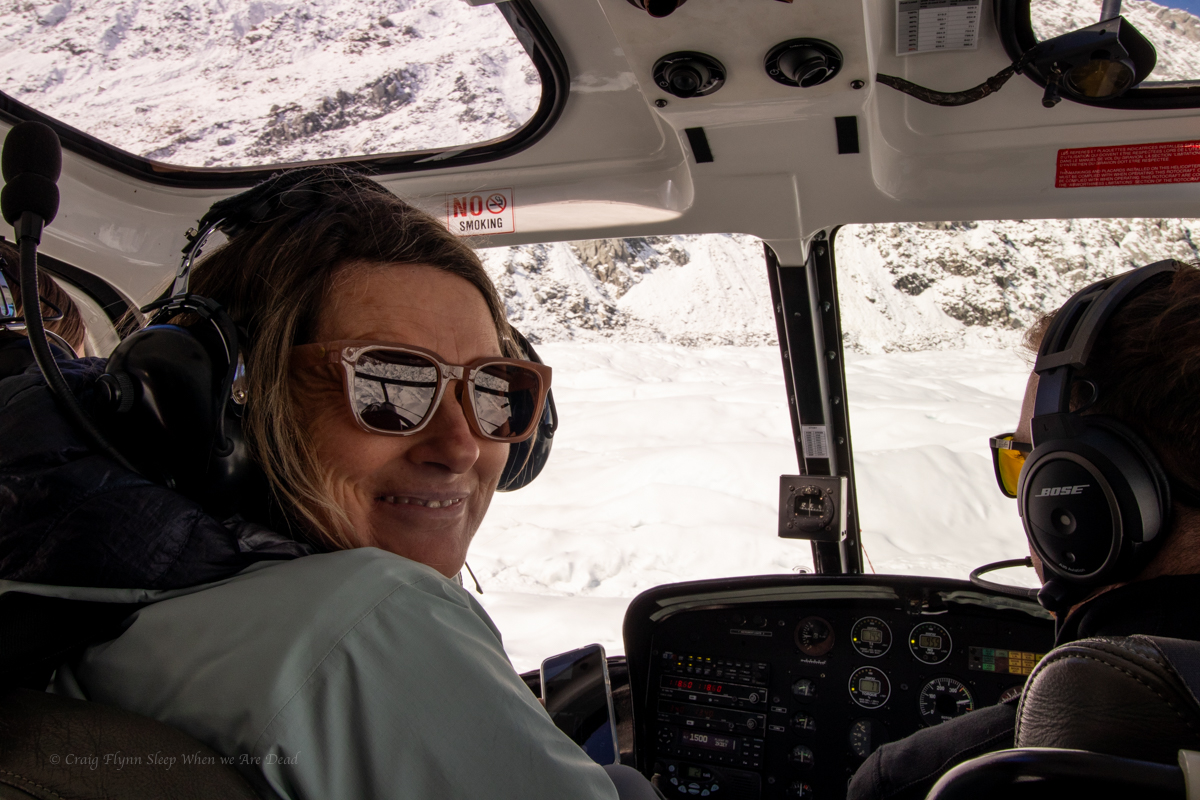
Suitably prepared we leave town via a lovely walk through the rain forest to the helipad. The group would be split into 2. And our group were first up with Maya joining us and our chopper pilot Matt giving great commentary along the way.
We had been assigned seating and Kylie had jagged a front seat, allowing her to capture some amazing videos.
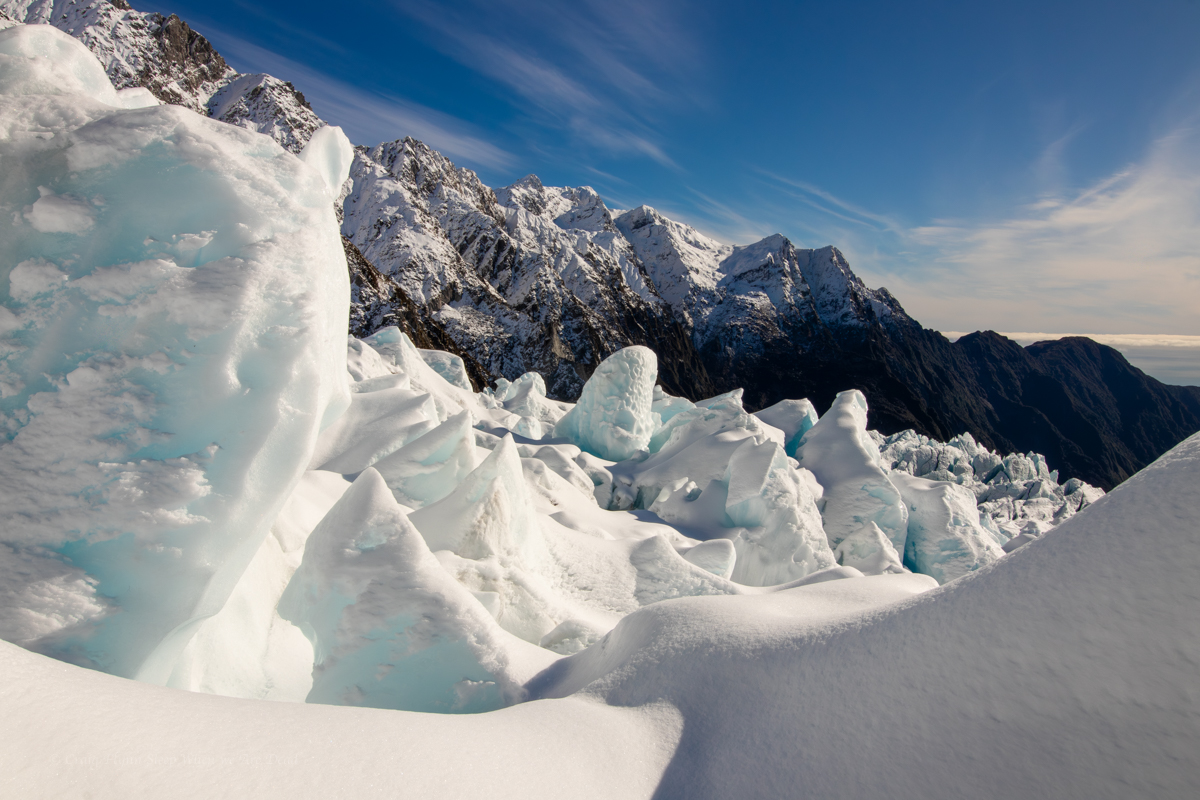
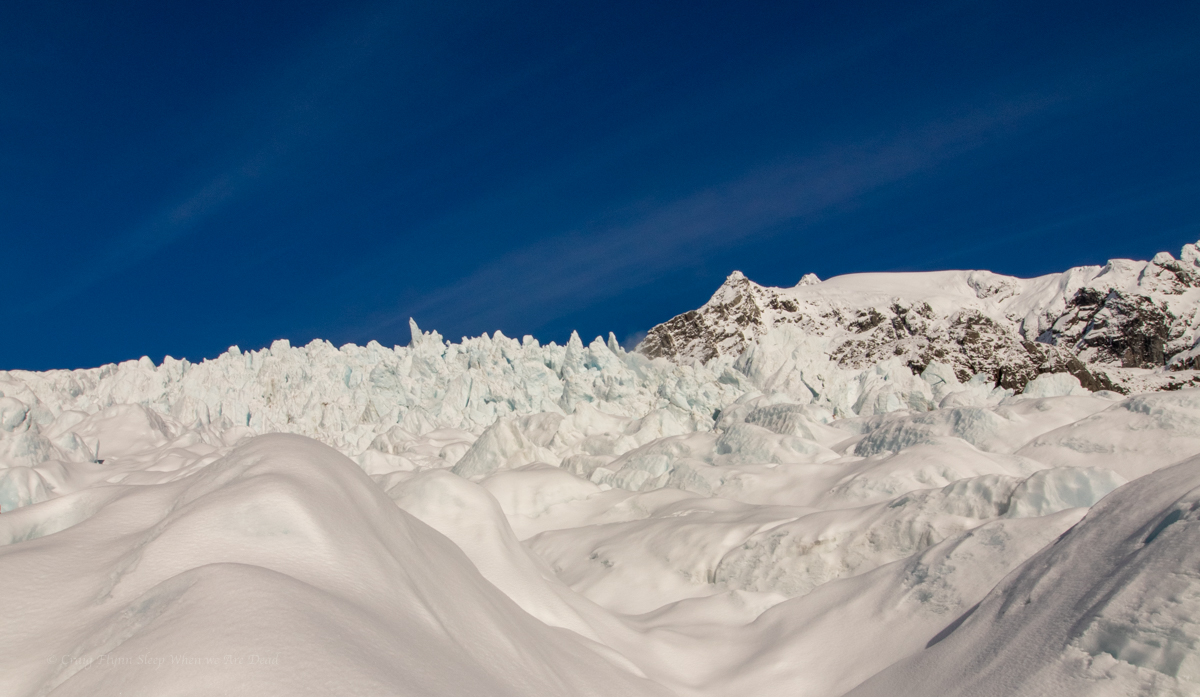
Even with Matt’s commentary it was hard to come to grips with the scale of this place. It wasn’t until we were down and looking back to the following helicopter that was just a tiny speck against the mountainous back drop that it started sinking in.
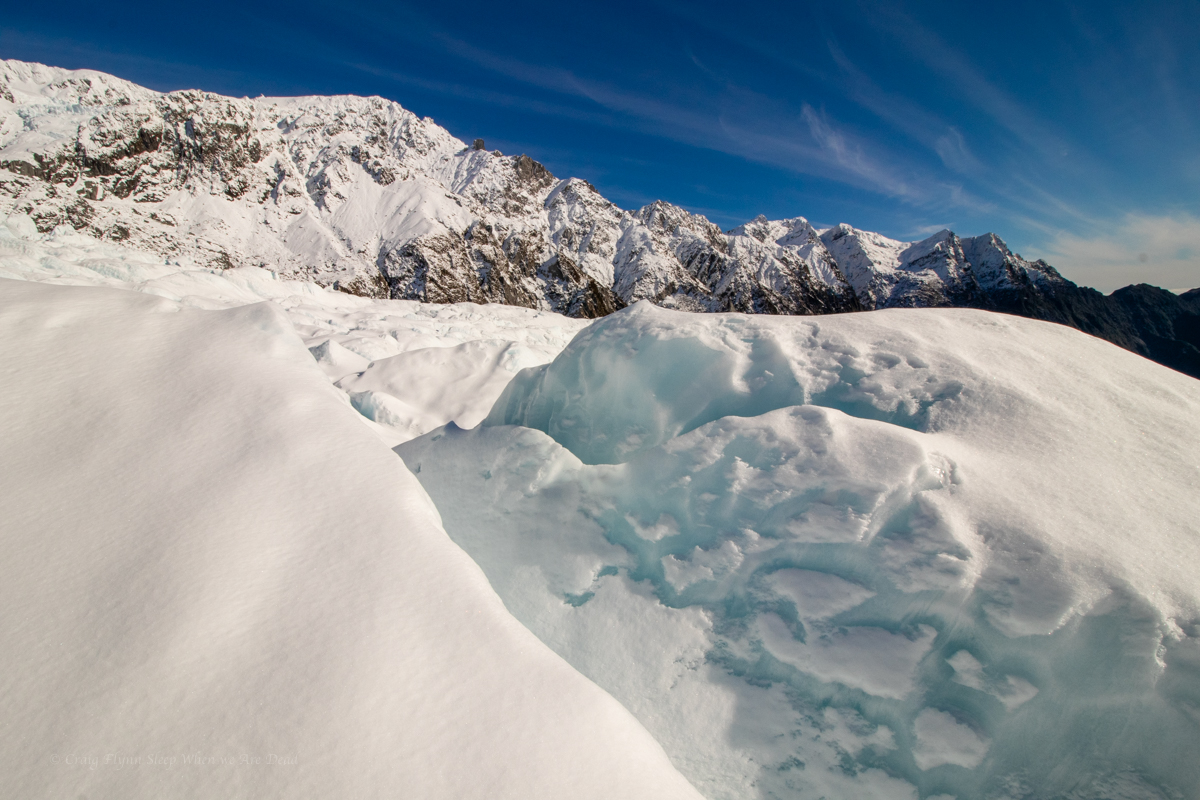
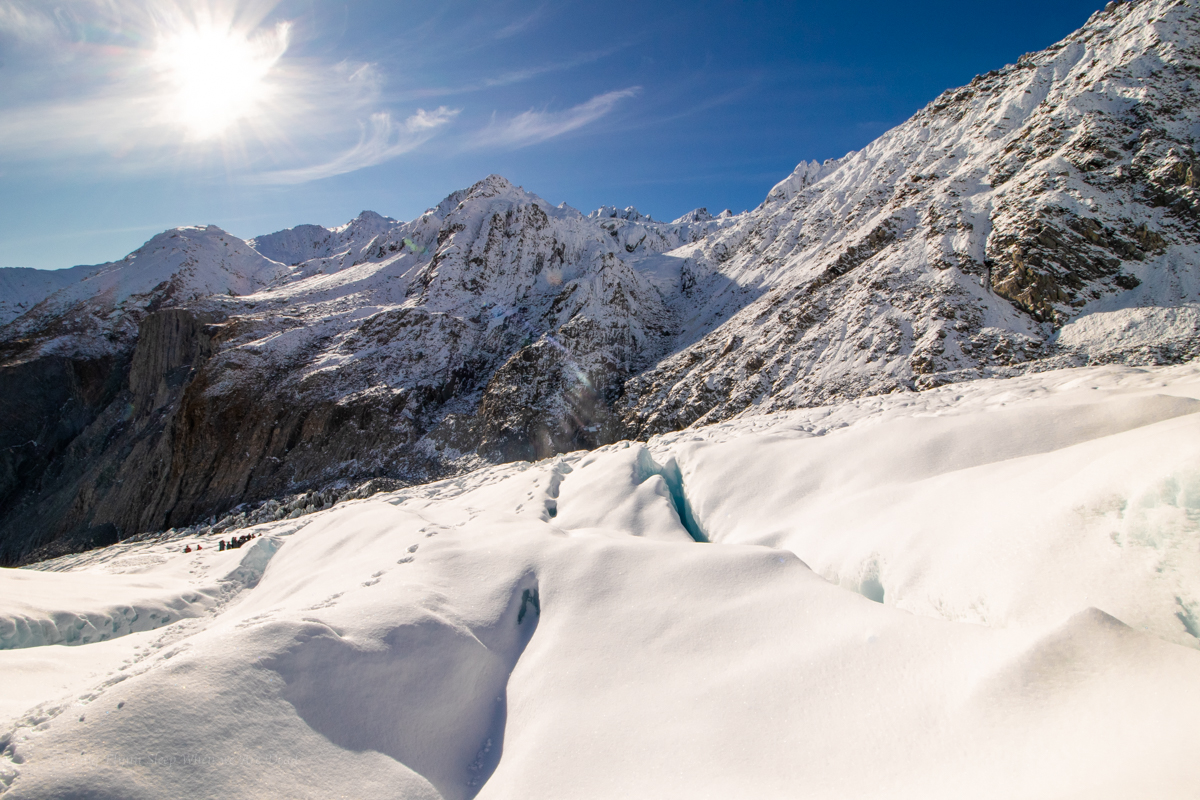
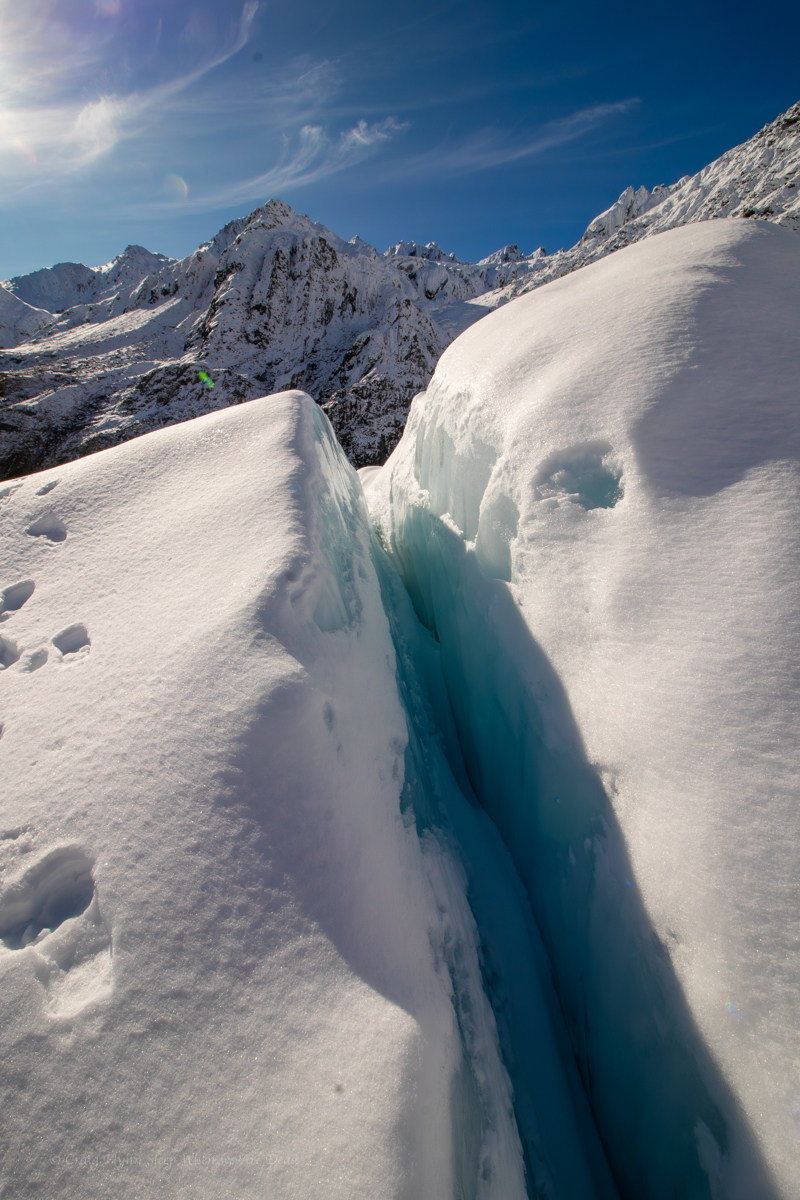
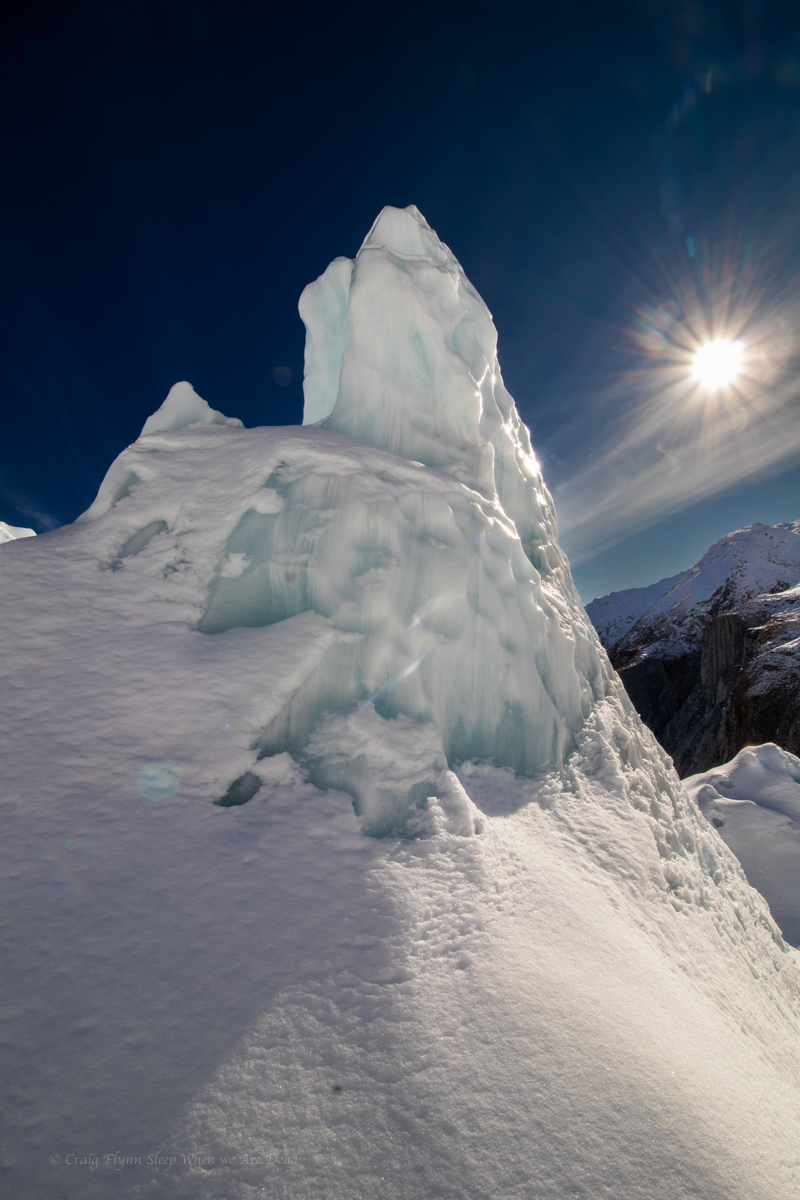
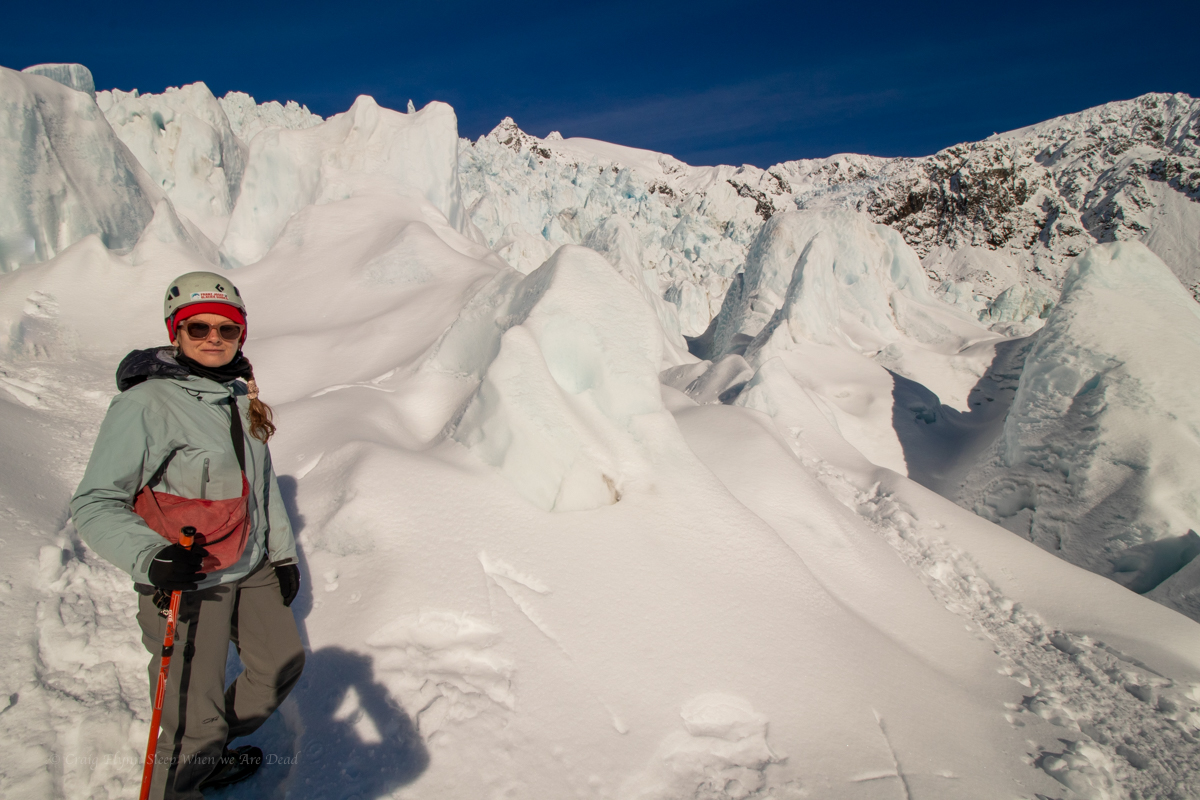
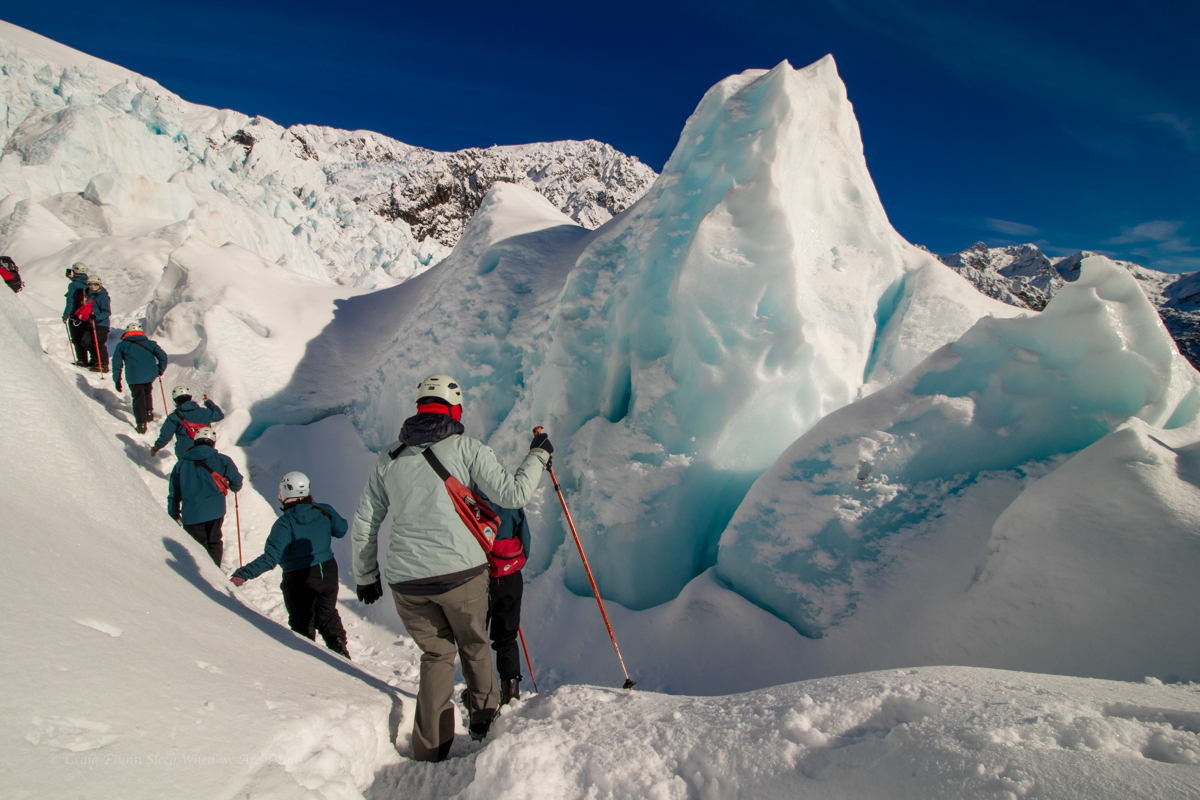
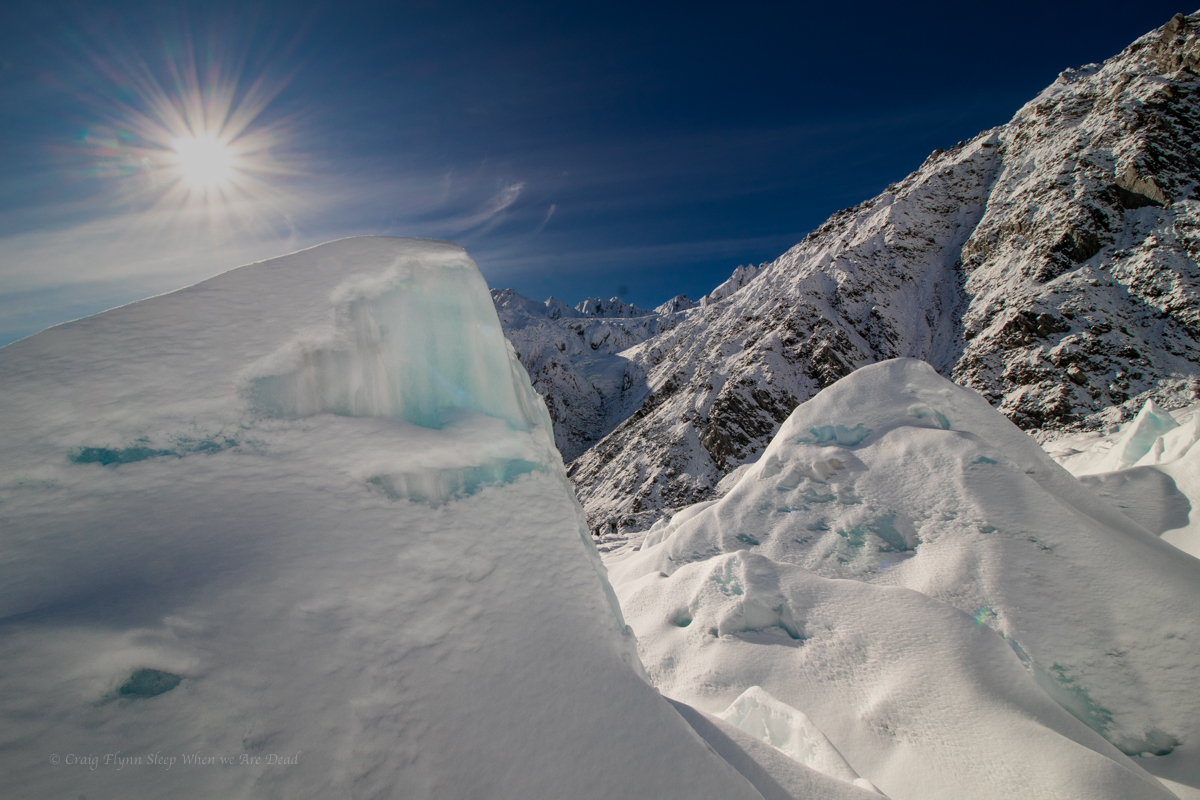
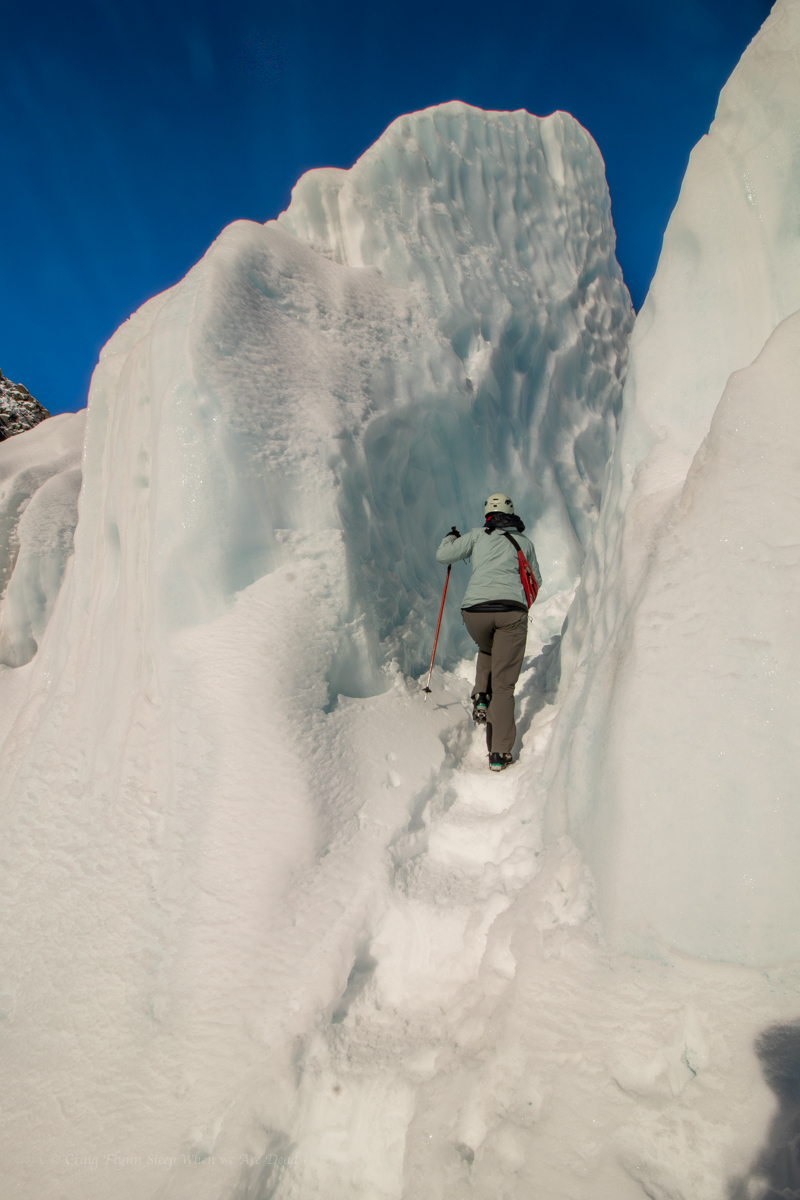
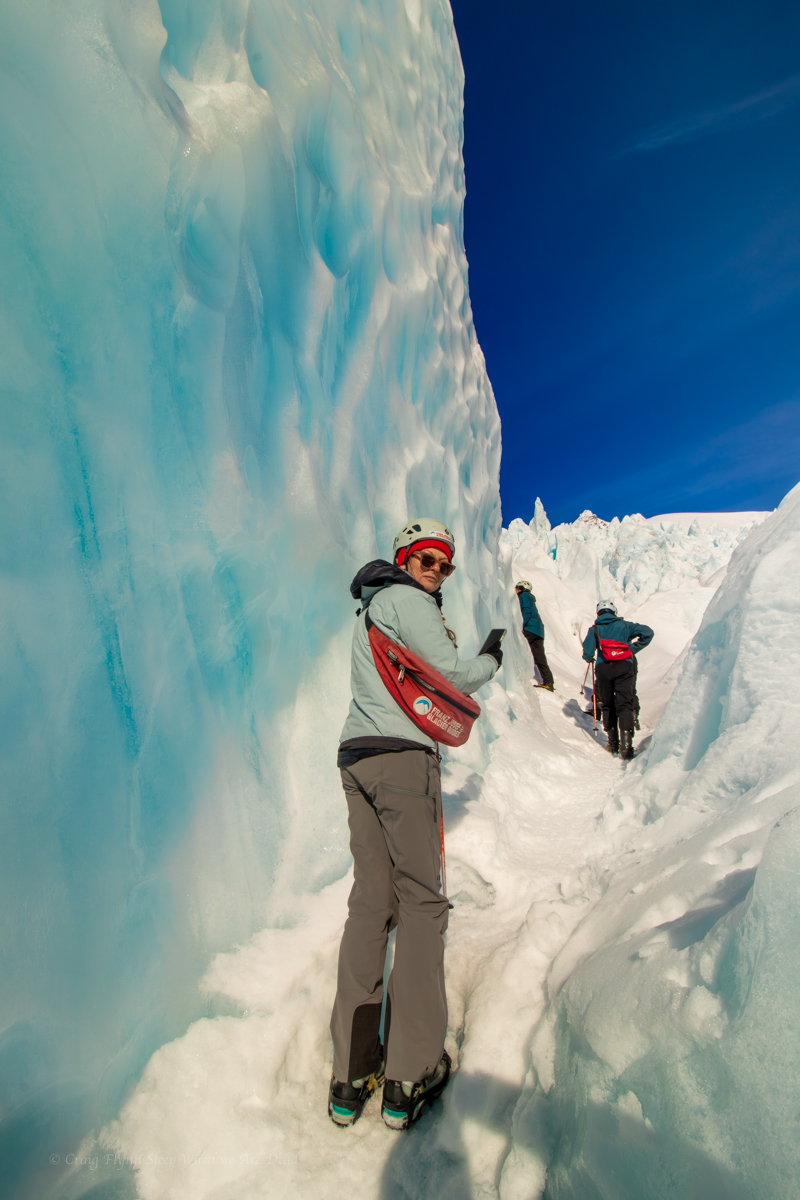
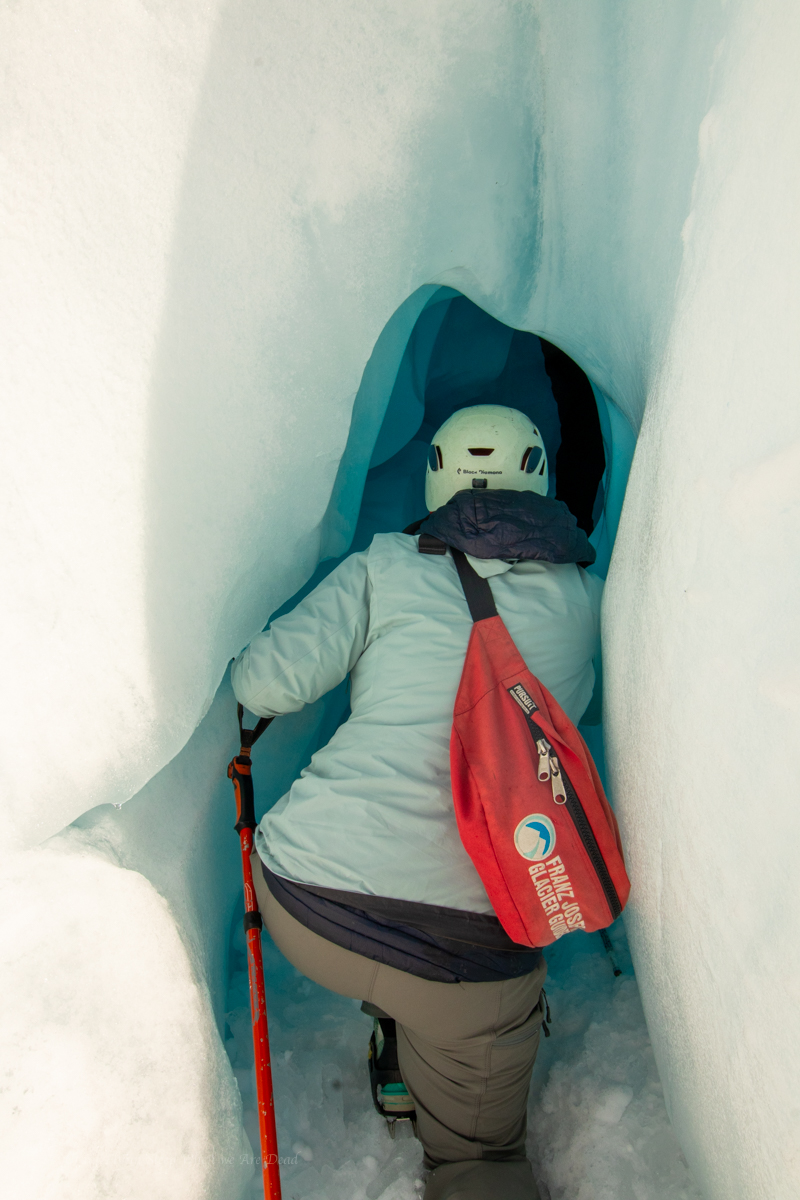
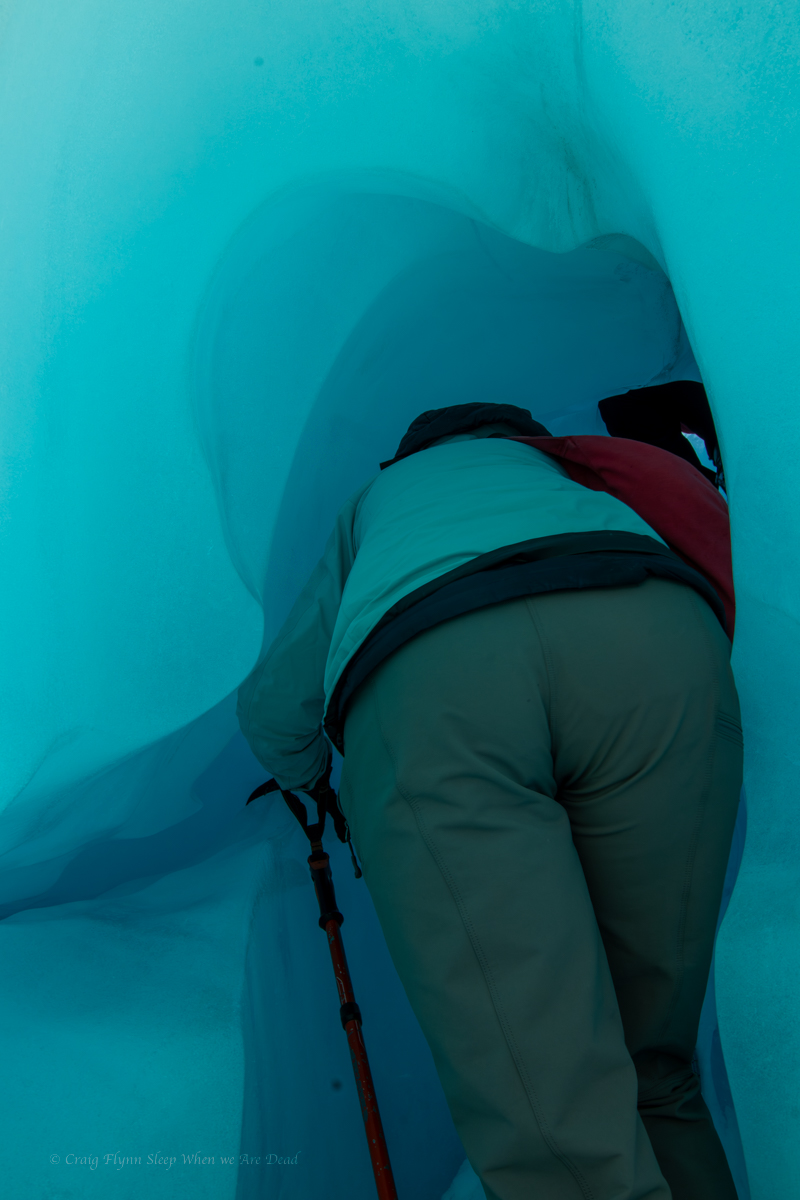
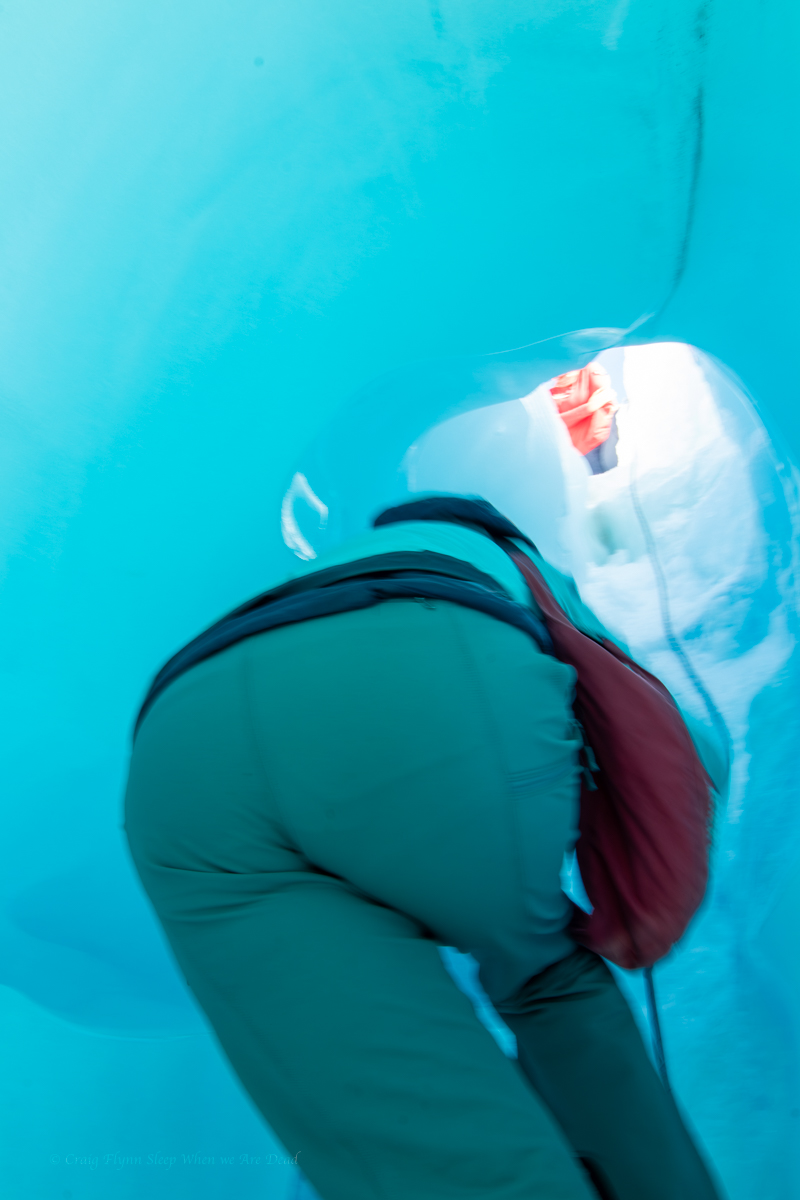
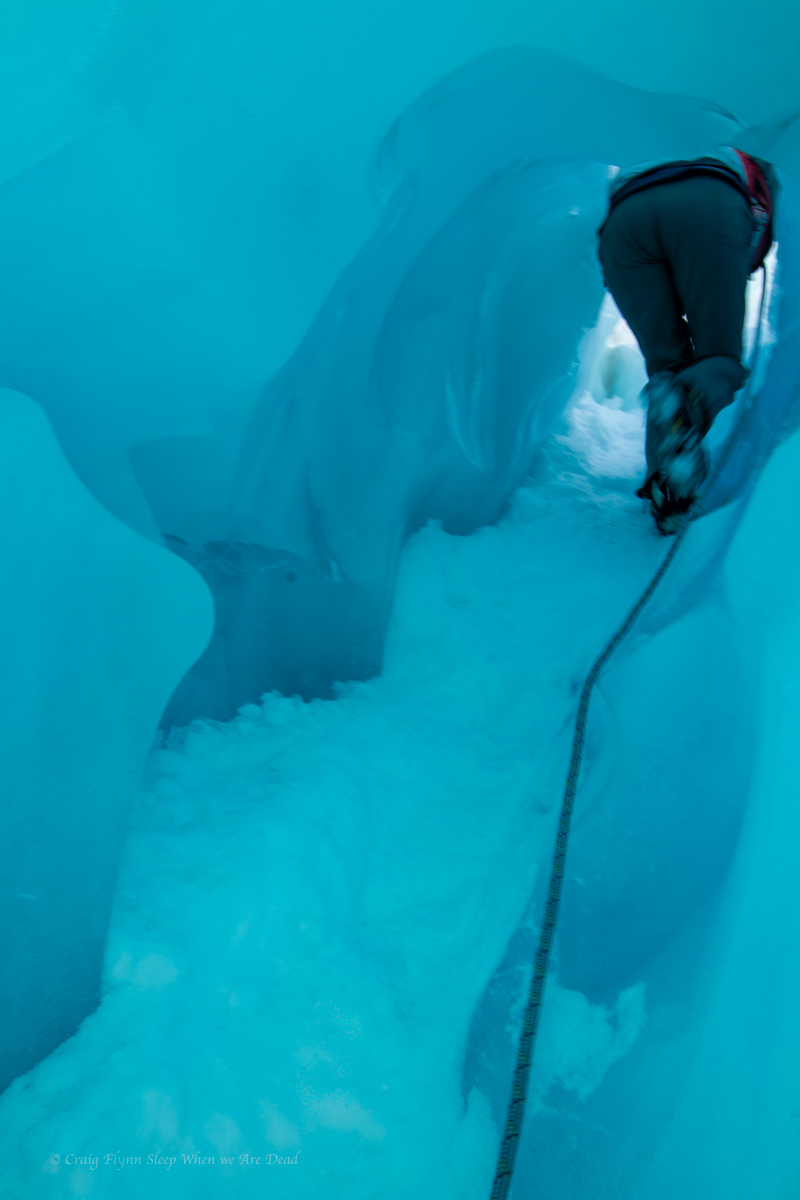
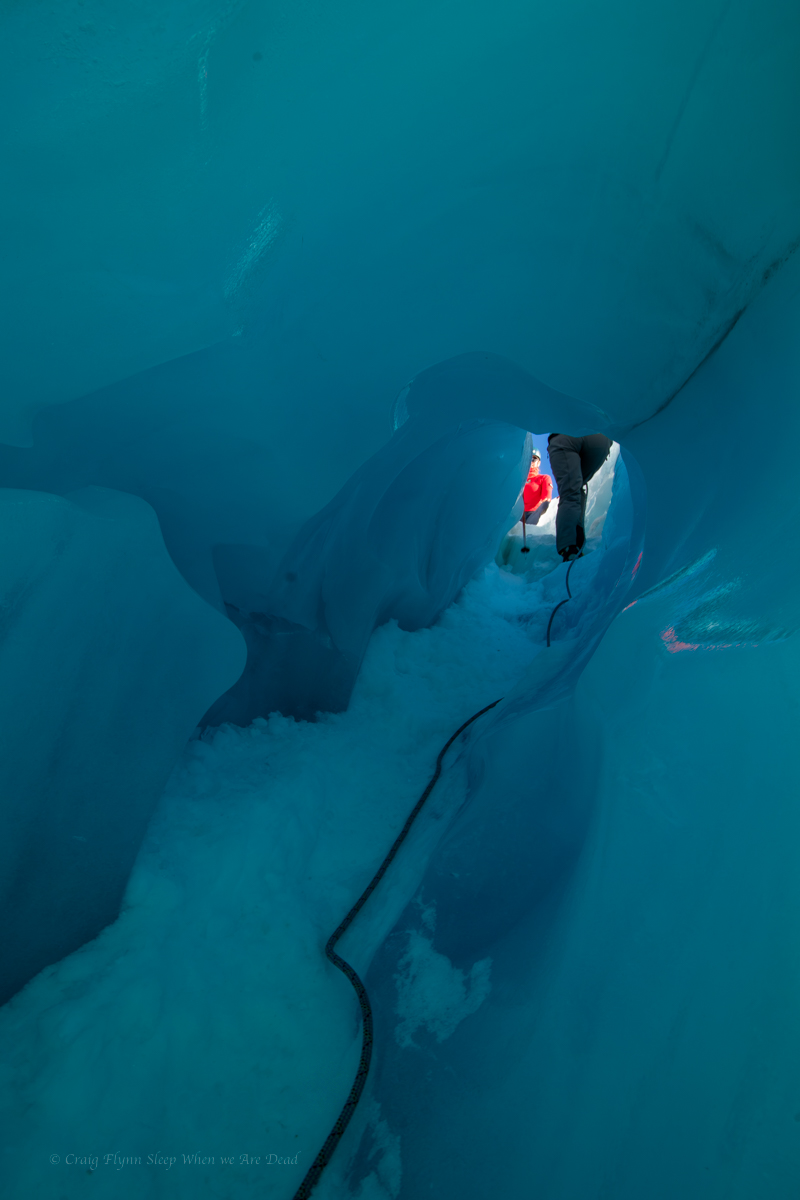
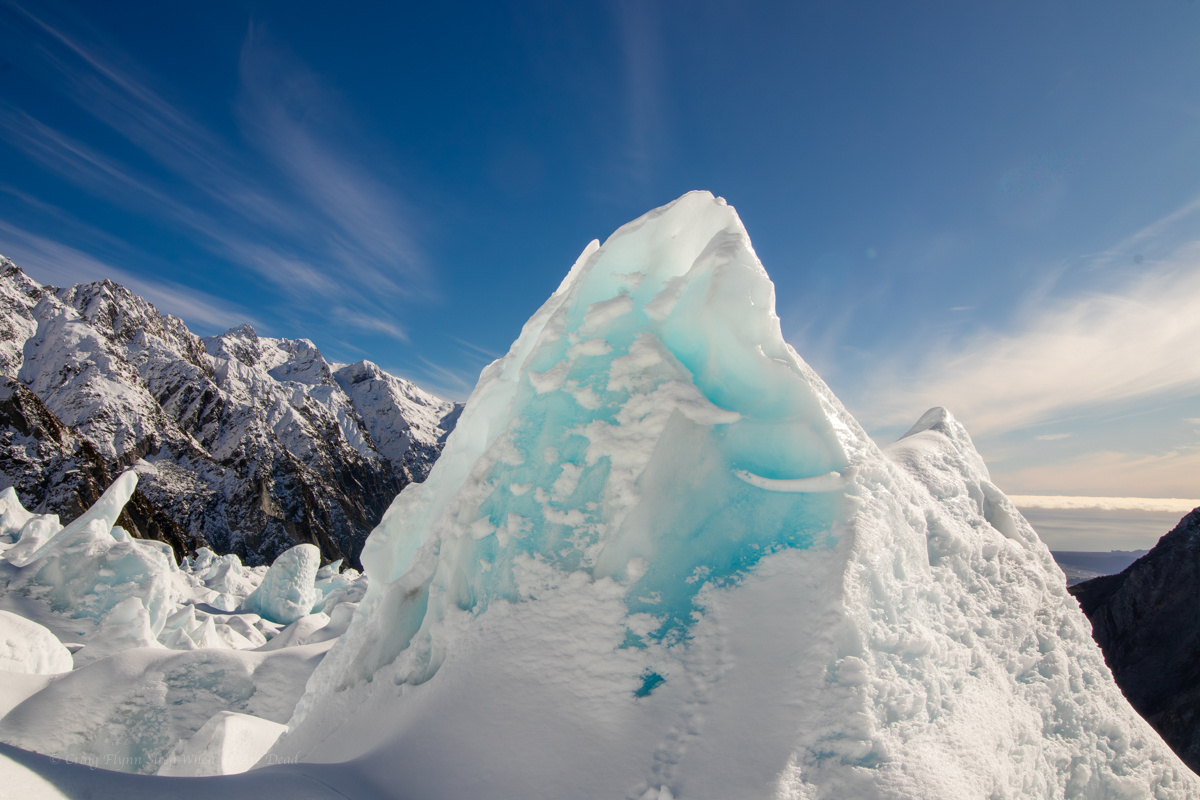
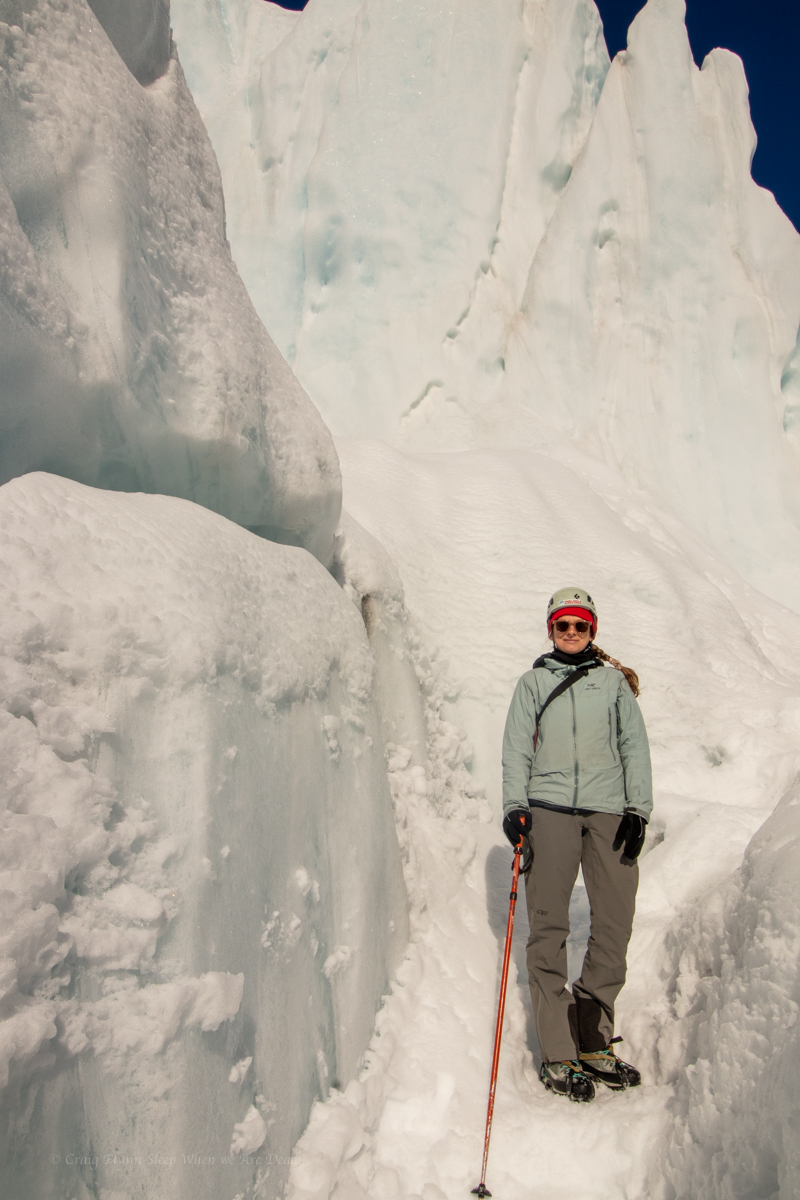
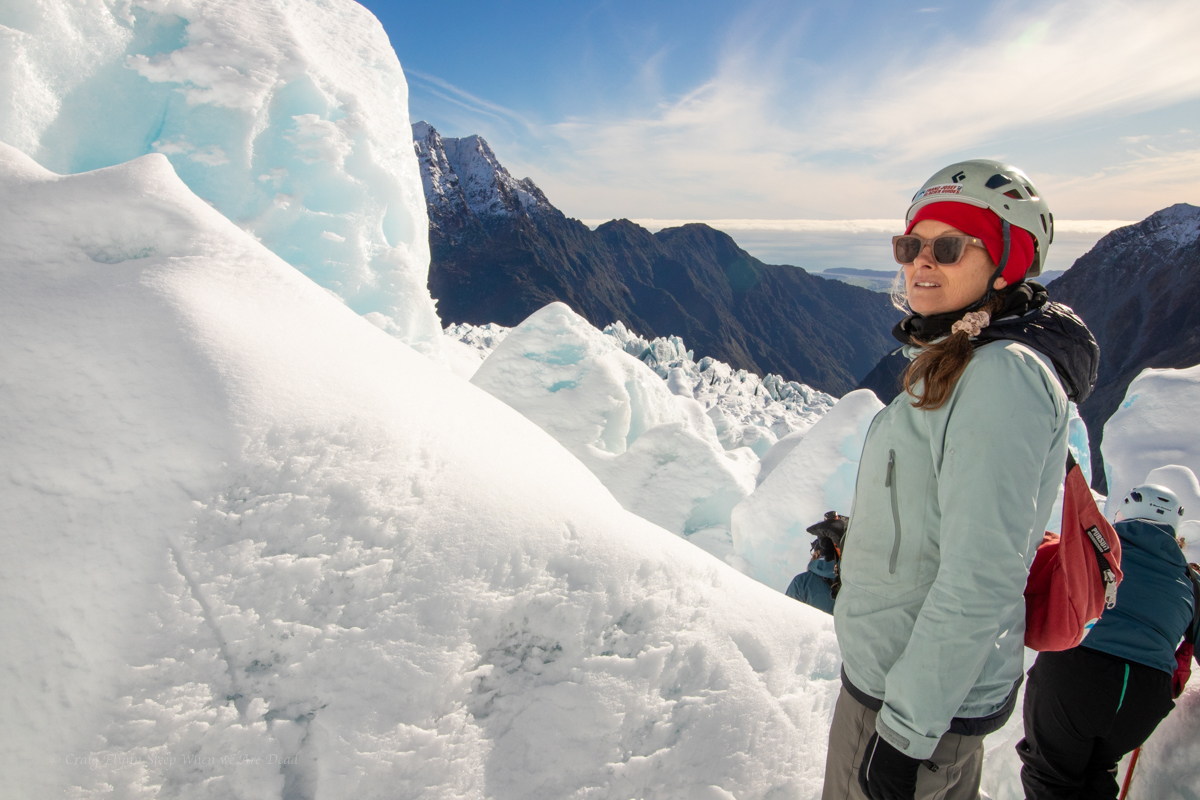
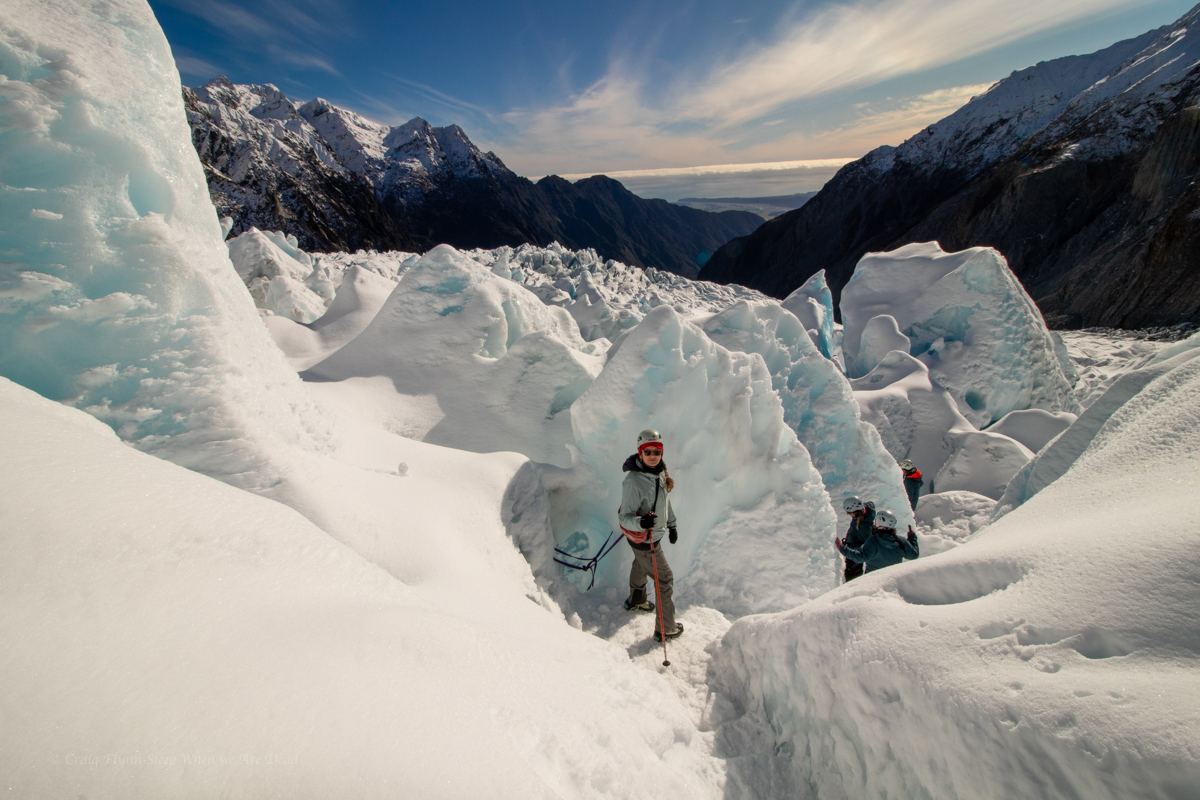
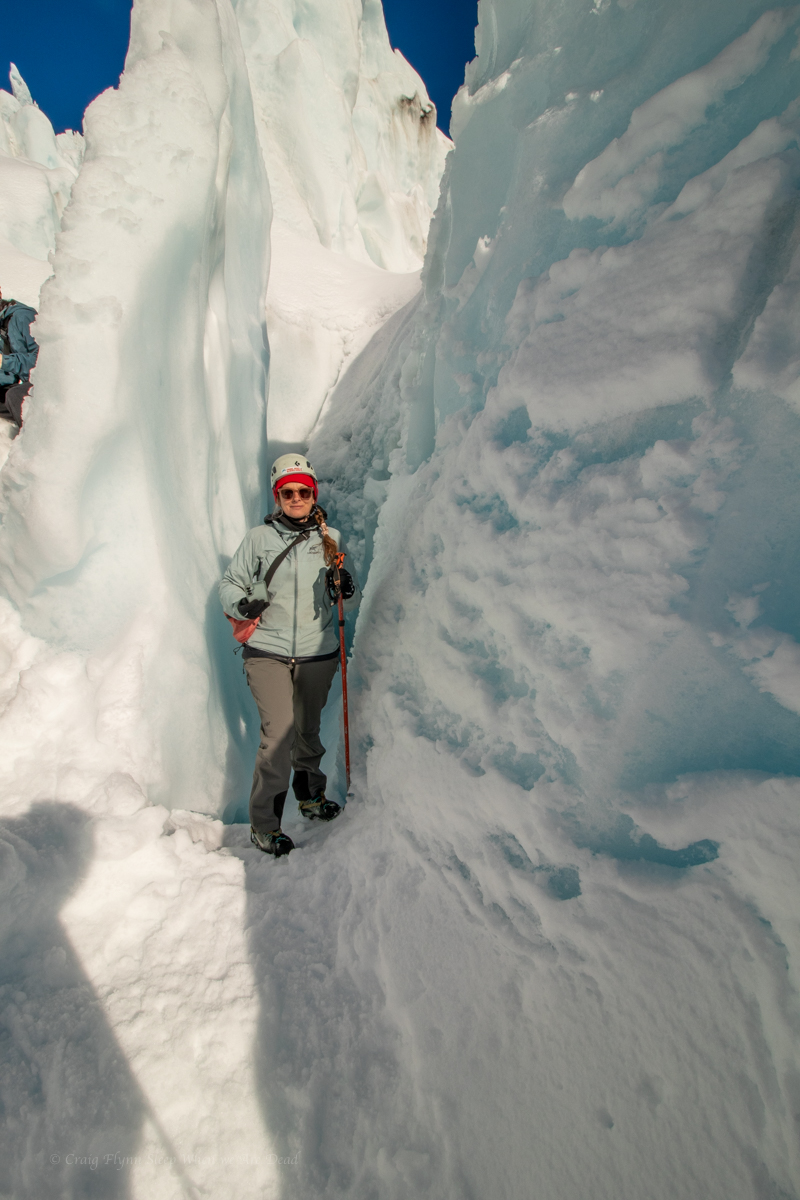
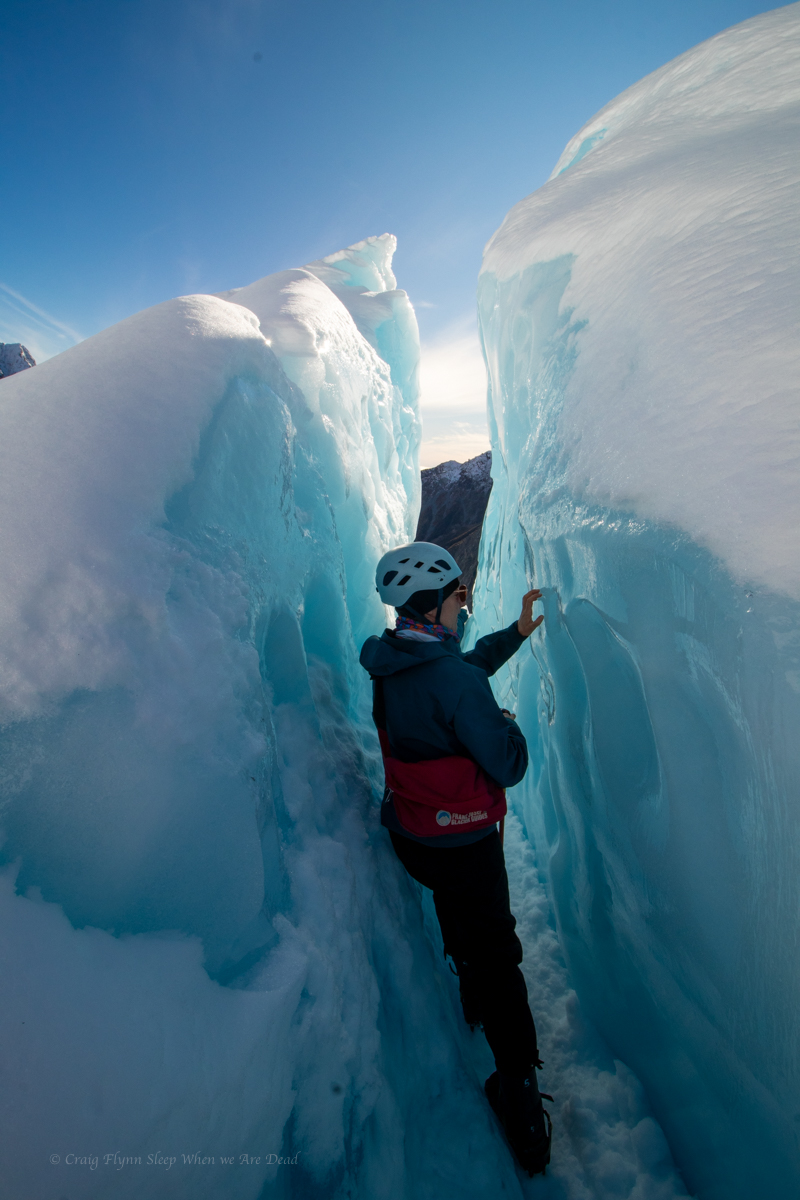
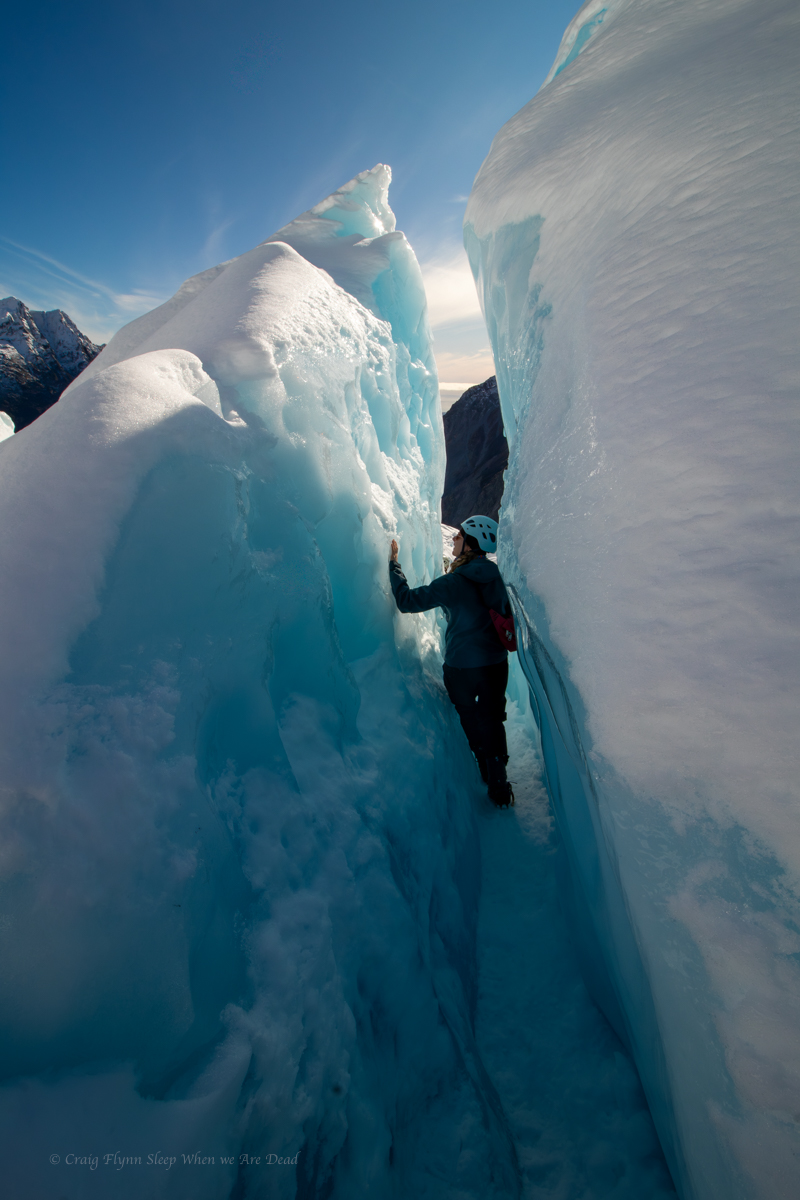
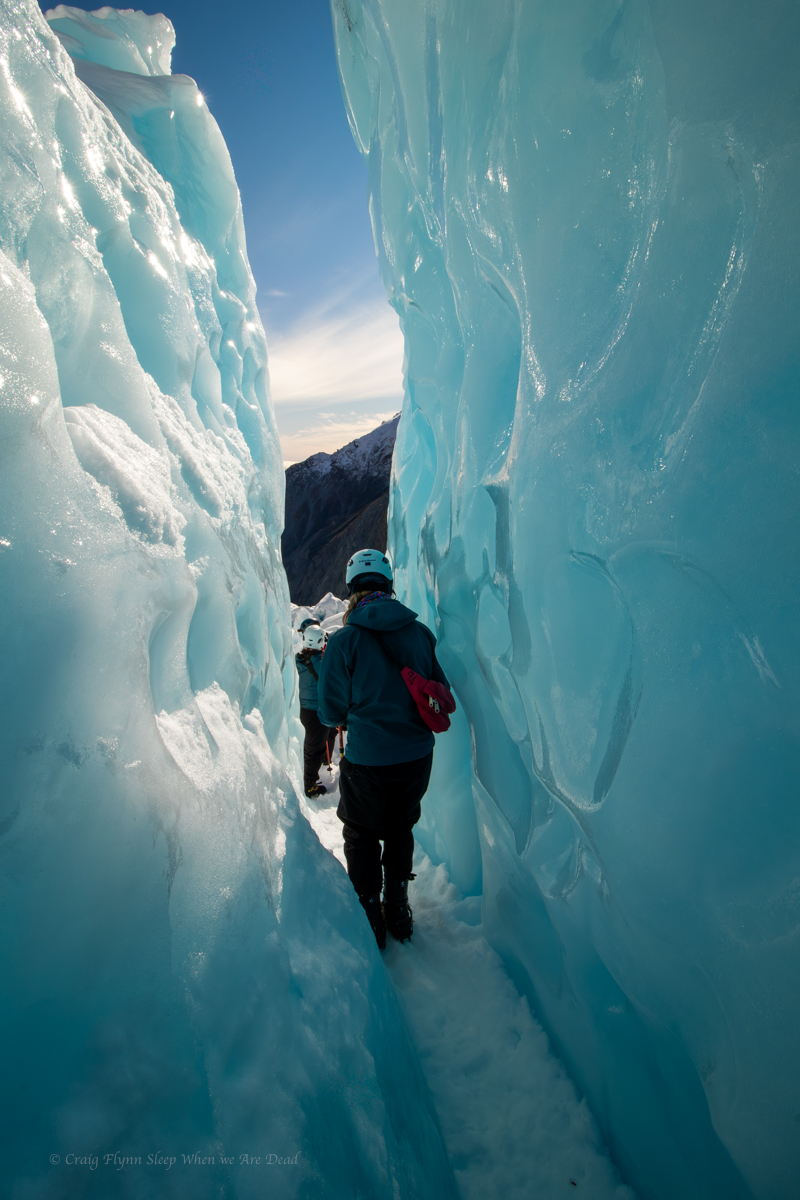
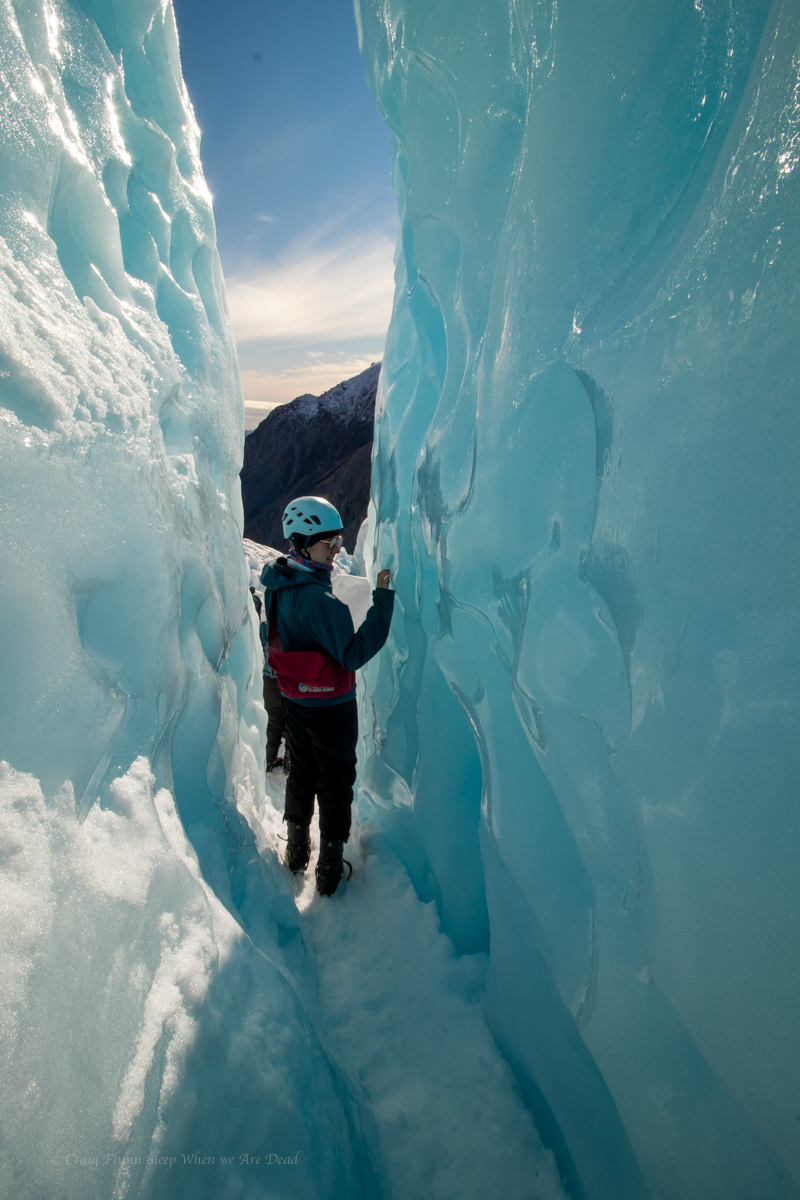
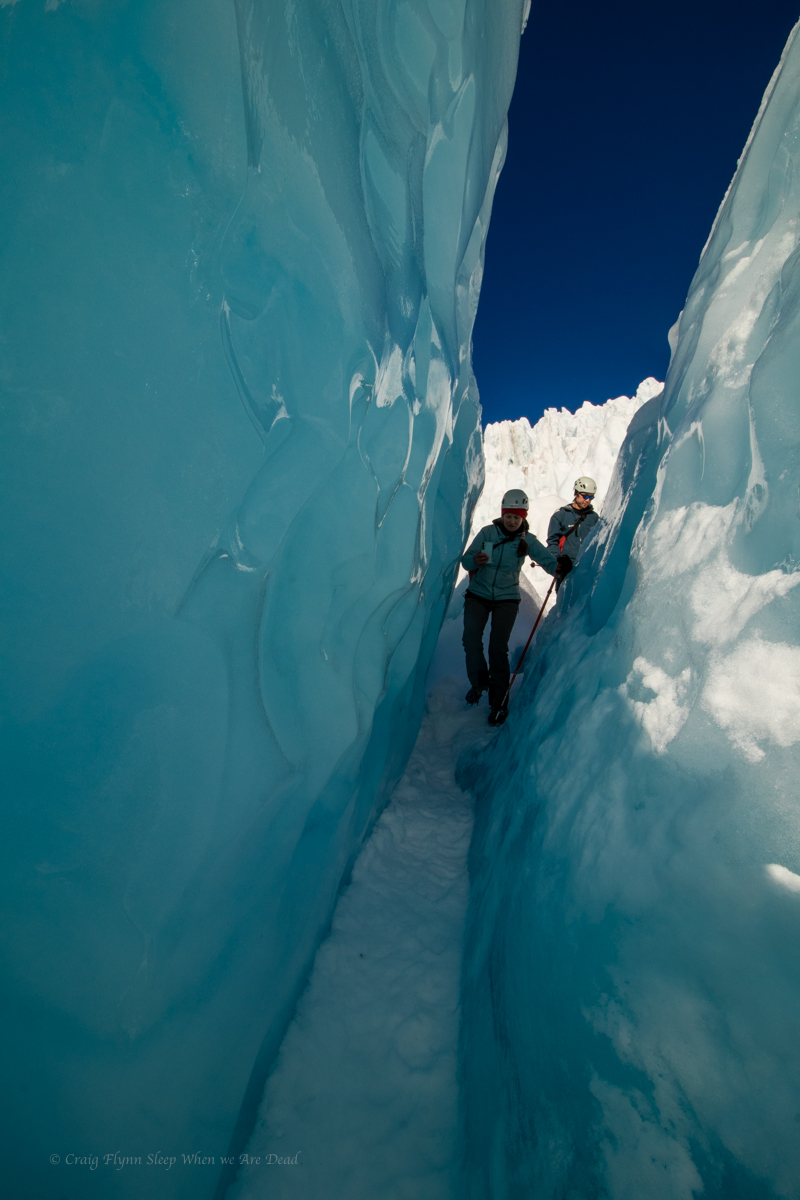
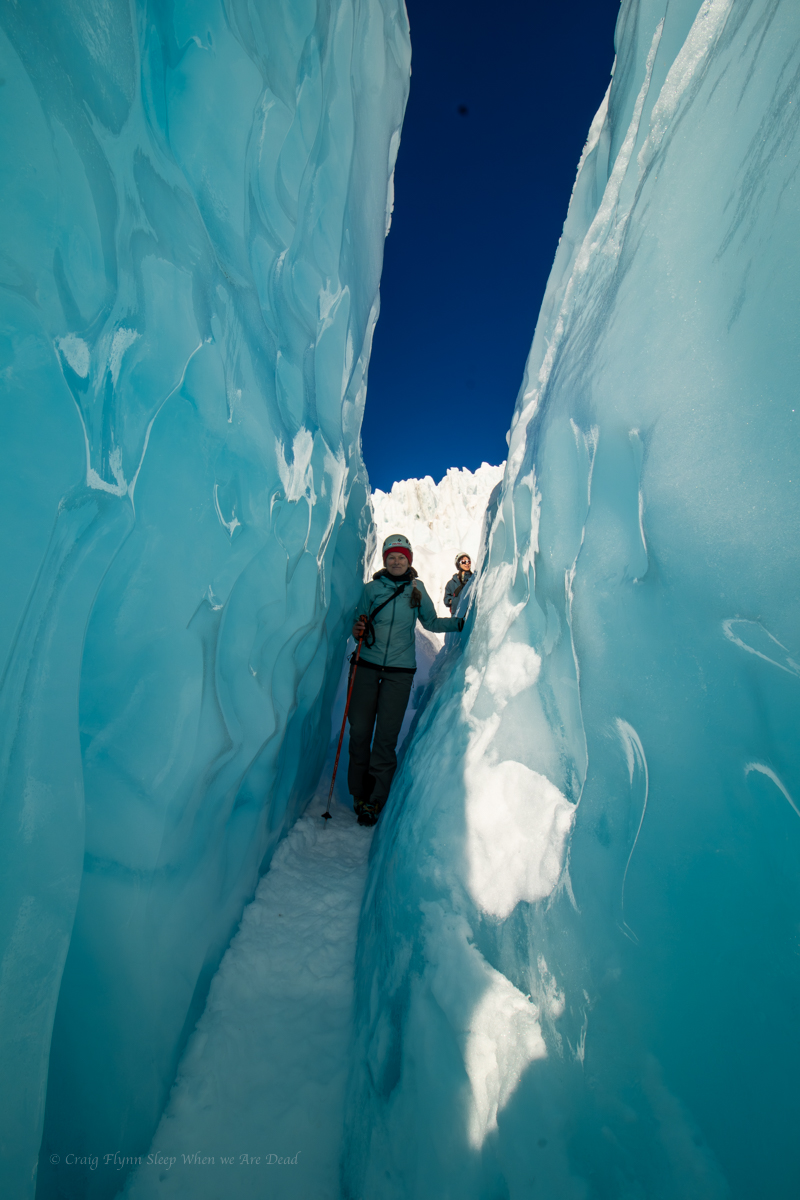
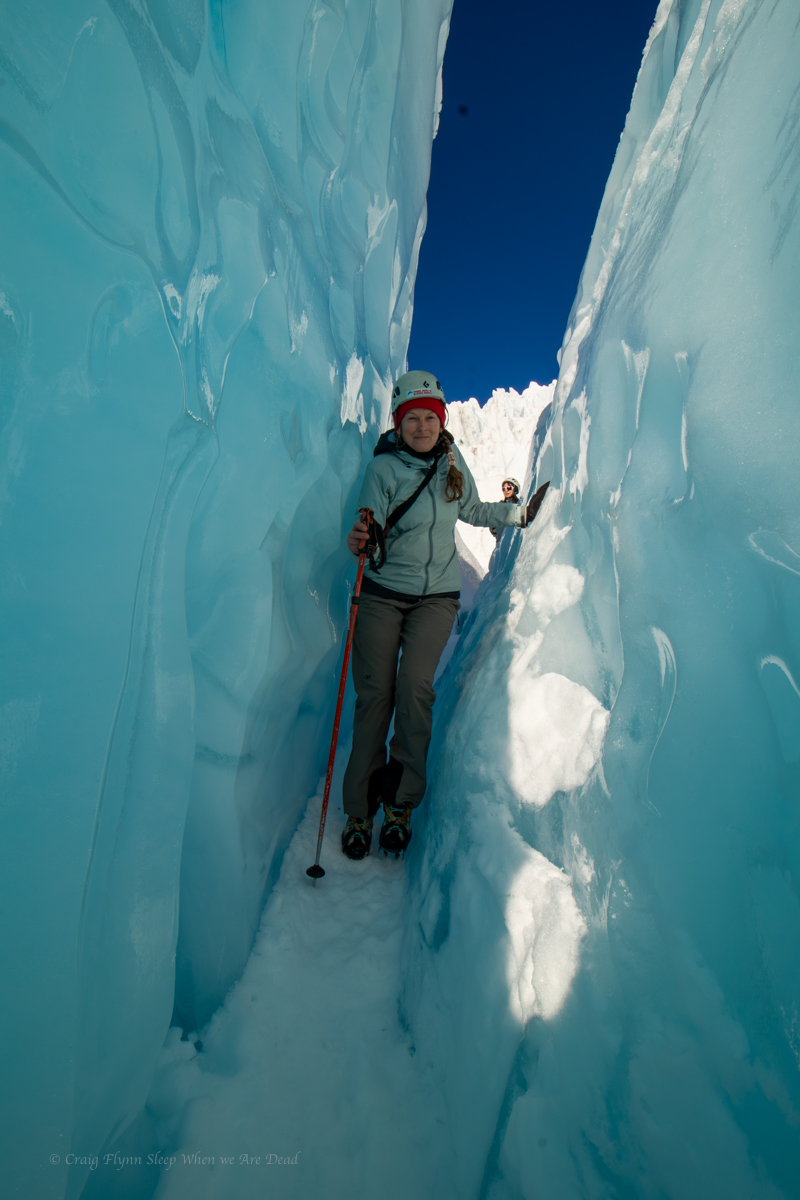
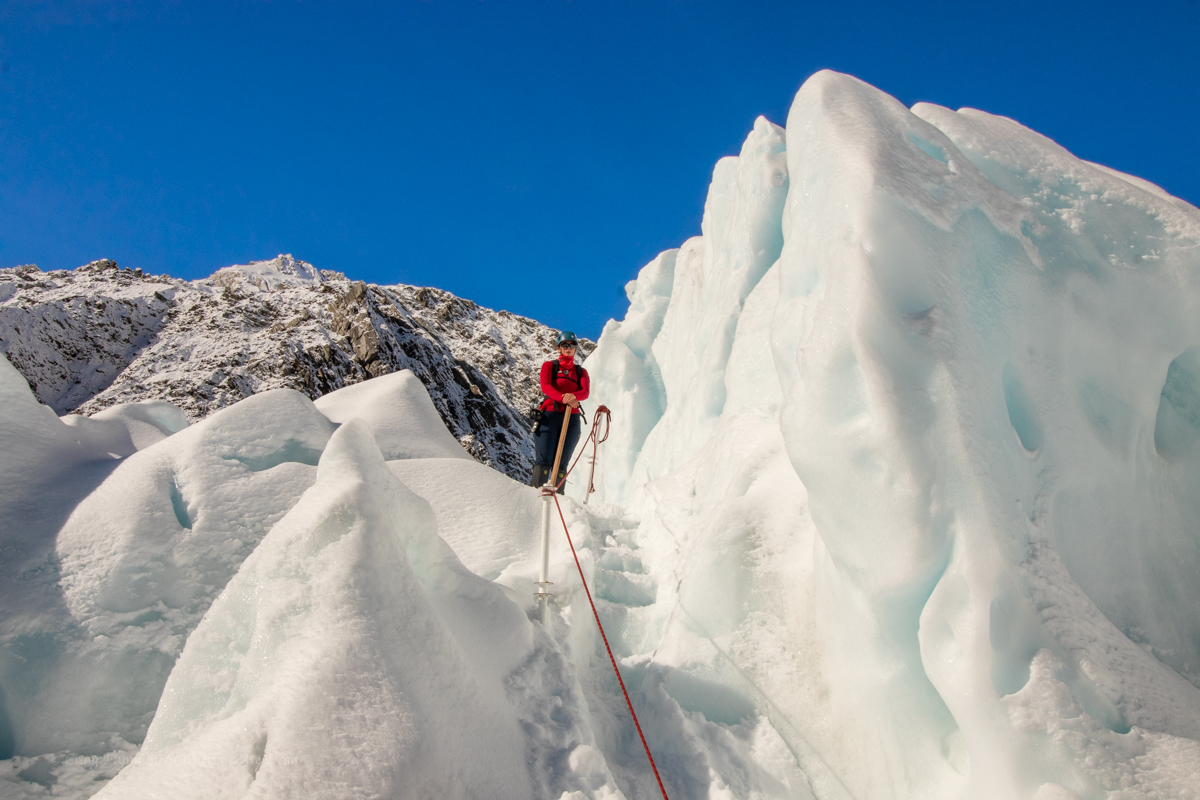
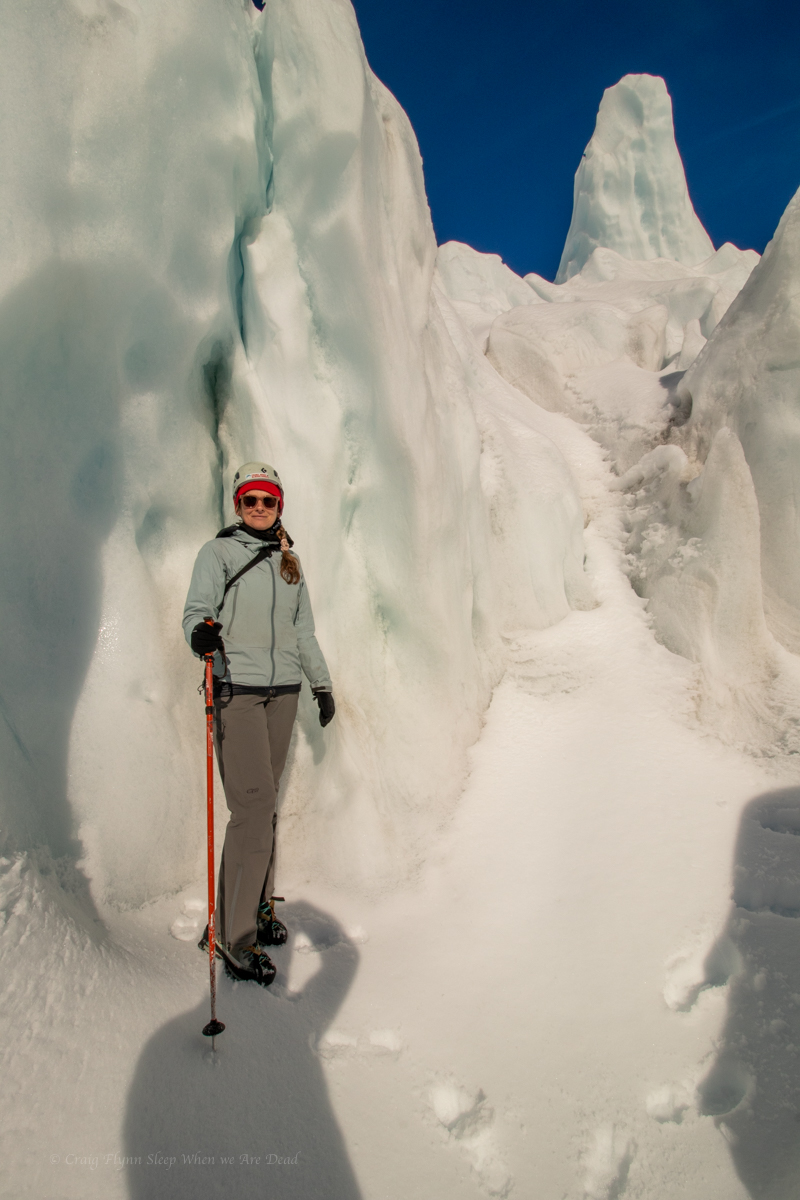
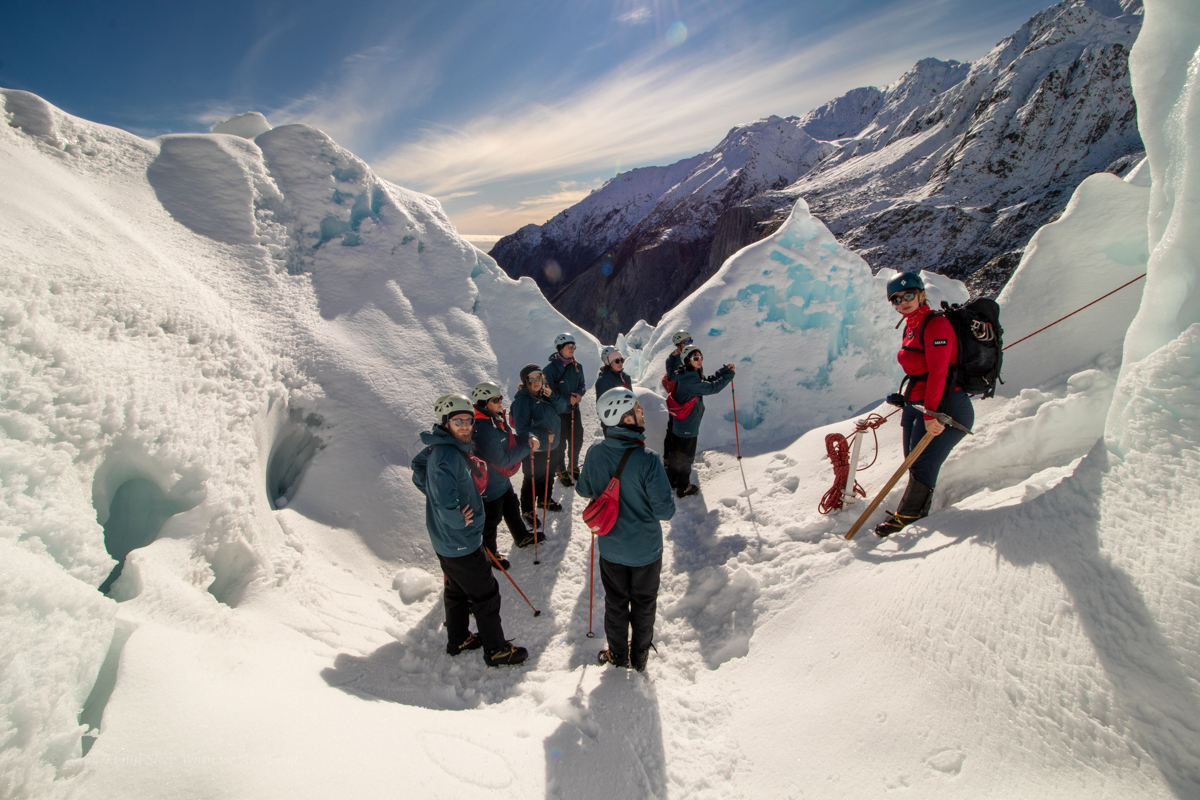
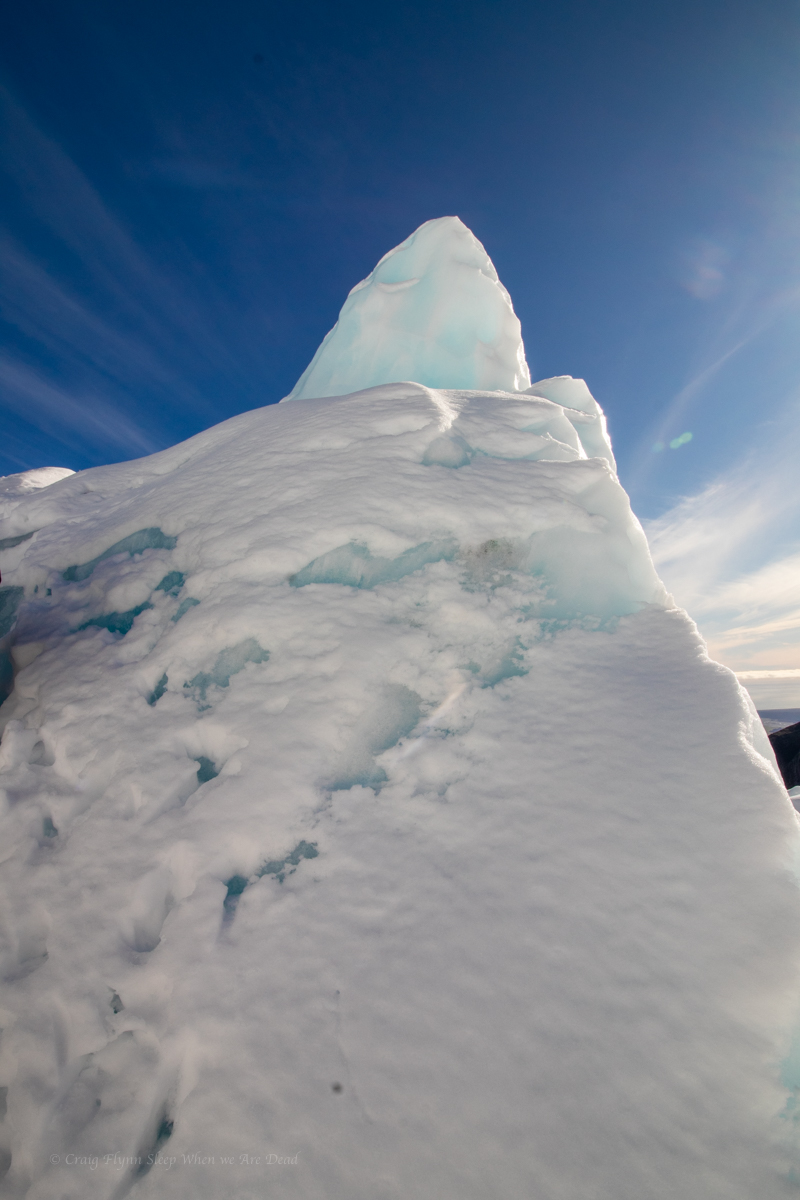
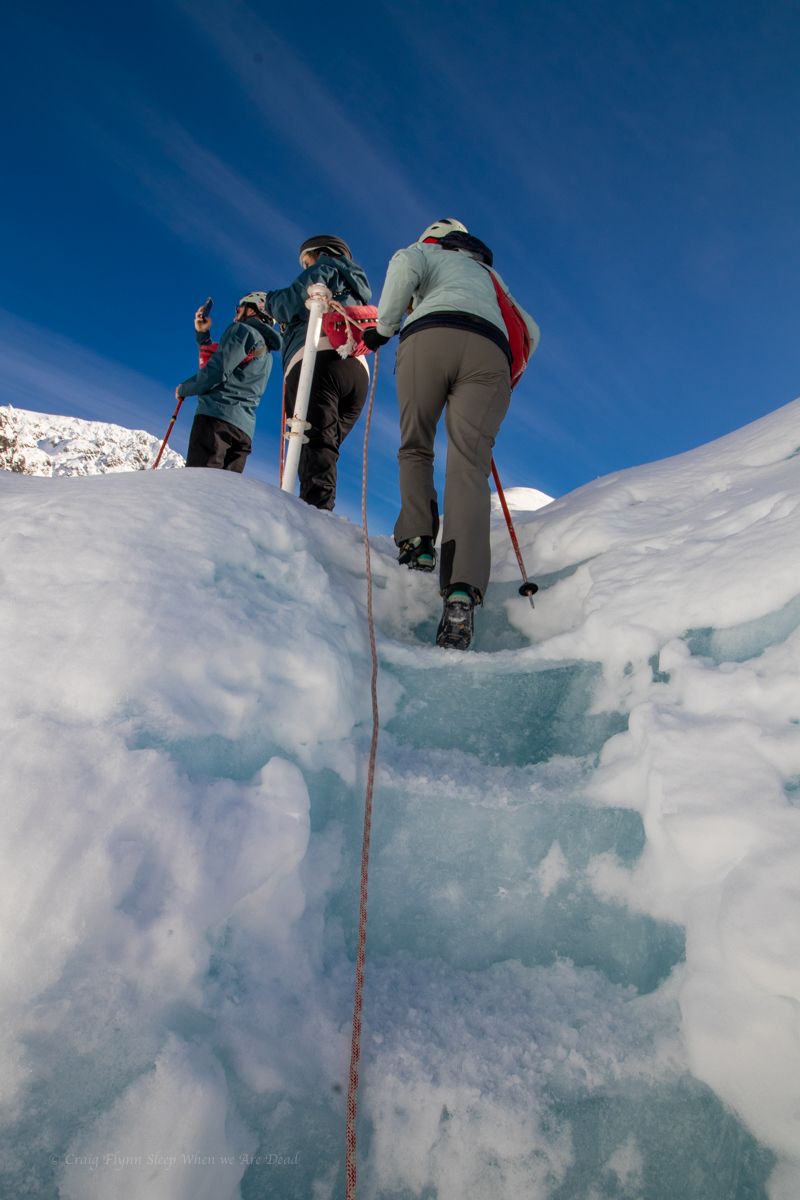
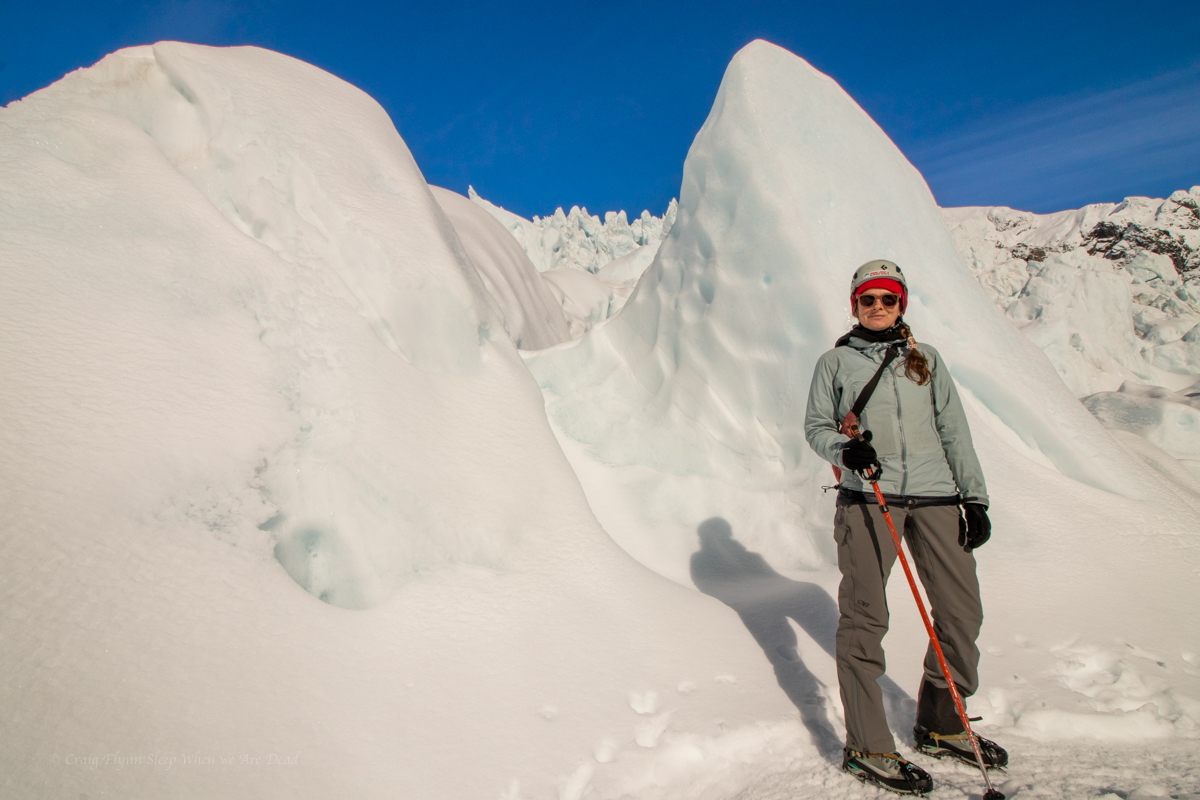
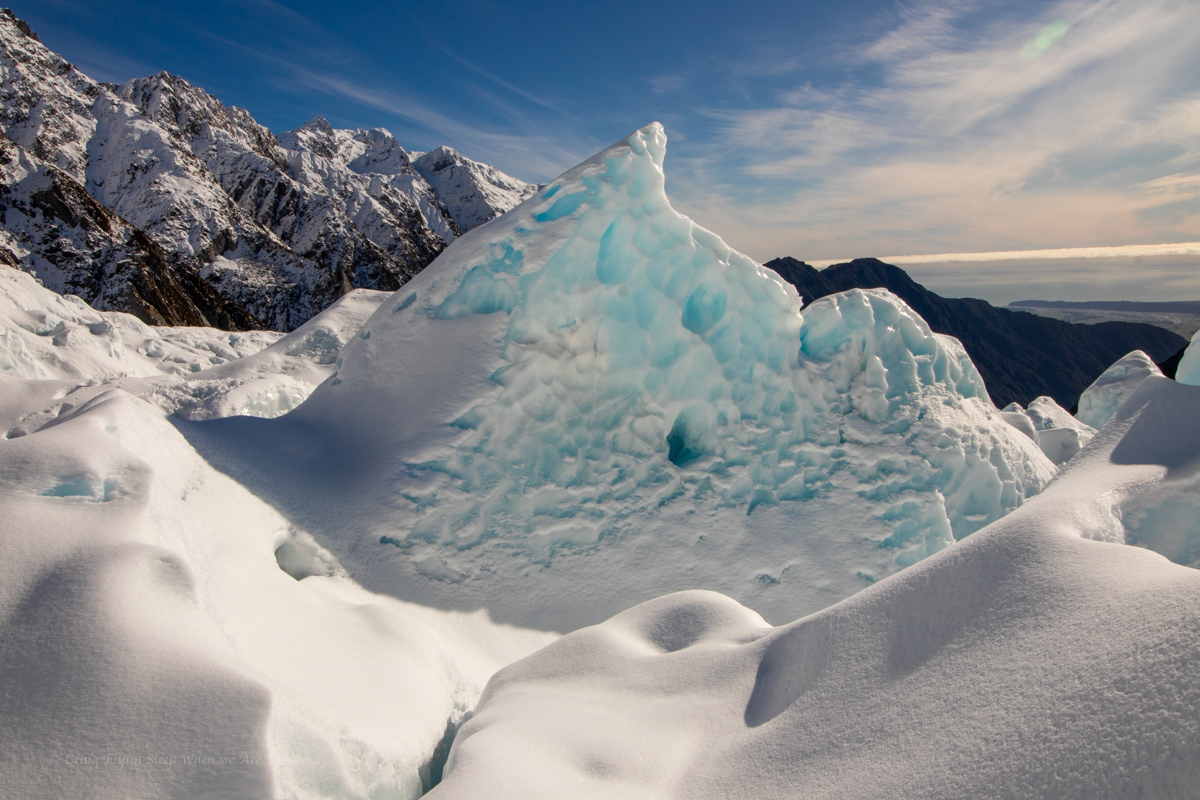
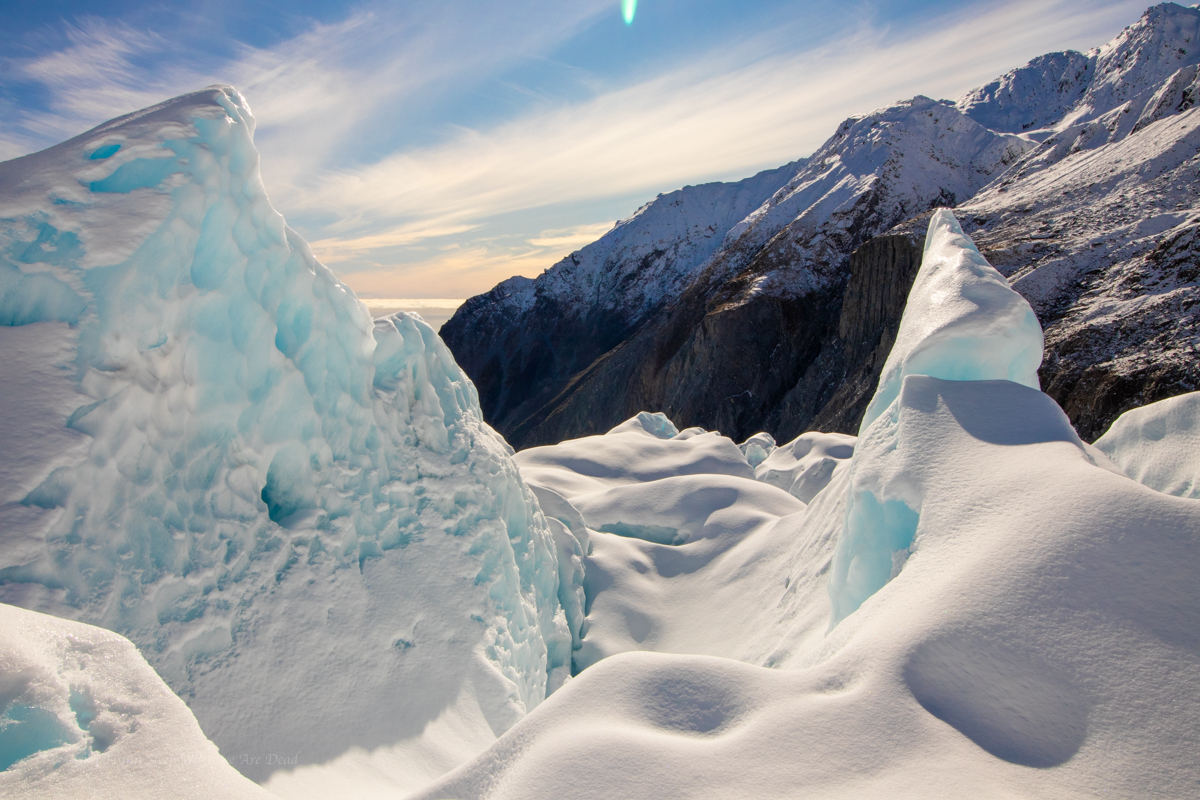
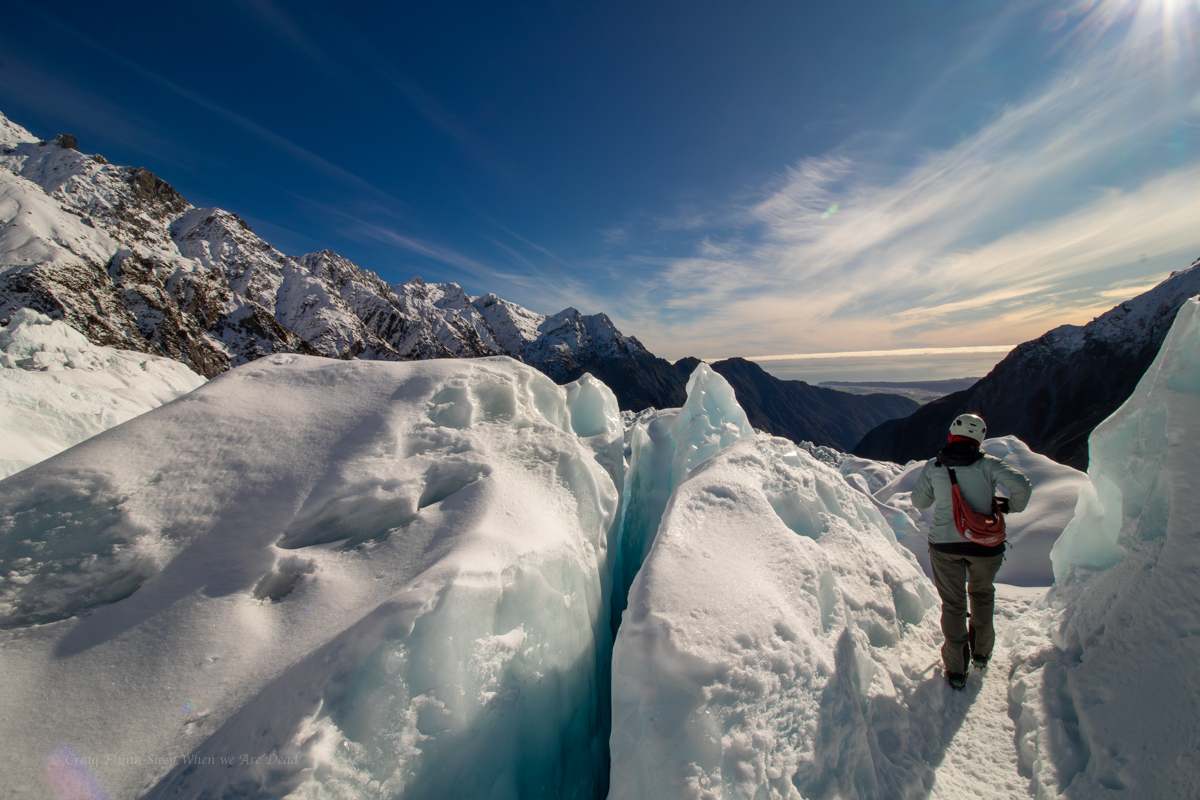
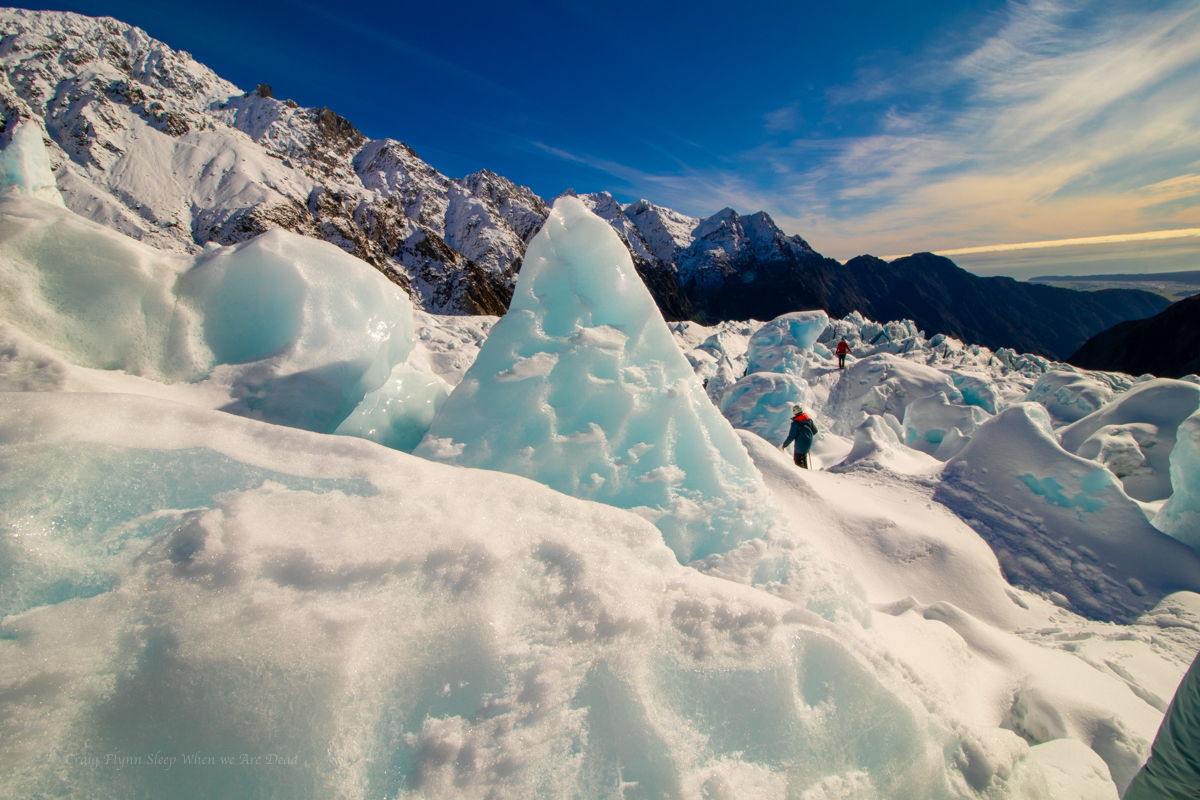
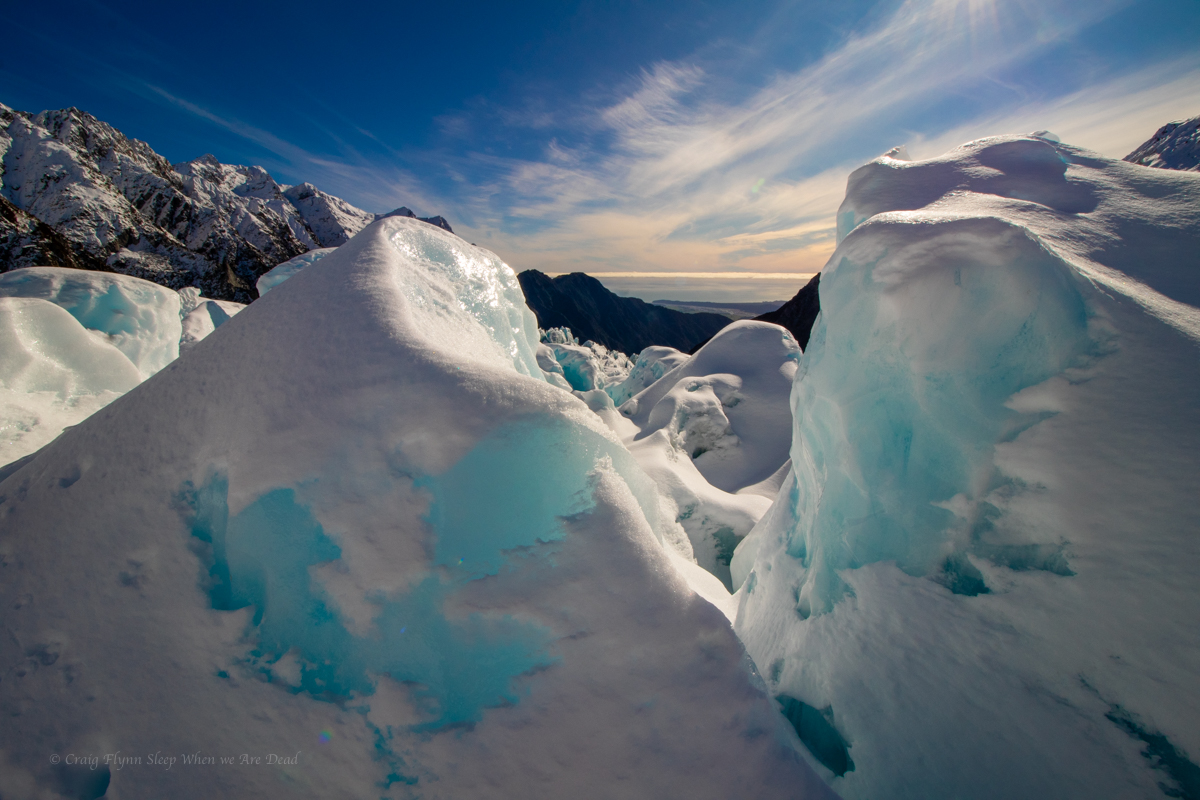
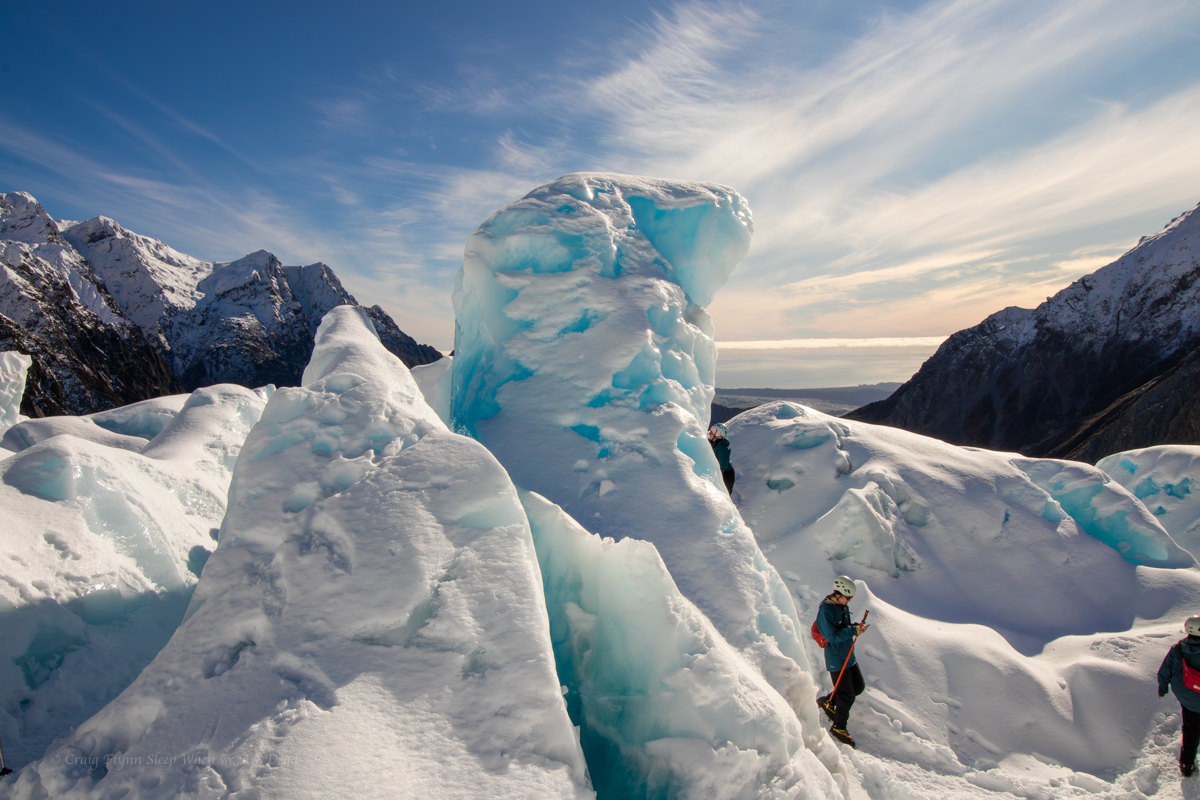
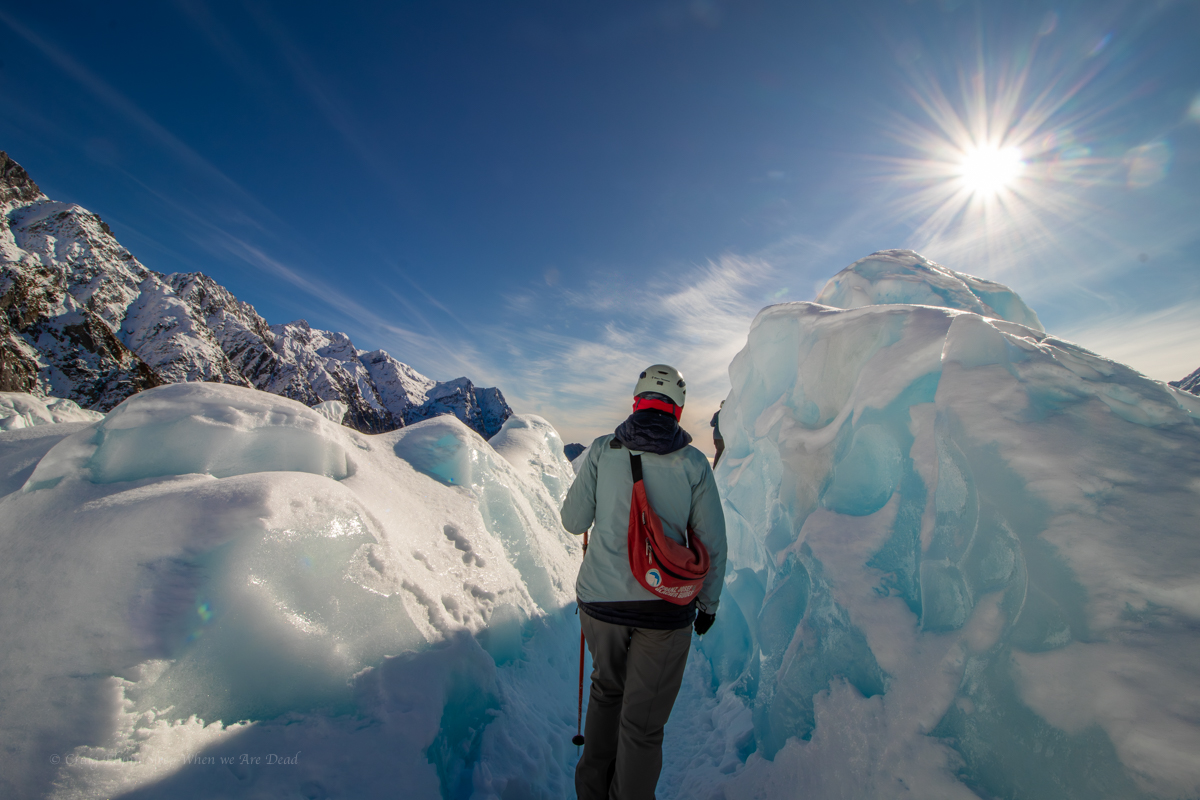
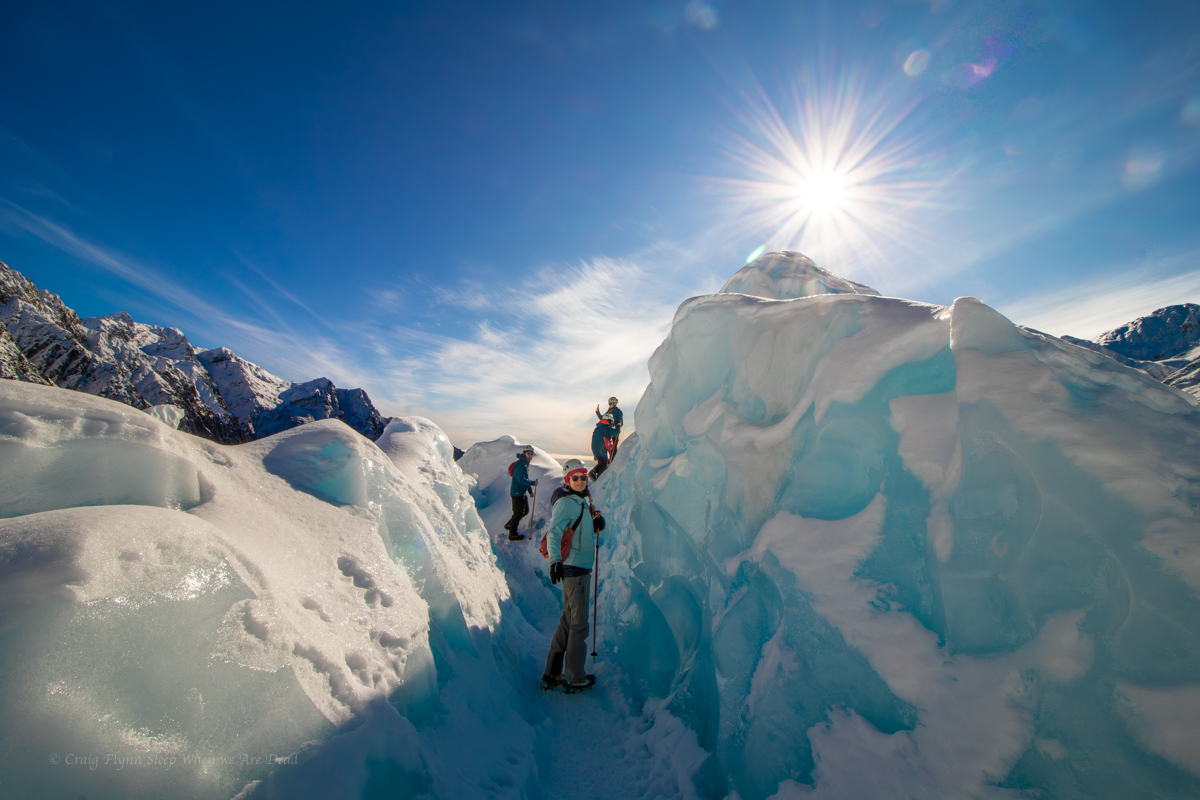
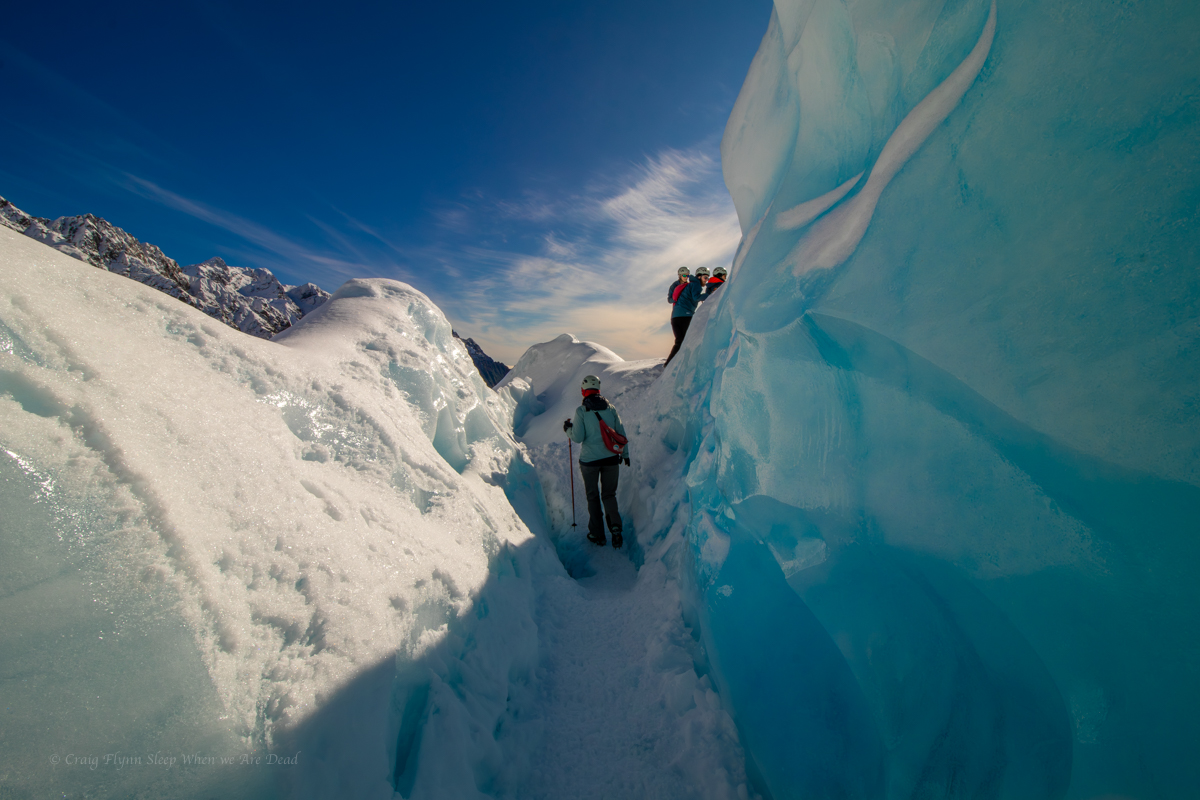
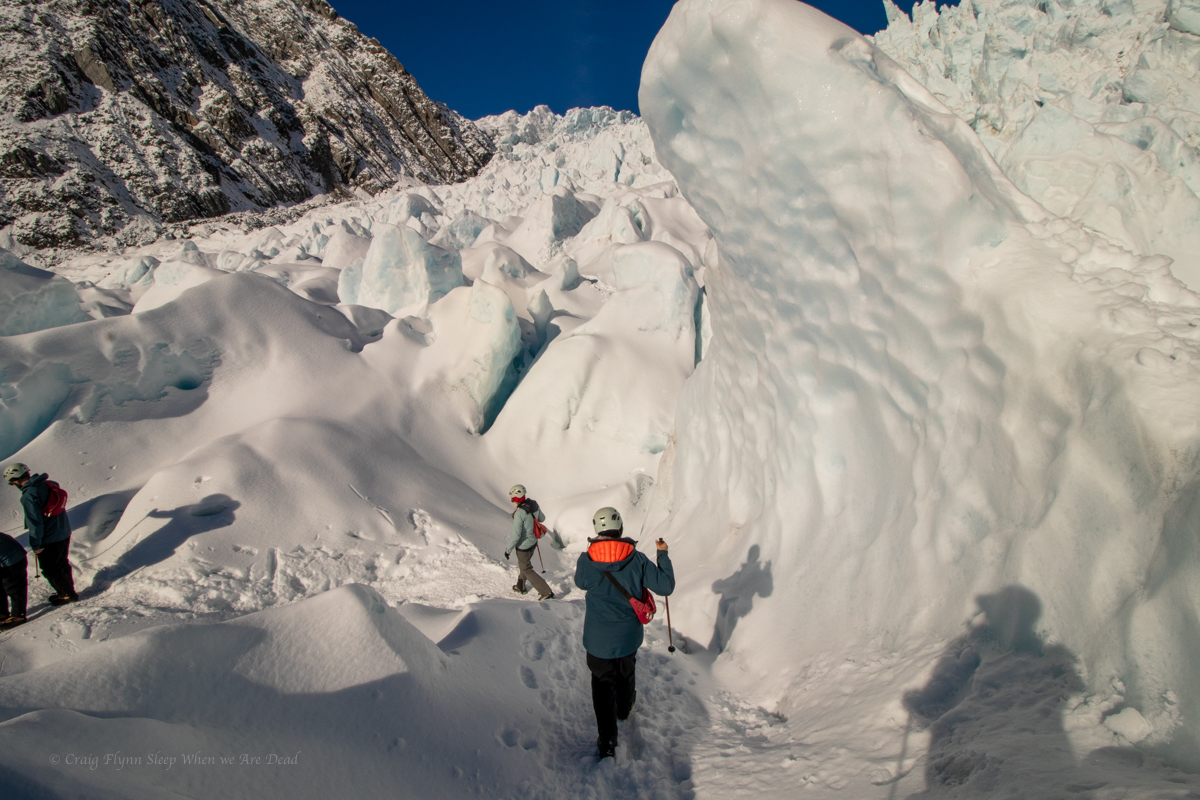
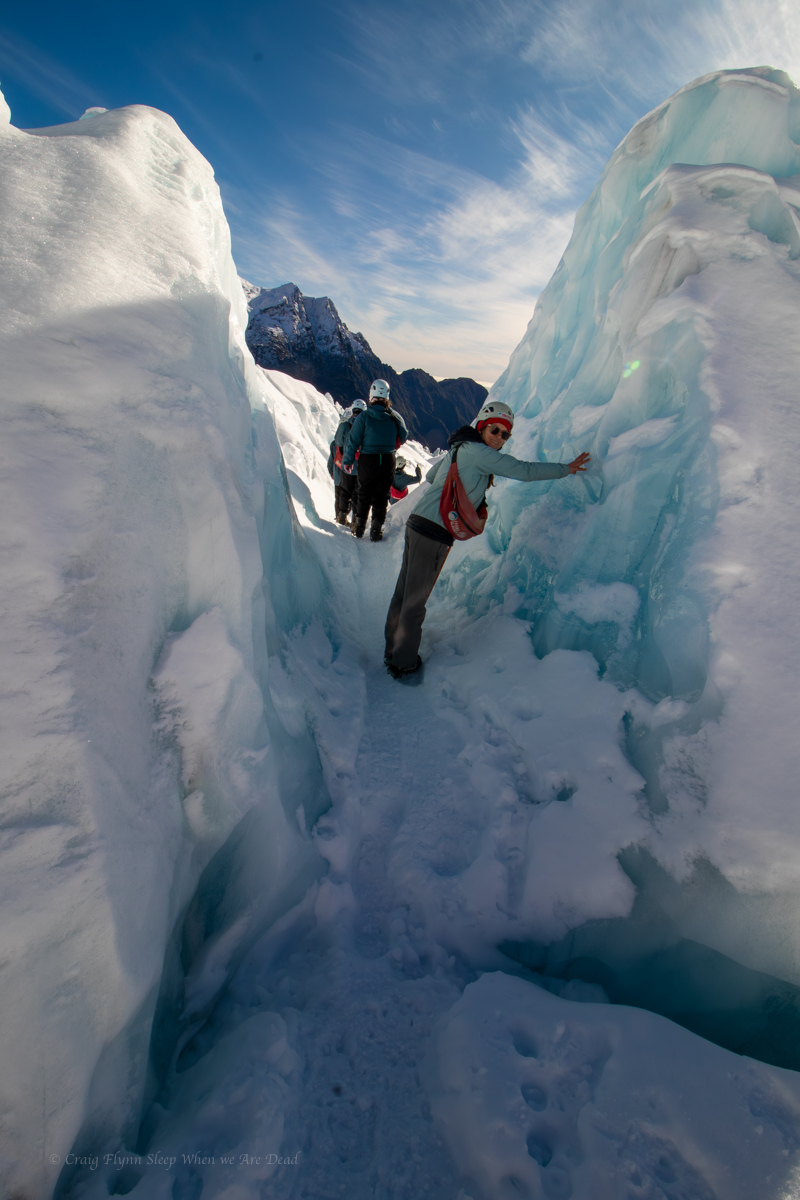
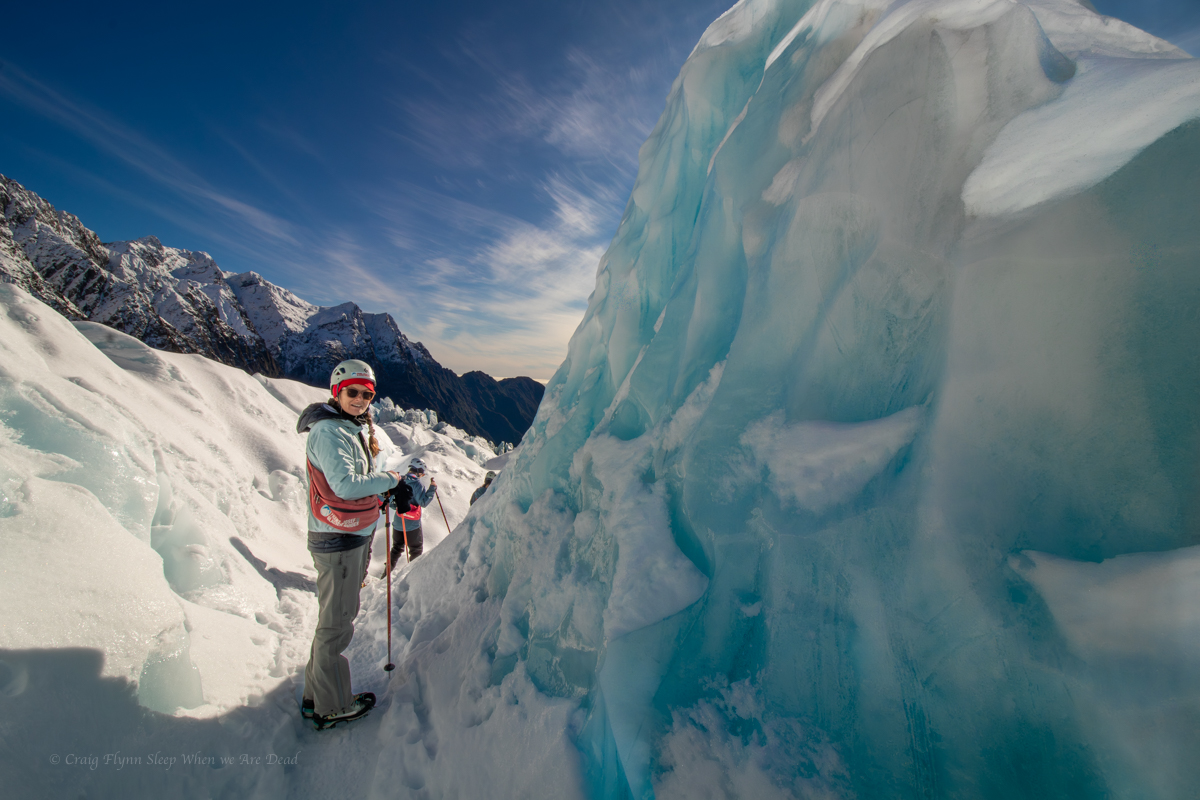
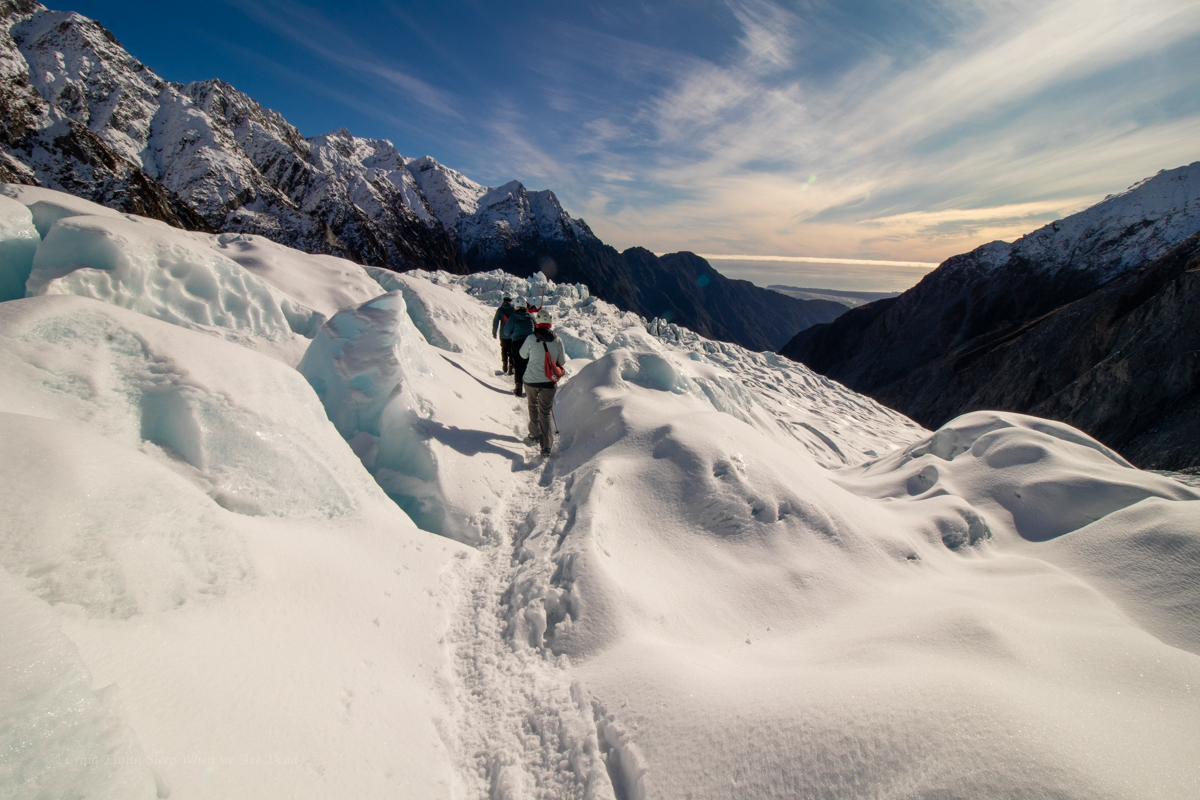
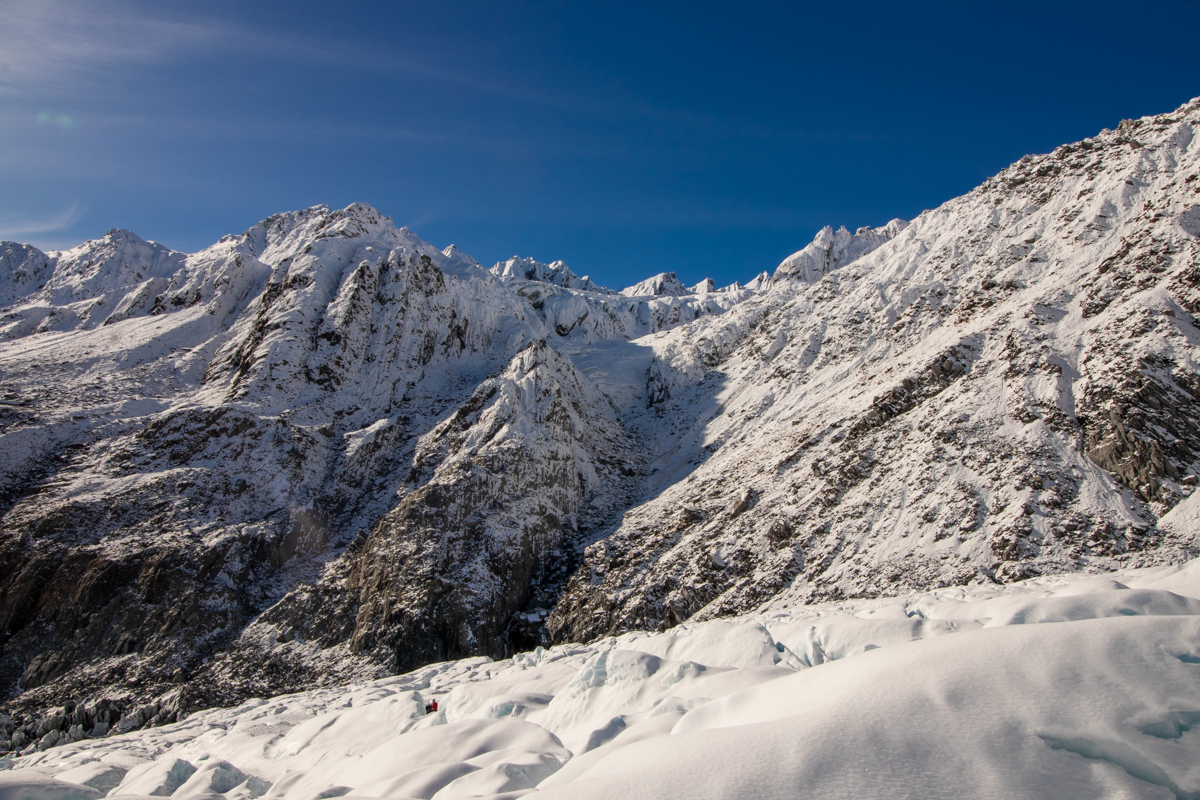
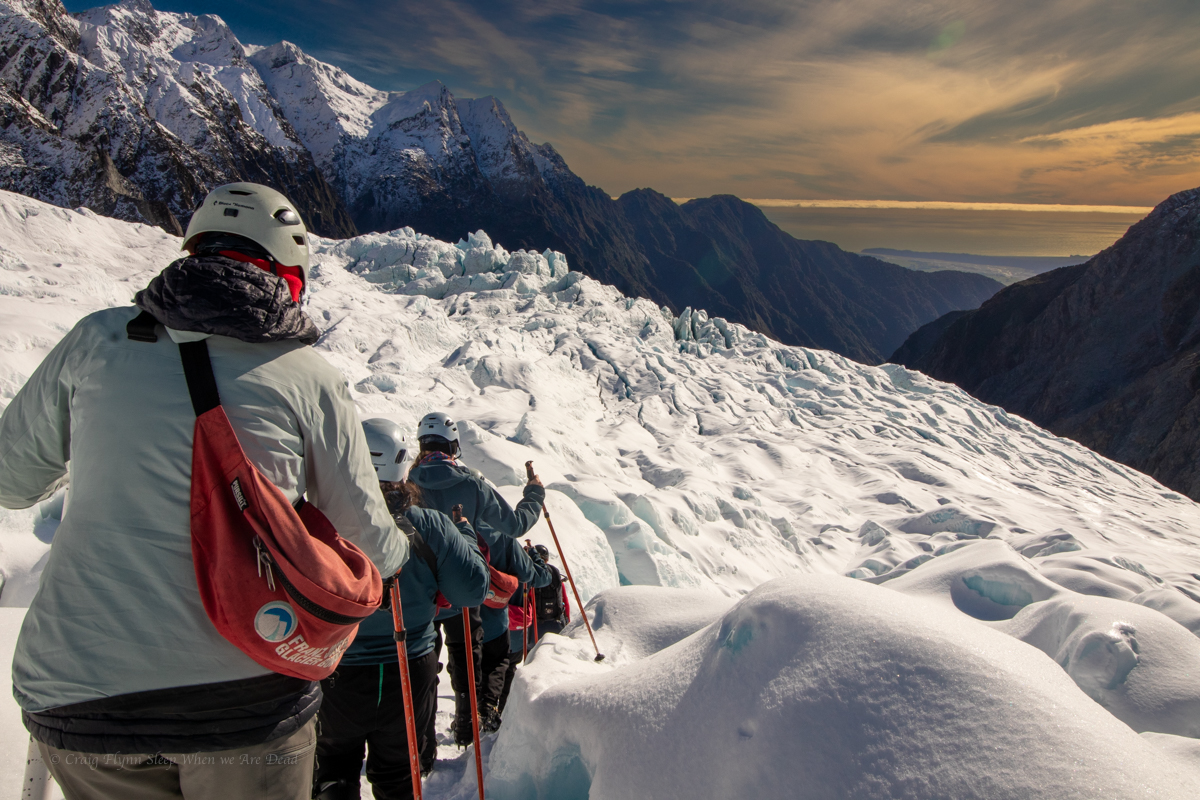
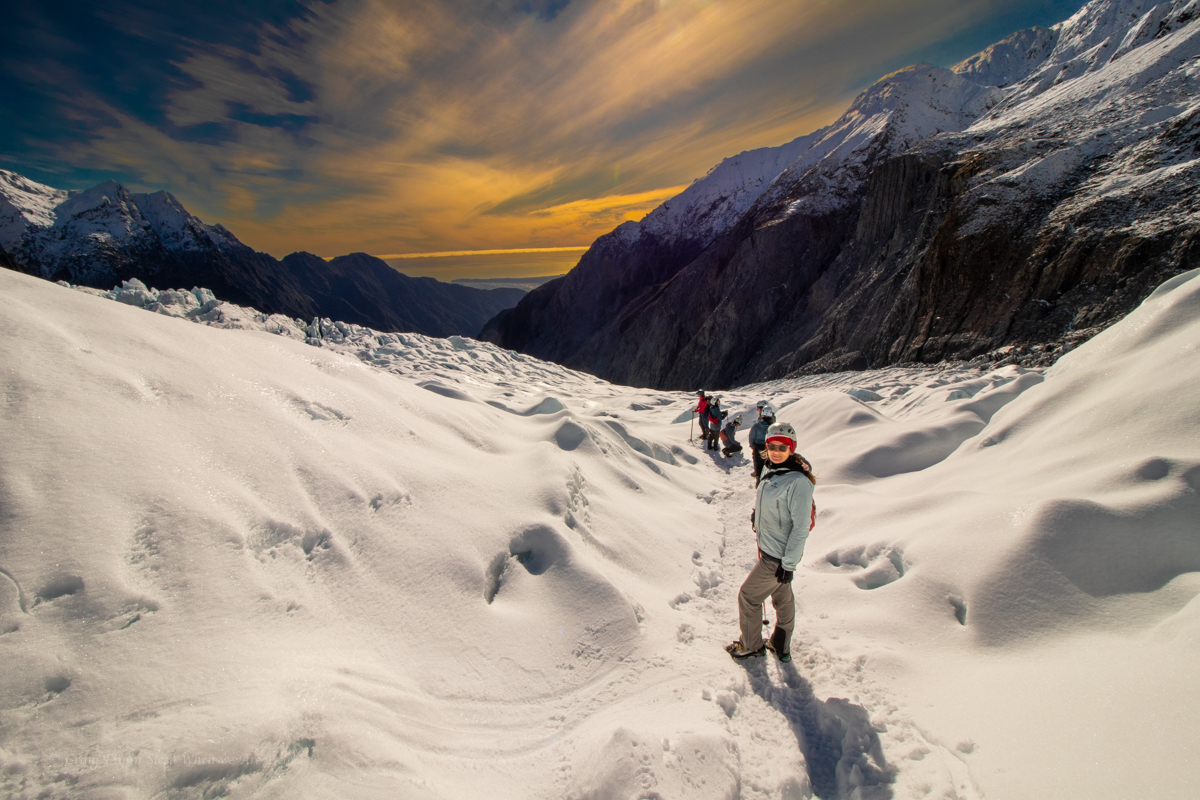
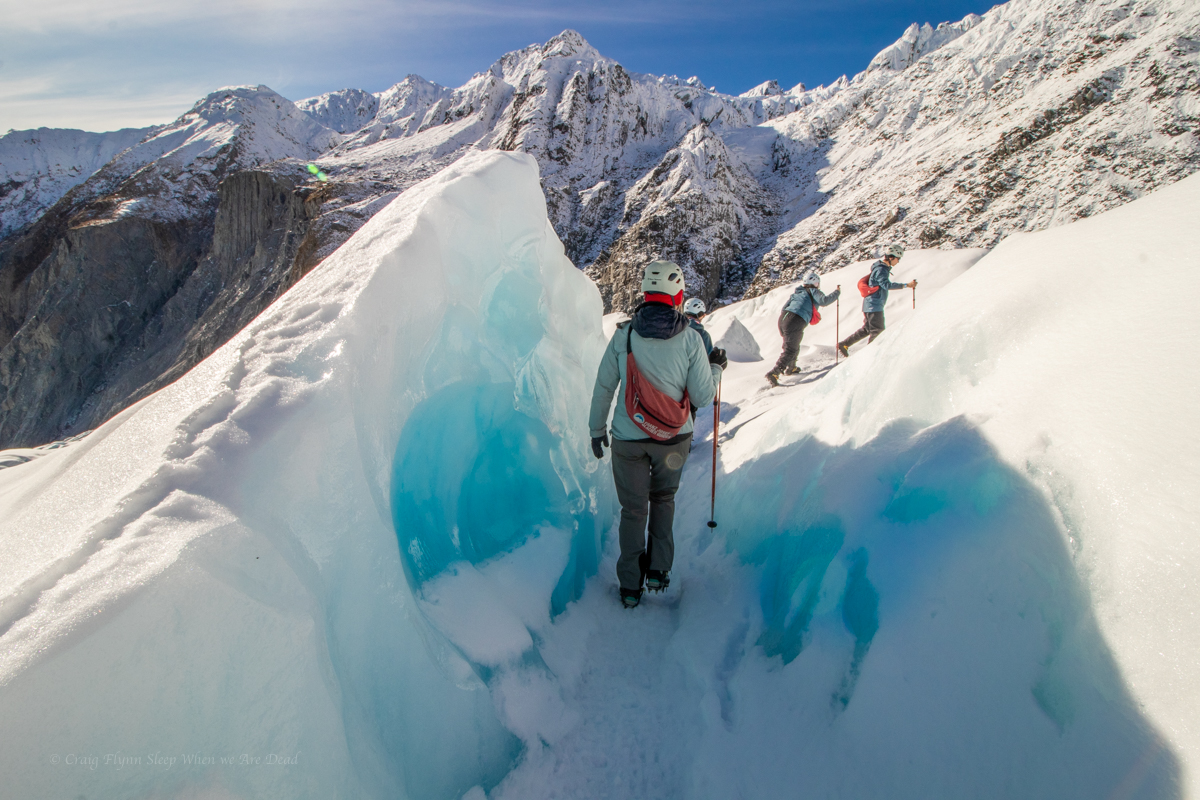
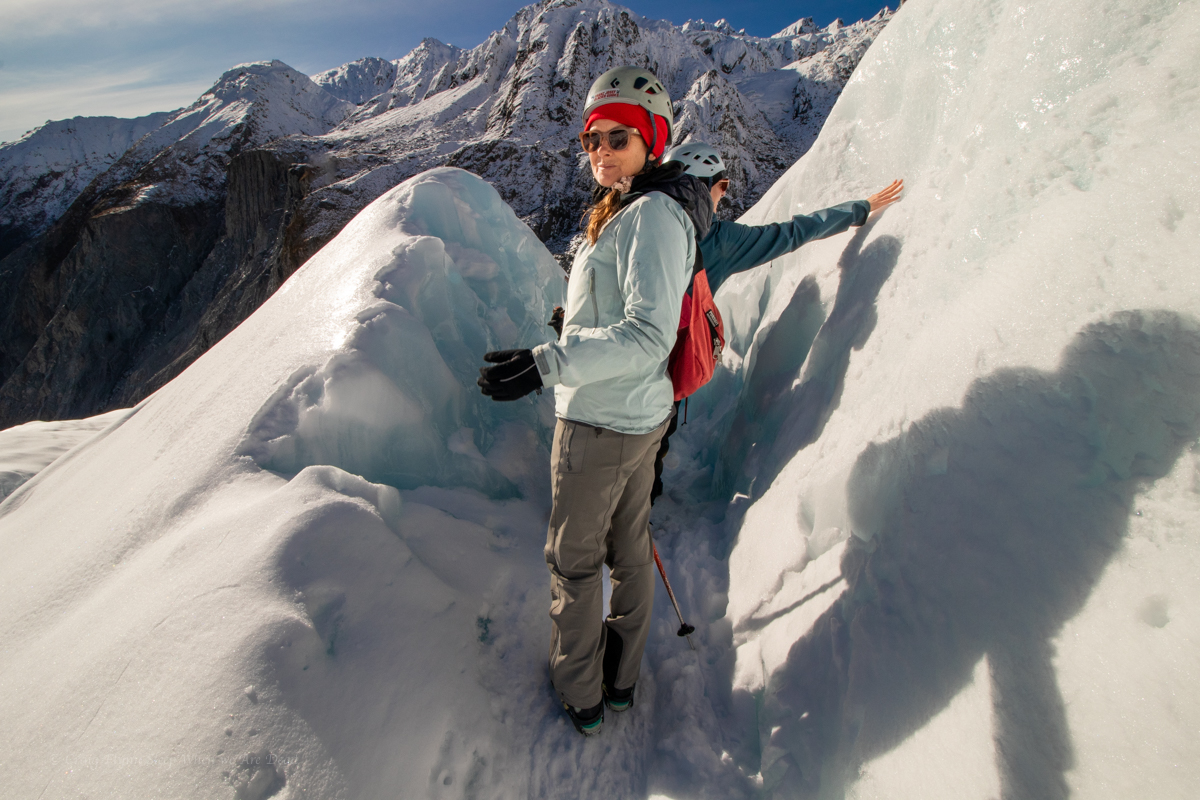
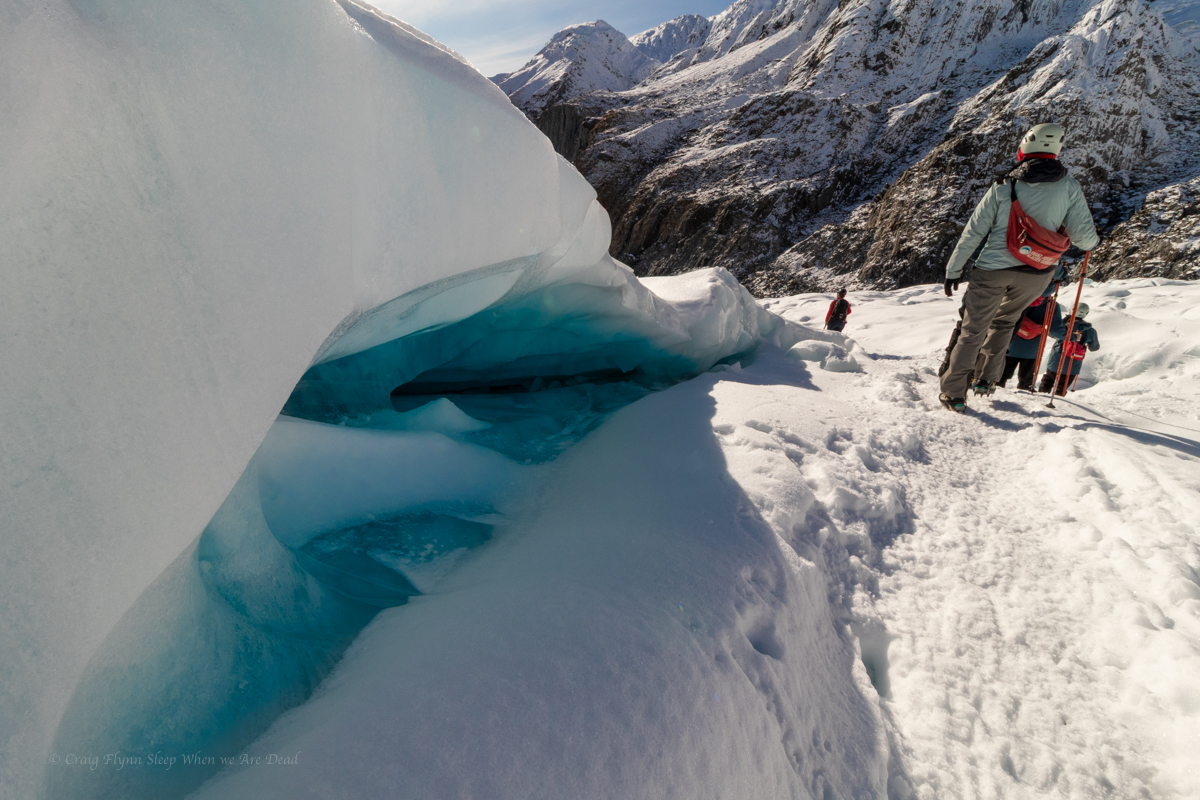
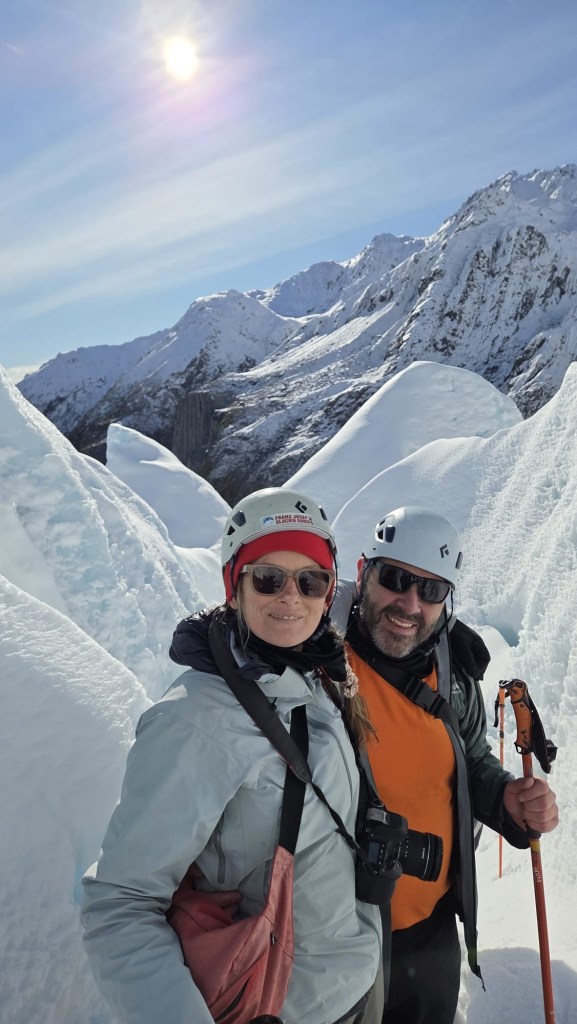
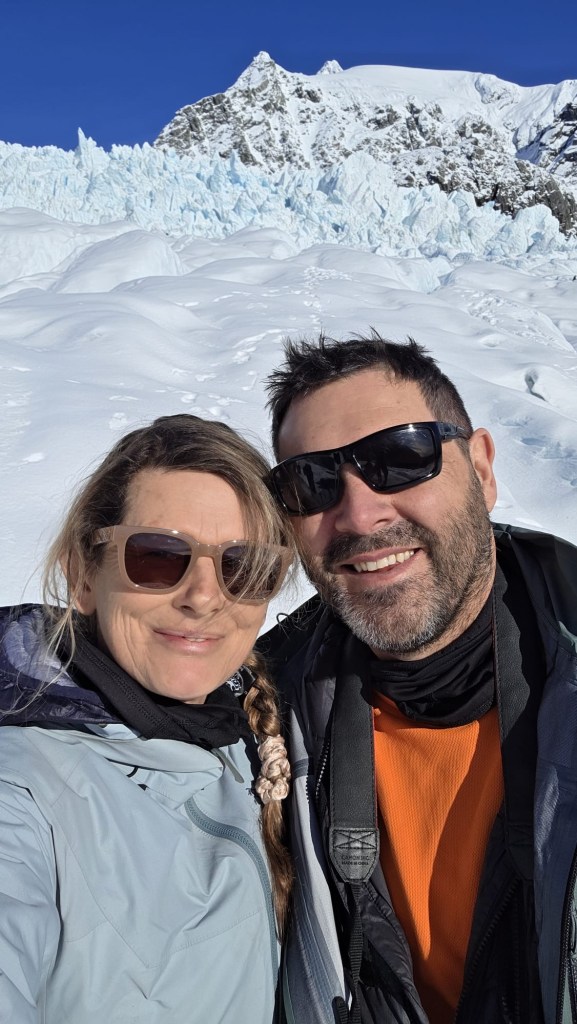
Once both groups were on the ice Maya guided us on a 2.5hr loop around the glacier with lots of facts, anecdotes, and Maori legends thrown in.
Kylie was in her element, engaging in her specialities of climate science, glacial processes, and paleo-river systems. Her smile was beaming and her eyes sparkling.
It was a great experience and I’d highly recommend it.
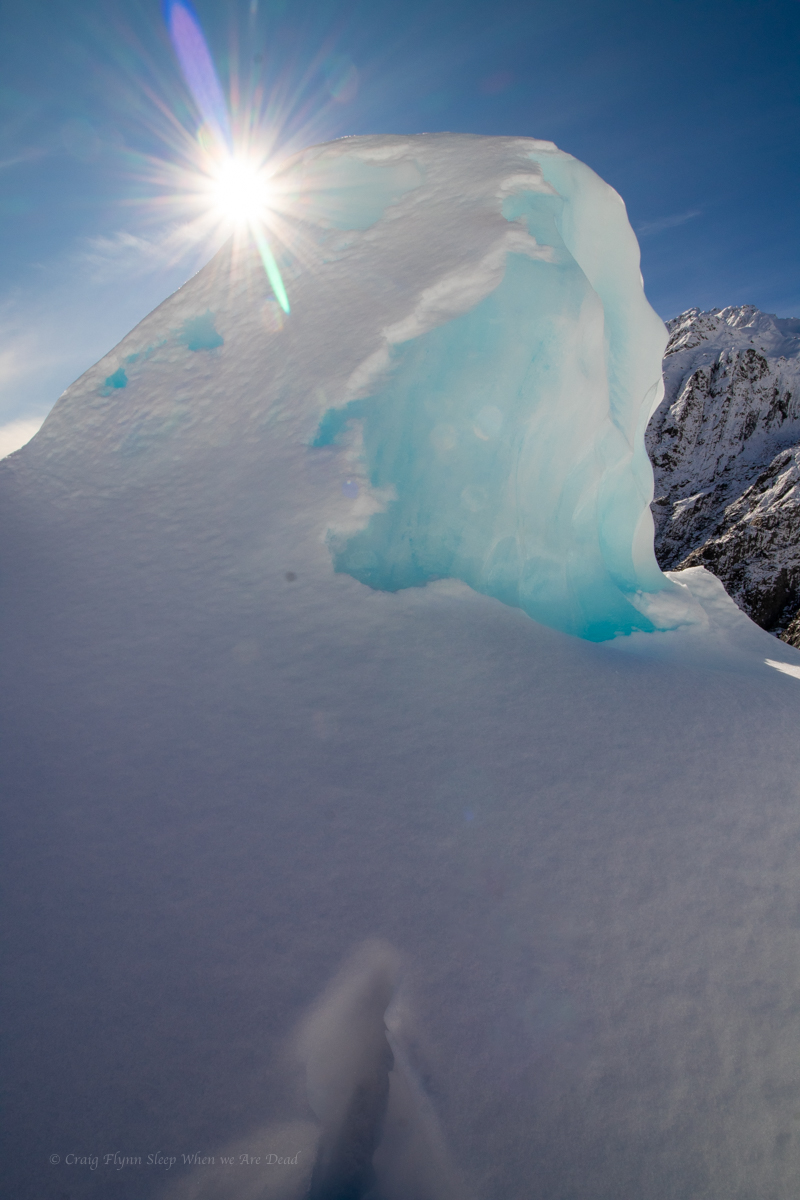
We had jagged a perfect bluebird day. Summer is their peak season but a clear winter’s day is the perfect time to visit.
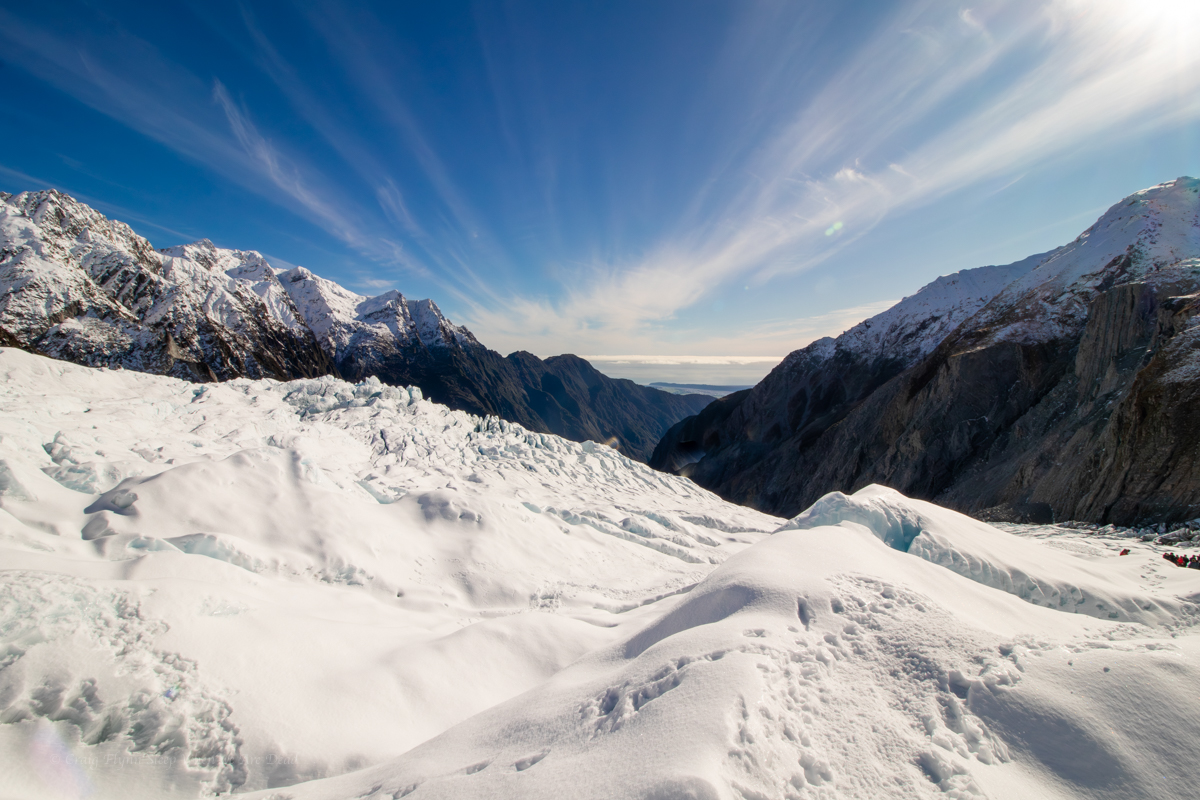
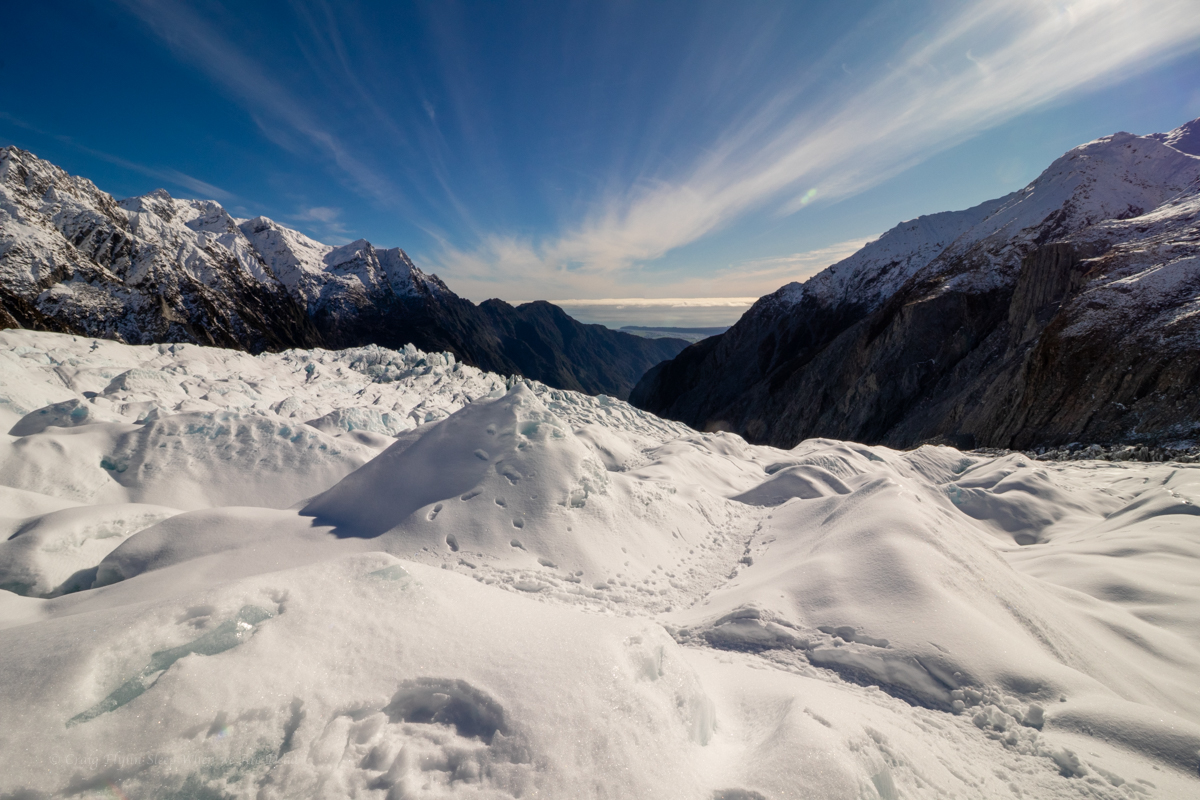
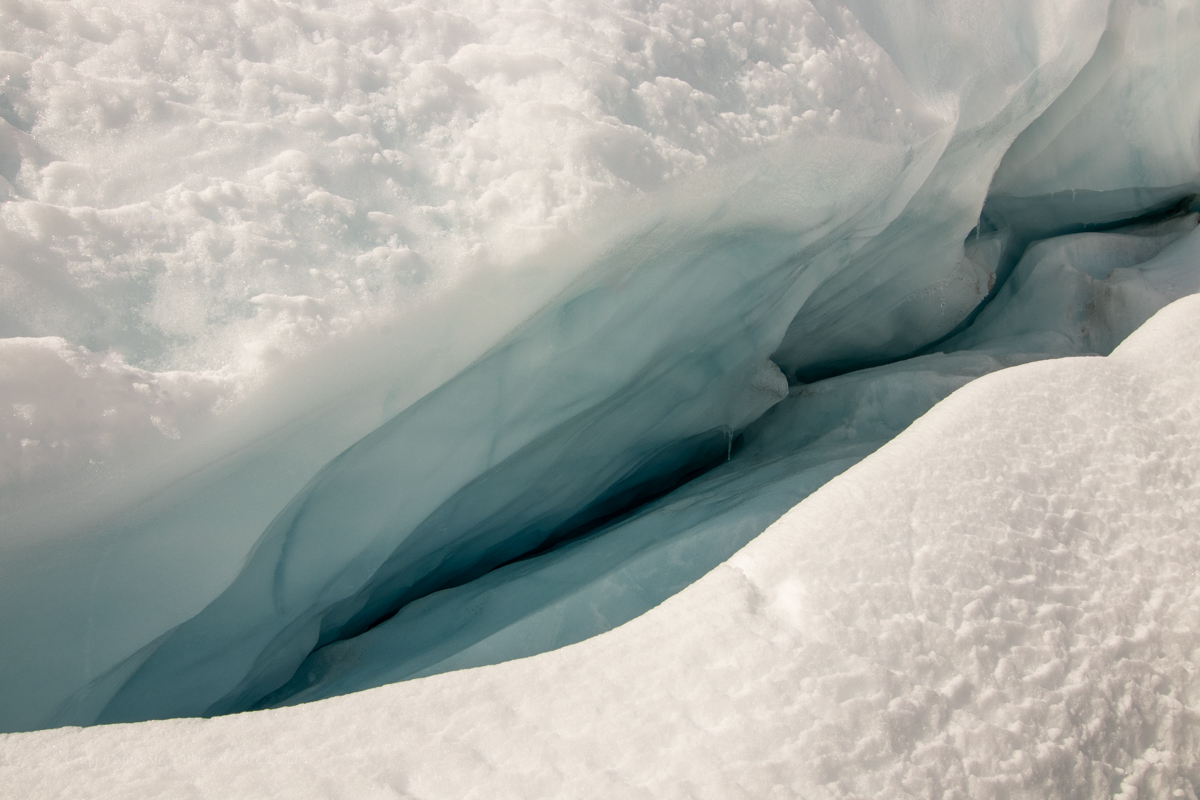
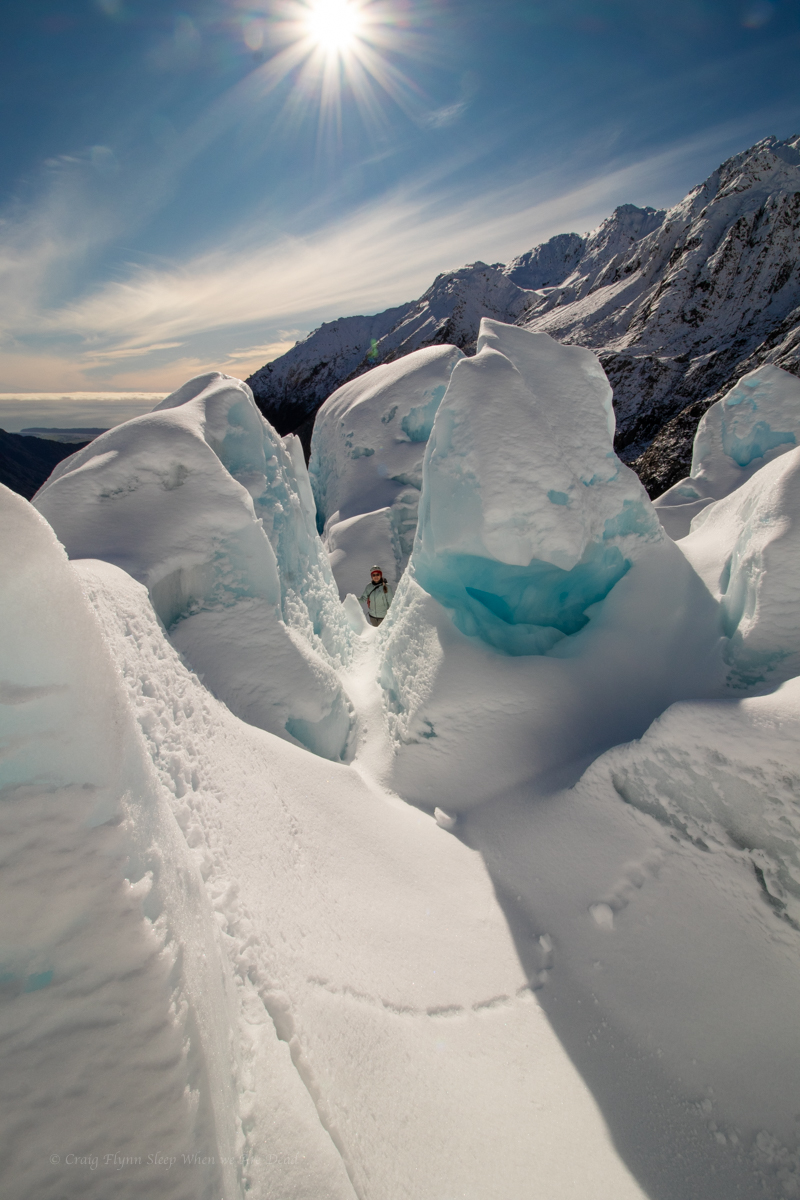
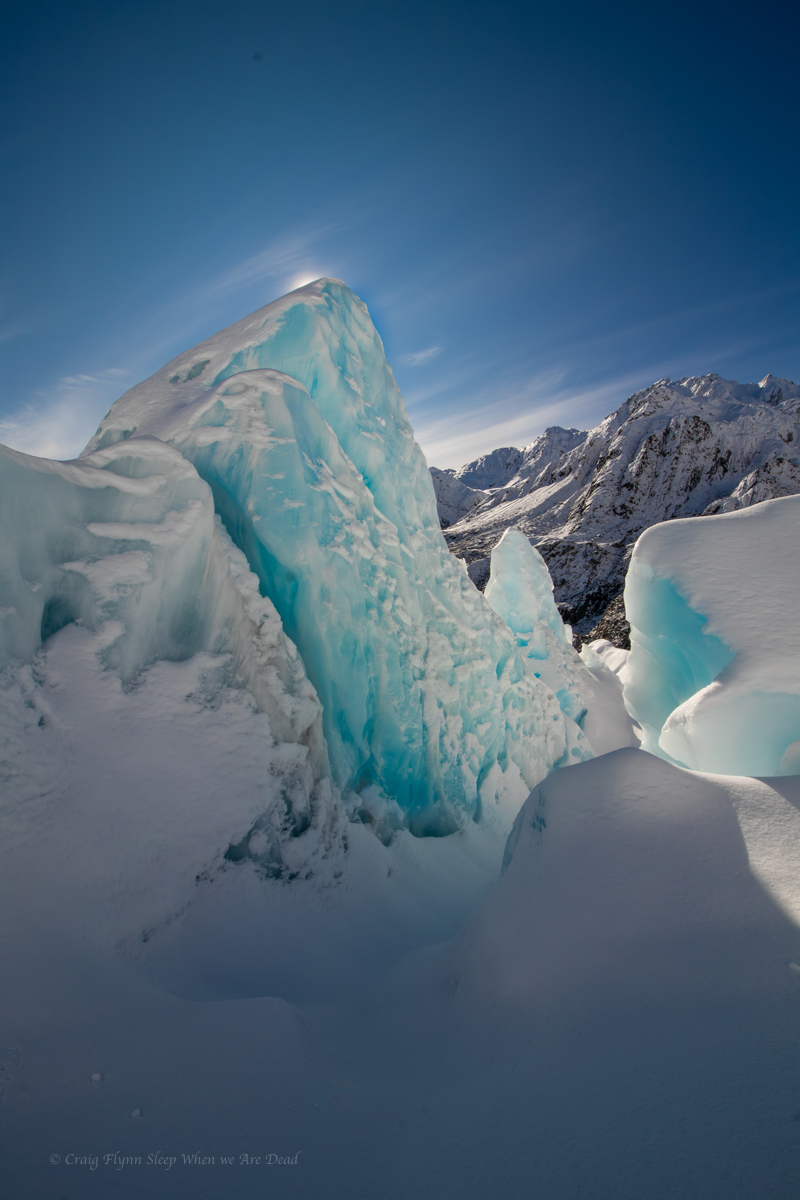
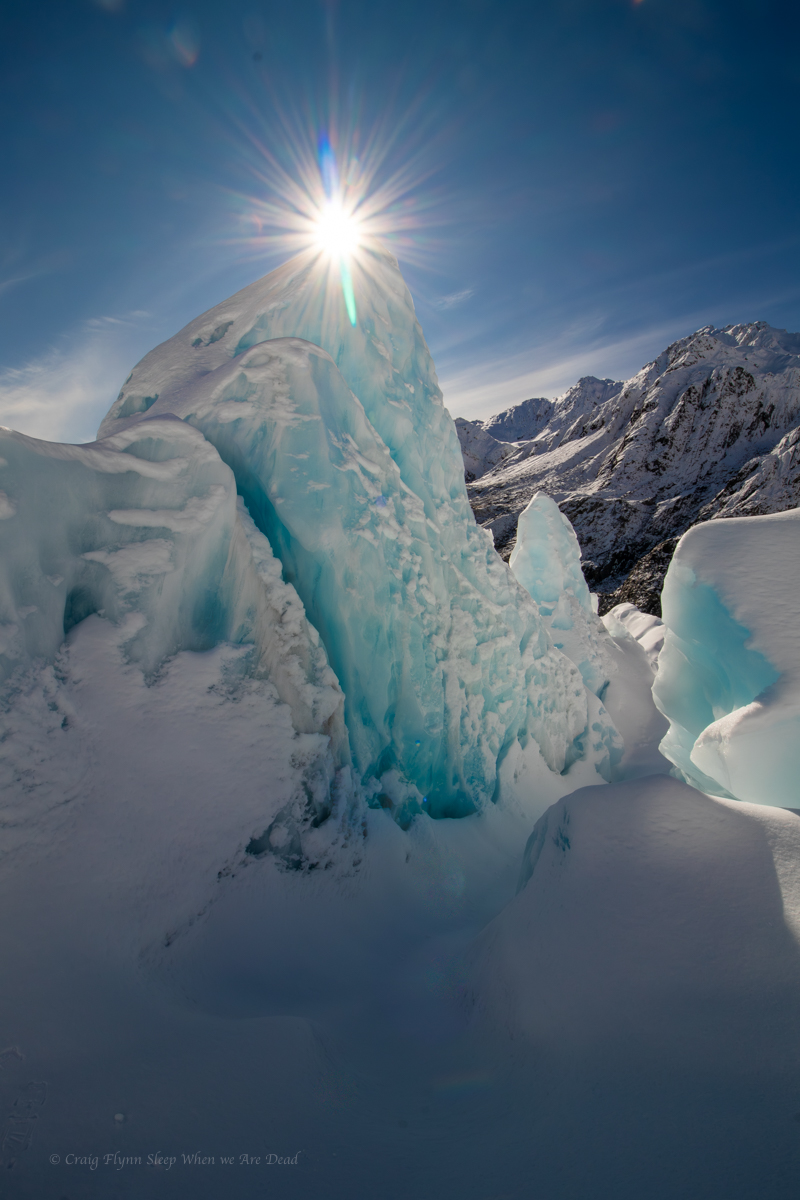
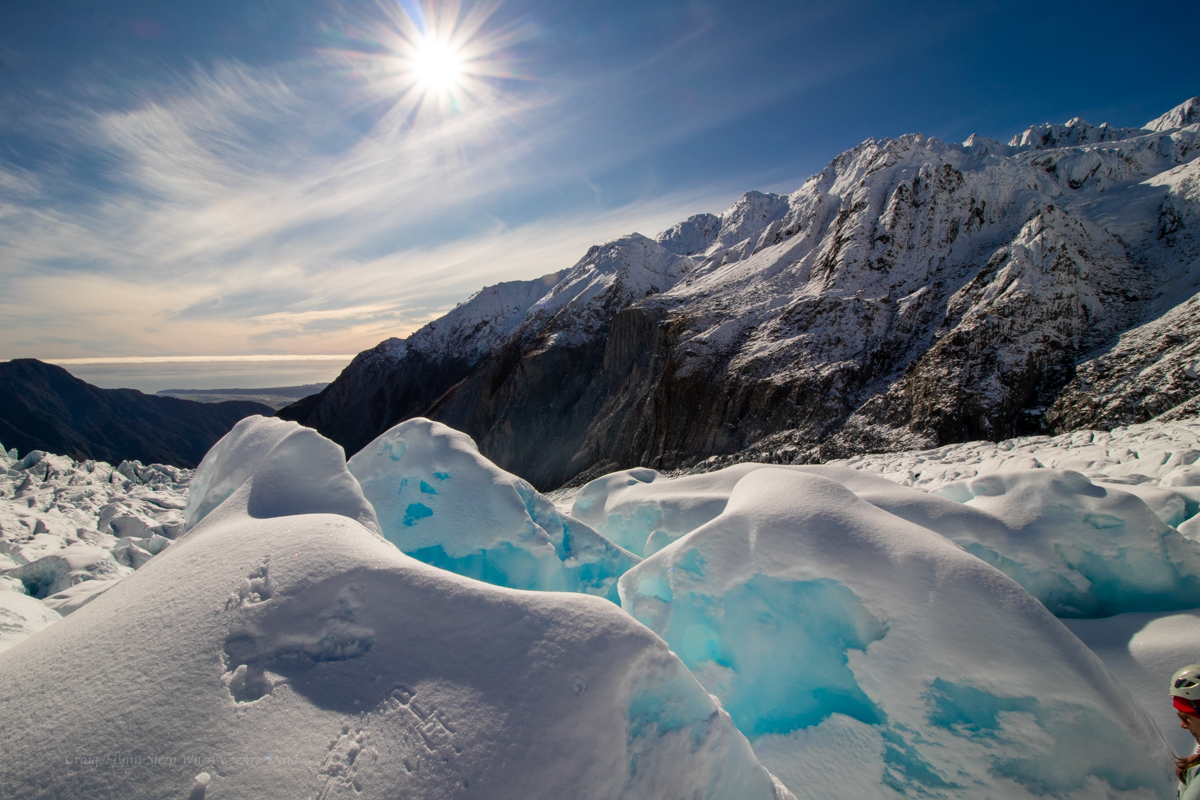
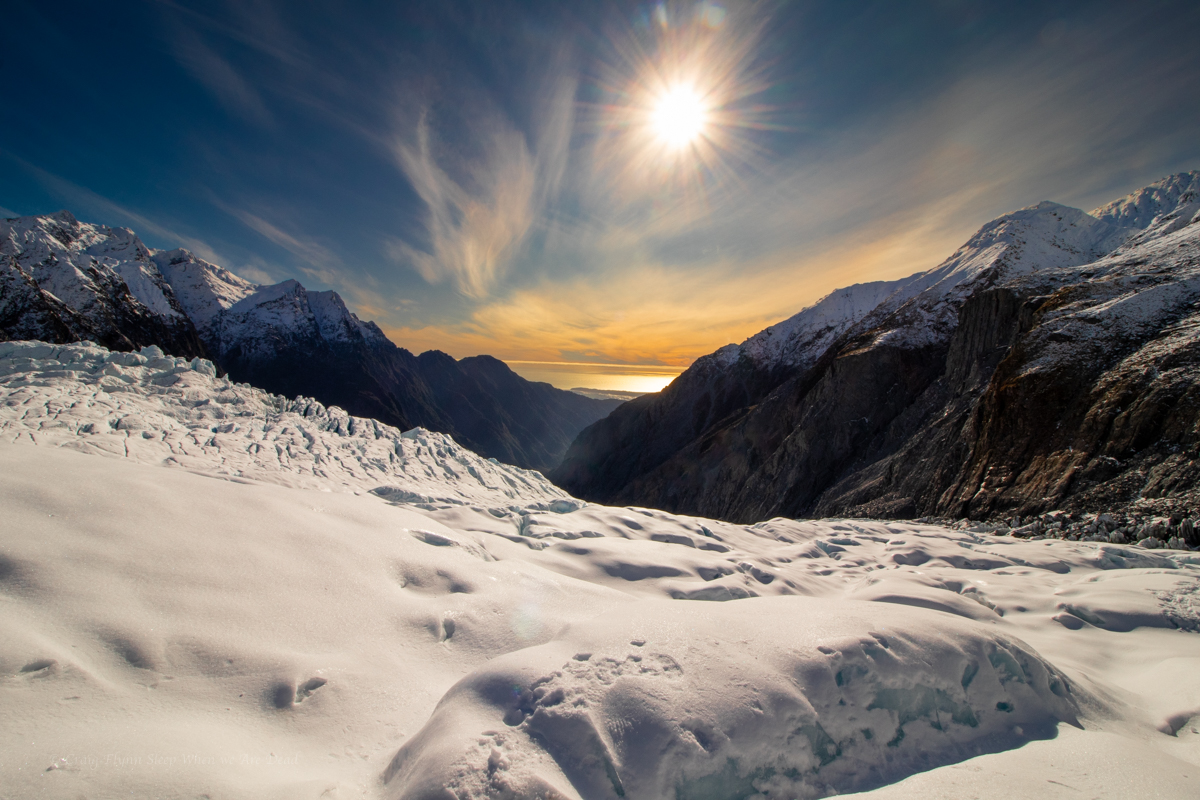
Anyhoo, we took about a thousand photos between us. Here are some of my favourite ones of mine.
Click to expand
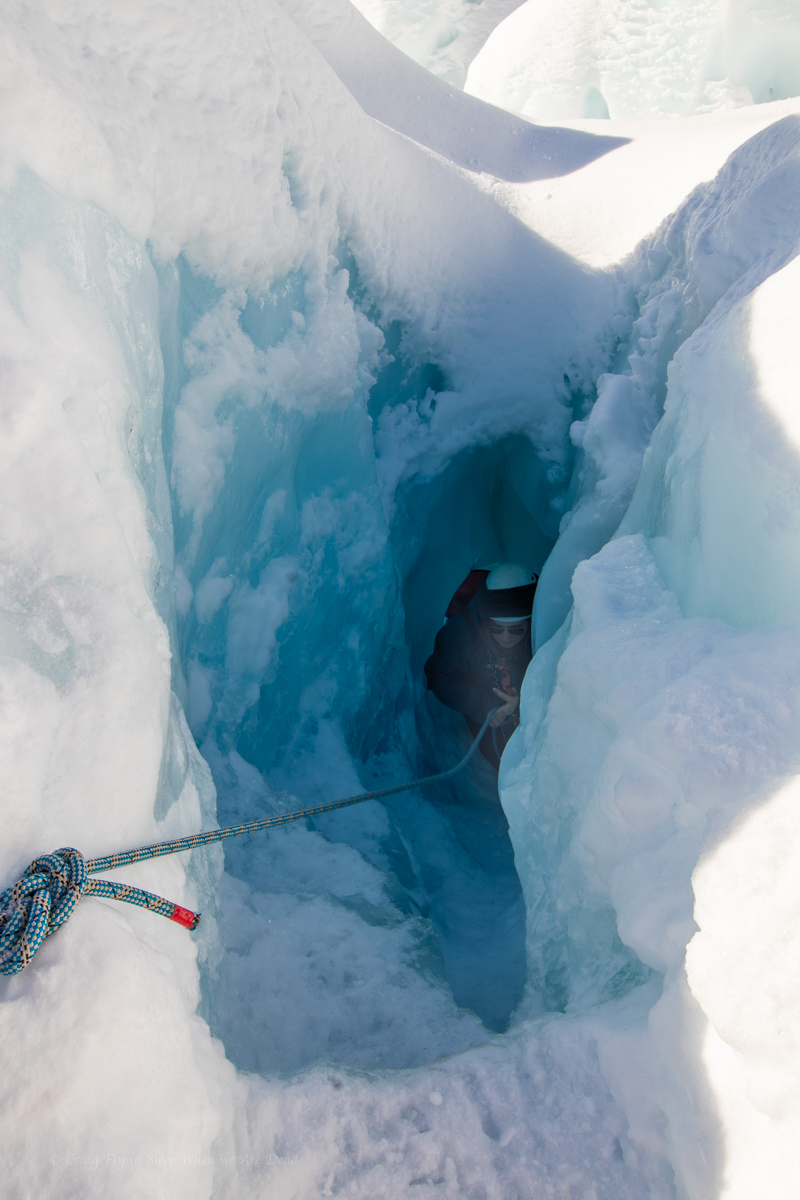
Canyon anyone?We are standing on a glacier looking at a beach!!!
Standing on a Glacier looking at a sunset over a beach!!!
Would 100% do it again
And on an absolute high from this we cruise down to Bruce Bay for camp
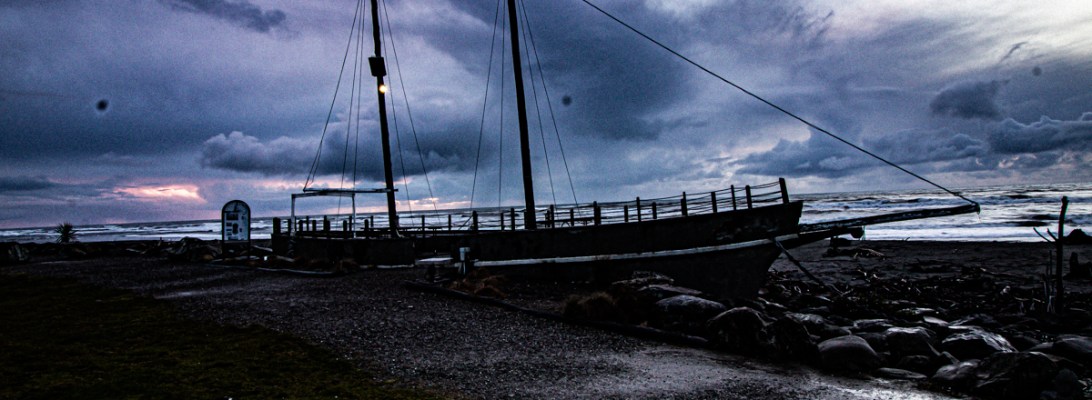
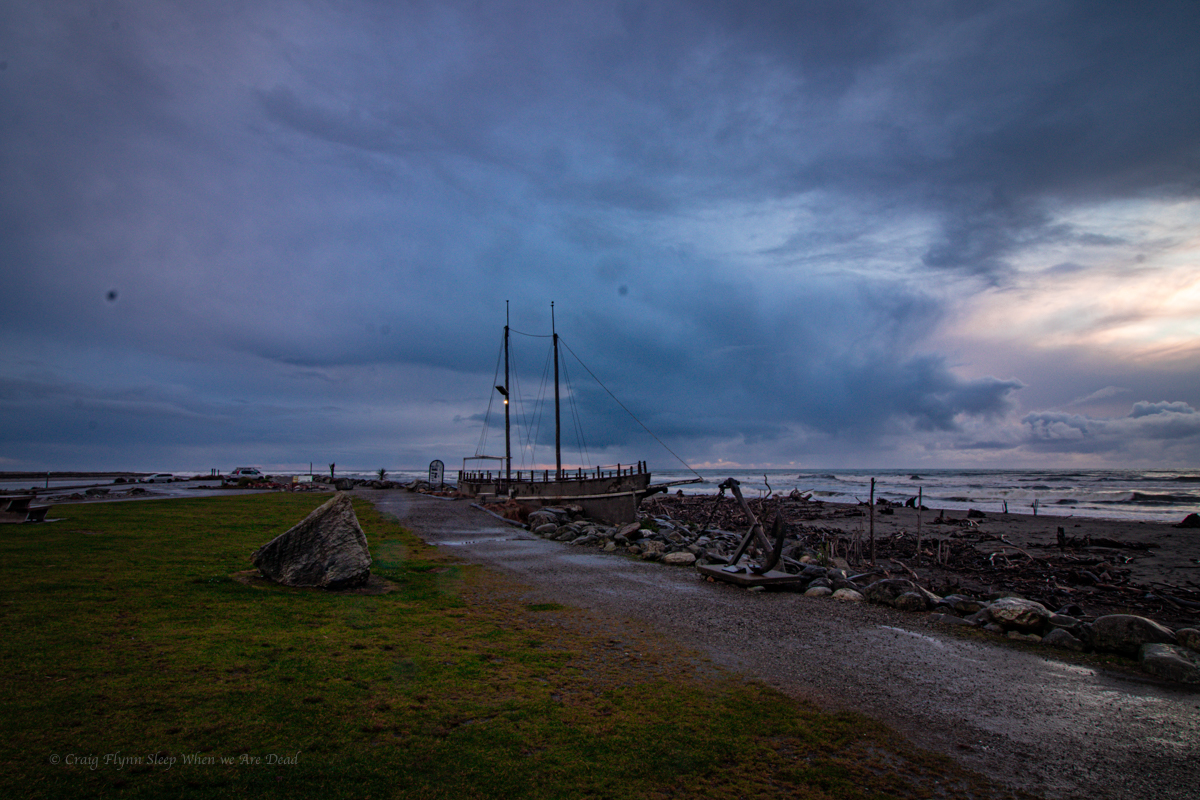
From Hokitika Gorge we slip back into town and head to Sunset point for diner in the van.
I’d never seen the sunset over the ocean before, Unfortunately the cloud cover closed in an all but blocked it out.
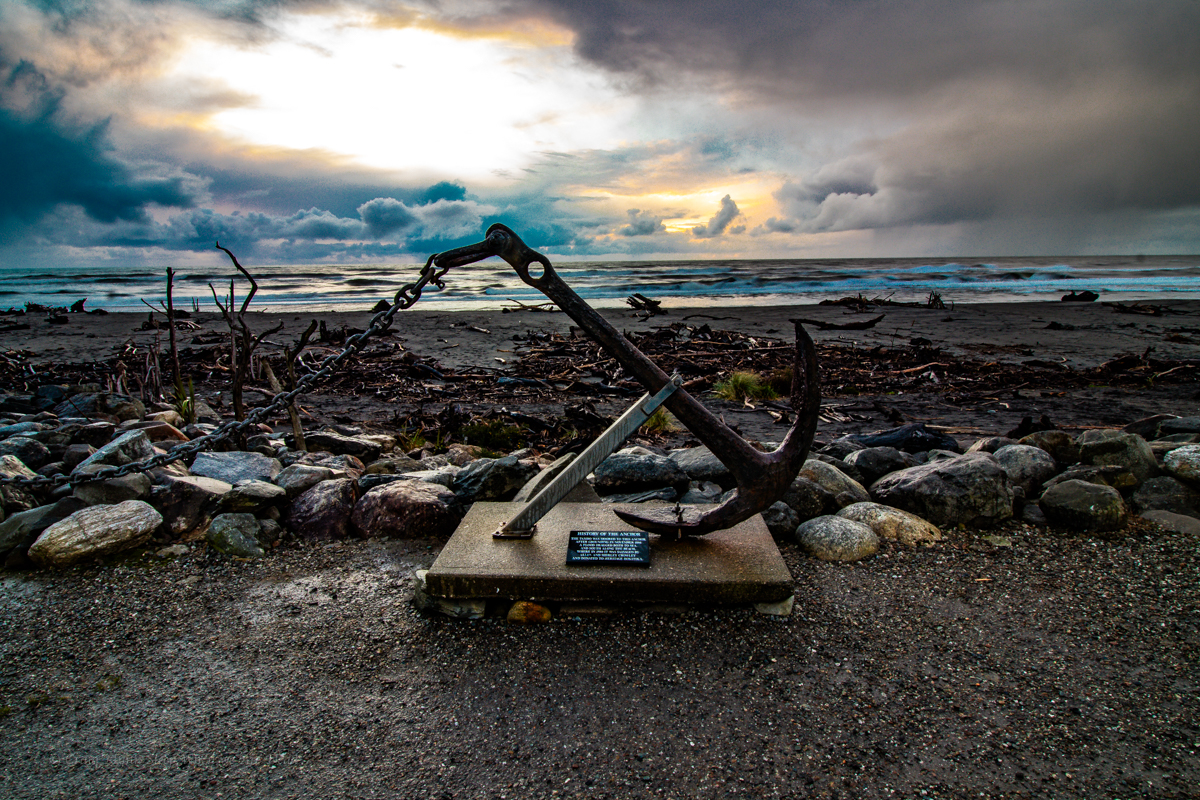
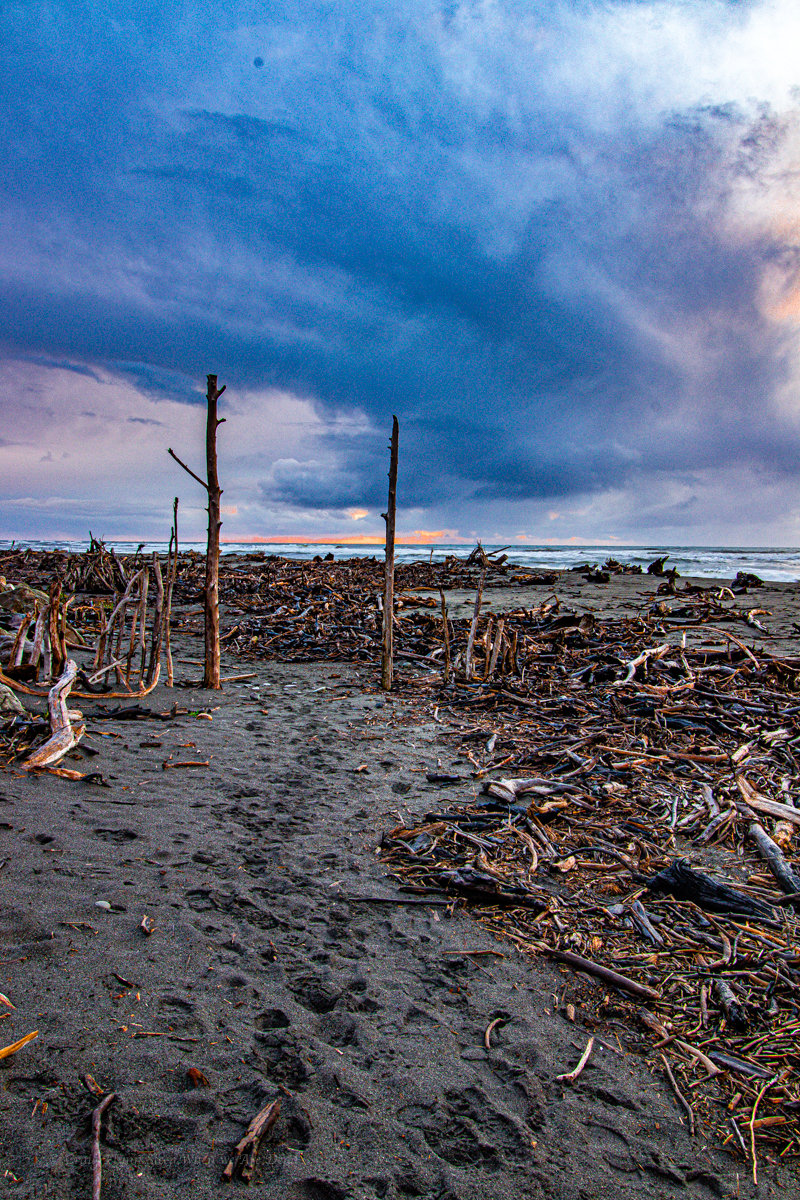
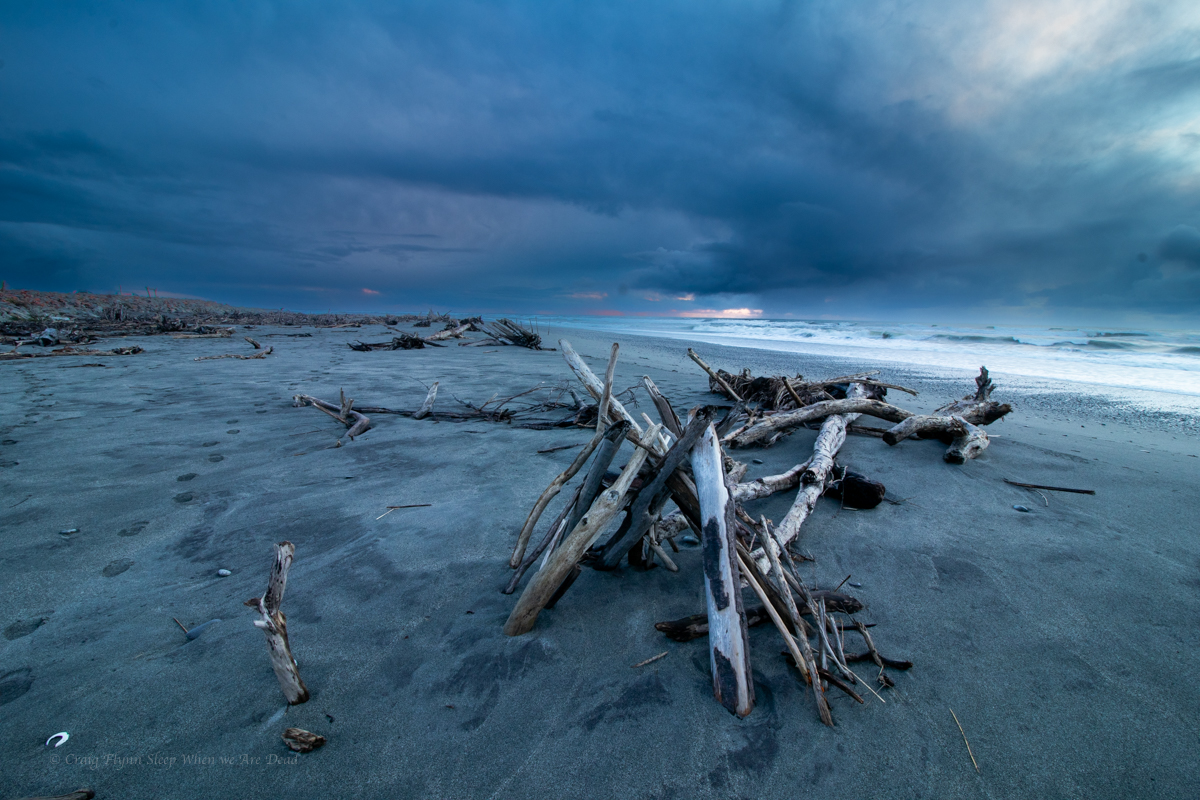
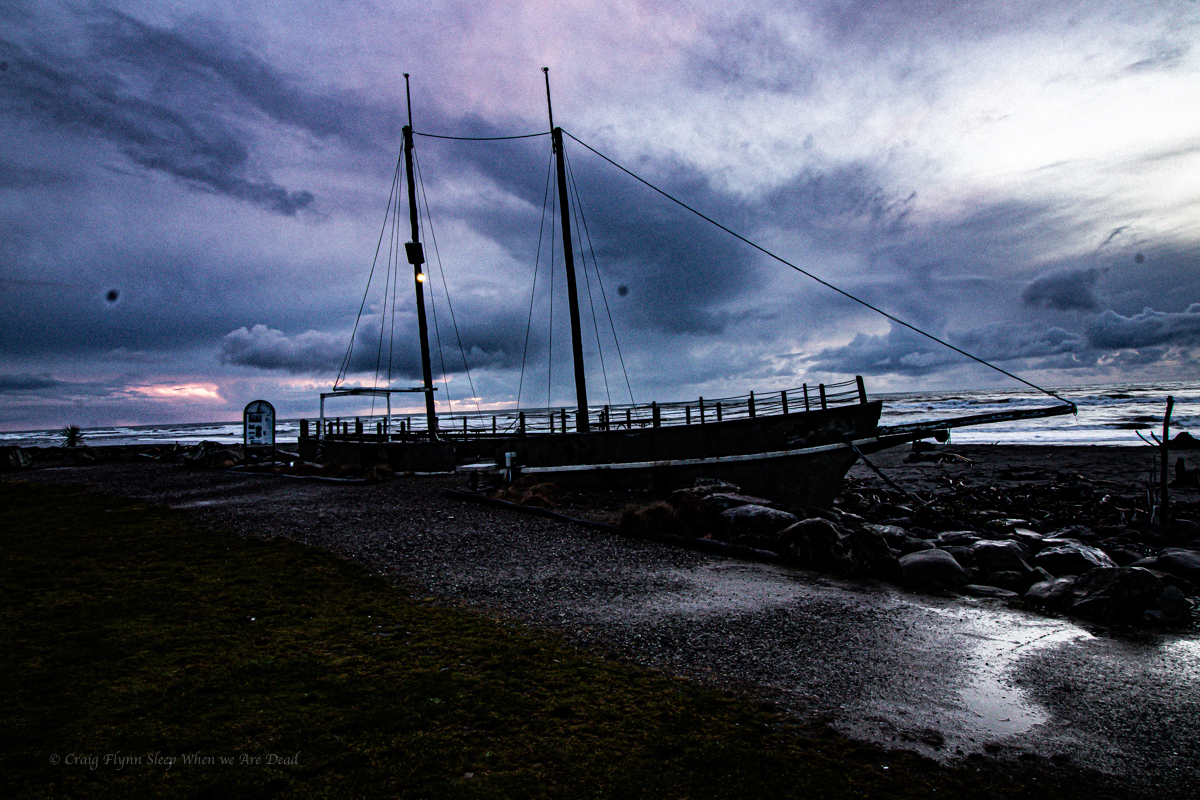
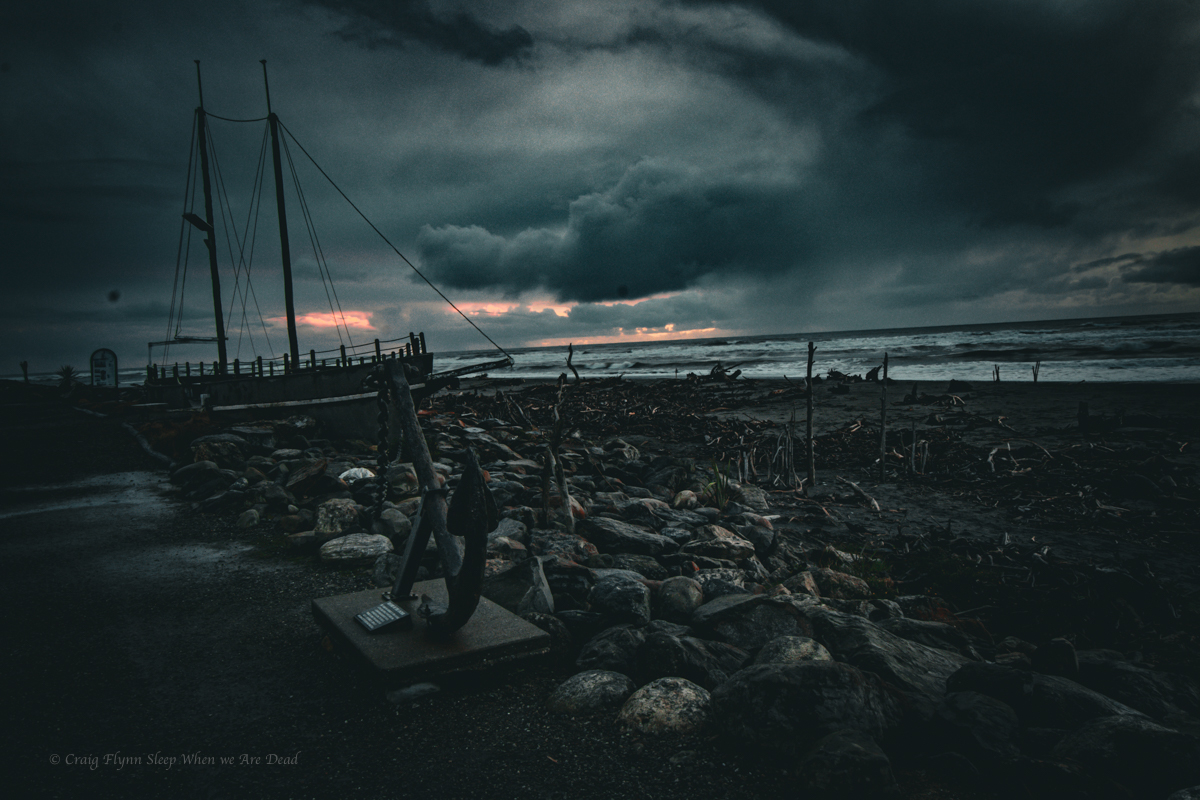
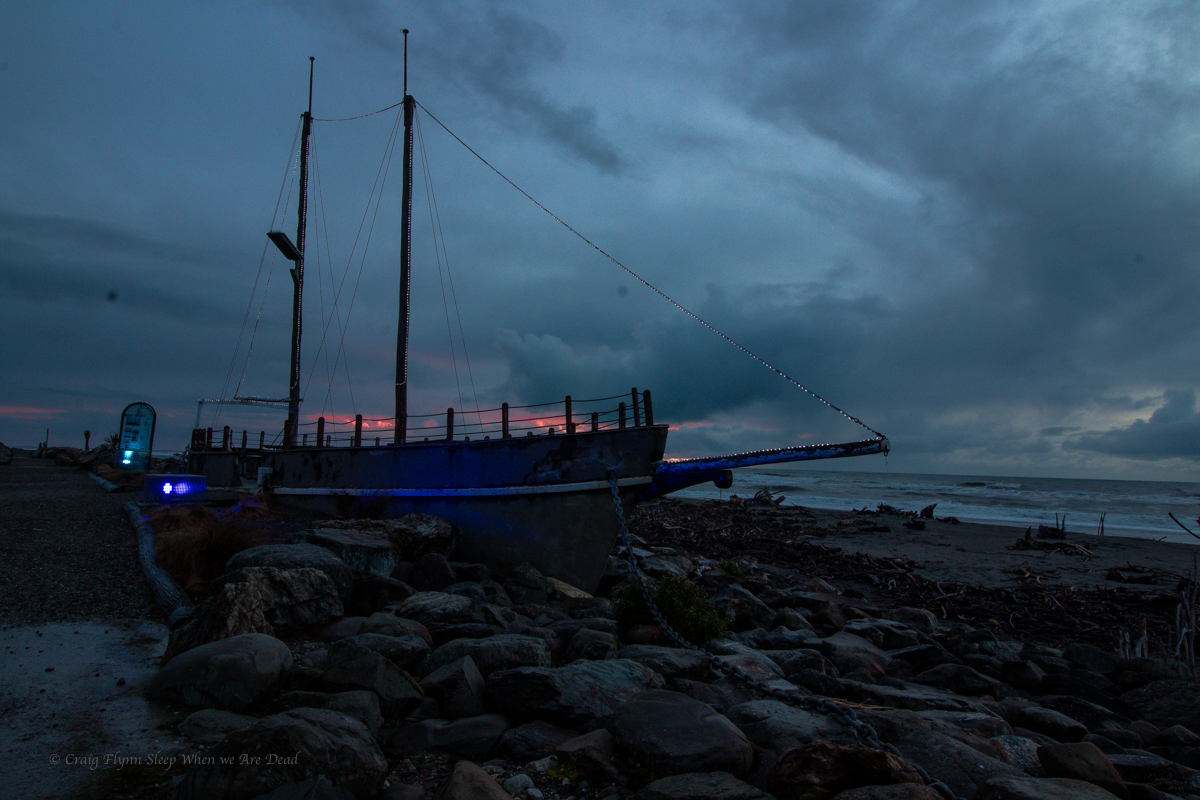
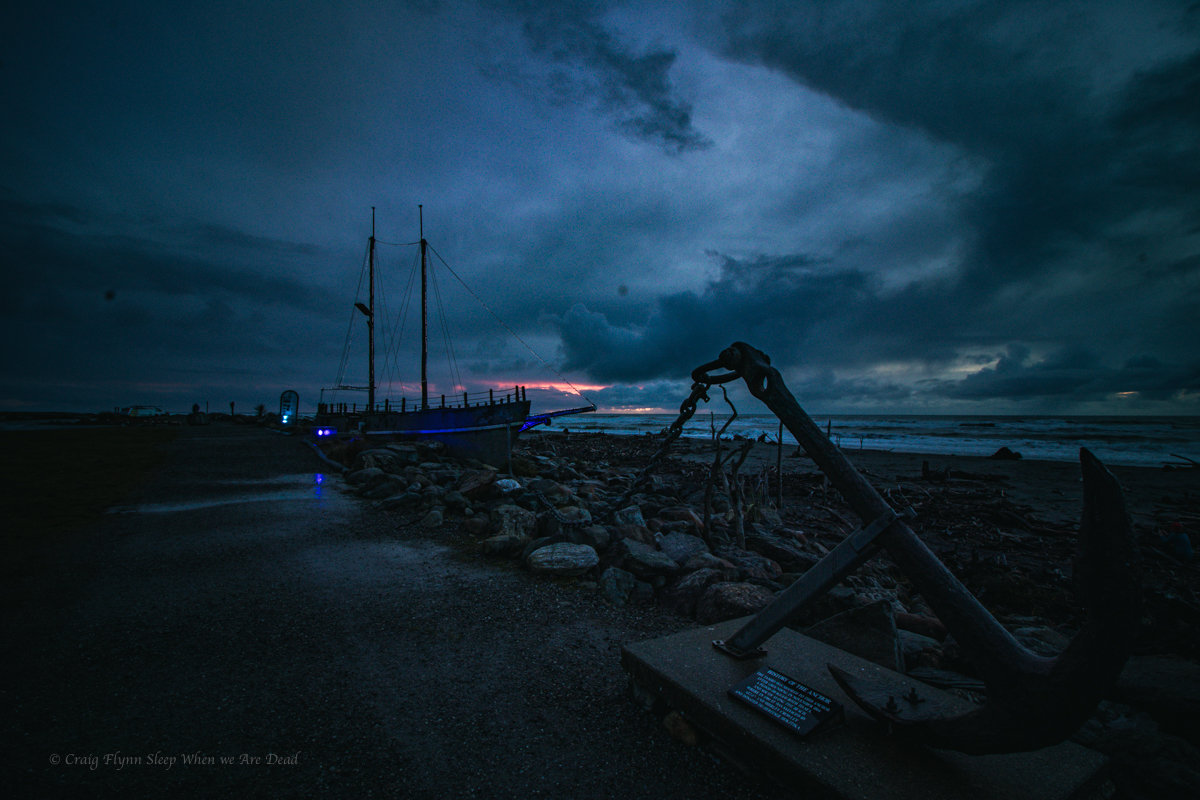
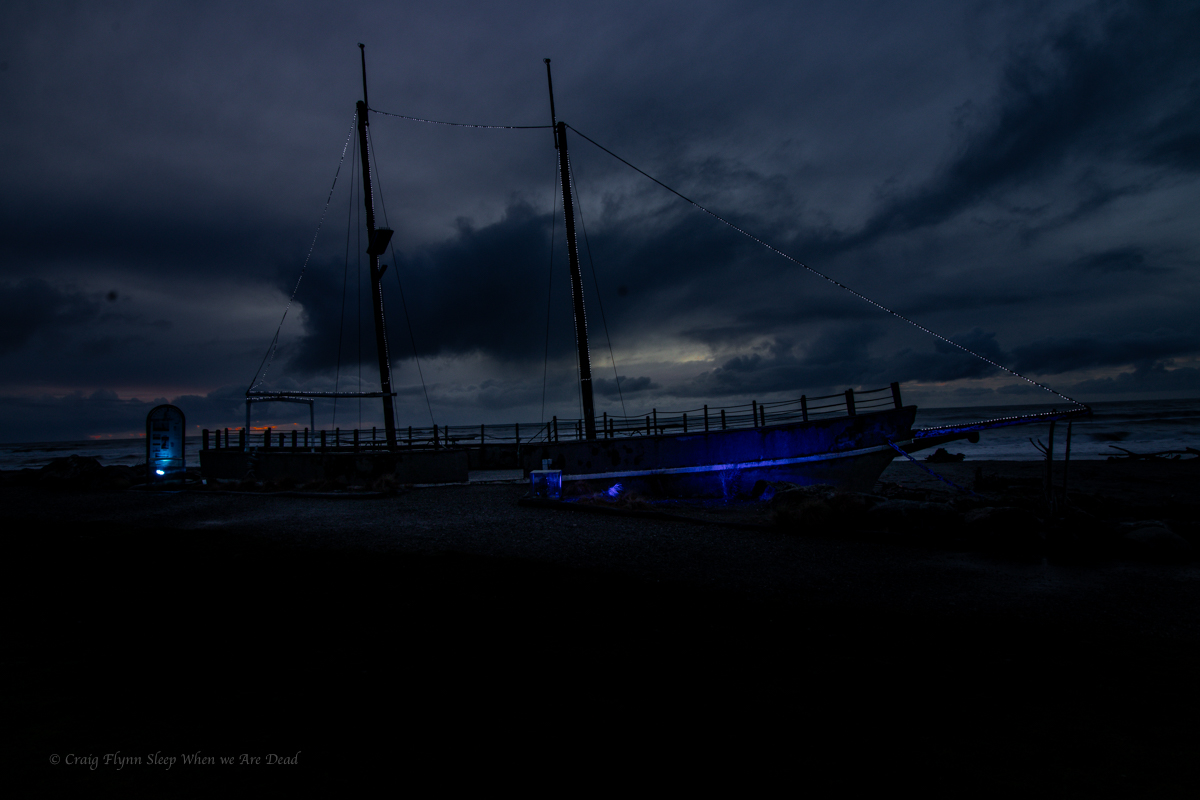
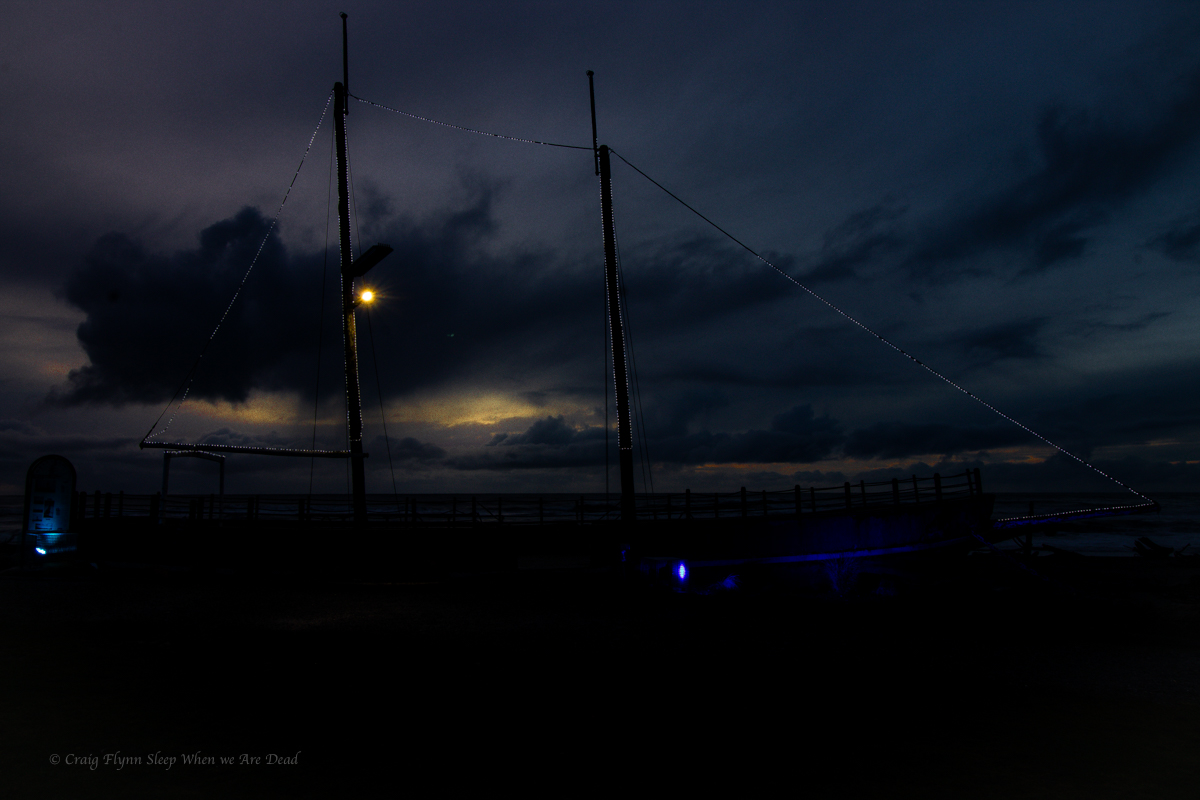
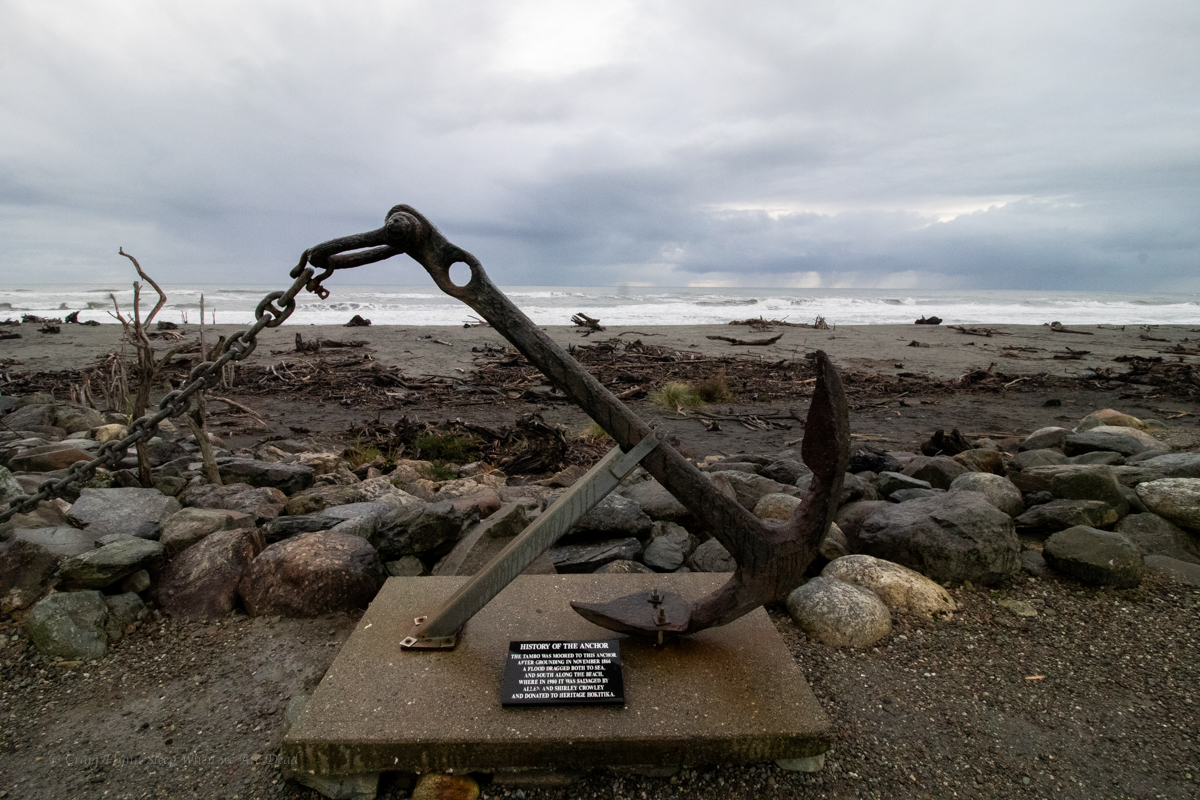
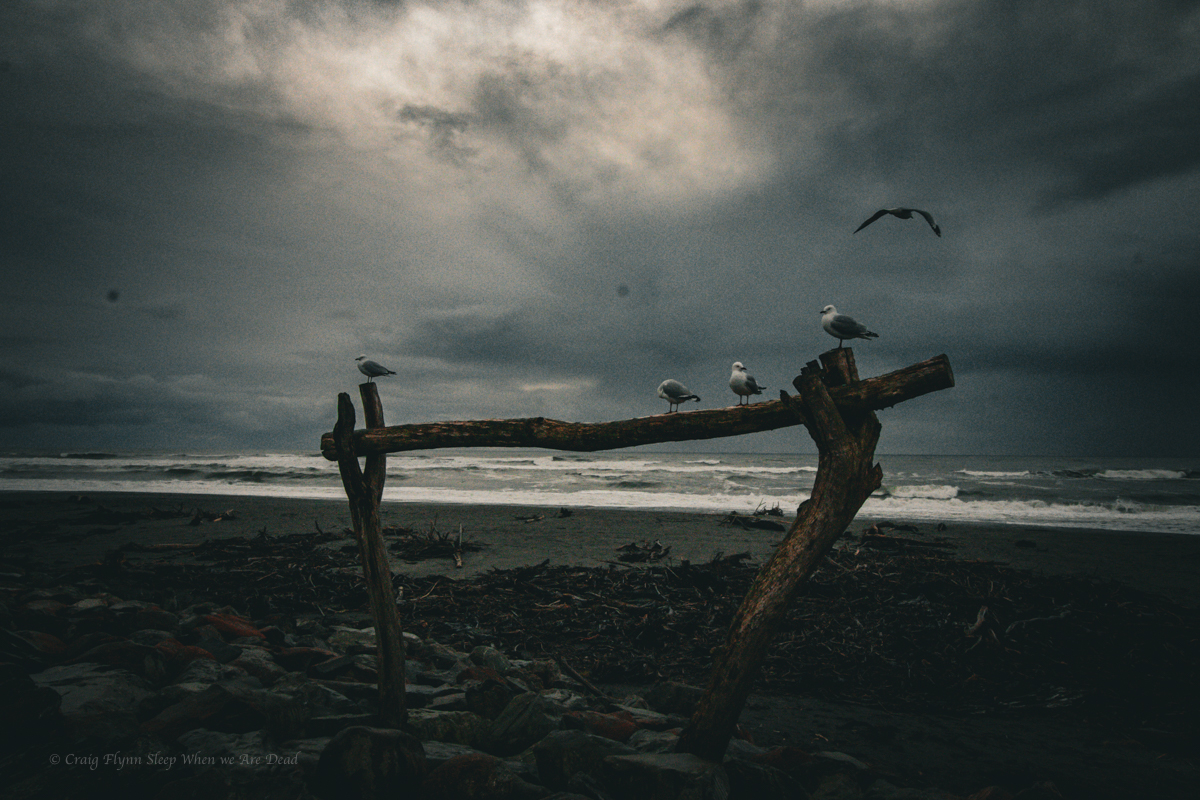
Not to be discouraged I thought I’d try my hand at some more arty farty photos at the memorial and art works.
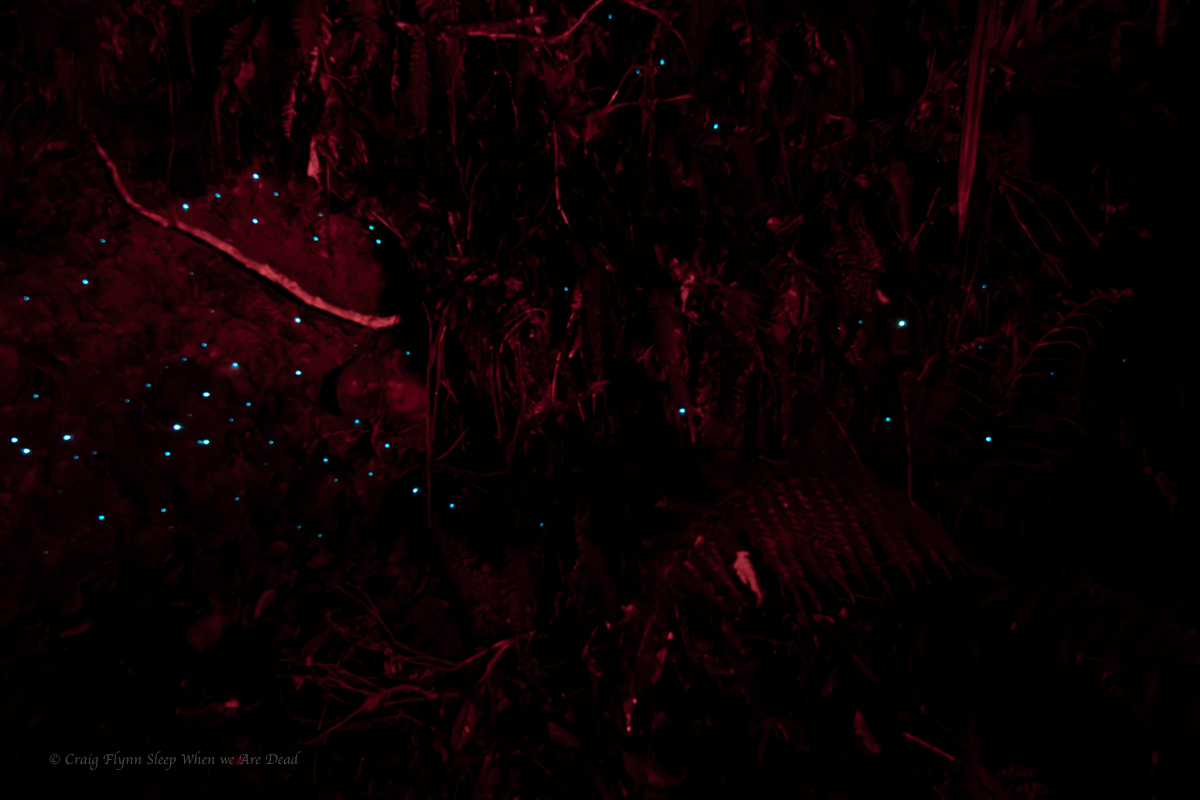
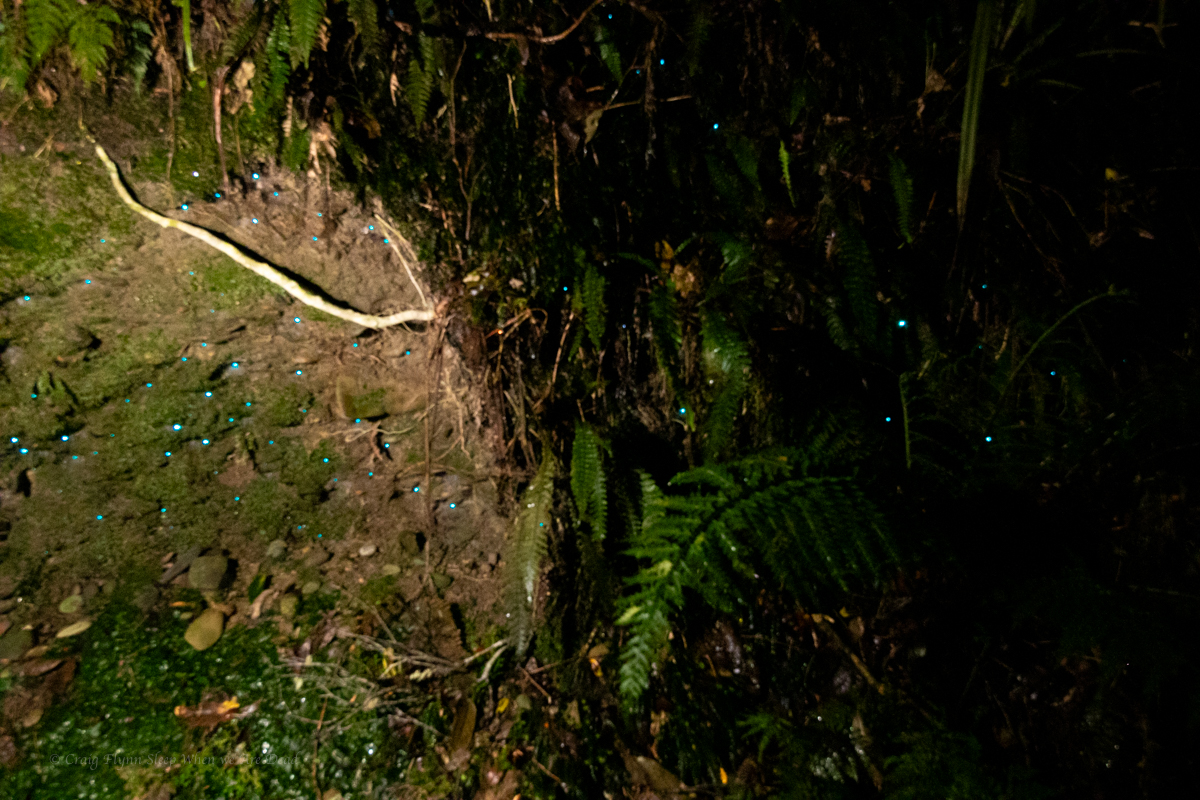
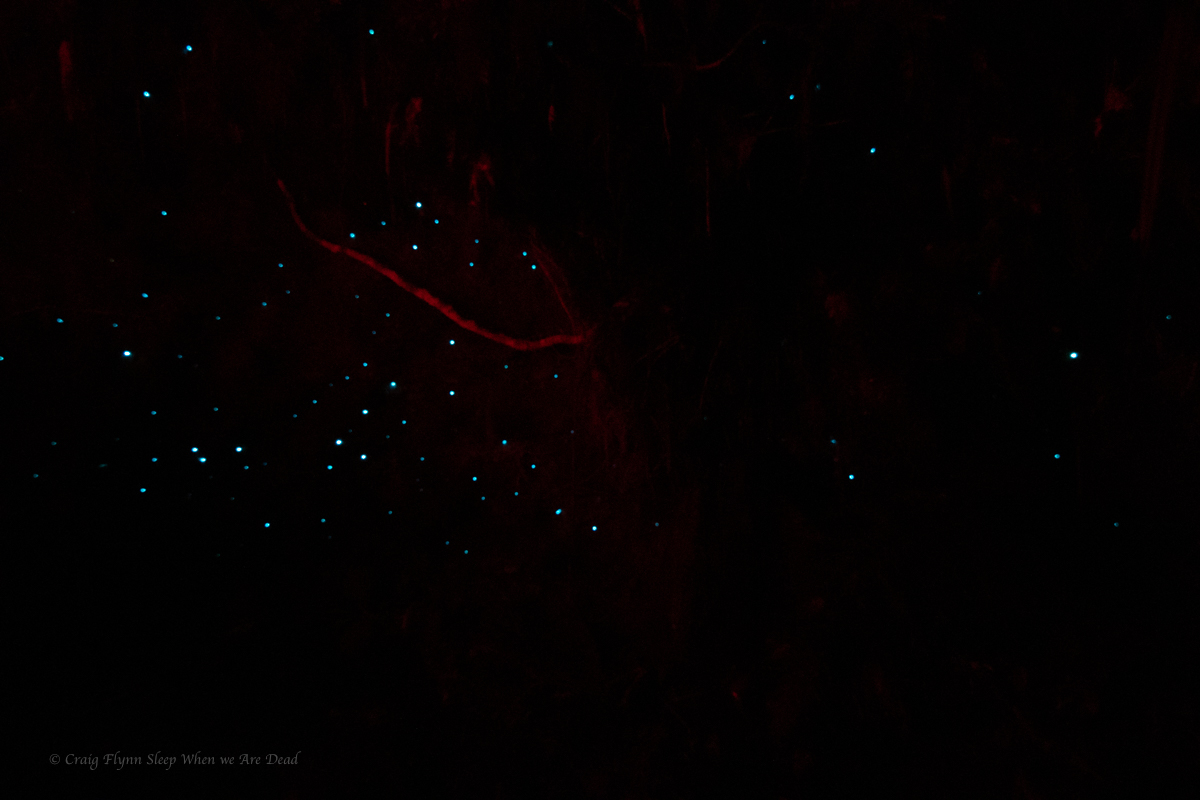
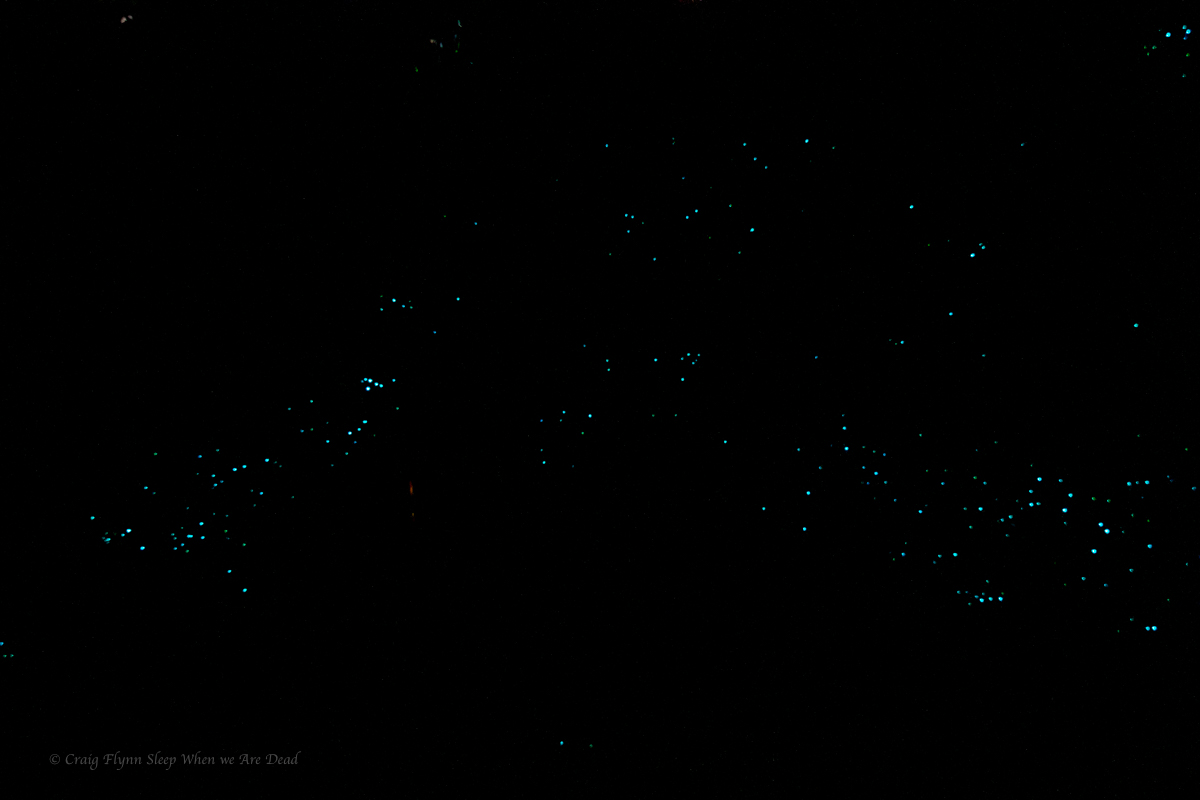
Driving into town I’d spotted a sign post for glowworms.
I know we had just done the most amazing cave tour but I’ve said it before and I’ll say it again, I will never not be awestruck by glowworms.
Lucky Kylie shares my fascination with the little shiny slugs with their little glowy bums.
If a cave tour sounds a bit too strenuous or clautrophobic for you I have some good news.
The Hokitika Glowworm dell is literally (Literally babes) 50m off the main highway in a shady, fern filled gully. A concrete path leads you in.
Tip: either use a red light (even a bit of coloured cellophane or contact over your torch) or hold onto the hand rails turn your torch off and let your eyes adjust.
From here it was on to a highlight in a long list of highlights from this trip Franz Josef Glacier

 sleepwhenwearedead